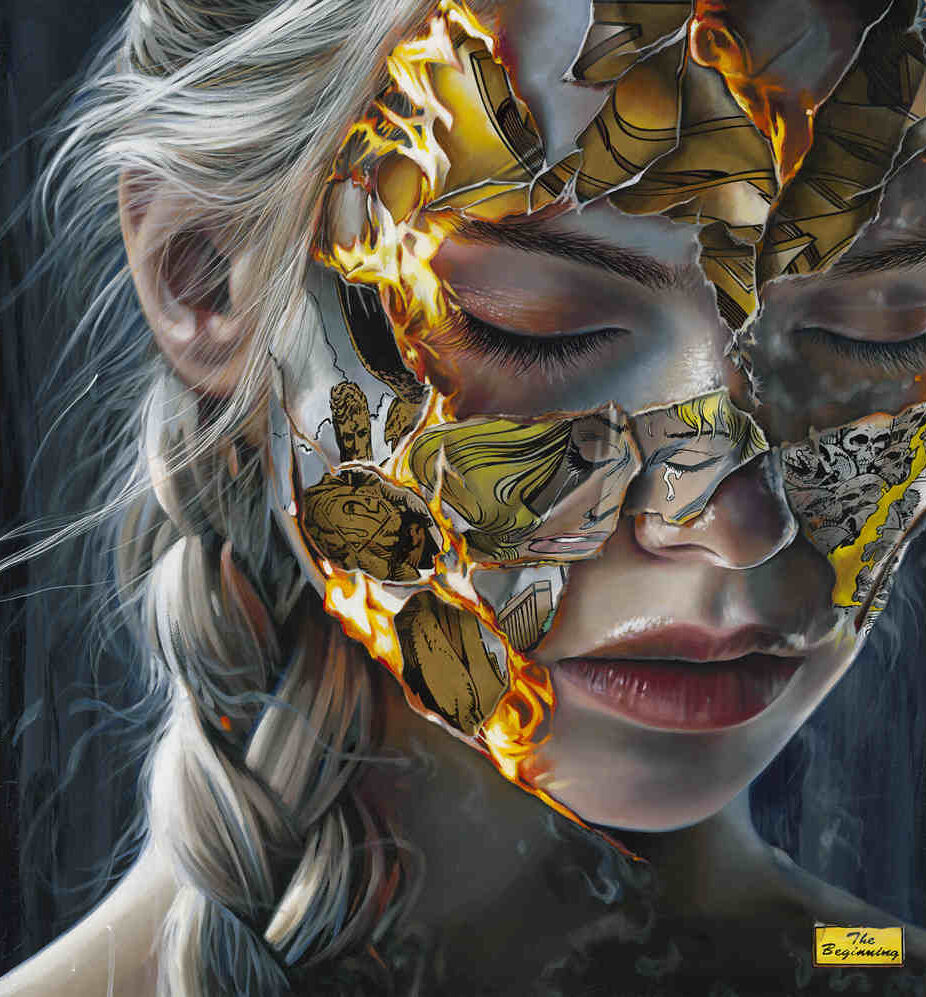
The gaze is a powerful vessel. It transforms the spiritual, psychological core of our internal and external perspective. Sandra Chevrier is a master at capturing this very essence in her work. The dichotomy of the eyes, the lamp of the body, and the masks meant to conceal our vulnerabilities inspire a penetrating focus. It asks us to examine and experience our own self-imposed cages.
When we consider the complexities and contradictions of human emotions and societal dynamics, heroes and villains play crucial roles. Heroes often symbolize resilience, courage, and the capacity to overcome adversity, showcasing the heights of potential and strength. On the other hand, villains frequently embody the darker aspects of the psyche, reflecting inherent weaknesses, manipulation, and the capacity for wrongdoing. In Sandra Chevier’s new solo exhibition, “a Cage & a House in it”, curated Jessica Goldman Srebnick, on view at Goldman Global Arts Gallery, we are invited to discover both sides of the same indelible shield. The energy exchange is the ultimate truth of freedom – not one of limitation but one of protection.

Examining this exchange reveals conflict many face – the drive to take action, the lust for control, acceptance of imperfection, maintenance of integrity, and the quest for motivation. Each of these are intrinsic to the shared human condition, but which mask do you wear when the human spirit feels it has been corrupted and what does that mask represent?
This concept, and Sandra Chevrier’s new body of work, is not only compelling but also deeply reflective. The reality… these dualities are within us all. The mask is a mirror should we choose to look.
“a Cage & a House in it“
A Solo Exhibition by Sandra Chevrier
Exhibition Dates: October 24 – January 15, 2025
Goldman Global Arts Gallery
266 NW 26th Street
Miami, FL 33127
United States
786.615.4233

Exhibition Statement //
a Cage & a House in it represents the collaboration of internationally acclaimed Canadian urban artist Sandra Chevrier and Curator Jessica Goldman Srebnick. What began as a relationship between artist and collector, blossomed into the desire to produce an epic solo exhibition to showcase an evocative body of work through 35 pieces (including canvases, inks on rice paper, mosaics and an installation).
Through her captivating portrayals of the masks women wear for society, layered with hand-painted comic book fragments, Chevrier explores the invisible cages women face, and the strength it takes to break them apart. Masks become both armor and burden, and their destruction becomes an act of regaining power. This exhibition stands as a deeply personal statement on resilience and transformation, with Chevrier amplifying that freedom is not given but fought for.
Artist Bio //
Sandra Chevrier is a Canadian contemporary / pop urban artist, known for her captivating portraits of women from The Cages series. Born in 1983, Chevrier earned her bachelor’s degree in visual and media arts from UQAM – L’Université du Québec à Montréal. As a self-taught artist, Sandra Chevrier first fell in love with art as a kid, to her; Art rapidly became a language on its own. At first, she drew sketches of eyes, all the time.
This initial obsession is highly visible in her present work. Sandra likes to describe herself as a “gaze collector” and her work; a dichotomy or a dance between power and fragility, freedom and captivity, the poison and the cure. Her work is exhibited internationally, and her artworks are now in the collections of art collectors all over the world.

Exclusive Interview with Sandra Chevrier
In your work and exhibition, “a Cage & a House in it,” the gaze remains fiercely exposed. Is the heroism of your subject found more in the empowerment they draw from the highly symbolic comic imagery, or the resolve revealed by their refusal to break despite societal expectations layered onto them?
The heroism in my subjects comes from both sources. The comic imagery and the storylines behind them provide a sense of empowerment, allowing them to display strength and resilience. At the same time, their determination not to break under societal pressure highlights their true heroism. This combination reflects the complexities of being human, demonstrating that strength comes not just from appearances but also from how we respond to our challenges.
I love playing with the dichotomies in my work; it’s like a dance between captivity and freedom, fragility and power, poison and cure, defeat and triumph. In cases where the storyline of the comic imagery illustrates fragile heroes—like Superman’s death in Lois Lane’s arms or Batman losing a battle—despite the fierce, courageous gaze of the portrait, it reveals the struggle and inner turmoil we all have to learn to live with in our daily lives.

Does the act of tearing the page ever feel like a deliberate act of deconstruction necessary to free the female identity from its historical cage?
Yes, tearing the page feels like a powerful way to dismantle old ideas about female identity. It symbolizes breaking free from traditional roles and stereotypes that have confined women for so long. This act creates space for new identities and stories to emerge, making it a crucial part of the journey toward liberation. I’ve also started to work with fire in my pieces rather than seeing it solely as a destructive force, it serves as a means of liberation by burning away the masks.
If comics represent the non-stop noise of the modern world, what is the emotional price, as the artist, for trapping such realistic fortitude and vulnerability behind the pop iconography?
The emotional cost comes from balancing the strength and vulnerability of my subjects while navigating the loud and bright world of pop art. Sometimes, I worry that deeper emotions might get drowned out by the flashy colors and comic style. However, I believe that this clash can spark interesting conversations about life, encouraging viewers to look beyond the surface and engage with the deeper meanings in my work.


If heroes and villains coexist, which do you feel (if not both) illustrates the fragility of the human condition, and which one has taught you the nature of strength and weakness—particularly within “a Cage & a House in it”?
In “a Cage & a House in it,” both heroes and villains illustrate the fragility of being human. Heroes represent hope and strength, while villains embody our fears and the pressures we face. We aren’t purely good or bad; we’re human and entitled to our flaws and mistakes. The heroes have taught me about resilience and overcoming challenges, while the villains remind us of the weaknesses that we all struggle with. This mix adds depth to our understanding of the complexities of human nature.

When do you feel the most unmasked? And does the act of painting—creating a new mask—become the paradox that fuels your personal sanctuary?
I feel most unmasked during moments of deep self-reflection when I confront my vulnerabilities and truths. In those times, painting becomes a sanctuary for me. While I create new masks, I’m also exploring my identity and expressing my thoughts and emotions. I often say that art is my first language and my therapy. This process helps me turn my vulnerabilities into something powerful and creative, making it feel rewarding.

The face is a map of the truth, the eyes the lamp of the body… conflict, reality, and moments etched within us. Between the fragility of portraiture and the invulnerability of comic book skin, what truth of the human experience do you hope the unwavering gaze has preserved?
I hope the unwavering gaze in my work captures the truth of our shared human experiences—our struggles, strengths, and the complexities of who we are. The contrast between vulnerability and strength reflects our ability to endure pain while also having the capacity to grow and overcome challenges. I want viewers to realize that being vulnerable is not a weakness; it’s a vital part of being human that connects us all. We fall, we fight, and we get back on our feet every time.
Goldman Global Arts Gallery
Website | Facebook | Instagram