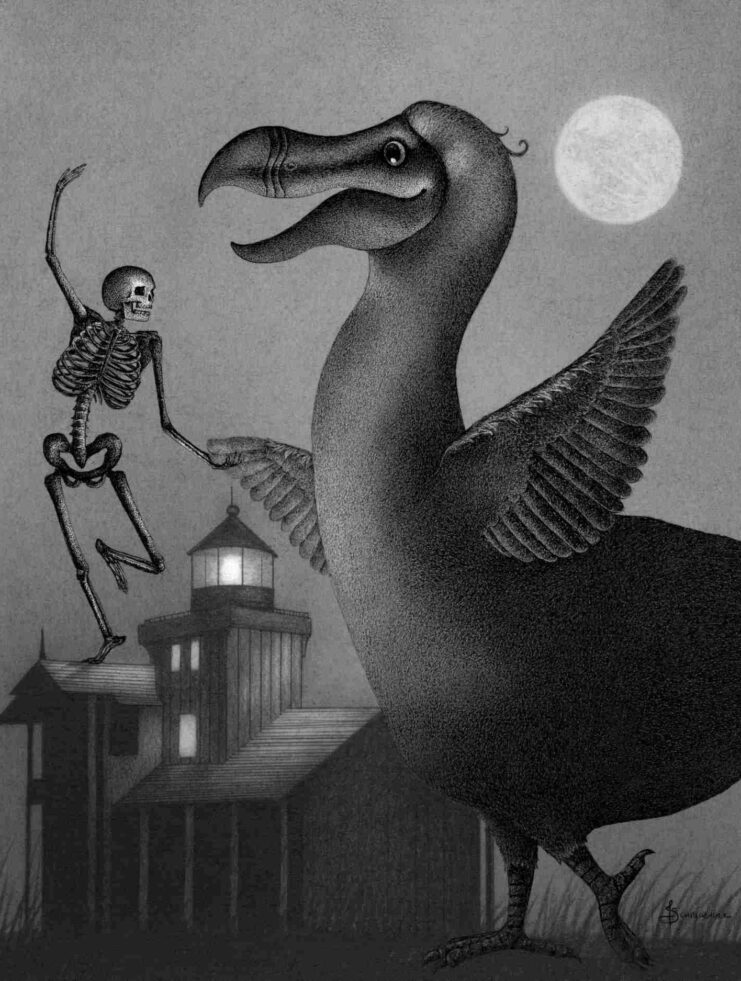
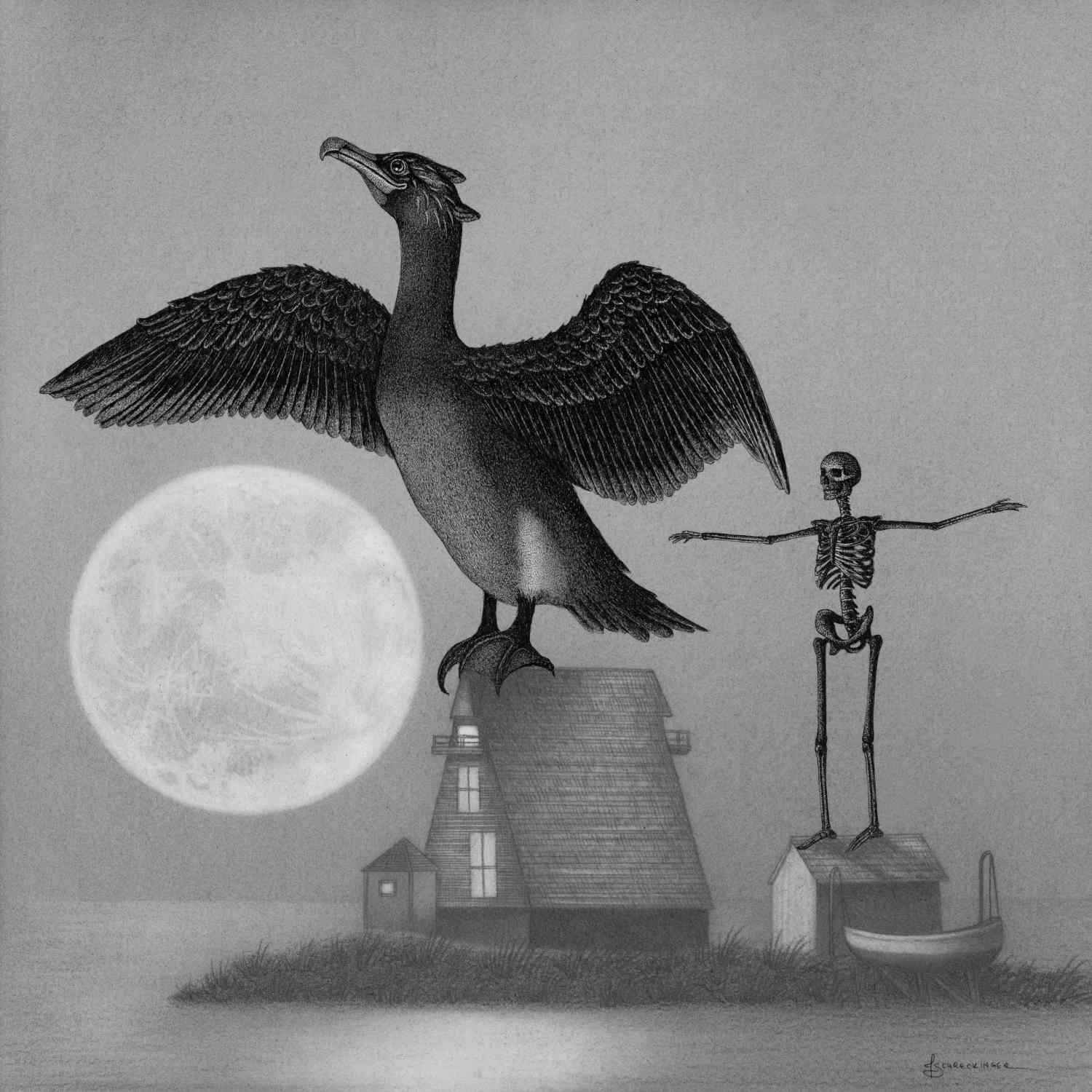
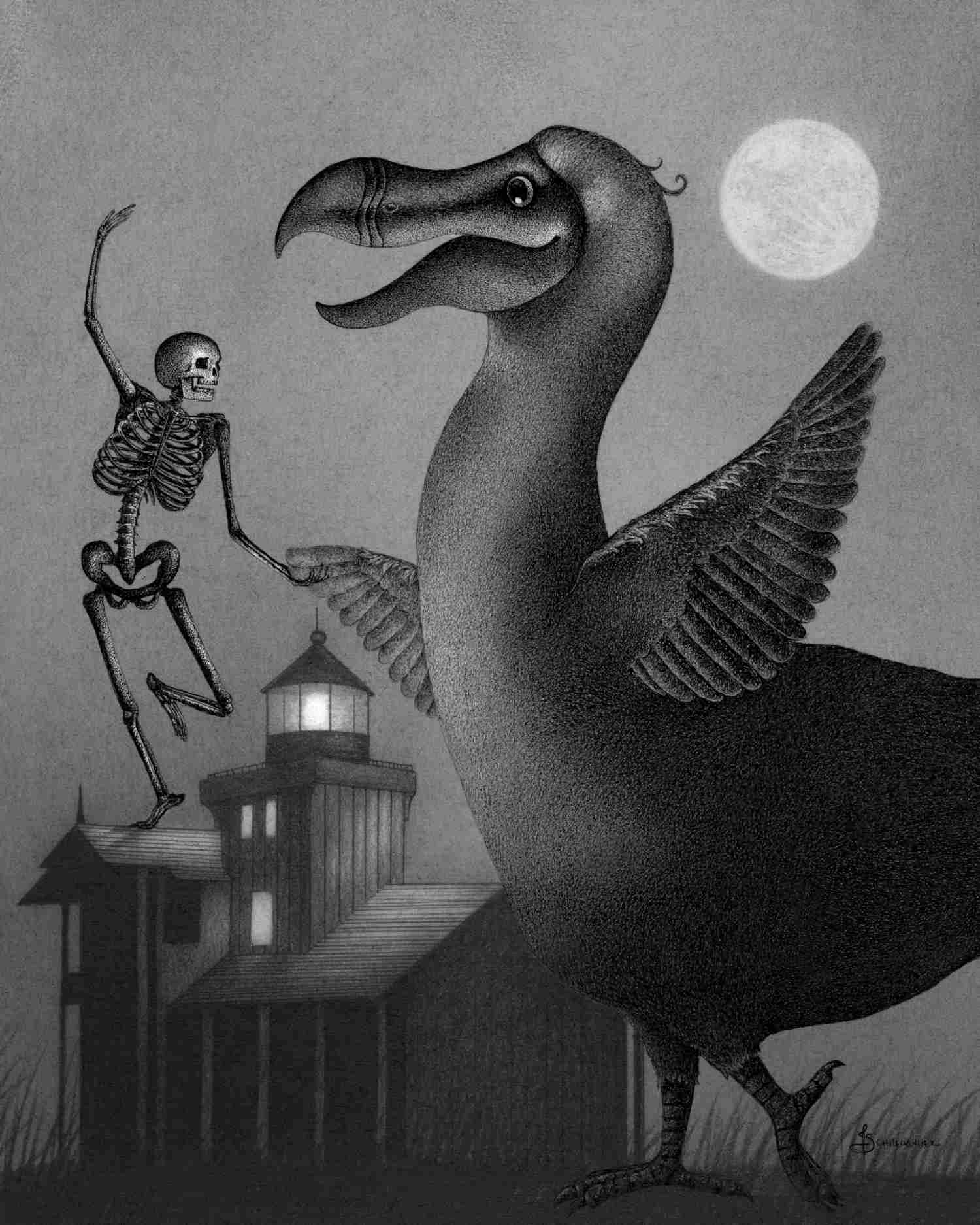
‘The Ghost Lights’ by Juliet Schreckinger is a truly special series that I’ve had the pleasure of witnessing unfold over the past few years. The Long Island based fine artist and illustrator has taken locations and creatures long lost to the passage of time and has filled them with a new lease of life. The sobering realities of death and decay are put to one side and in its place, a ghostly celebration takes place as these visitors from the past are given the opportunity to debut themselves into our modern collective consciousness. We are invited into cosy cabins nestled under the warm low of lighthouses that guide sailors no longer. We are encouraged to dance, to play, to hop, skip and jump alongside animals that we haven’t seen for years, centuries or even millennia. We are encouraged to remember the past and all its lost magic, and more importantly, we are encouraged to remember to live in the present.
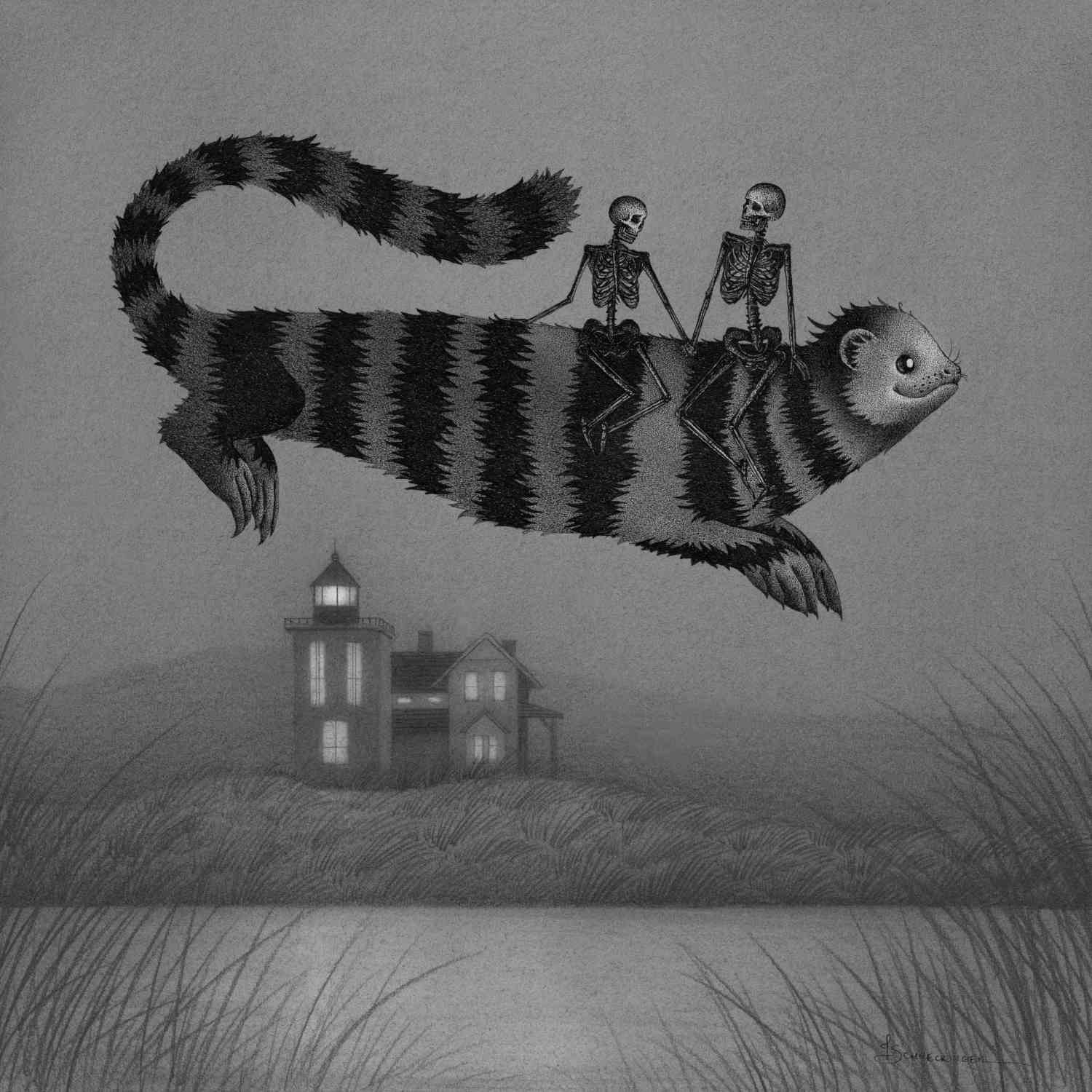
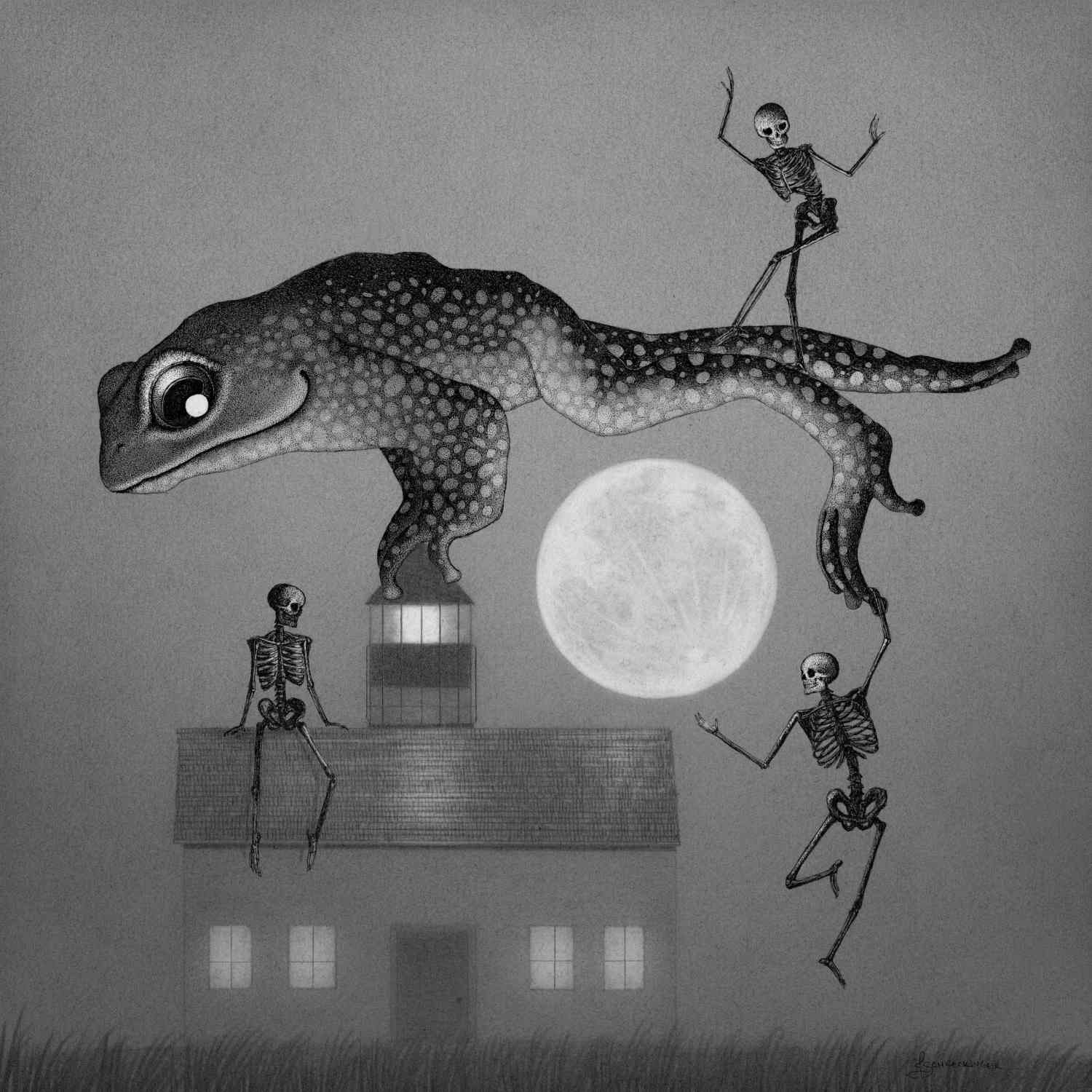
The story behind ‘The Ghost Lights’ began when Juliet became a member of the United States Lighthouse Society. Upon discovering a pack of stamps titled “The Lost Lights” at one of the participating lighthouses, Juliet became inspired to take the concept of these long forgotten structures and immortalise them in pen, ink and graphite. Volume 1 debuted in October 2023 where Juliet released 8 artworks that established the foundations of this trilogy. These artworks focused not only on the lost lighthouses themselves but incorporated extinct animal alongside them to further develop her concept.
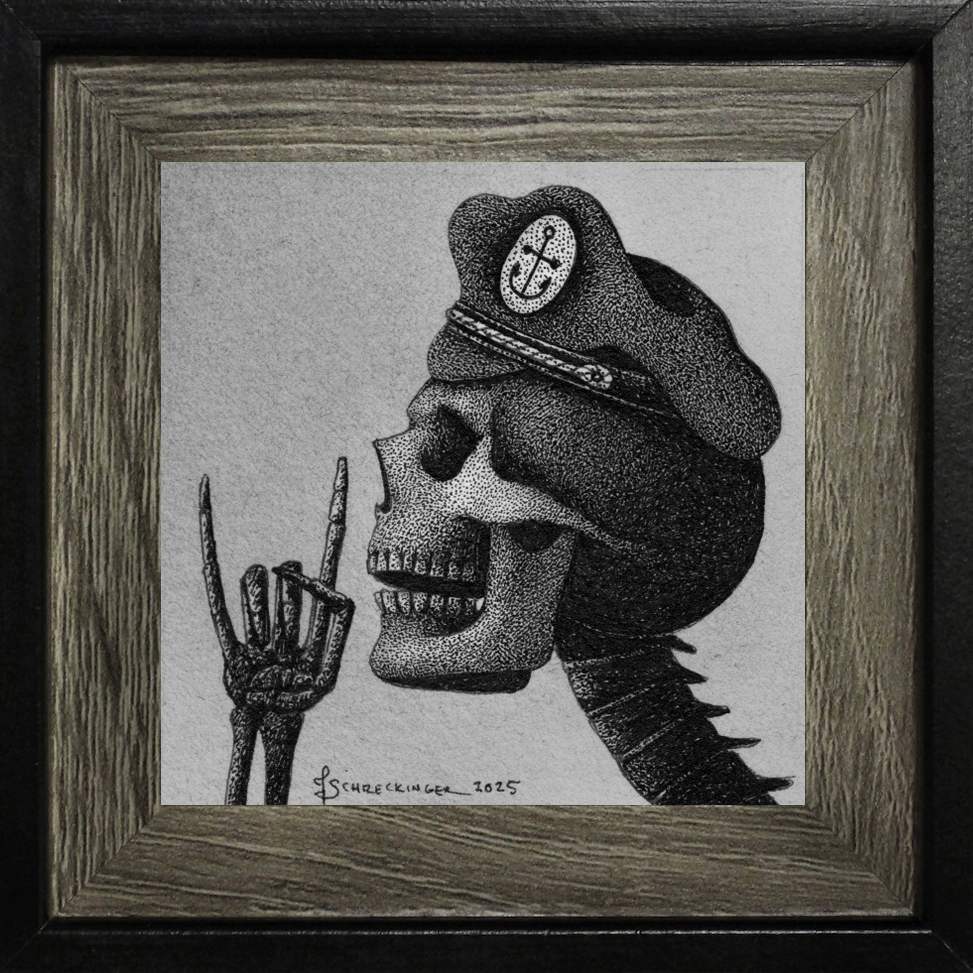
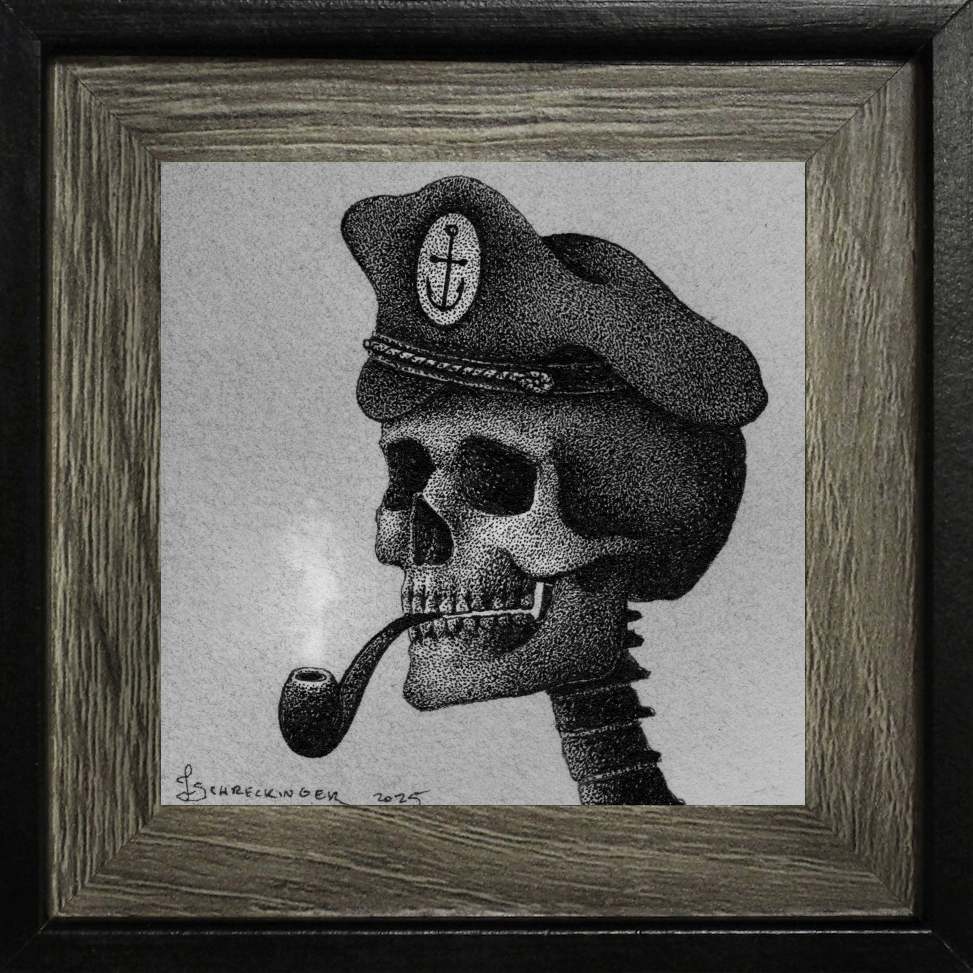
The following year, in December 2024, Juliet debuted ‘The Ghost Lights II’ where she added 26 more works to this collection including the addition of her ‘Captain’ series. Finally, in December 2025 Juliet concluded this trilogy with the release of ‘The Ghost Lights III‘ which is on show at Arch Enemy Arts until 15th March 2026. This final instalment brings 30 additional artworks into the light and would introduce a new character to the mix in the form of human skeletons.
In this exclusive interview, I catch up with Juliet to discuss her thoughts on ‘The Ghost Lights’ including her process working on her third and final instalments, how she’s found working on this 3 year long project and what awaits her moving forward.
Interview with Juliet Schreckinger
You’ve been working on your ‘The Ghost Lights’ series for several years now and have recently finished your third and final show in the series. I’d love to hear your thoughts and reflections on the journey you’ve been on with this series and how you’re feeling now the project has concluded.
Working on ‘The Ghost Lights’ series has been so fulfilling. I worked on it for the better part of three years, with the entire collection spanning over three volumes, each with its own gallery opening reception. The inspiration for this series came a few years earlier, when I joined the United States Lighthouse Society and got a lighthouse passport book. Each participating lighthouse has a stamp that you can put in your passport book to mark that you have visited that light. It became a completely enthralling hobby. One day I saw that the lighthouse society was offering a pack of stamps you could purchase for your passport book called “The Lost Lights”, and I was curious as the name really drew me in. I read about how society made this collection of stamps based on lighthouses that had either fallen or been destroyed by nature due to lack of upkeep. Many of these lighthouses, although man-made, have become home to seabird nesting areas, sea lions, and other animals.
As I saw this pack of stamps a spark of inspiration hit and I knew that I had to do a series documenting these lost lights. I thought about what inspires me most of all – the protection of the creatures within our world – and how I could incorporate that underlying theme into this series. I rapidly saw the parallel between these lost lights and so many beloved animals – they are gone, permanently. Yet the ghost of these things, the memory, lives on and inspires us to do better and to protect those that are still here. So, I decided to create this series, where each of the lost lights is paired with an extinct animal. It is a series that cannot be fully explored in one exhibition, as there are so many lost lights and creatures that I want to highlight.
In ‘The Ghost Lights’, I focused on the relationship between these lost lighthouses and extinct sea creatures. In ‘The Ghost Lights II’, I wanted to explore the relationship between the lost lighthouses and land creatures, particularly those that likely do not come to mind when one thinks of a lighthouse. In the final chapter, ‘The Ghost Lights III’, I wanted to incorporate some element of humanity into the work. I wanted to now explore the complex yet beautiful relationship between humans and nature, a relationship that has so much nuance, both pain and happiness.
Now that I have finished the final chapter of the series, I feel both melancholy and happiness. While I am sad to leave this series in the past, I do feel doors are never really closed in the art world… and it is not impossible I revisit old friends from ‘The Ghost Lights’ series again someday in my work. For the time being, that was my last chapter of the series, and it is definitely a surreal feeling to close that long chapter of my art journey.
Oftentimes, I will have a vision for how I want my piece to look, and that is hard to achieve therefore the final result will look a lot different than I planned. I think this whole series came out pretty close to how I envisioned it, which is rare. I had a very clear vision for what I wanted it to be, what it should look like, and what I hoped to achieve with it, and it is very encouraging to me to see that come to fruition. I am using the validation this series has given me to move forward with my work and keep creating.
What have been some of your biggest highlights whilst working on this series and why?
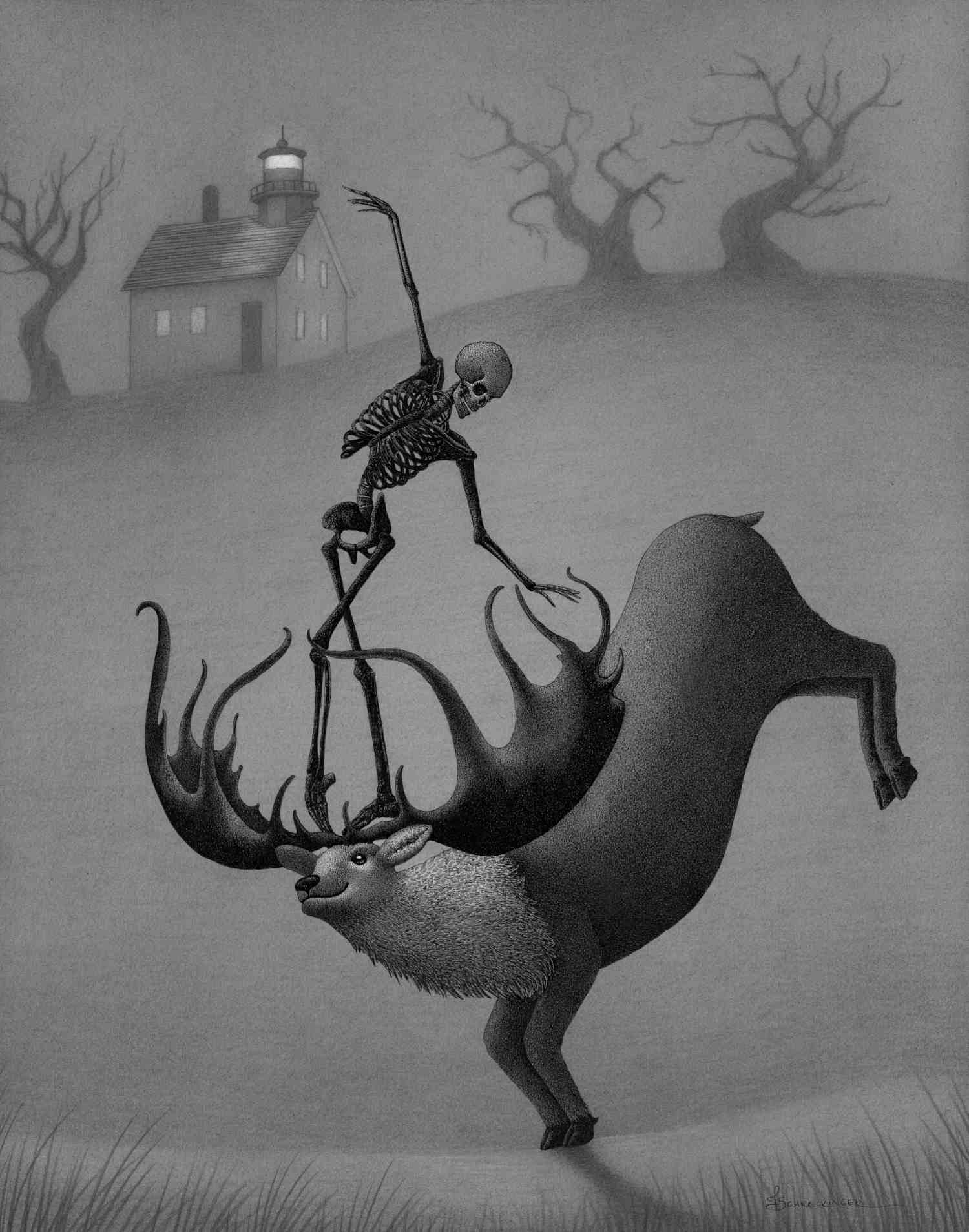
I adore getting the chance to recreate places that no longer exist, so working on this series was a real treat. I had spent many hours researching and planning out this show, learning the intricacies of lighthouses that in some cases have not existed for decades. Architecture is an area of illustration that I find very challenging, so being forced to draw over thirty lighthouses for a series was an amazing way to push myself and strive to be a better artist. I loved the chance to also create animals that are extinct, and continue their legacy by getting to feature them as characters in this body of work.
Another big part of my process when creating new work is taking my own reference photos. While it was impossible to photograph animals and places that no longer exist, I did shoot images of similar settings that I could use to create this body of work. I often travel to different locations and settings to gather references to use in my drawings, and really enjoy that step in my process. I find that to draw fog really well (which is a common theme throughout the series) I have to go to a foggy coastal setting and see what it is really like during those sorts of conditions.
As this series has been told in three parts, did you approach each section with a similar mindset and workflow, or did you find yourself approaching each part differently?
I have a system for creating work that rarely changes. I find that once I have a way of doing things, I’m the type of person who won’t really stray from that system. I approached all three parts of this series more as one large collection rather than in different parts. I was already sketching for chapter three before chapter one was even released. The show evolved and changed in certain ways as I went along, yet the core concepts and themes remained the same. I will say though that my workload for the third series was much more intense, as it was a thirty piece solo show which is by far the largest body of work I ever did for a gallery opening. I was working close to twelve hours a day on the pieces for weeks, and the show took the better part of a year to complete.
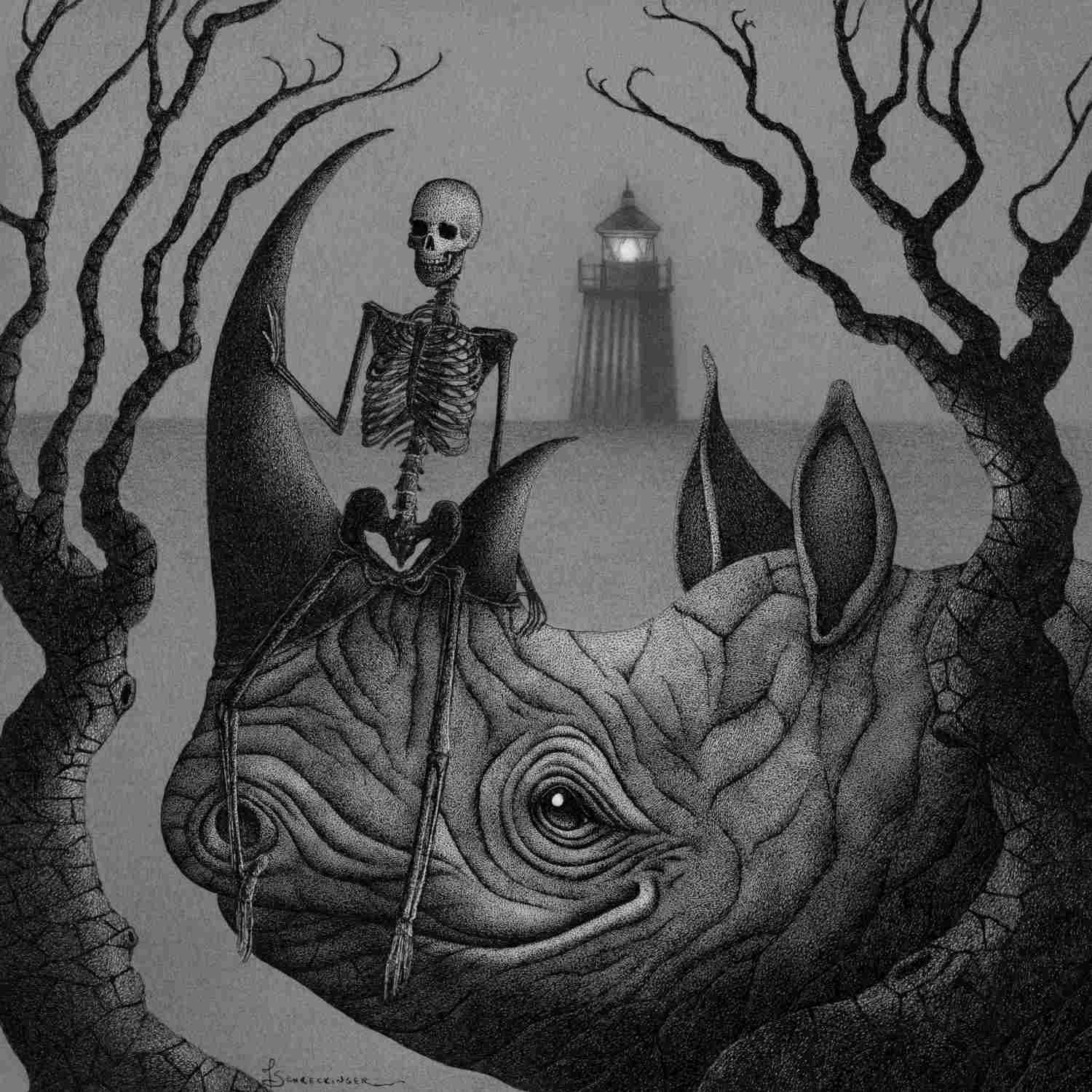
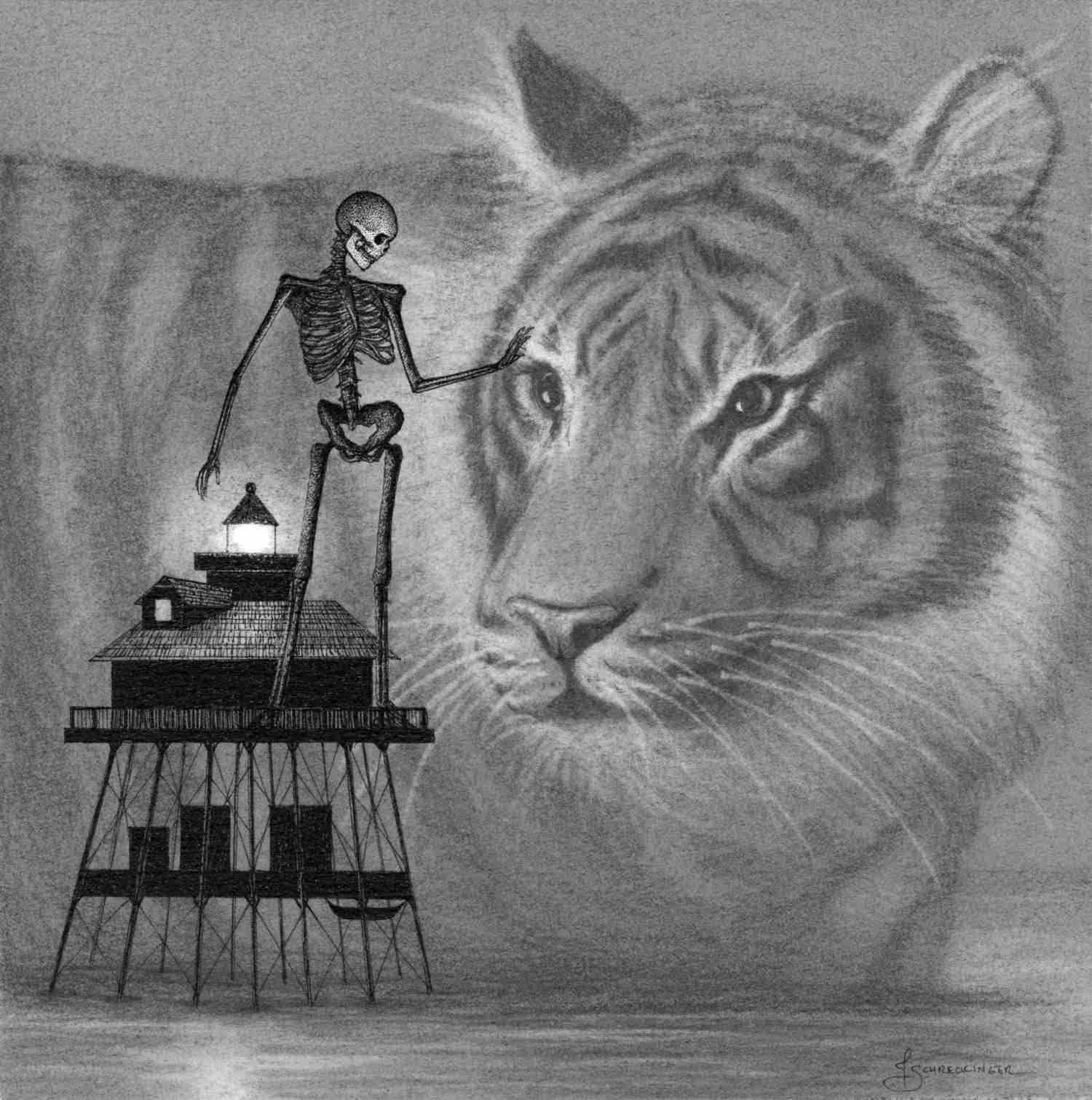
‘The Ghost Lights III’ includes a new element, human skeletons which is something the previous two parts didn’t have. These skeletons represent the role we humans play within the natural world and the many wonders we’ve created. Since this is the final installment within this series, do these skeletons also represent the conclusion for the series since skeletons are most often associated with death?
That is a very interesting question as I had not thought about it that way, but love that take on it! Skeletons being associated with death and signifying the ending is very unintentionally satisfying, I must say! In this final chapter, the eighteen original extinct lighthouse keepers return, still guardians to their respective lights, but with open hearts to the humans that are long since gone as well to the world. In this world, there is life after death. There is forgiveness of those who hurt you in another life, there is understanding of how fragile life can be, and a genuine appreciation of things that shine.

The extinct keepers help the newly forgotten humans navigate this new landscape, putting aside their differences and teaching them to dance again in this forgotten space. I have been asked why I choose to depict humans in my work as skeletons, and one of the main reasons is it levels the visual playing field. There are so many issues that pertain to so many groups of people, but something that I feel we can all relate to is our relationship to nature. By depicting humanity as skeletons, I hope that people can connect to the work easier, as we are all bones underneath it all.
Are there any lighthouses or extinct animals that you’ve grown particularly fond of whilst working on this series? If so, which ones and why?
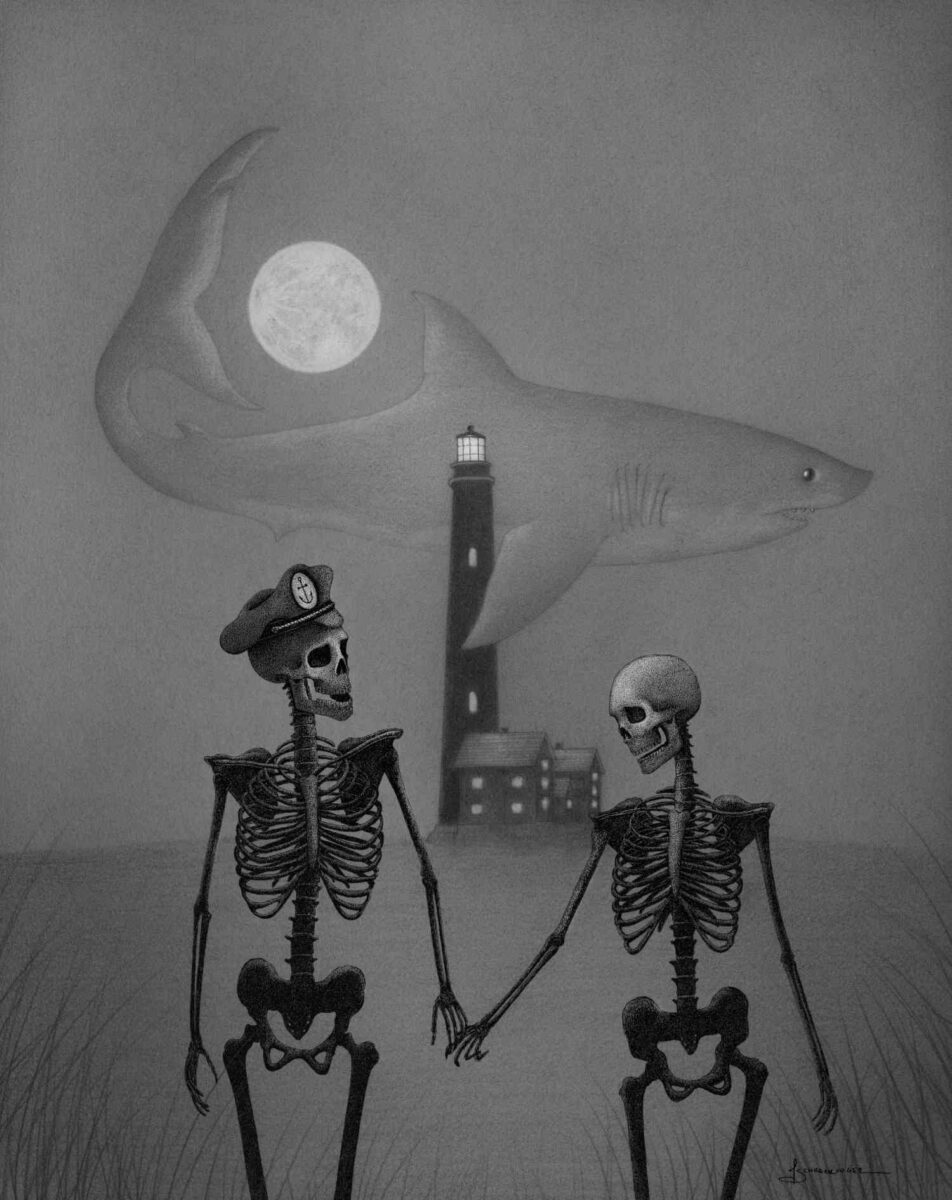
Oh yes, I always feel a closeness to any creature that I have the privilege of drawing, and became especially fond of this cast of long forgotten animals. It’s so hard to pick favourites, yet one that feels especially close to my heart is Mable the Megalodon shark. Growing up, I always loved the idea of a giant ancient shark roaming the dark seas. Mable is the keeper of the Shinnecock Lighthouse, a fallen light that was located on Long Island, NY. Being raised on Long Island led to a deep rooted love of coastal scenery, lighthouses, ships, and all things ocean related. The pieces that feature Mable and this Long Island lighthouse feel like something that childhood me would be really proud of.
What have viewer reactions been like to ‘The Ghost Lights’? Have you had any memorable experiences from those who’ve interacted with this body of work?
I have been very humbled by people’s reactions to ‘The Ghost Lights III’, as it is a very unique show in both subject matter and concept. I was nervous going into the final chapter as all thirty new pieces contain skeletons and I was worried that viewers would maybe see the work as too dark, but that was not the case at all. My viewers seemed to connect with the intention behind the pieces, and that really meant so much to me. One moment that I found particularly touching was when a fellow artist (the amazing Maria Teicher who also shows at Arch Enemy Arts) told me that one of the students in her art class had chosen my show to do a final essay about. I found this particularly heartwarming as it felt very special to connect with the younger generation. I am so moved that a student would choose me of all the artists they could have picked to do their final project on. That meant the world to me, and is extremely encouraging to keep creating.
Hope is one of the main messages you wish to covey to viewers within ‘The Ghost Lights’. Has this project provided you with hope?
What I hope will be the overall takeaway from this series is a sense of hope. I, at times, find myself feeling overwhelmed by the world around me, by things that have been lost, by the pain. In many ways this series was an escape for me to fall into everyday while working on it. The collection served as a silent hope of what I wish for after this world, of what I hope there will be. I hope there can be an afterlife of joy for the extinct, as I feel that their light truly doesn’t flicker out when they are lost to our world. Their importance stands, whether they are physically here or not. I hope people can find a childlike sense of joy when looking at the series, and that it makes people remember even if just for a moment of things of the past and why it is vital we remember them. Seeing people connect to the series so much has absolutely made me hopeful that so many of us are on the same page, feeling the same human emotions and longing for better.
What’s next for you? Do you think you’ll return to ‘The Ghost Lights’ again in the future or are there new projects waiting on the horizon?
I have lined up some really exciting group shows along with my annual larger solo show at Arch Enemy Arts. While I will not be continuing ‘The Ghost Lights’ this year, I do have a very exciting plan for what my upcoming fall 2026 show will look like. It will be in an entirely new realm, (with a hint of fantasy), yet it will still be created in my stippling technique. I am excited to venture out concept wise into areas I have not yet gone, and that I have Arch Enemy Arts support in allowing me to evolve as an artist.