Anna Wypych, a Beautiful Bizarre Artist Directory member provides fascinating insights into her practice and experiences in teaching, the Artist Directory community, and the creation of new series, as she responds to the questions below.
- You’ve been a member of the Beautiful Bizarre Artist Directory for 3 years now. How has the Artist Directory community supported your journey, what values do you feel the directory add to your professional art career?
- What did you learn about yourself and your students both as an artist and as an educator during your year of teaching at the Academy of Fine Arts?
- Your new series, Tales and Women Flowers, mark an exciting chapter in your practice. What inspired their creation, and what emotions or ideas do you hope they evoke for viewers?
- What role do commissions play in an artist’s growth, technique, or understanding of their audience?
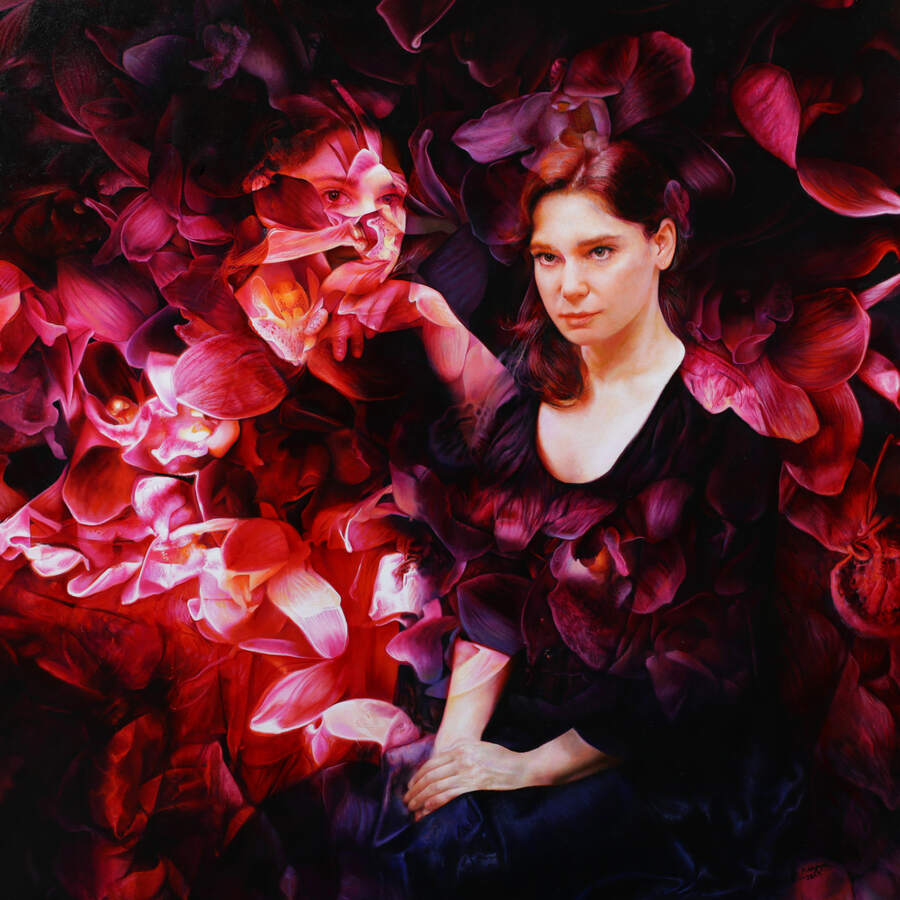
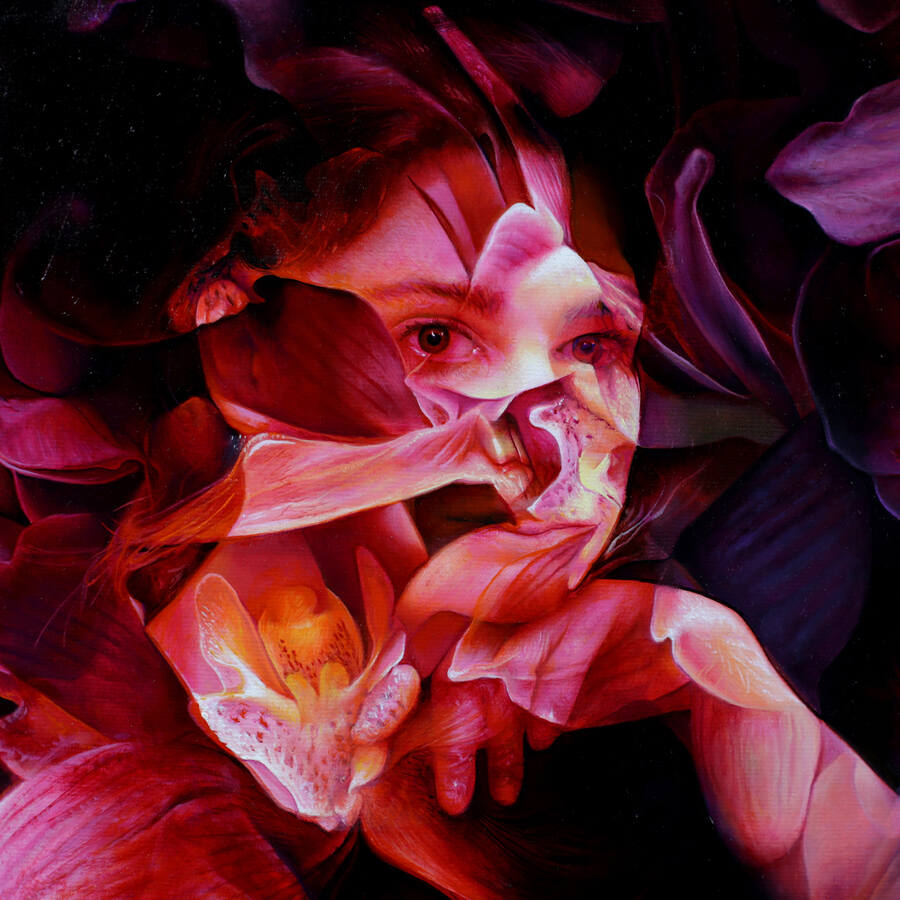
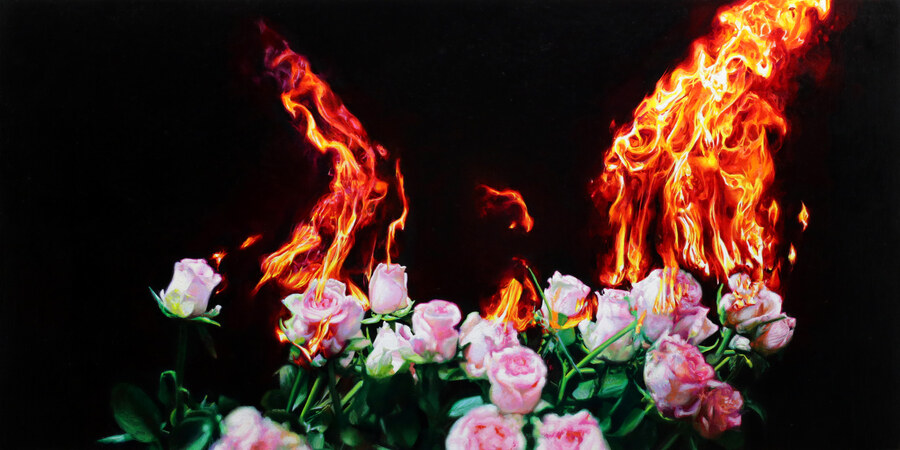
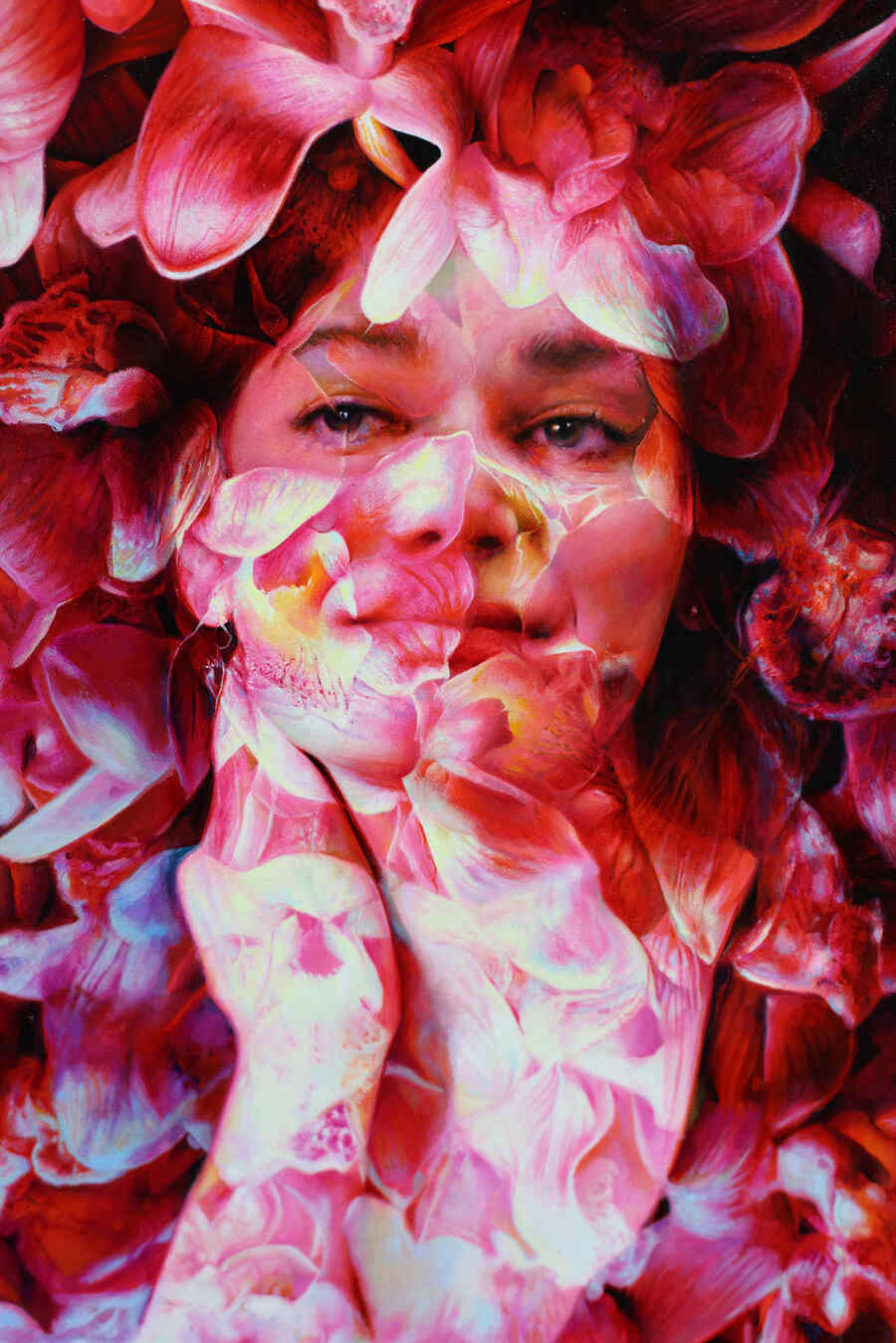
Your new series, Tales and Women Flowers, mark an exciting chapter in your practice. What inspired their creation, and what emotions or ideas do you hope they evoke for viewers?
I enjoy giving people joy and emotion. Isn’t that, to a large extent, one of the purposes of art? Of course, not only that and not in every form but it is certainly one of its roles. Art is a living organism with many faces, and this is one of them. In 2024, the group exhibition “Katharsis – Wild Heart” took place a show I curated for the first time in my life at Principle Gallery Alexandria. It was a large undertaking and a tremendous success. The exhibition featured many artists from around the world. I also had the pleasure of attending the opening in person, and thanks to that, I was able to visit Washington with my family, which is located very close by. I saw the incredible collections in some of the most famous museums.
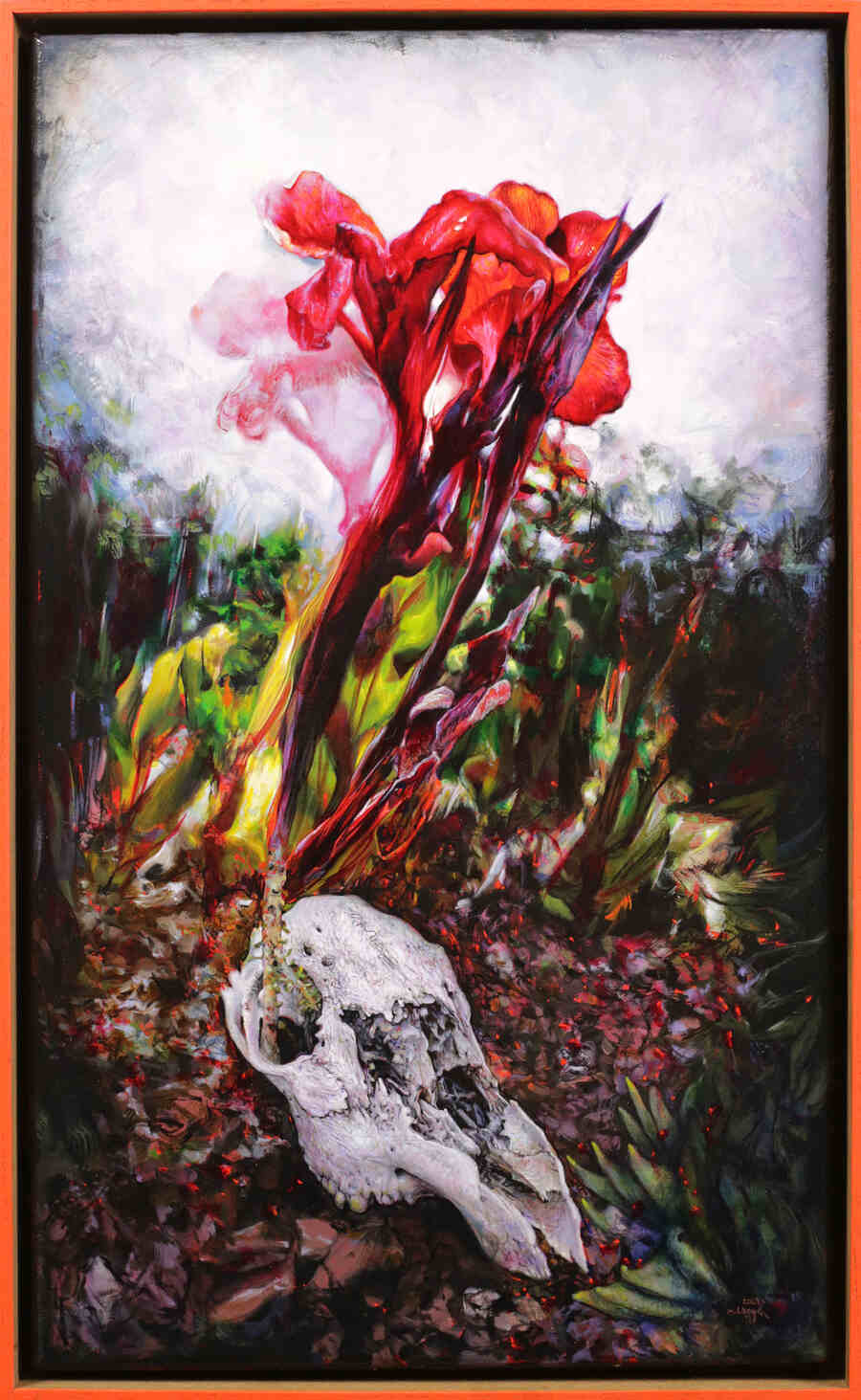
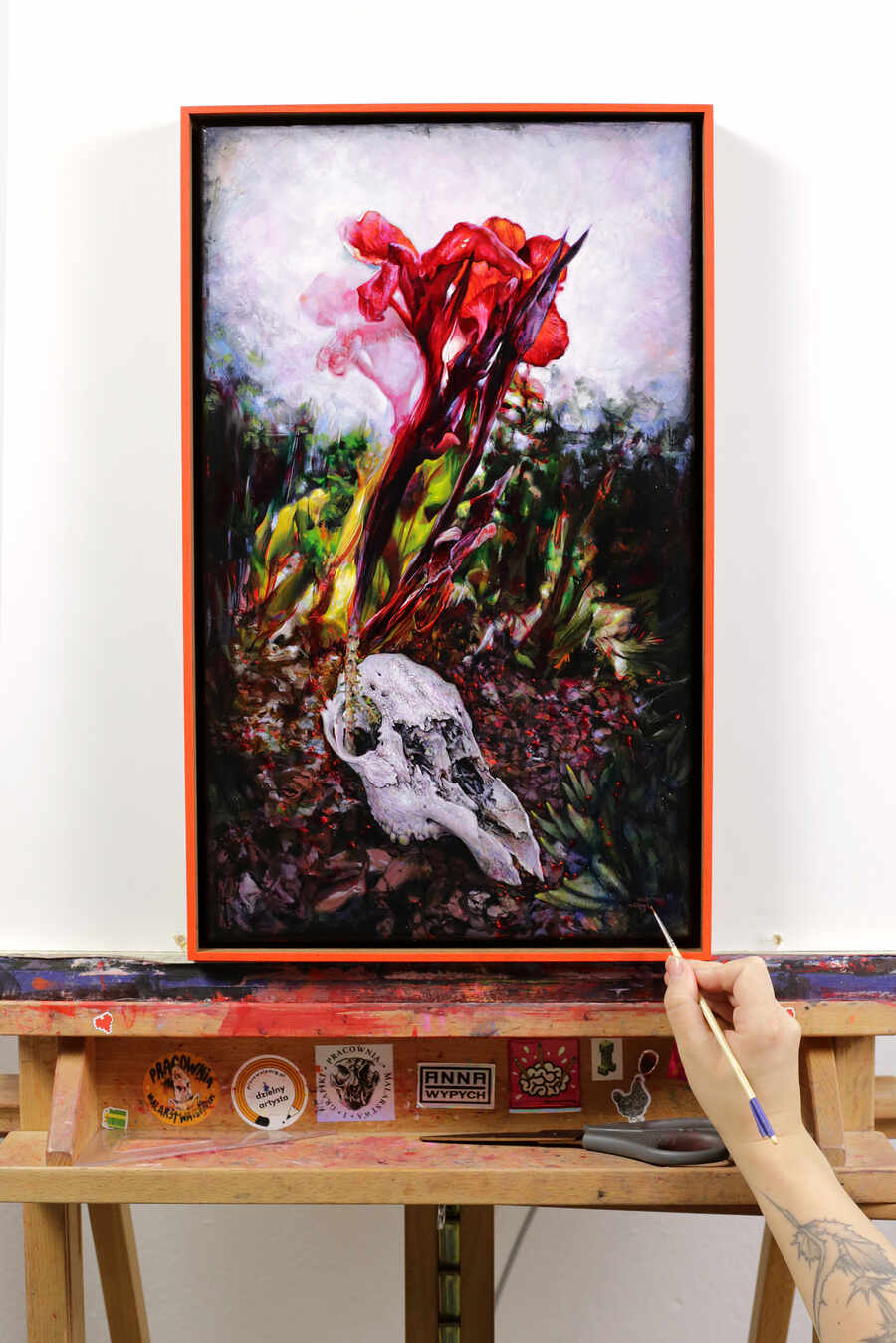
At one point, I went for a walk near the Capitol and entered the Botanical Garden, just to see flora for a change, rather than art. There, my attention was drawn to an animal skull on display. I took literally one photo of it and that photo became the starting point for the first painting in the series. “Animal”. There was once a traveler who had an animal. He walked through the desert for so long that he had nothing left to eat or drink. The traveler then killed the animal and ate it, and the animal agreed to it. But at night, the spirit of the animal awoke, and it was angry, and it killed the sleeping traveler. In the morning, the traveler woken up and walked away, but he remained dead forever. In the place where the animal died, a flower grew and blooms once a year.
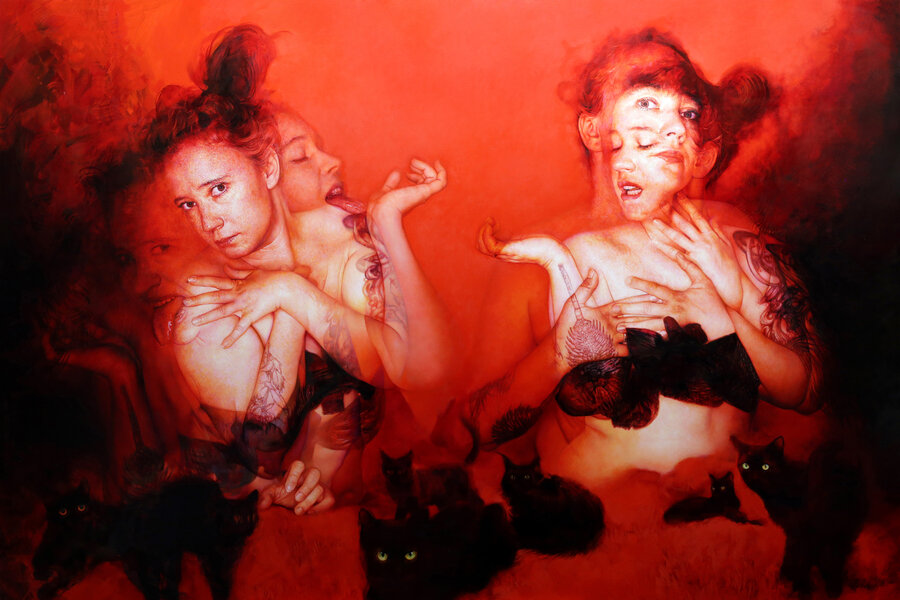
A few months later, the idea for “Tales” crystallized a series in which each painting is a short, highly abstract narrative. I imposed no restrictions and smoothed no edges, so some of these stories are quite strong and intense in tone. I love that they function almost as autonomous beings, highly abstract, and open to countless interpretations.
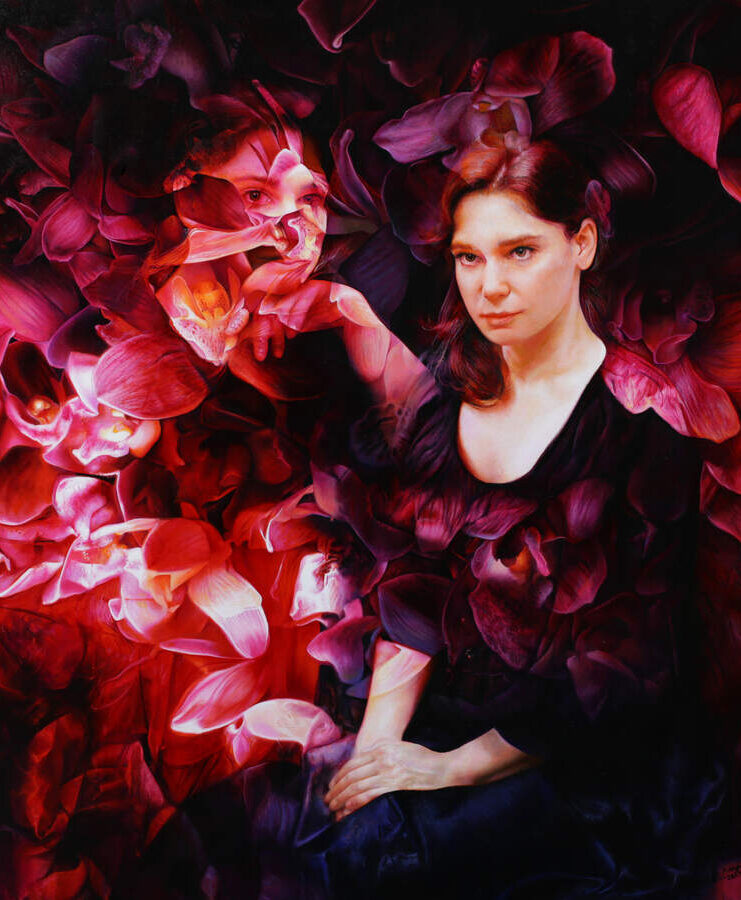
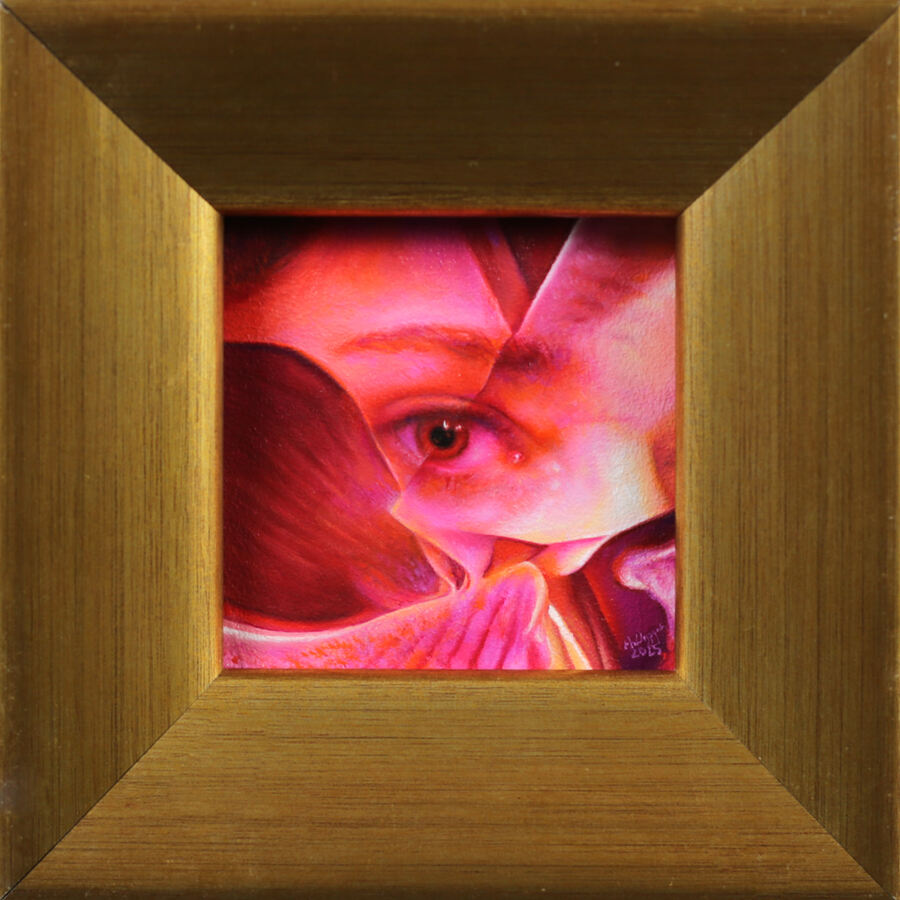
That summer, something happened in my life that could be called a shock. Then I realized I needed something lighter the “Tales” were too heavy. I longed for something simple, purely beautiful, and unmistakably positive. That is how “Women–Flowers” began. At their core lies a process of deconstruction and self-recreation, but also of course my favorite kind of subversion. Flowers carry strong symbolism: femininity, beauty, delicacy, fragility, and impermanence, yet from them also come some of the most potent poisons.
The female artist painting flowers is, in itself, a complex topic, deeply connected to the history of art and the role of women in painting. It also ties into my personal story. A few years after graduating, during my honeymoon in Barcelona, I happened upon the MEAM museum. I saw the Figurativas competition exhibition, which became a turning point in my thinking about painting. On the same day, I also discovered the work of Antonio López. His monumental paintings left a profound impression on me. Years later, when I saw a comprehensive retrospective of his work, I experienced a new revelation. López a true legend of painting also painted flowers in vases, slowly, with extraordinary care. Knowing his process, I understand that he devoted immense time to them. The result was masterpieces and yet they were “just” flowers in a vase.
As an artist and a woman, I must be very careful in choosing such subjects. Here lies my personal subversion: not only do I paint flowers, but I do so in “feminine” colors, and moreover, with a positive tone. Now that is truly an act of rebellion.
What did you learn about yourself and your students both as an artist and as an educator during your year of teaching at the Academy of Fine Arts?
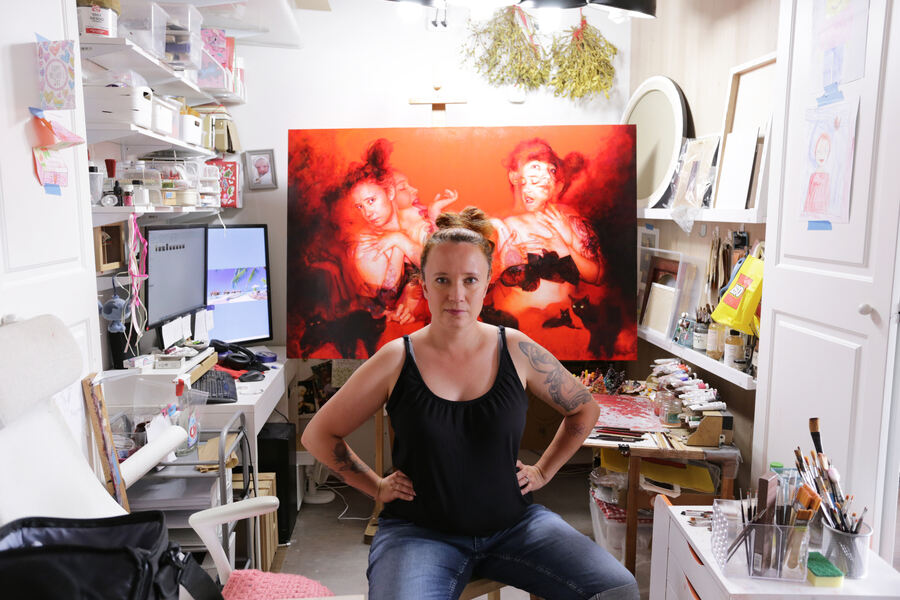
It is quite an interesting story. One calm day in September 2023, I was simply resting when my phone suddenly rang. A week later, I was already on my way to the Academy for my first meeting with students. Everything happened very quickly, and I had the feeling of being a knight in shining armor, arriving at the last moment to save the situation.
This is how I became an assistant in the diploma painting studio led by the Rector. At the Academy, the program consists of five years of study culminating in a Master’s degree. In the Painting Department, students spend their first two years in foundational studios, and then choose a diploma studio, where they work for the following three years, preparing their final projects under the guidance of a professor. Professor Krzysztof Polkowski, who was also serving as Rector at the time, was understandably extremely busy and needed someone capable of working independently and responsibly. During that year, I worked with students in their third, fourth, and fifth years, including those preparing their diploma projects.
I decided to treat this experience as a one-year project. It was important to me to offer students something more than simply a well-functioning studio. I began by asking myself what I had missed most when I was a student, and this led to the idea of a series of lectures and open conversations. I am a practitioner, since the day I graduated, for many years now, I have supported myself entirely through painting and I felt I had practical knowledge worth sharing.
I began with the essentials: what life after the Academy looks like, realistic career paths, and how to start navigating them. We discussed working with galleries and collectors, developing an artistic language, professionalism, creative blocks, and the realities of building a presence online. I also spoke openly about money, pricing work, creating sustainable income, budgeting, and long-term planning without embellishment, which the students deeply appreciated.
I built strong relationships with the students and truly enjoyed teaching in this framework. However, after a year, I realized that while teaching can be part of my professional life, my own artistic practice must remain the priority. The Academy needed full dedication, which I couldn’t balance alongside my studio work.
I still believe students benefit greatly from contact with practicing artists, even in limited formats, and I remain open to mentoring, collaborations, or focused workshops. This experience also taught me something valuable about myself: while I thrive in solitude, I equally enjoy helping, teaching, and working within group or institutional settings when the balance is right.
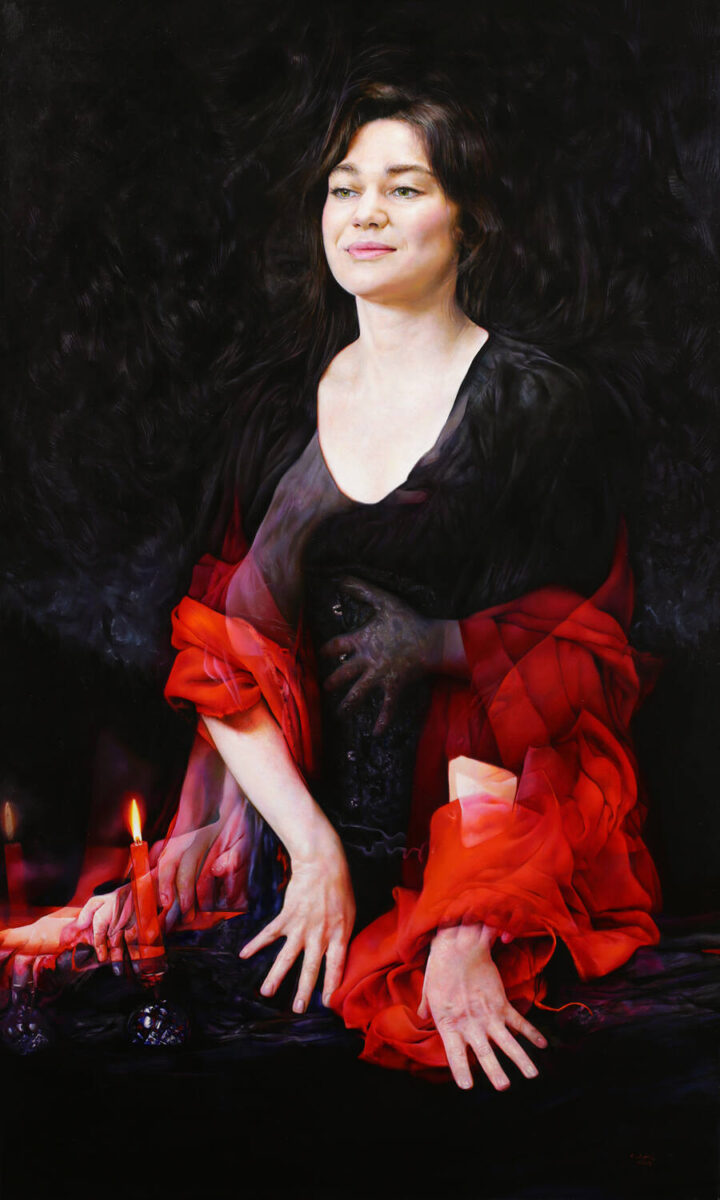
What role do commissions play in an artist’s growth, technique, or understanding of their audience?
Many artists speak about commissioned work with a certain reluctance, sometimes even with a sense of superiority, and occasionally with outright disdain — as if it were something shameful. I would like to share a short story.
Not long ago, I gave a radio interview and traveled to another city for that purpose. While there, I decided to visit a museum. Quite unexpectedly, I found myself walking through a familiar institution with another painter, someone I had just met (I knew her for a while but only online), which made the conversation all the more engaging. We talked freely about paintings, artists, tastes, and the often unpredictable paths of creative lives. We stopped in front of “Murzynka” by Anna Bilińska-Bohdanowiczowa, and right next to it hung a portrait of a lady, also by her. From a distance, it was immediately apparent that one of these works had been painted “for oneself,” while the other had been created on commission. Don’t ask how it is simply something one senses.
Why do I mention this? Because the twists of fate have placed both paintings today in the National Museum in the country’s capital, hanging side by side, equally valued. We never know where life will lead us or what significance our work may take on in the future.
Historically speaking, painters worked primarily on commission for centuries, it was a natural part of the profession, while creating work “for oneself” was often a luxury or an extravagance. The vast majority of works by the Old Masters came into being this way.
I understand why some artists struggle to accept commissioned work. It is often associated with the need to fulfill very specific client expectations, which can feel like a limitation on creative freedom. In my view, boundaries are essential here. If an artist cannot say “no” at the right moment, they may easily find themselves producing work with which they feel no genuine connection. Commissioned work requires attentive dialogue, mutual trust, and sensitivity.
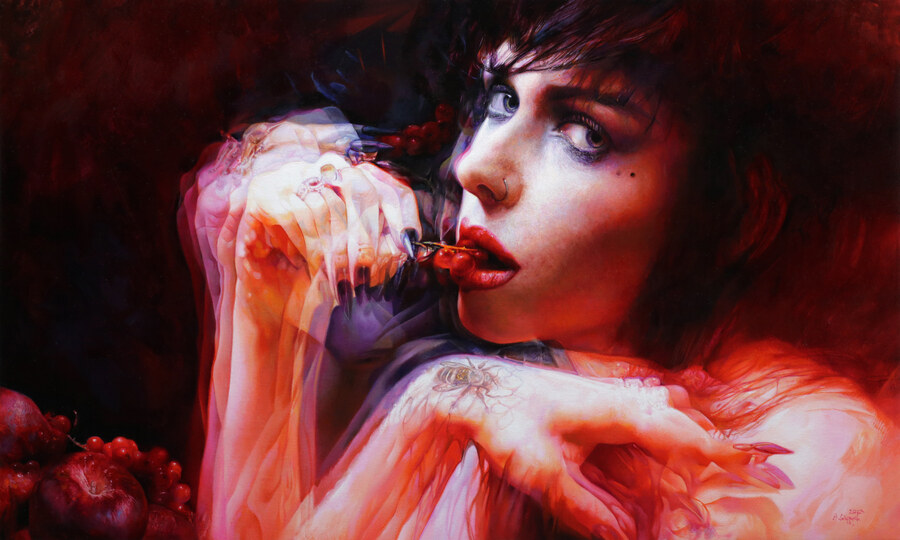
I see it differently. I enjoy sharing joy, and painting commissions are precisely that for me the fulfillment of someone’s dream, an entry into another person’s world. Of course, that world cannot entirely replace my own, which is why commissioned works make up only a defined portion of my creative output over the course of a year. Balance is key.

I would like to speak about my most recent commission, because it is a beautiful story.
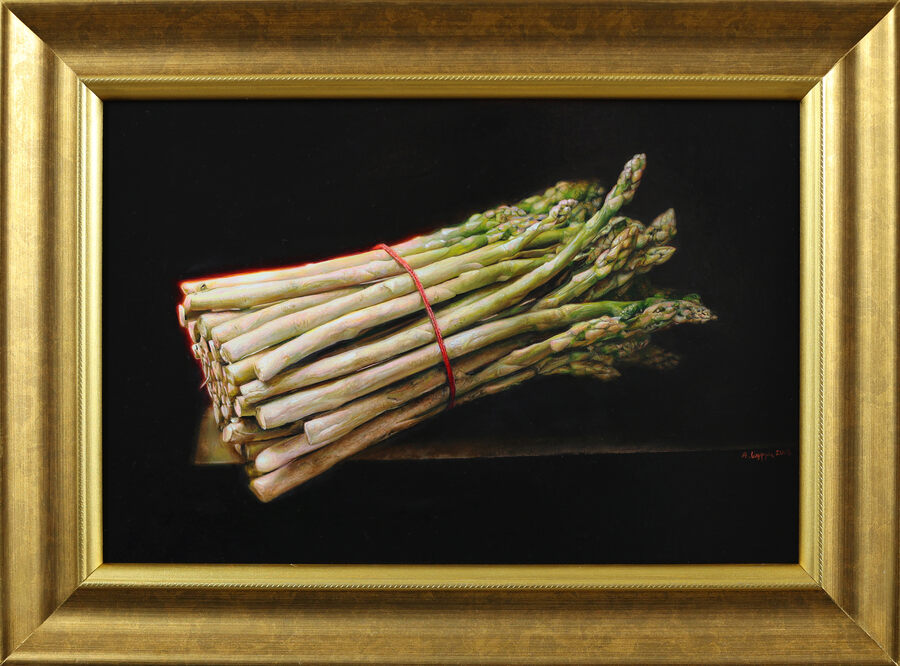
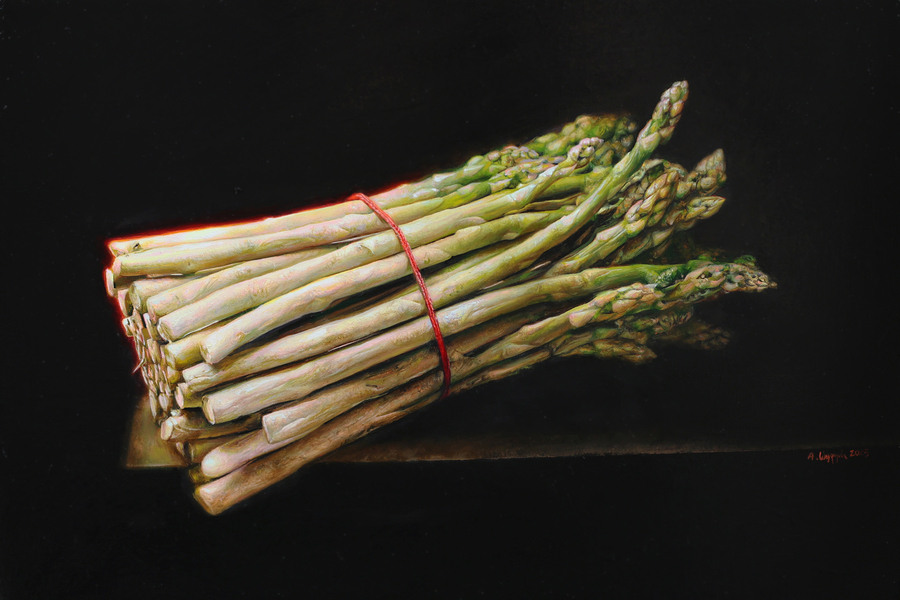
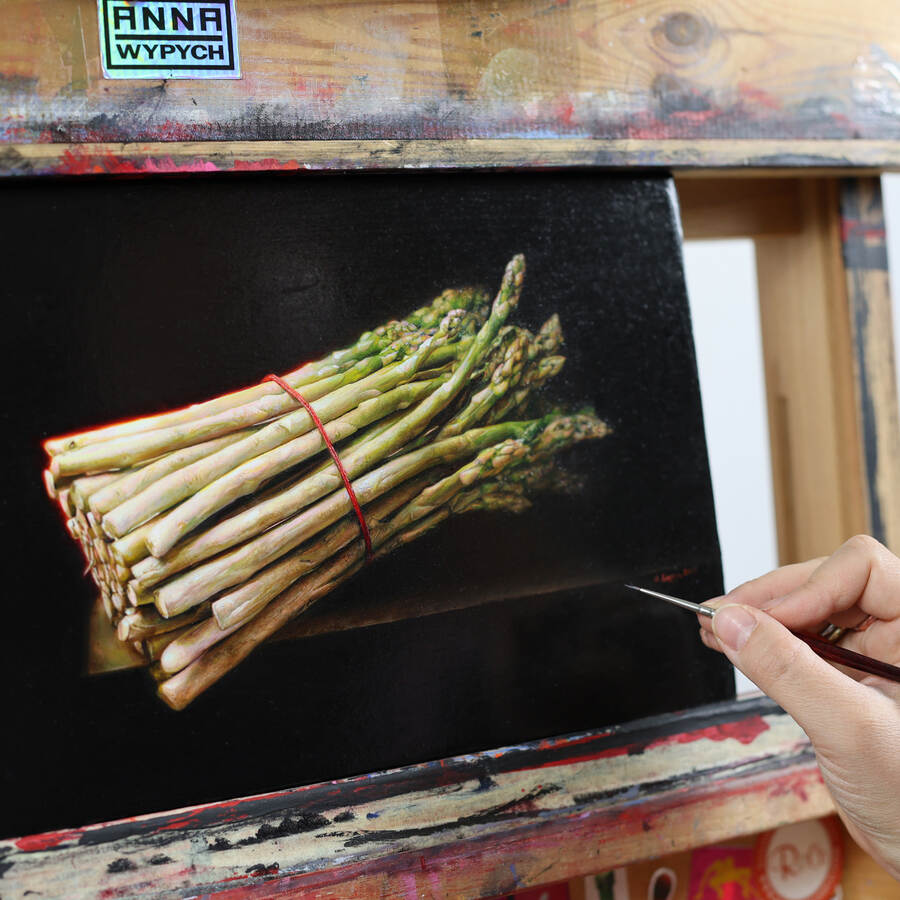
“Asparagus”. A woman, while visiting a museum in London, was deeply moved by a painting something that tends to happen to sensitive viewers. But she was not an ordinary visitor. She did not simply turn away and go home, leaving the experience behind. Instead, she thought, “I want one like this too,” and she followed that thought through to its conclusion. Dreams can be realized, and visions can be pursued. And I, as a painter, can be that benevolent spirit who knows how to enchant a feeling, capture a dream, preserve a memory, and see through someone else’s eyes using my own hands to create something truly unique. The painting was created as a commission and was inspired by Adrien Coorte’s Asparagus from 1703.
You’ve been a member of the Beautiful Bizarre Artist Directory for 3 years now. How has the Artist Directory community supported your journey, what values do you feel the directory add to your professional art career?
At its core, it’s about community. For me, this is what truly distinguishes Beautiful Bizarre. It has grown far beyond a magazine or competition into a meeting place that actively fosters connection and gives the project real depth.
Today, there is no single path for artists. Each must find their own way, and in this context, a global community like Beautiful Bizarre is invaluable. It allows artists to connect, exchange experiences, and draw inspiration from one another often without ever leaving their studios.
As algorithms increasingly shape social media and genuine connection becomes harder to find, a community built around a publication with a clear vision feels far more organic and meaningful than maintaining a presence on advertising-driven platforms.
On a personal level, the Beautiful Bizarre Artist Directory is also about people. I value being able to reach real individuals both fellow artists and the team behind the magazine without navigating impersonal systems or automated responses. This openness has led to meaningful conversations and opportunities.
Of course, there are also the more obvious benefits, such as increased visibility, a broad reach across social media, new collectors, and professional opportunities that emerge following publications. Beautiful Bizarre Artist Directory genuinely supports the development of my online presence and professional recognition. After a publication and sometimes even after a single post tangible, real opportunities tend to appear over time: a new collector reaching out, an invitation to participate in an interesting project, or a conversation that opens the door to something further.
Join cutting-edge artists from around the world
The Beautiful Bizarre Artist Directory is a powerful tool for artists looking to grow their visibility, and connect with fellow artists, curators and collectors. To join the Beautiful Bizarre Artist Directory click here for more information.