The below essay about Remus Grecu and his work was originally published in Issue 51 of Beautiful Bizarre art magazine. Get your copy: print magazine, digital magazine.
If Remus Grecu’s paintings could speak, they would not deliver arguments or narratives. They would exhale. They would hover at the threshold of sound, not telling but luring – a hum, a vibration, a kind of atmospheric persuasion, murmuring not sense but sensation. His works move differently from much of contemporary art; they seek not provocation or spectacle, but create a velvet intensity where beauty is sharpened into principle.
“I would hope that such a painting could bring only beauty into the viewer’s mind, whispering words filled with peace and serenity,” Remus says. His paintings do not soothe by avoidance, but by insistence. To paint light in a fractured world is not to escape it; it is to wrest from it another possibility.
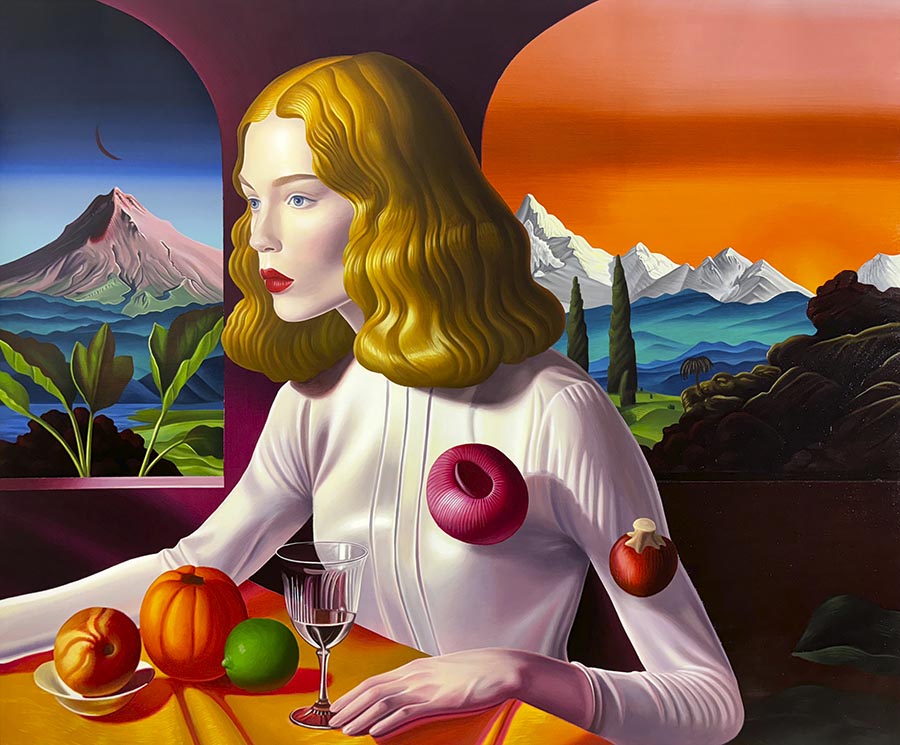
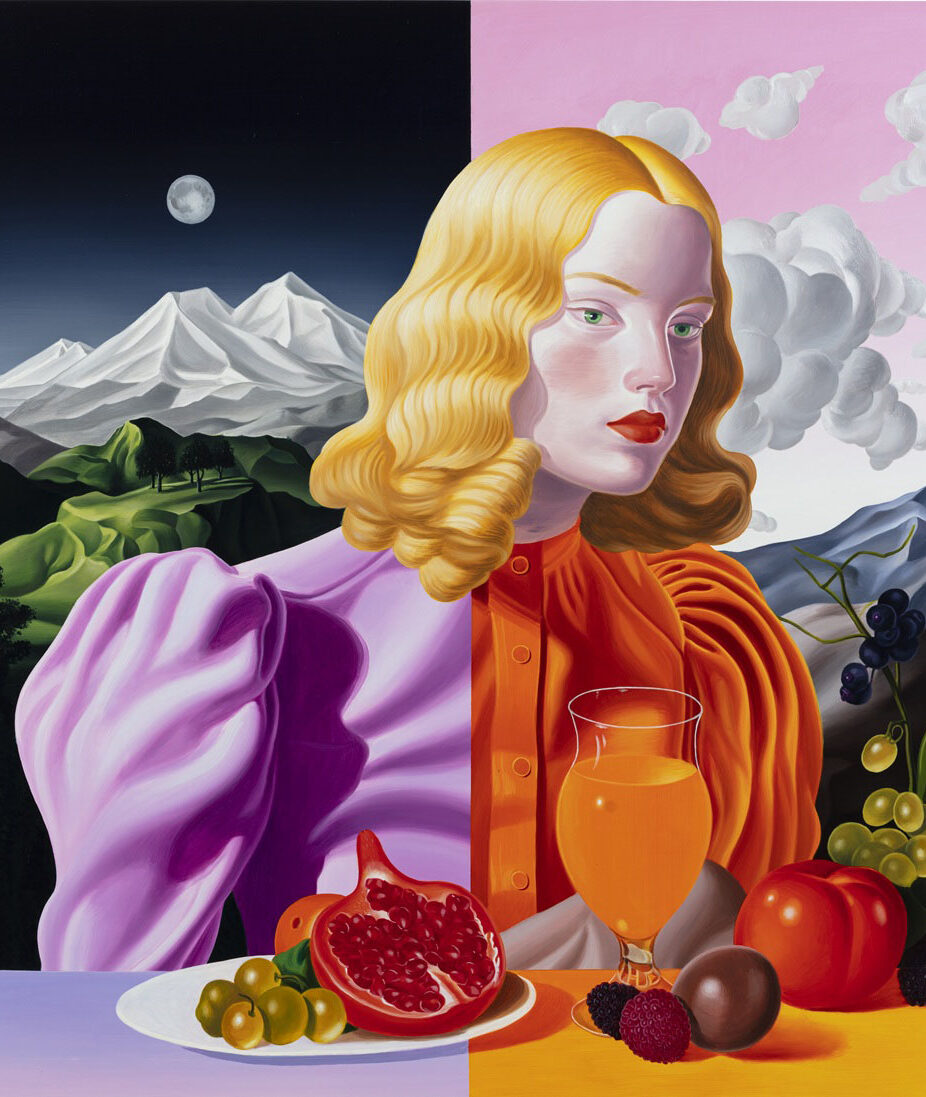
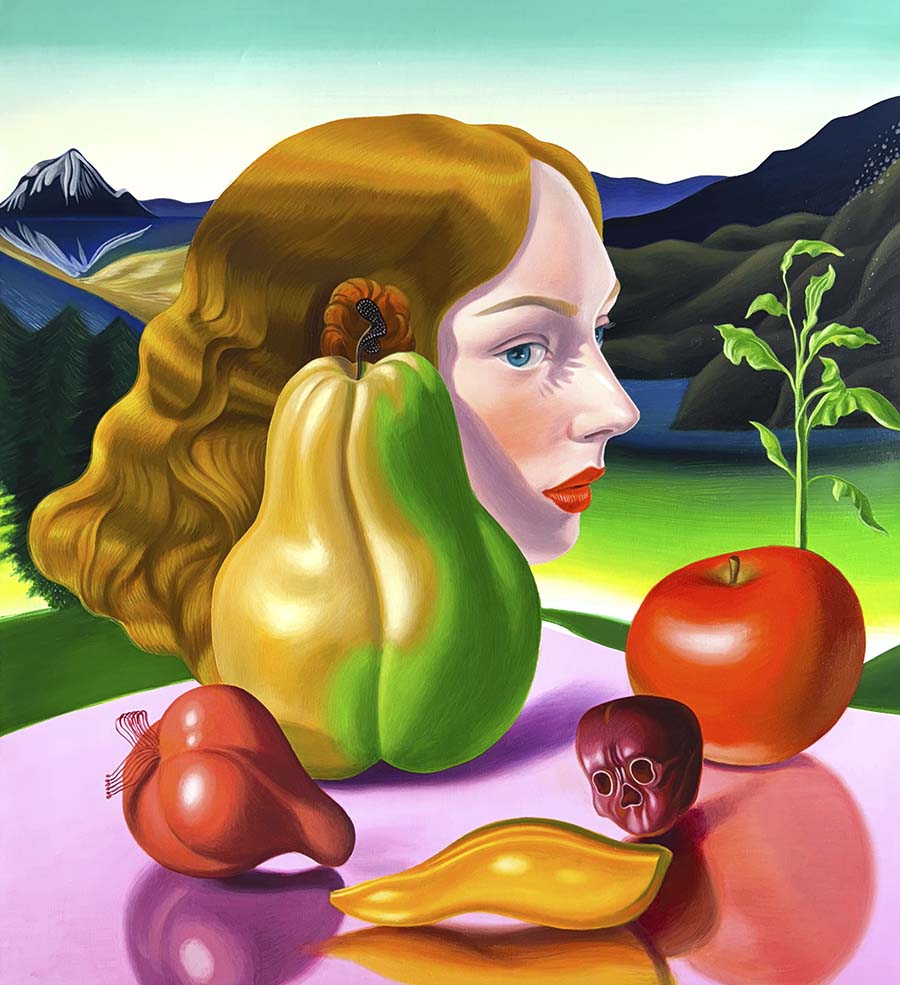
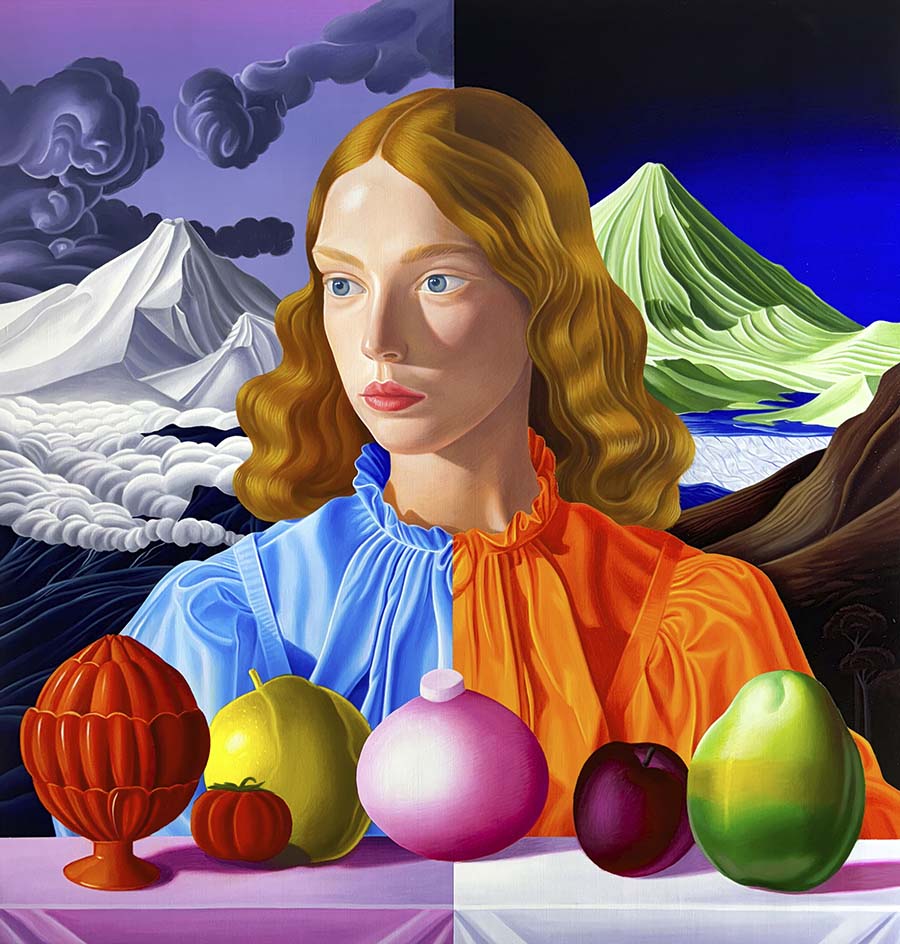
To look at his work is to enter a place that feels both remembered and invented. Bodies strike near-classical poses, yet the settings around them seem collaged from dream or memory: fragments of architecture, expanses of impossible sky. These are not continuous environments but montages, places that hold together only by the logic of vision. At first glance, they radiate serenity; on closer look, their beauty feels charged, uncanny, heightened until it tips into estrangement. A sky too blue, a surface too velvet, a figure too composed. His canvases conjure a utopia whose perfection reveals its artificiality, and it is in that paradox – both seductive and disquieting – that their power lies.
“Remus’ canvases conjure a utopia whose perfection reveals its artificiality, and it is in that paradox – both seductive and disquieting – that their power lies.“
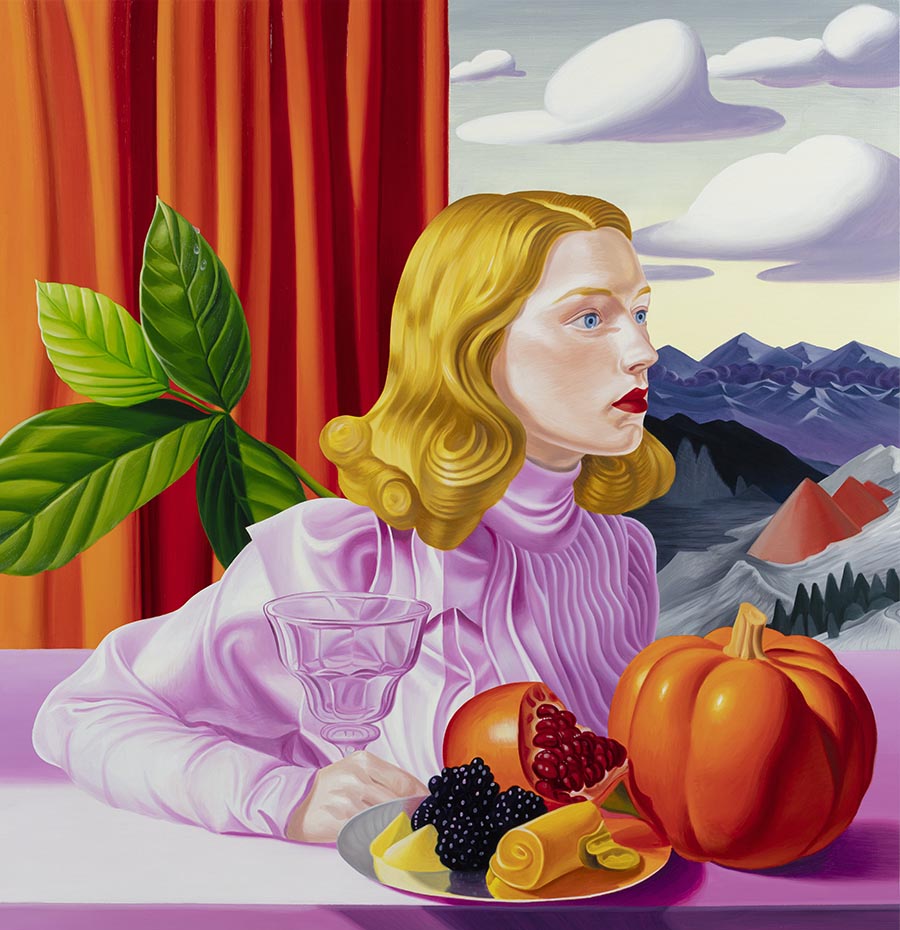
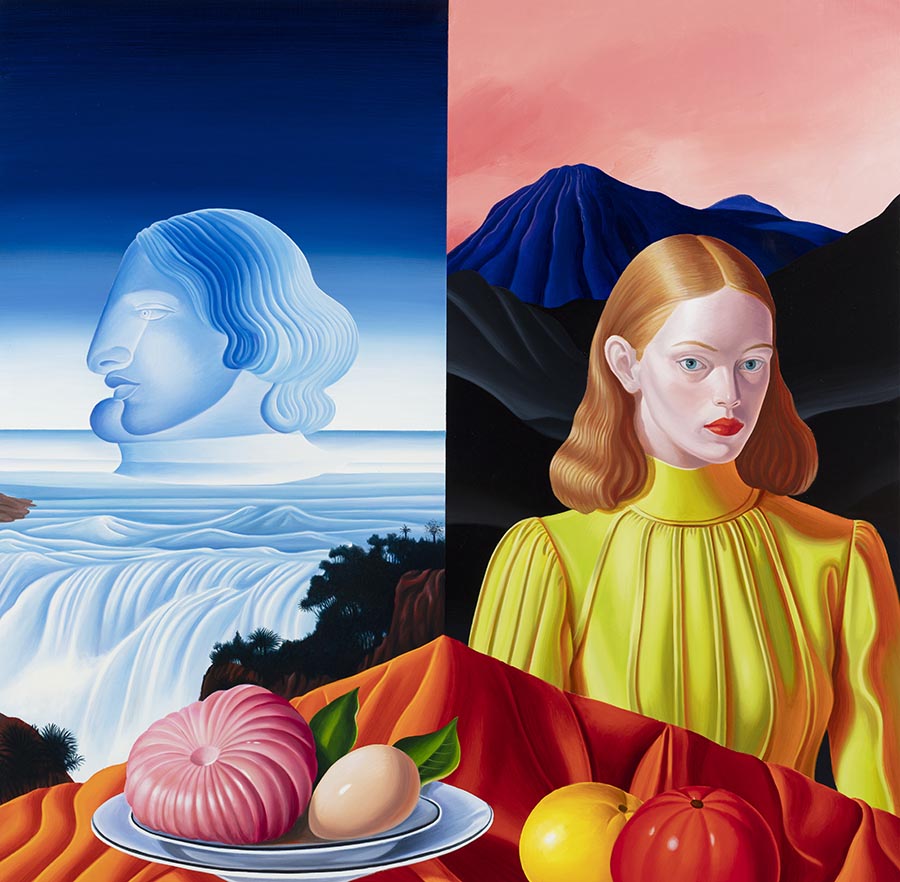
Part of this effect comes from his use of paint itself. Remus’ surfaces seem to breathe, velvet-like, their chromatic layers absorbing and releasing light. Reds dominate with unapologetic clarity. “Red is passion, life, and energy; I would rather embrace passion than dwell in shadows,” he says. These reds are arteries and curtains, flame and velvet at once. Even his blues – “like the skies of a Swedish summer night” – are taut, vibrating with atmosphere. Colour in Remus’ world is not description, but summons: skies that could never exist, surfaces that verge on touch, chromatic fields that construct an entire mood before one notices the figure within them.
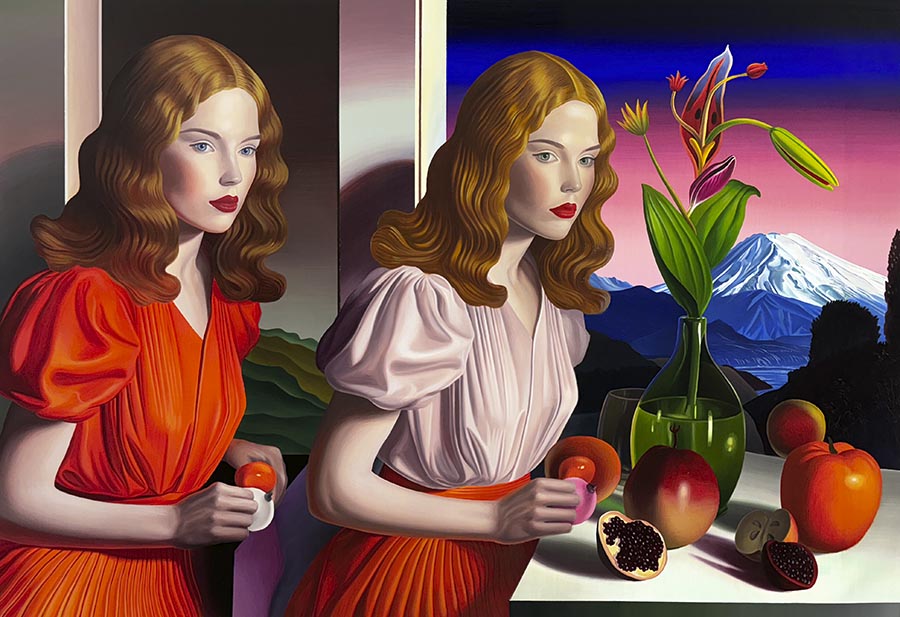
This boldness of palette prevents his utopias from slipping into mere idyll. There is nothing pastel or fragile about them. They glow with the saturated certainty of visions – luminous but not delicate, harmonious but not faint. If they feel timeless, it is because they refuse the ordinary registers of time. His figures stand neither in the past nor the present but in a suspended “elsewhere,” belonging only to the world Remus makes. The uncanny quality of his paintings reaches a particular pitch in works such as The Double Life of Her.
Here, the figure’s poised stillness, doubled and refracted, evokes the unstable identities of David Lynch’s Mulholland Drive. In Lynch’s cinema, the femme fatale is both dream and threat, desire and undoing; her doubling exposes the fragility of reality itself. Remus’ women carry something of this same fluidity, occupying roles that shimmer between serenity and enigma. Yet where Lynch’s worlds collapse into nightmare, Remus holds his figures in luminous suspension. His “femme fatale” does not implode; she resists dissolution, embodying instead a beauty so heightened it begins to feel unreal. The painting becomes a meditation on doubleness itself: how identity can split, recombine, and hover at the edge of dream.
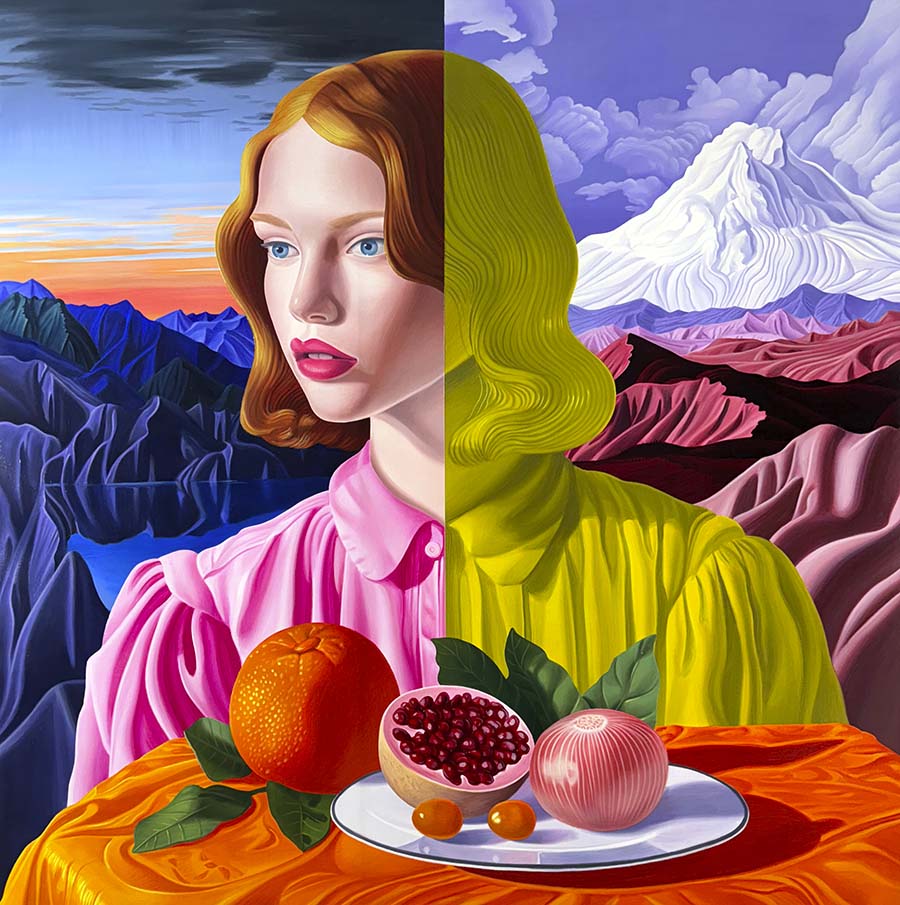
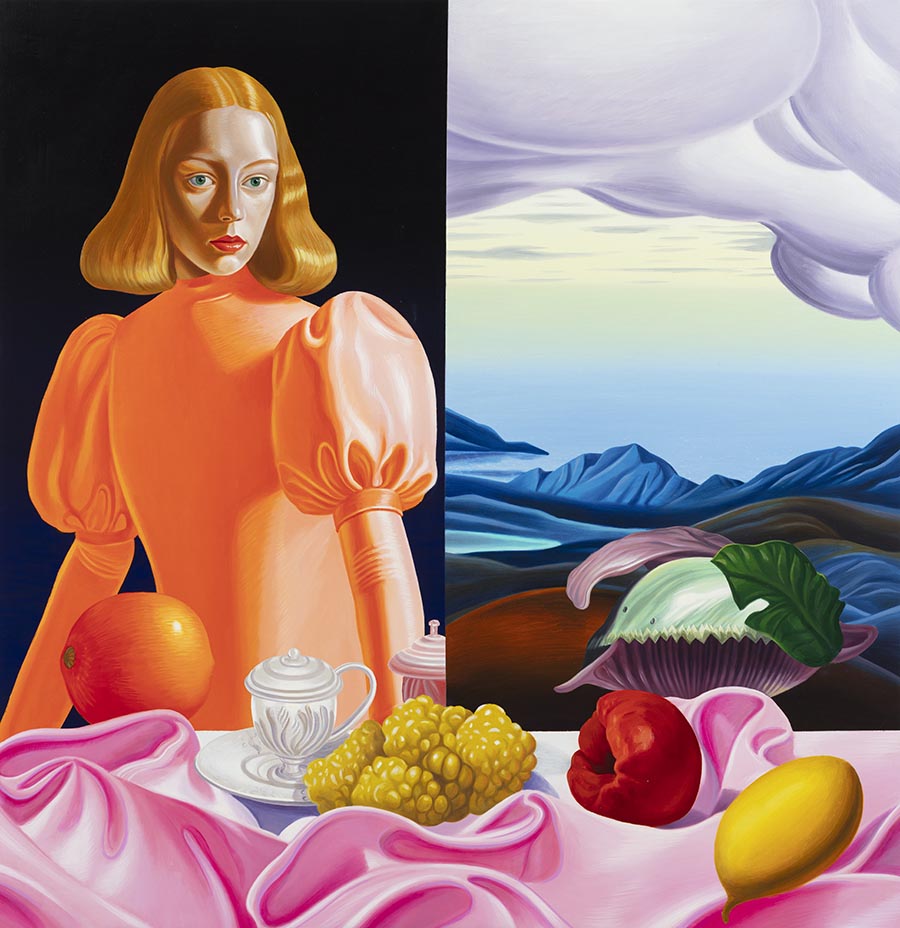
That Remus’ canvases now radiate this kind of serenity is striking when one considers where he began. Much of his earlier work was conceived in the hypnagogic state, the liminal zone between waking and sleep. “Some of my past paintings, at least their core ideas, were born in that twilight zone of consciousness, where images often arrive with a surreal mood.” Out of this came canvases that were visceral, shadowed, restless: “as if portraying a restless soul wandering aimlessly through darkness”.
He even devoted a solo exhibition to the aftermath of a lost love, paintings born from fragments heavy with grief. Chaotic brushstrokes, shadowed palettes, turbulent textures – these were images steeped in nocturnal despair. What is remarkable is his decision to leave them behind. “Now, I consciously exclude that shadowed part of myself and strive to paint only idyllic, luminous worlds.” This turning-away is not denial but defiance. His canvases are not innocent of pain; they are built on its knowledge. To insist on beauty, in this context, becomes a wager against despair.
“His canvases are not innocent of pain; they are built on its knowledge. To insist on beauty, in this context, becomes a wager against despair.”
Yet to paint serenity is not serene work. “Painting feels like going to war every day,” Remus admits. “It usually takes me at least a month to finish one painting, and during that long stretch the work looks terrible for 90% of the time, like some restless ghost haunting the canvas.” This confession unsettles precisely because the paintings themselves appear so composed, as if effortless. To know they are born from attrition reframes them as victories. “Only in the final days does something emerge into the light and begin to look somehow alive.”
His words recall Cézanne’s torment – “to realise each motif” through endless revision – or Francis Bacon’s description of painting as “a kind of accident continually repeated”. But Remus distinguishes himself from these predecessors by refusing distortion, refusing despair. His battle with the canvas is not against the image but for it, a pursuit of luminosity that he knows will never quite arrive. “It’s like giving birth to a flawed child and immediately beginning another, in the hope this one will be better.”

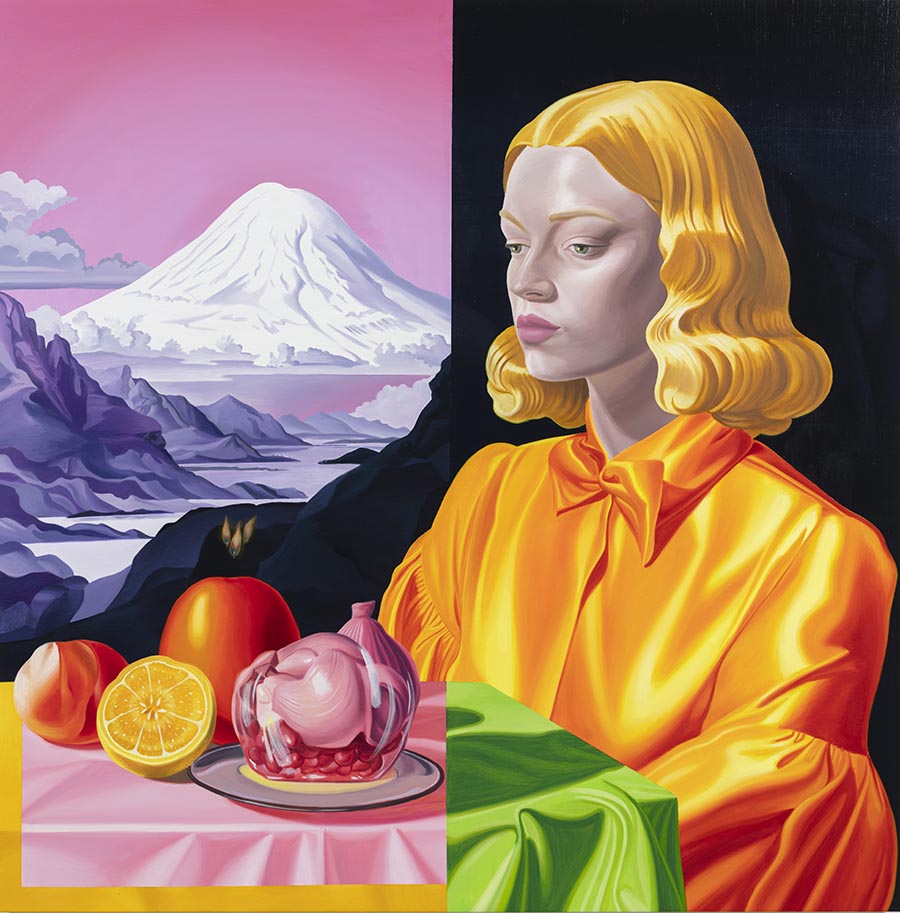
This ceaseless labour is shaped by the peculiar rhythm of his days. Remus is a night-worker: “mornings are truly my enemies,” he says. He wakes late, takes coffee at the same neighbourhood restaurant, then retreats into his villa-studio. Painting begins at dusk and stretches until dawn: “I love working when it’s dark outside, and I often keep painting until the first light of dawn begins to climb the sky.” His canvases carry this nocturnal charge. They are not daylit pastorals, but visions prised from the hours when most of the world sleeps. Their brightness is not casual sunlight but light hard-won from night.
“Remus’ canvases carry this nocturnal charge. They are not daylit pastorals, but visions prised from the hours when most of the world sleeps. Their brightness is not casual sunlight but light hard-won from night.”
The space of making mirrors this intensity. His studio, once warmed by a fireplace, now housed in a 1890’s villa, is both home and sanctuary. Two cats prowl as companions; tall windows flood the room with light by day, though his brush moves most feverishly at night. He has never favoured industrial studios; his practice requires intimacy, the tethering of work and life into one rhythm.
Outside the canvas, he draws inspiration from the mother of beauty: the natural world. Horses, for instance: embodiments of grace, freedom, and ancient nobility. “If I weren’t a painter, I would certainly have been a horse whisperer,” he confesses, drawn to the delicate dialogue between human and animal. The horses in his work are entirely spectral yet grounded, carriers of a world stripped of machines, where movement is by hoof and breath, not engine. Similarly, skies recur with unusual insistence: “clear blue skieswith silver-white clouds, like the summer heavens of Sweden.” They are not backdrops but characters in themselves – atmospheric presences that seem to govern the mood of each world.
The effect is one of pastiche, but a pastiche that transcends mere citation. Remus assembles motifs – figures, skies, fragments of architecture – into collages that should not hold together, yet do. This places him, obliquely, alongside Symbolist painters who sought not to represent reality but to suggest the visionary. One might hear faint echoes of Puvis de Chavannes in his compositional stillness, of Odilon Redon in the atmospheres, of Balthus in the clarity of gesture. Yet Remus’ difference lies in what he refuses. Where Borremans courts menace, Remus insists on peace; where Lynch’s doubles collapse, Remus’ reconcile.
His relationship with time follows this same refusal. Though he does not consciously think of temporality as he paints, his works nevertheless hover in a state of suspension. Figures are stripped of fashion, stripped of epoch; they occupy a perpetual present. Yet he is adamant about avoiding repetition: “I don’t necessarily return to a motif from the past; it feels like a relationship that, once over, truly belongs to another time.” What recurs is not imagery but intention: the pursuit of beauty, always renewed. Each painting is not a repetition but a re-beginning.
The horizon ahead is both certain and unknown. In 2026, he will open a solo exhibition at Yutso/Giner Gallery in Madrid, with further art fairs to follow. Beyond this, he voices only hope: “less war and more peace. I truly hope that 2026 will be gentler, more luminous, and wrapped in light and positivity.” Of his own practice, he is tentative: “Something is shimmering on the horizon, but I cannot yet say exactly how my paintings will evolve.” What matters is freshness, that the work continues to live.
What distinguishes Remus is not simply the harmony of his painted utopias but the courage to construct them. To paint serenity in an era fractured by violence and speed is an act of resistance. His canvases are not escapist but oppositional: paintings of impossible perfection, made in long nights of attrition, coaxed into velvet brilliance. They whisper of worlds that could exist, if only for the span of a painting.
“What distinguishes Remus is not simply the harmony of his painted utopias but the courage to construct them. To paint serenity in an era fractured by violence and speed is an act of resistance.”
Remus calls painting “an endless rainbow-chase”. Perhaps that is true. But in the wake of his work, the rainbow does not vanish. It lingers on the surface, saturated, strange, whispering still.