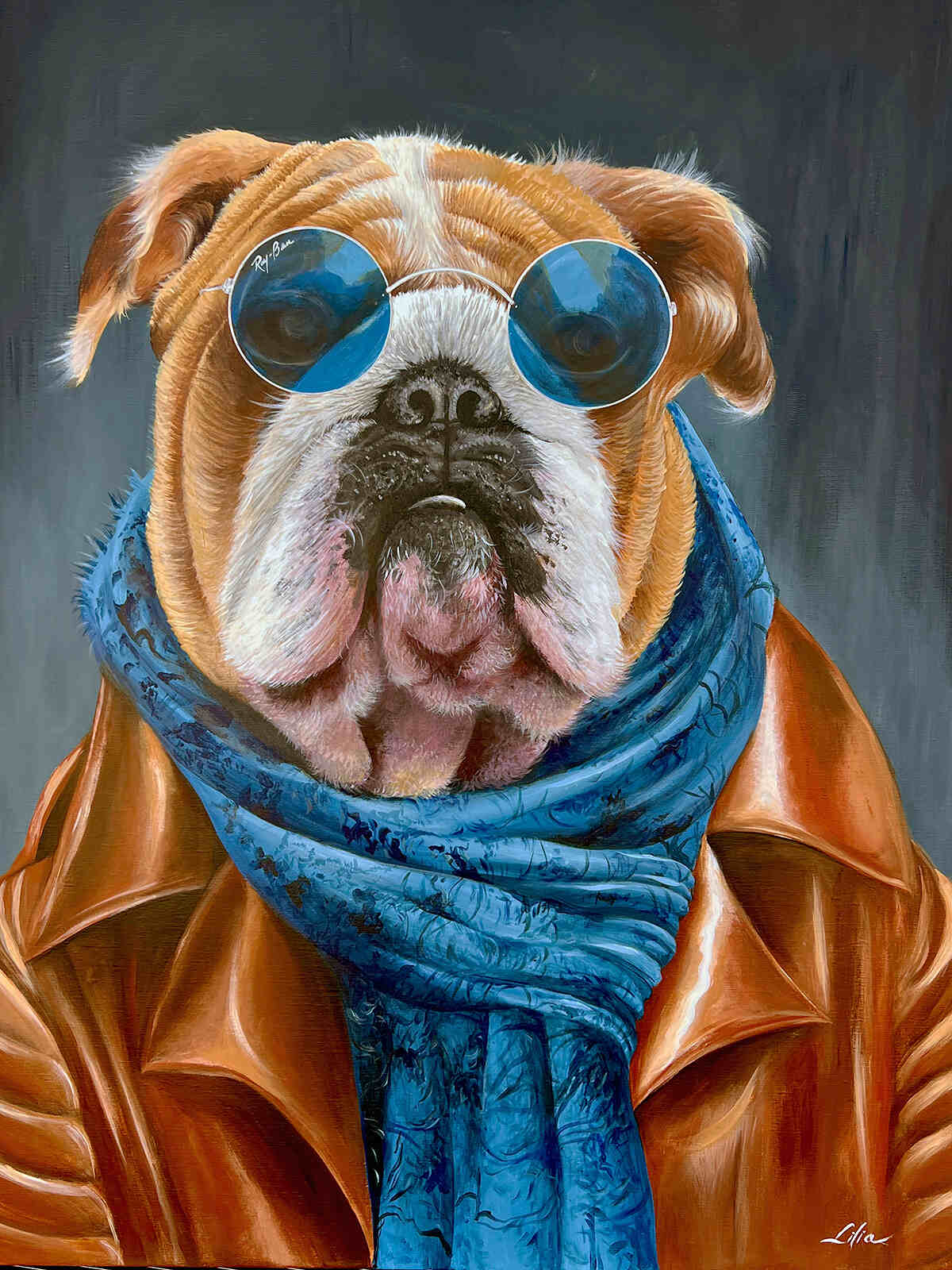
Looking at the work of Lilia Larcos is like a breath of fresh air. Her surreal characters invite you into a conversation mid-laughter, mid-story… tapping you on the shoulder and gently drawing you in, each one charming its way into your thoughts, and suddenly, into your heart. There’s something in the way Lilia Larcos captures the spirit of her animal portraits that’s so effortless and yet deeply intentional.
Alive with gestures, presence, and a sense of nostalgia you can’t quite explain – it’s easy to lean into the moment as though they exist somewhere far beyond paint and canvas. Every brushstroke carries emotion, and every gaze is like a friendship between the wild and the soulful.
You don’t just see her muse, you find yourself wanting to talk to them… half expecting they might just talk back.
“When I started painting, I wanted to create something unusual, something with a bit of edge. I’ve always been drawn to extremes and animals gave me the perfect space to explore that in a bold and unexpected way.” – Lilia Larcos
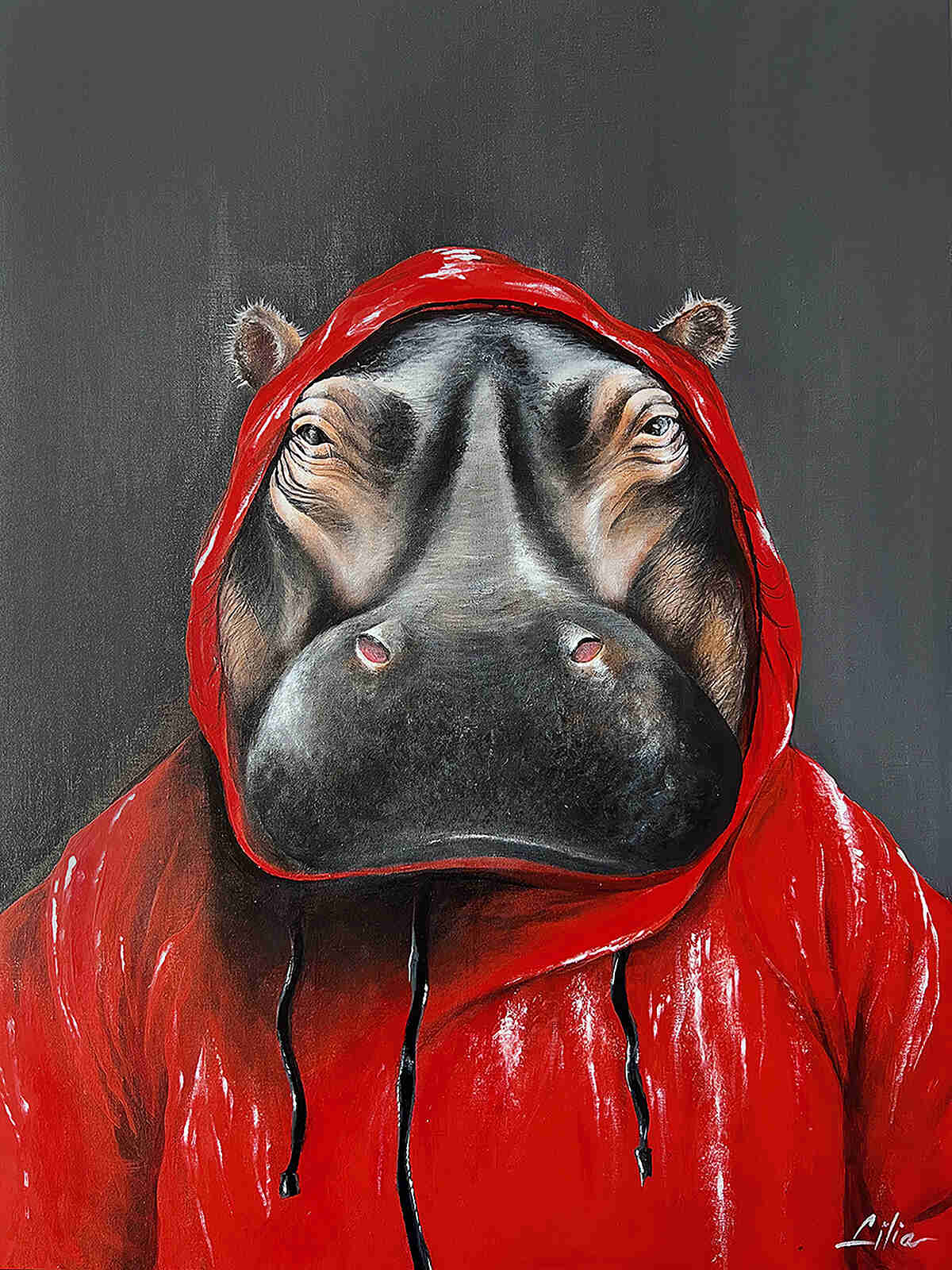
Exclusive Interview with Lilia Larcos
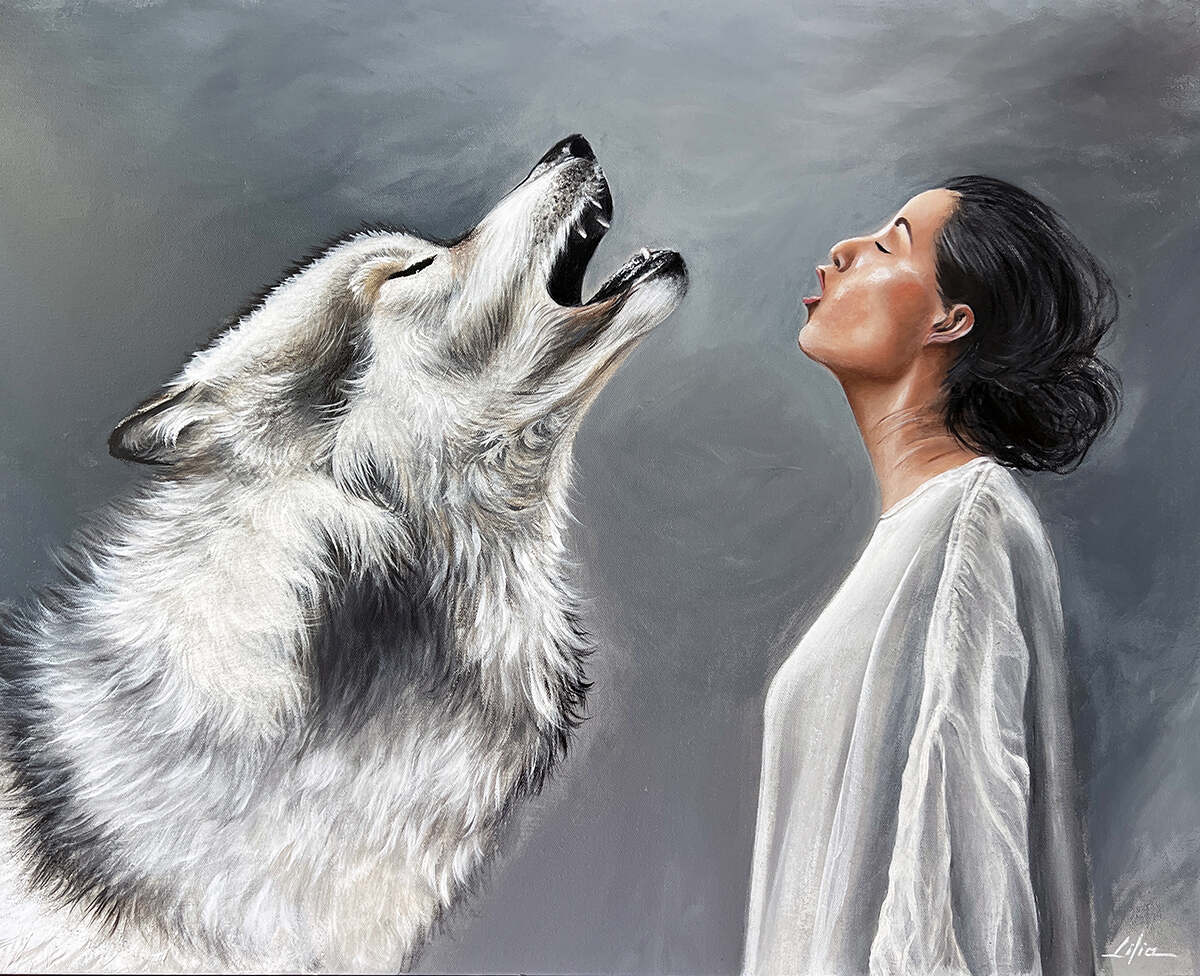
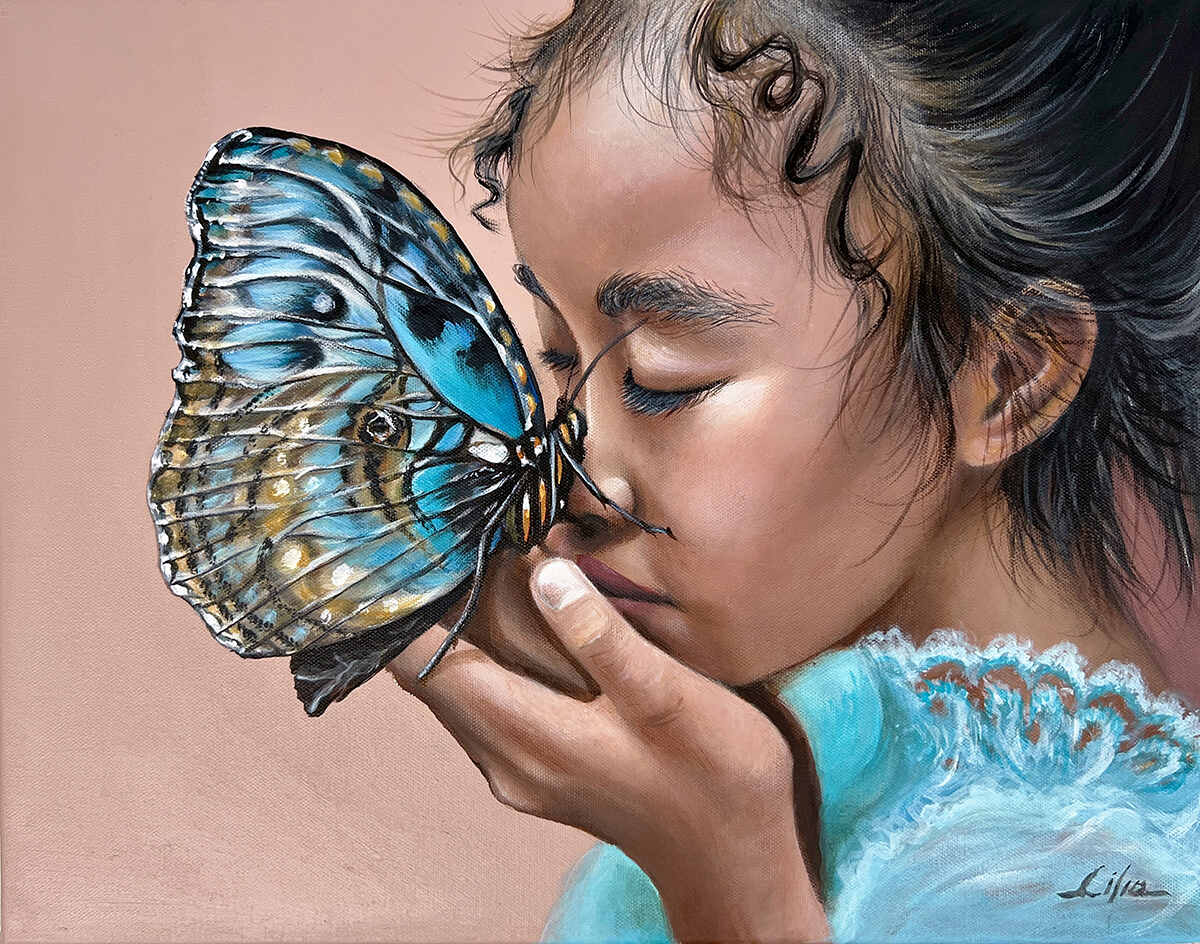
The subjects within your paintings are so alive with personality and individualism. You want to be friends with them; you want to howl at the moon alongside their wolf pack, and embrace the butterfly together. Has this sense of vitality within your work always been a part of how you see the world?
I have just always been very creative. When I started painting, I wanted to create something unusual, something with a bit of edge. I’ve always been drawn to extremes and animals gave me the perfect space to explore that in a bold and unexpected way.
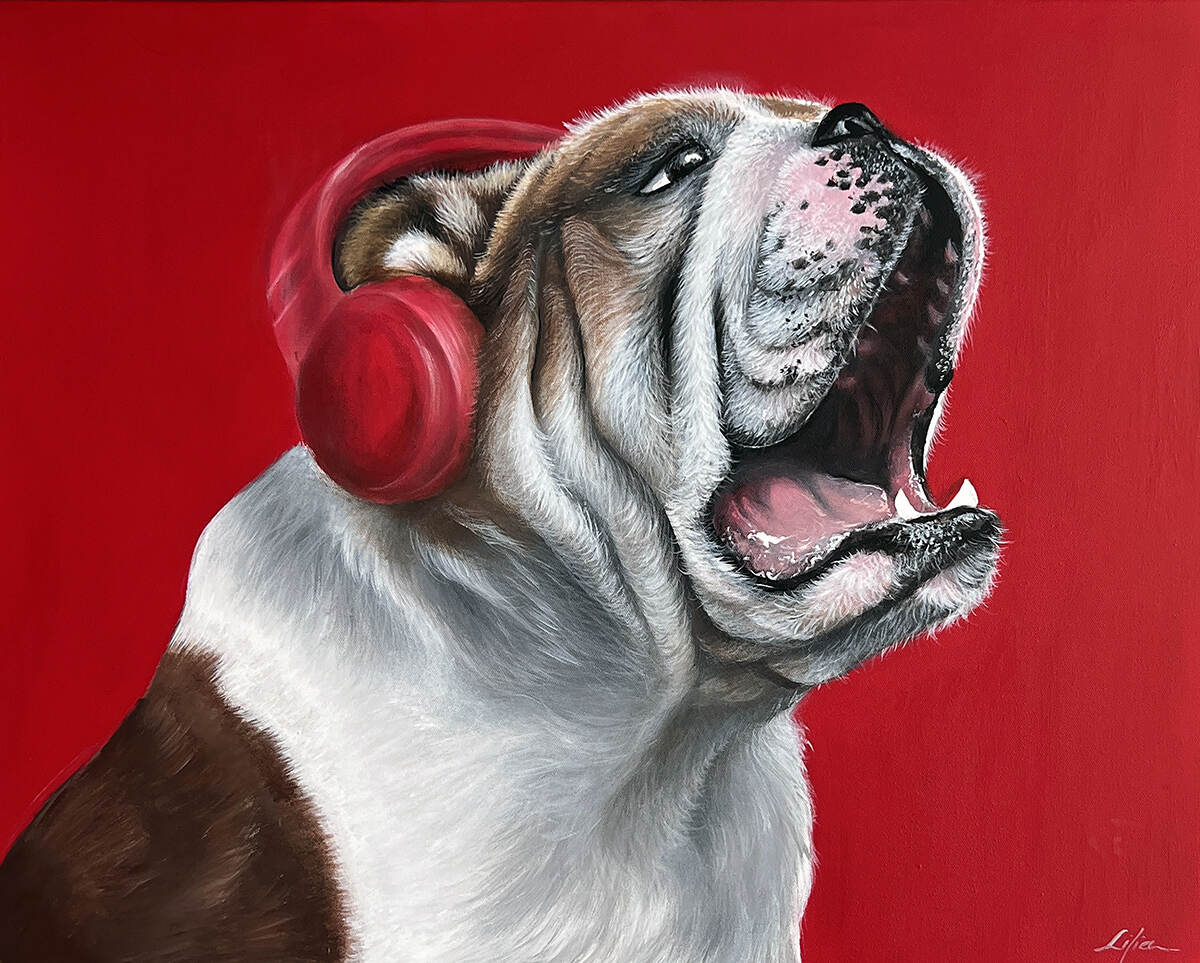
I can look at a dog and immediately sense whether it’s confident, sensitive, mischievous or calm. That awareness of character is something I carry into every piece. For me, it’s about translating that inner life onto the canvas. I think that’s why people connect with the work, it doesn’t feel like an observation, it feels like an encounter.
When did you realize that being a creator was not simply a path you were on, but something deeply embedded in who you are?
It wasn’t one clear moment, it happened gradually. Creating has always been something I return to, no matter what else is going on in life. There were periods when I was busy with other responsibilities, but I always felt a pull back to it.
What made me realise it was deeper than just a path was discovering that I could create concepts, storytelling, not just images. That opened up a whole new, exciting way of thinking and gave me something to constantly look forward to.
Creating is how I process ideas and even everyday experiences.
Is there a painting that has stayed with you long after it was finished, not just as an artwork but as an experience that changed you in the process?
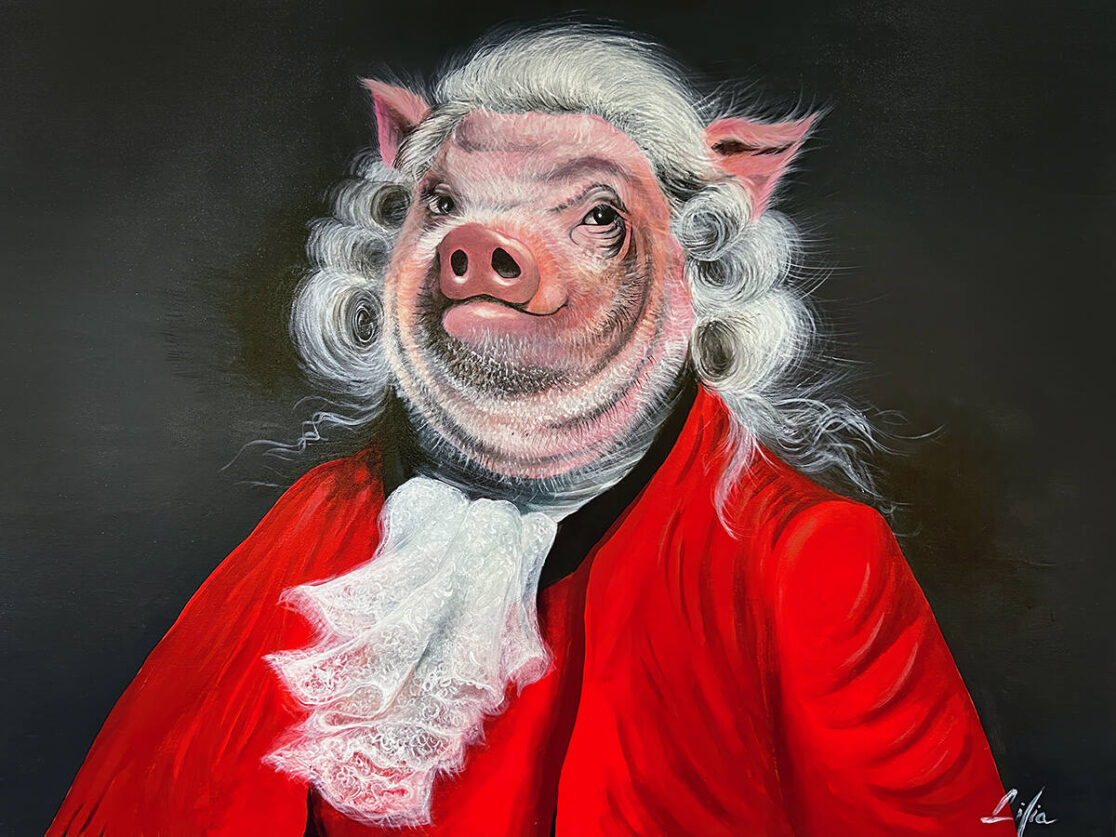
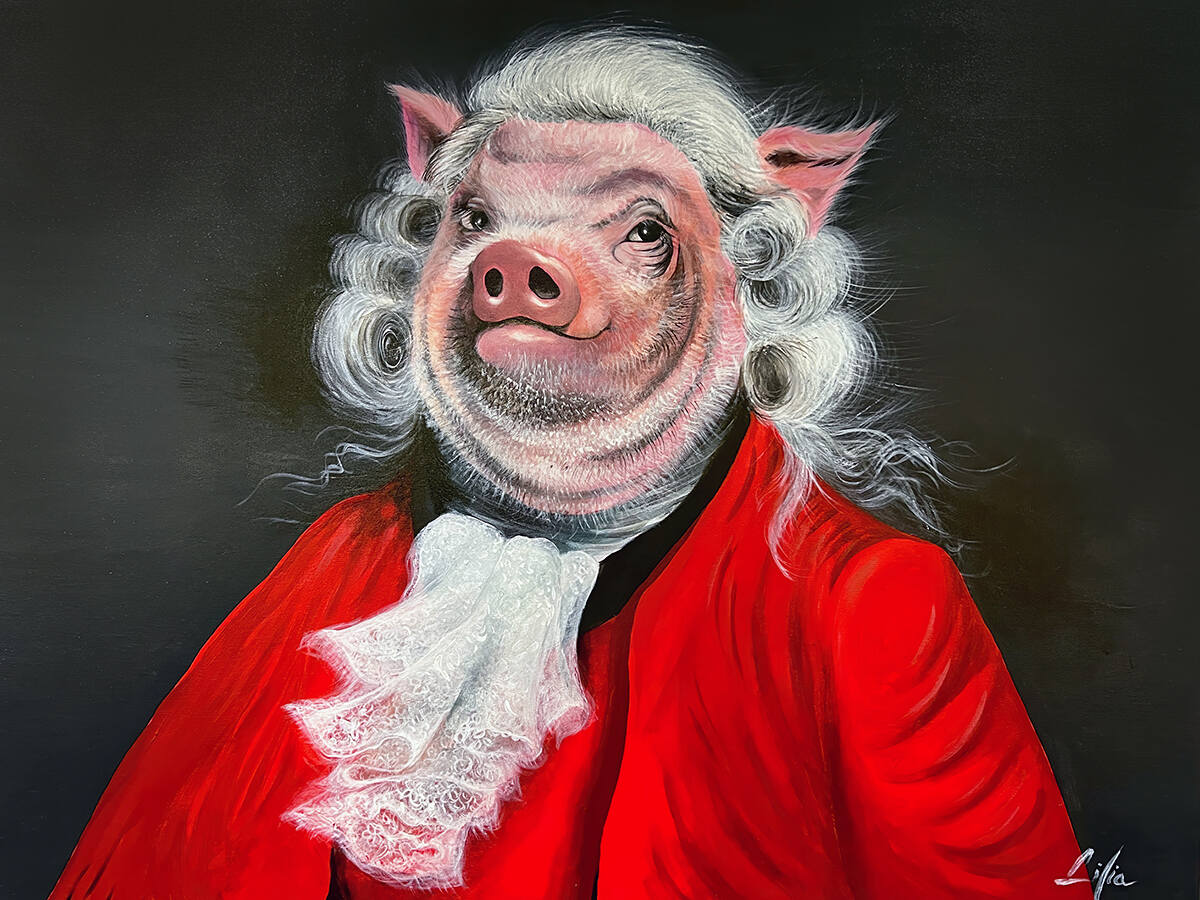
Yes – LORD HAMILTON (below).
That piece stayed with me in a very distinct way. We tend to see pigs as humble, a bit dirty, almost overlooked, not really associated with presence or status. I saw that as a challenge. Metaphorically, I wanted to take something people don’t usually respect and give it an authoritative, impressive presence.
As I worked on it, he started to develop a real personality (look at his face) not just a subject, but a character with his own attitude and story. There was a quiet confidence in him, but also something slightly playful, which made him even more engaging. He became a lord, and I gave him a fun name too, Lord Ham-ilton.
What changed for me during that process was a real sense of clarity. I realised that this way of working, creating strong, almost human personalities through animals wasn’t just something I was experimenting with. It was something I wanted to fully step into and develop further. It gave me direction.
There is a collective emotional presence held within each painting. What feelings, memories, or unspoken truths move through you as you create?
It’s not always something I can clearly define, which is part of what makes it interesting. There are layers, sometimes memories, sometimes moods or experiences and sometimes just instinct. For example, when I went to see the opera The Barber of Seville, I loved everything about it, the energy, the characters, the whole atmosphere. But as I kept thinking about the word “barber,” it suddenly turned into “baa-baa-barber” in my head and that’s how an idea sparked. It’s those unexpected, slightly playful connections that often lead me into a new piece.
I don’t sit down with a fixed story in mind. It’s more fluid than that. I might start with a feeling, a word, or a character and then it evolves as I work. Sometimes the direction shifts halfway through and I follow it.
A lot of it comes through in subtle ways, the eyes, the expression, the posture, even the colour choices. Those elements carry emotion without needing explanation. It’s quite intuitive, almost like the painting reveals itself as I go and I’m responding to it rather than forcing it.
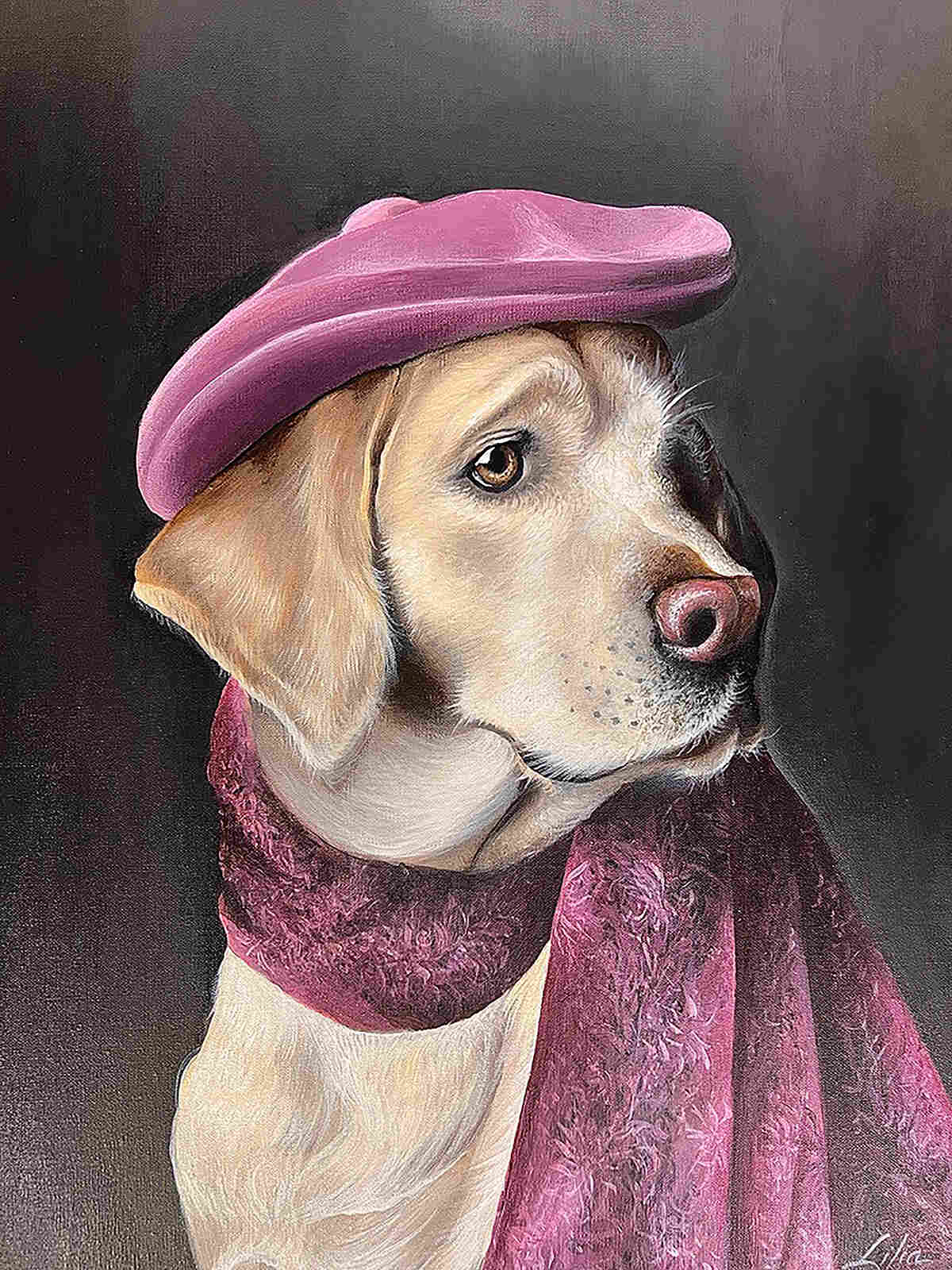
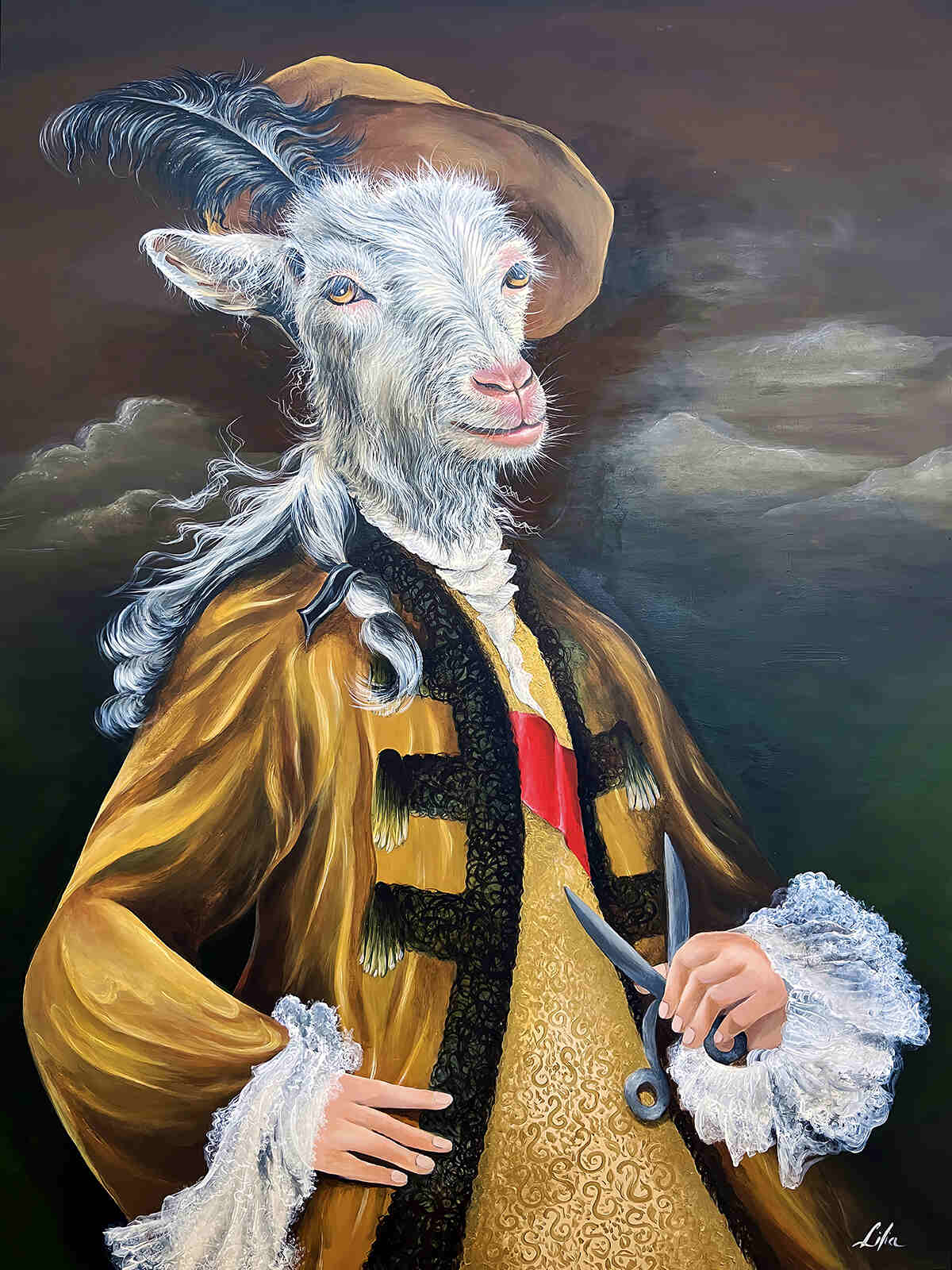
“I realised that this way of working, creating strong, almost human personalities through animals wasn’t just something I was experimenting with. It was something I wanted to fully step into and develop further. It gave me direction.” – Lilia Larcos
Looking at your practice, what does it give you that everyday life cannot?
It gives me a kind of stillness and focus that’s hard to find elsewhere. Everyday life is full of movement, responsibilities, distractions, everything is quite fast. When I paint, that slows down completely. I enter a different space where I can concentrate deeply and explore ideas without interruption. There’s freedom in that but also grounding. It allows me to disconnect from noise and reconnect with something more internal and focused.
As you continue evolving as an artist, what feels the most important about protecting your creative voice within today’s society, the world of social media, and the artist’s place within it?
What feels most important is staying anchored in your own point of view. Social media has a way of quietly shaping taste, not in an obvious way, but through repetition of what performs well, what gets attention, what people respond to quickly. If you’re not careful, you start adjusting your work without even realising it.
For me, protecting my voice means having a clear sense of what interests me and why, and not compromising that for visibility. I think audiences can feel the difference, when something is made to connect versus when it’s made to perform. There’s also a discipline in not overexposing everything. Not every stage needs to be shared, and not every idea needs to be validated immediately. Some work needs space to develop privately before it’s ready to be seen.
At the end of the day, the work has to hold its own beyond the platform. Trends pass, algorithms change, but a strong, distinct voice stays. That’s what I try to protect, not just what I make, but the thinking behind it.
Have you ever made something during a difficult season of life that helped carry you through it?
Yes – not in an obvious or dramatic way, but in a very quiet and grounding way. During a difficult time, when I lost my father, I created a piece called Ocean’s Embrace. That painting became very personal to me. The whale, in many ways, represents him, a strong, powerful presence, a very intellectual man. At that stage, he was letting go, and I think, without fully realising it at the time, I was painting that transition. There’s a sense in the piece of rising, of moving upward, almost towards the clouds.

That idea of strength but also release. It wasn’t something I planned, it came through naturally as I was working. My father had a huge influence on me. He taught me to love nature, to be brave, to push myself. He had a strong personality, but also warmth and depth. That painting holds a part of him.
What parts of yourself show up in your artwork that people may not immediately notice?
I think at first glance people notice the beauty, the vibrant colours, the detail, the finish. I am naturally drawn to that. I love creating something visually striking and refined.
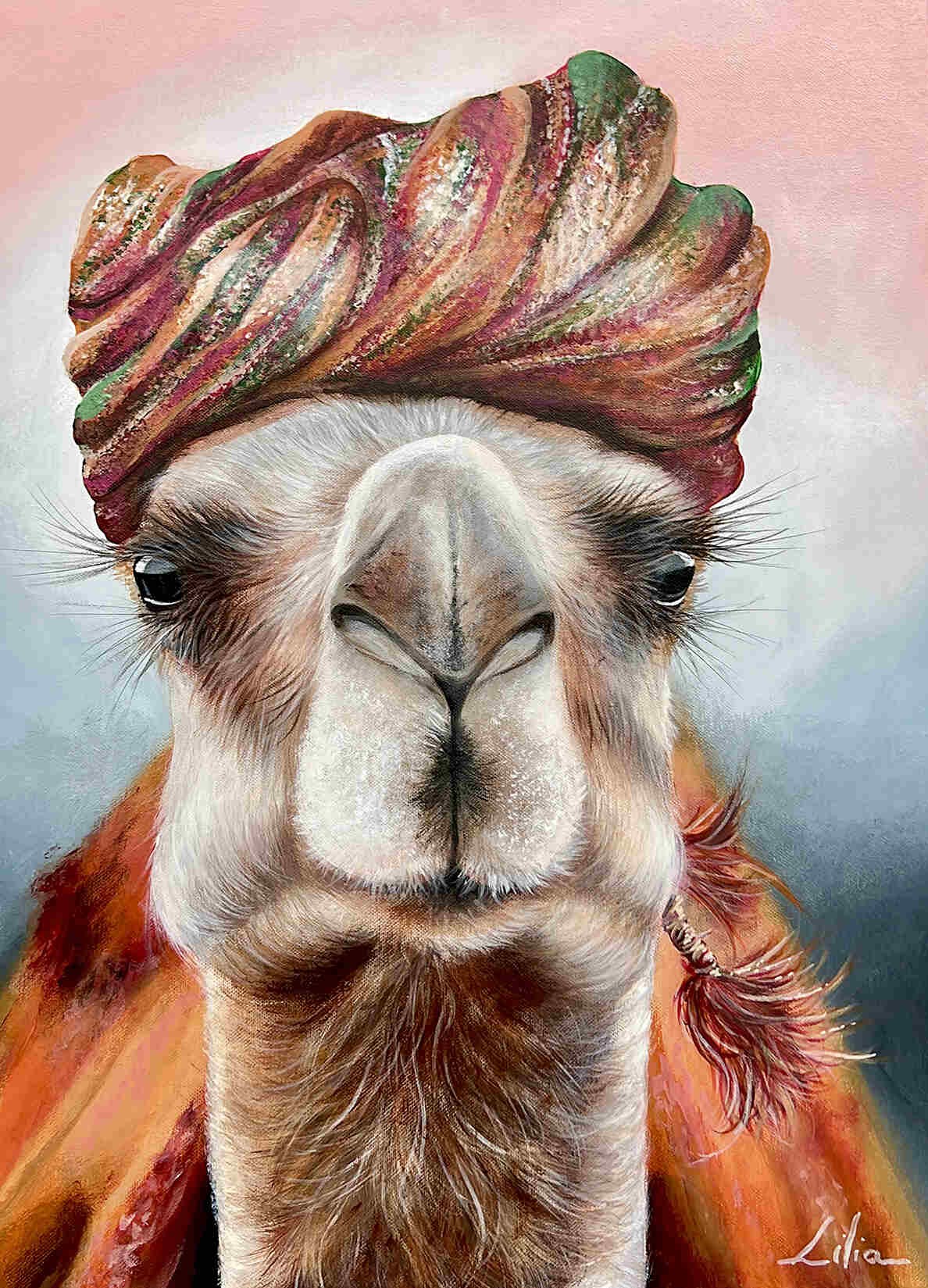
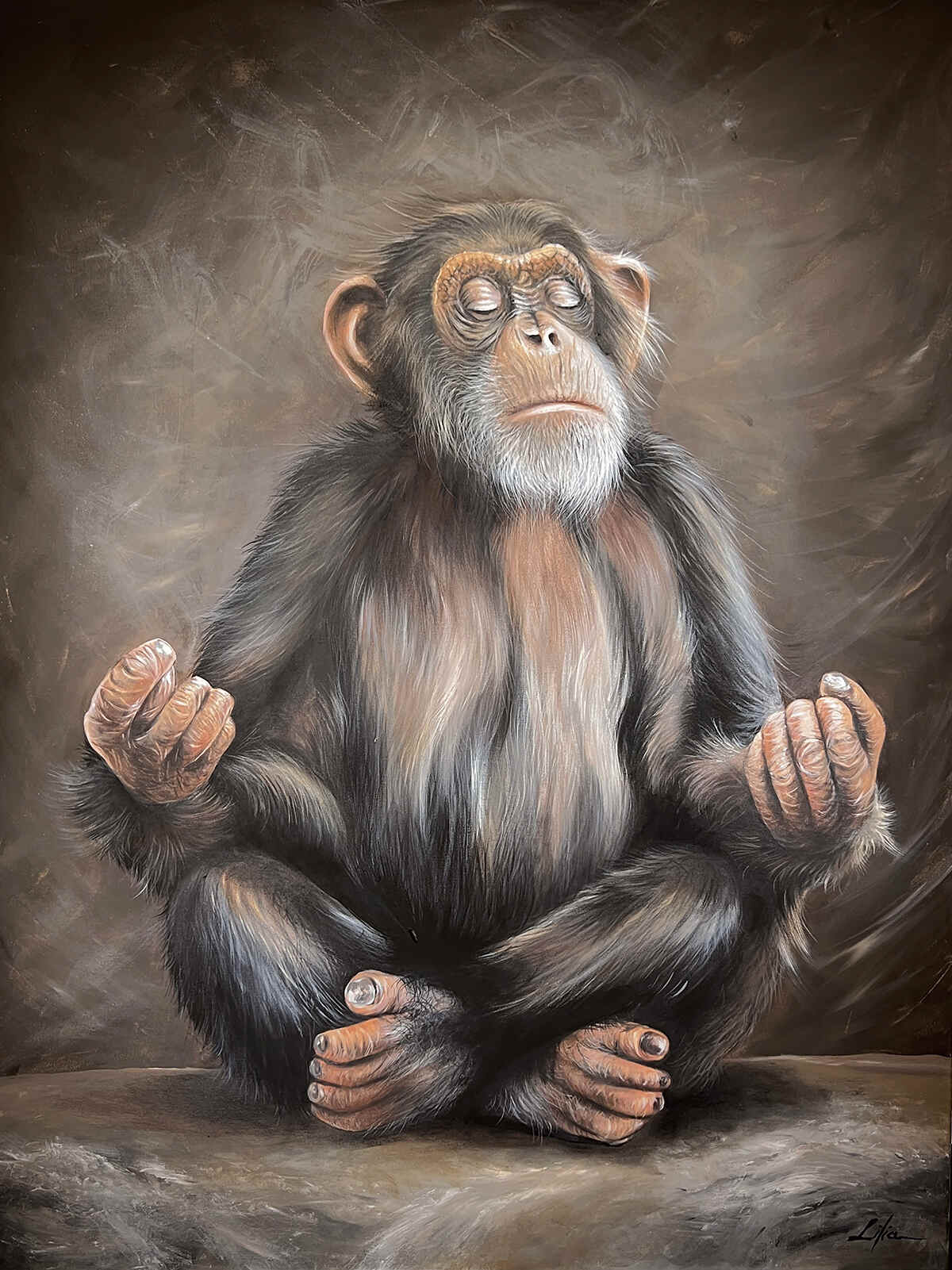
But underneath that, there is another layer that’s a bit more subtle. There’s a sense of playfulness, sometimes even something slightly surreal or unexpected. It might be in an expression, an attitude, or the way a character is presented, something that feels just a little “off” in an interesting way. I don’t always think that part is immediately obvious, but it’s important to me. It adds personality and depth.
There’s also a lot of patience in my work. I spend time on details because I want the subject to feel believable, not just visually, but emotionally. I want people to feel like they’re not just looking at an image but encountering something with presence.
If someone who has never seen your work could understand only one thing about you through your art, what would you want it to be?
That I am not one-dimensional. I enjoy contrast, I can be playful and light, but also proud, refined and quite sophisticated. I like moving between those extremes and I think that comes through in the work. I am very driven by ideas and stories. I like taking something familiar and shifting it slightly, so it becomes unexpected, but still relatable.
At its core, my work is about connection. Whether it’s an animal or a human subject, I want it to feel like an encounter, something that draws you in and makes you pause, even briefly.
What are you most excited to share in 2026?
I am excited to take everything further, stronger characters, more presence and a deeper sense of identity in each piece. I want the work to feel more intentional, more refined, but also more daring. Over the past year, I have had the opportunity to exhibit in several European countries, where the work has been received with a lot of interest. I have also been encouraged to continue submitting new pieces, in London and Spain, which has been very rewarding and motivating.
At the same time, I would really like to expand my presence in Australia and show more of my work locally. It’s important to me to build that connection here as well. I am also focusing on bringing my different worlds together, the animals, the expressive portraits and the slightly surreal ideas in a way that feels seamless and more evolved. Not separate directions, but part of one clear voice.
More than anything, I want the work to feel undeniable, something you recognise instantly, something that holds your attention and stays with you.