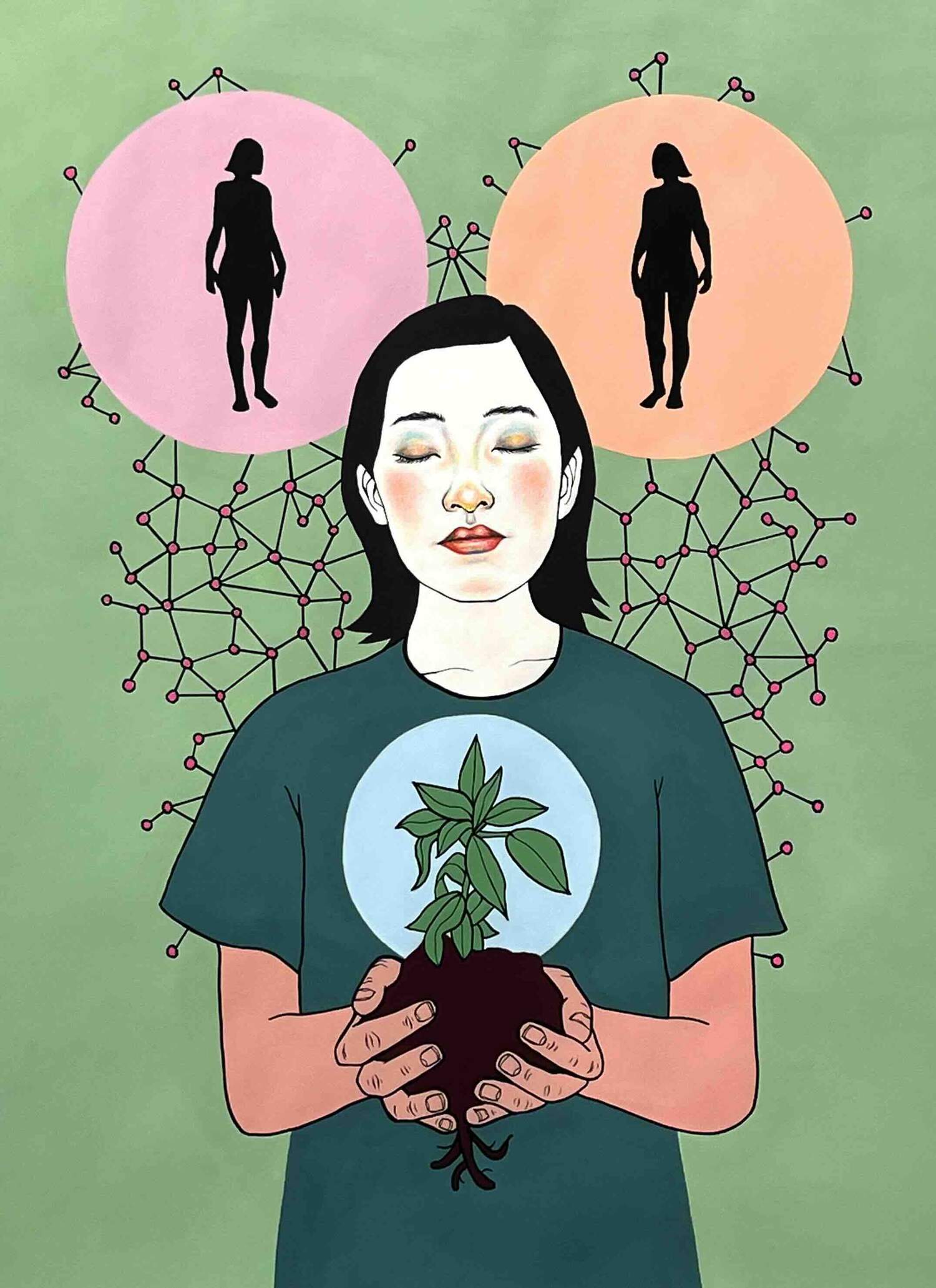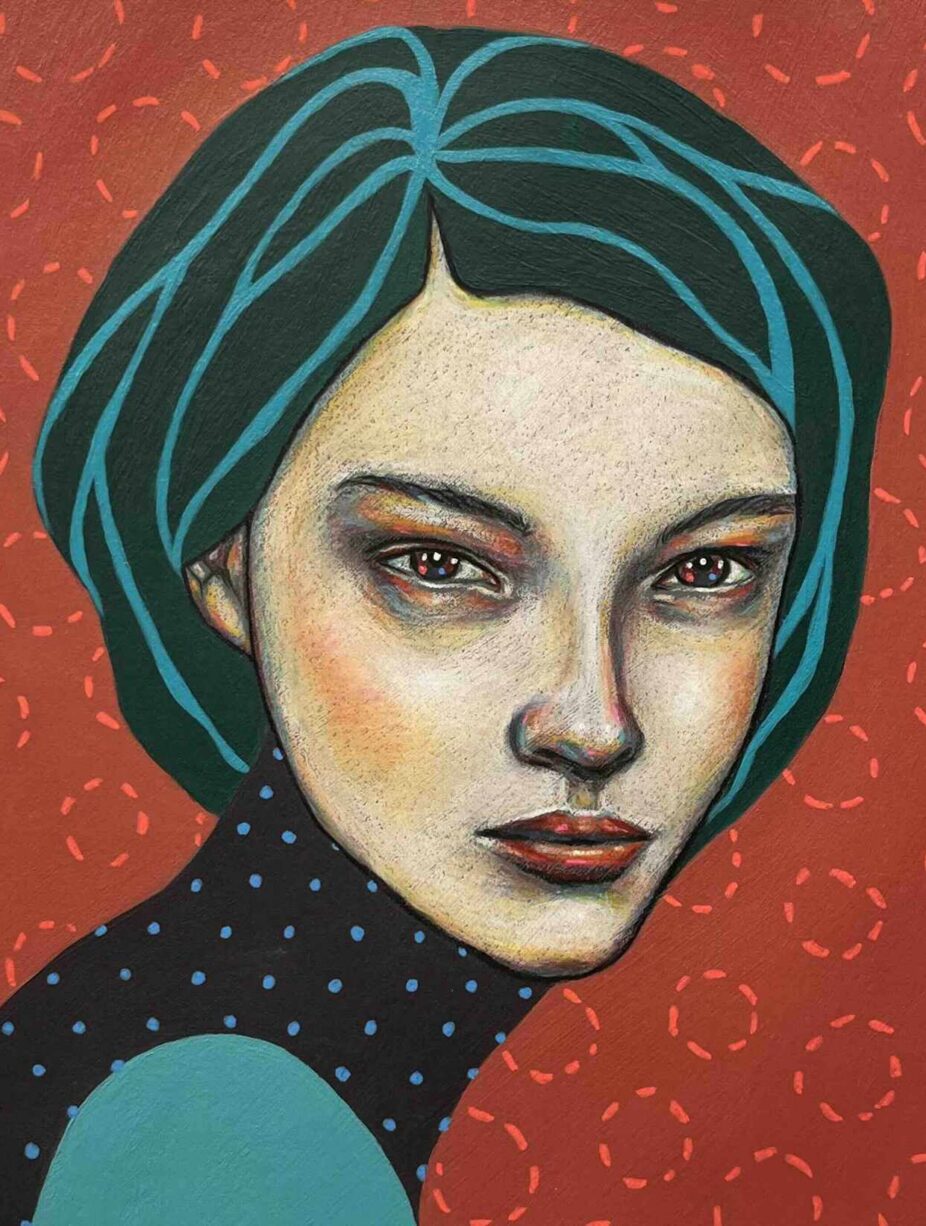
Aneka Ingold captures the inner world of the feminine mind. Her artwork showcases soft, dreamy, and surreal places that can often appear strange and nonsensical to those who peer within. Every artwork is as unique and dynamic as its subject as she blends raw, realistic beauty with the abstraction of the mind. In these dreamscapes, creativity bubbles in streams of consciousness and new knowledge grows from fruitful trees. Fleeting moments become precious memories, helping to reshape these inner realms and further enhance feminine identities. Her work demonstrates that femininity isn’t defined by one set of rules. It is a centuries old journey that continues to grow with us into the hopeful hands of tomorrow.
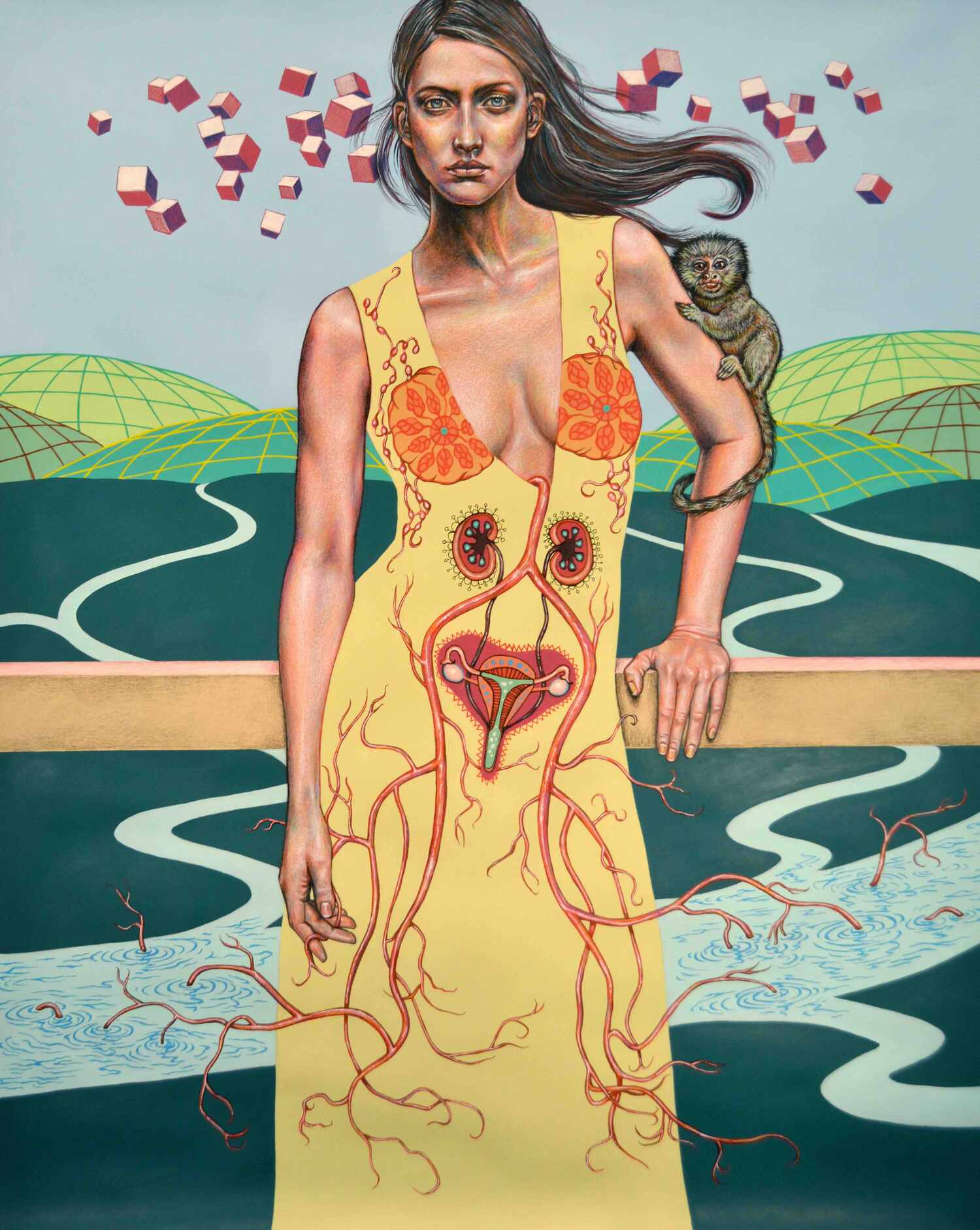
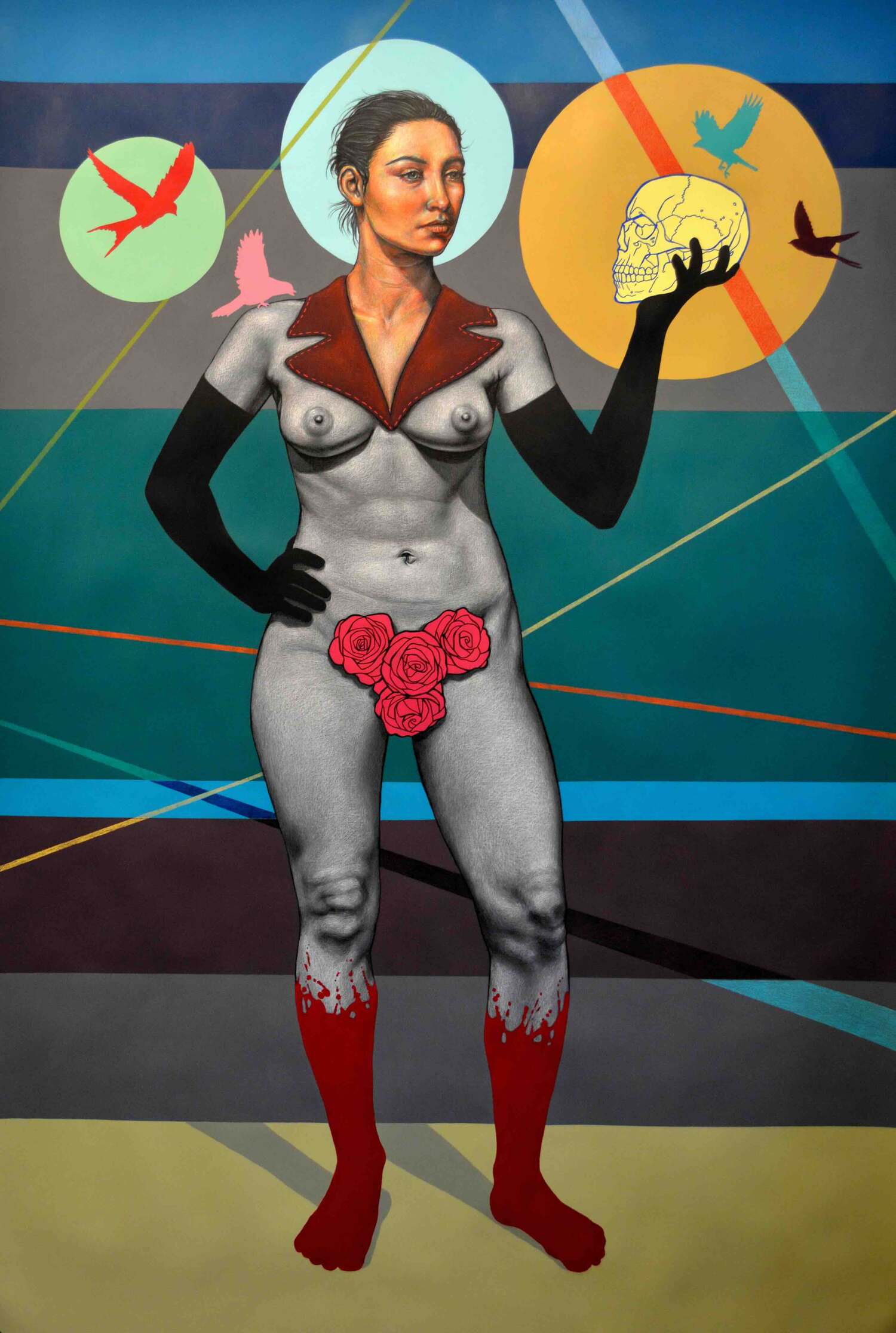
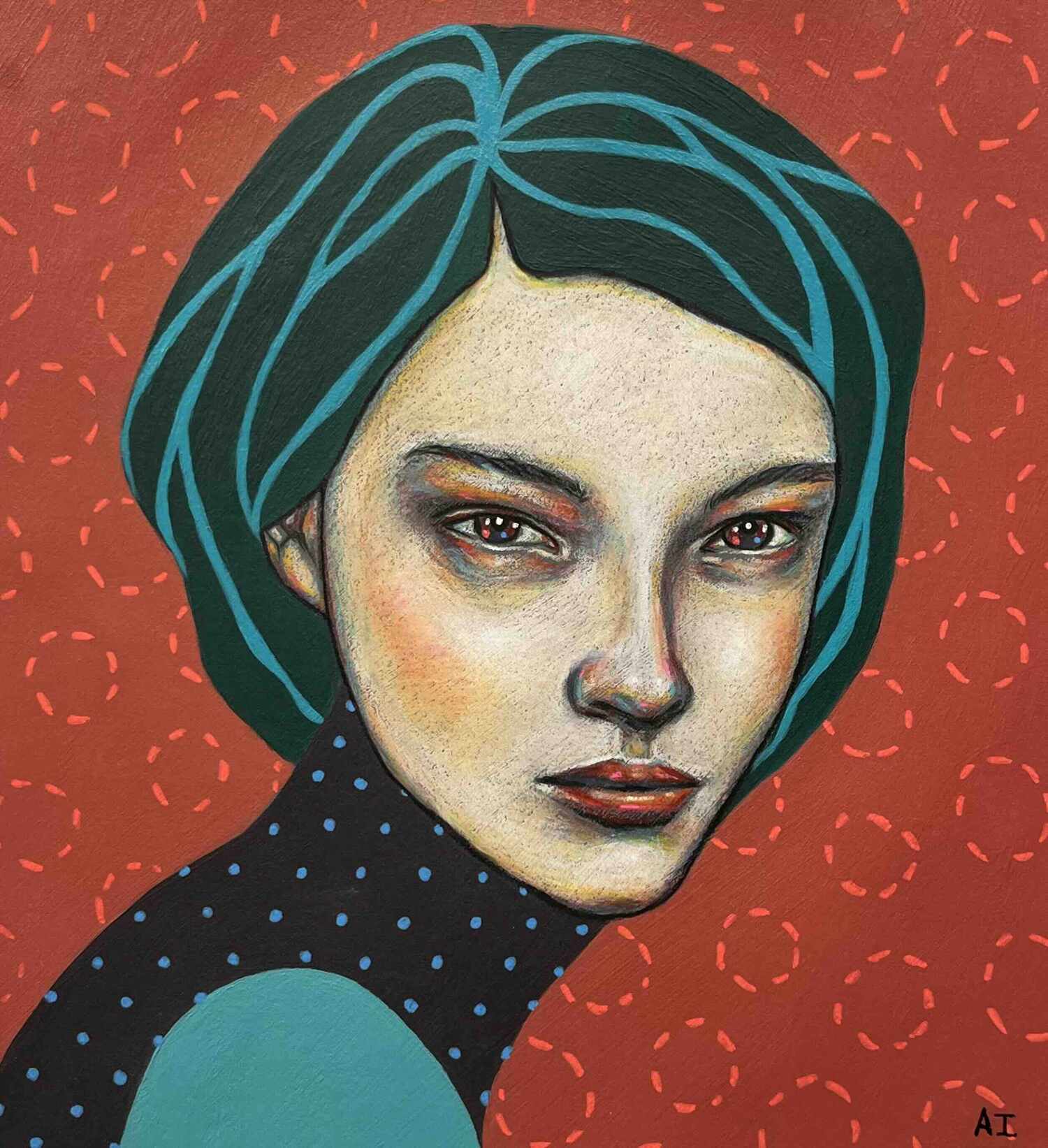
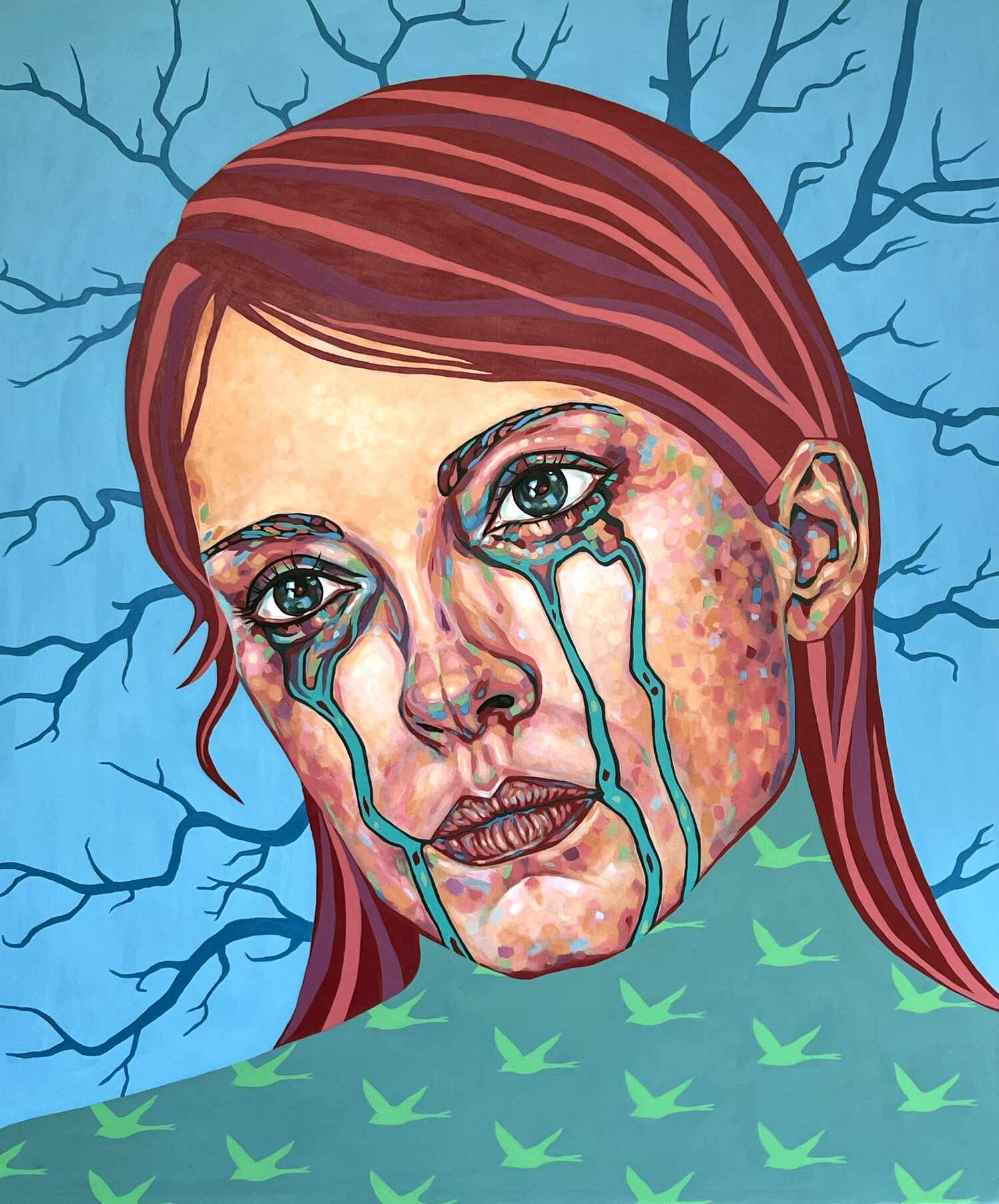
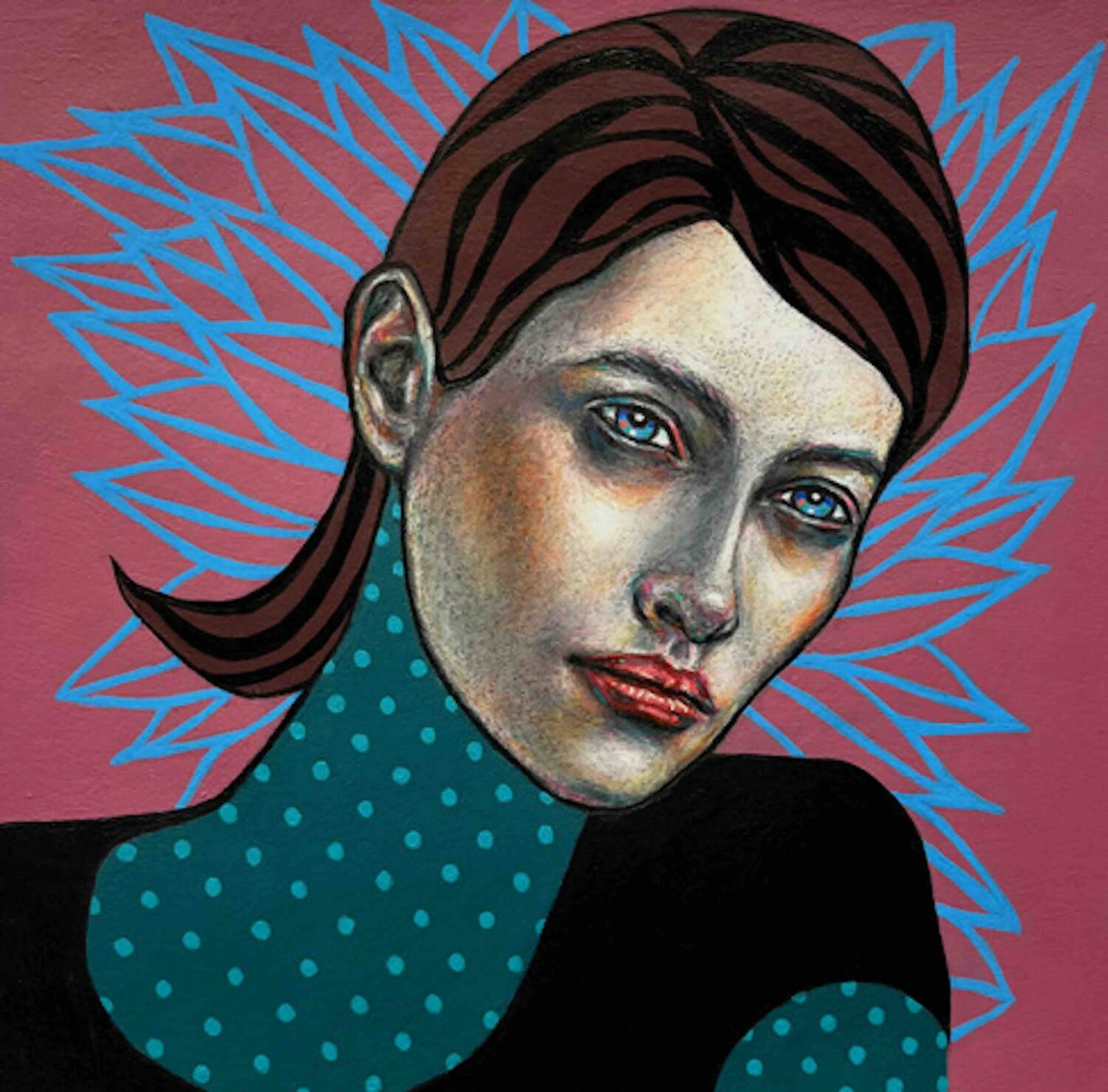
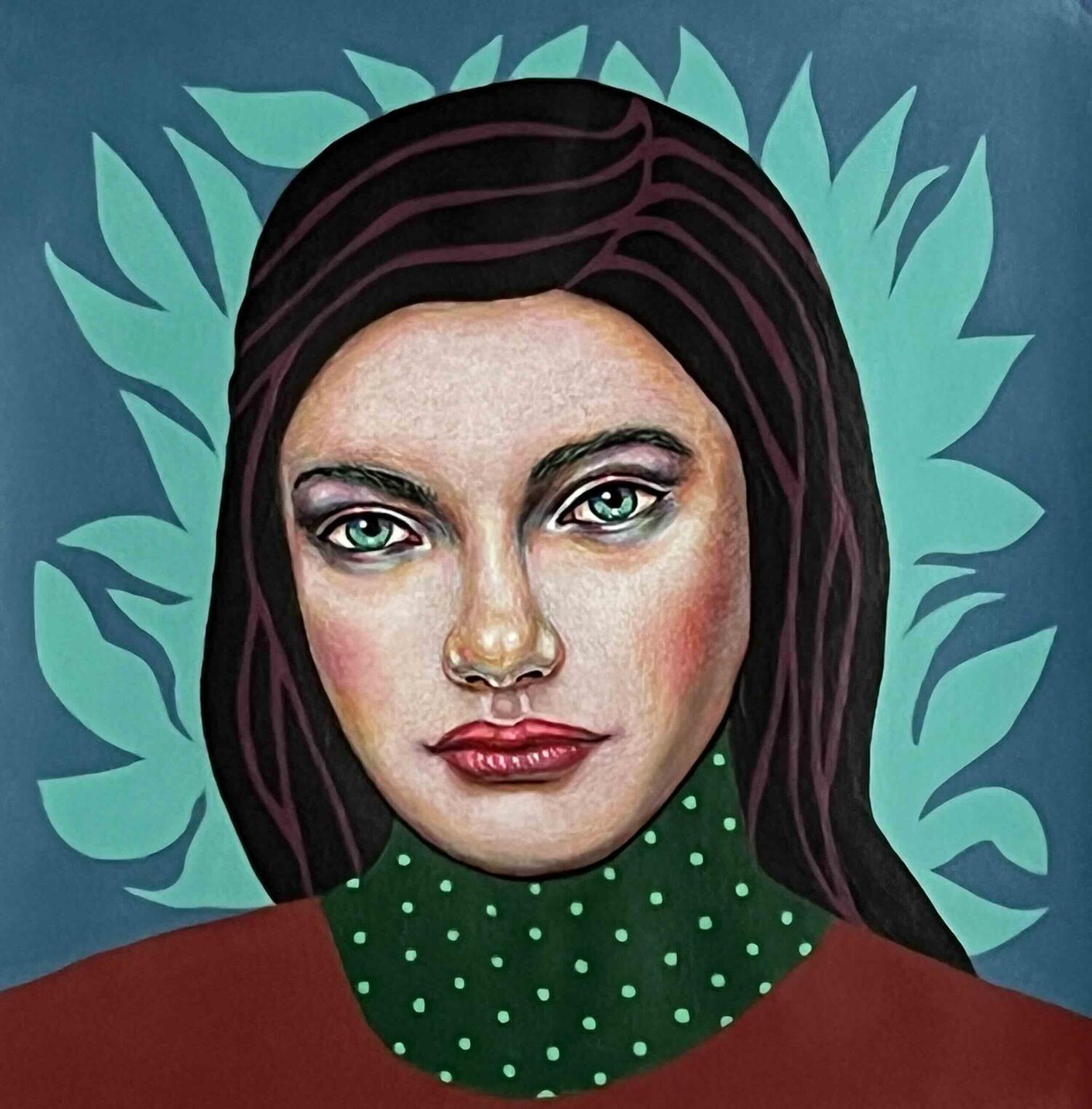
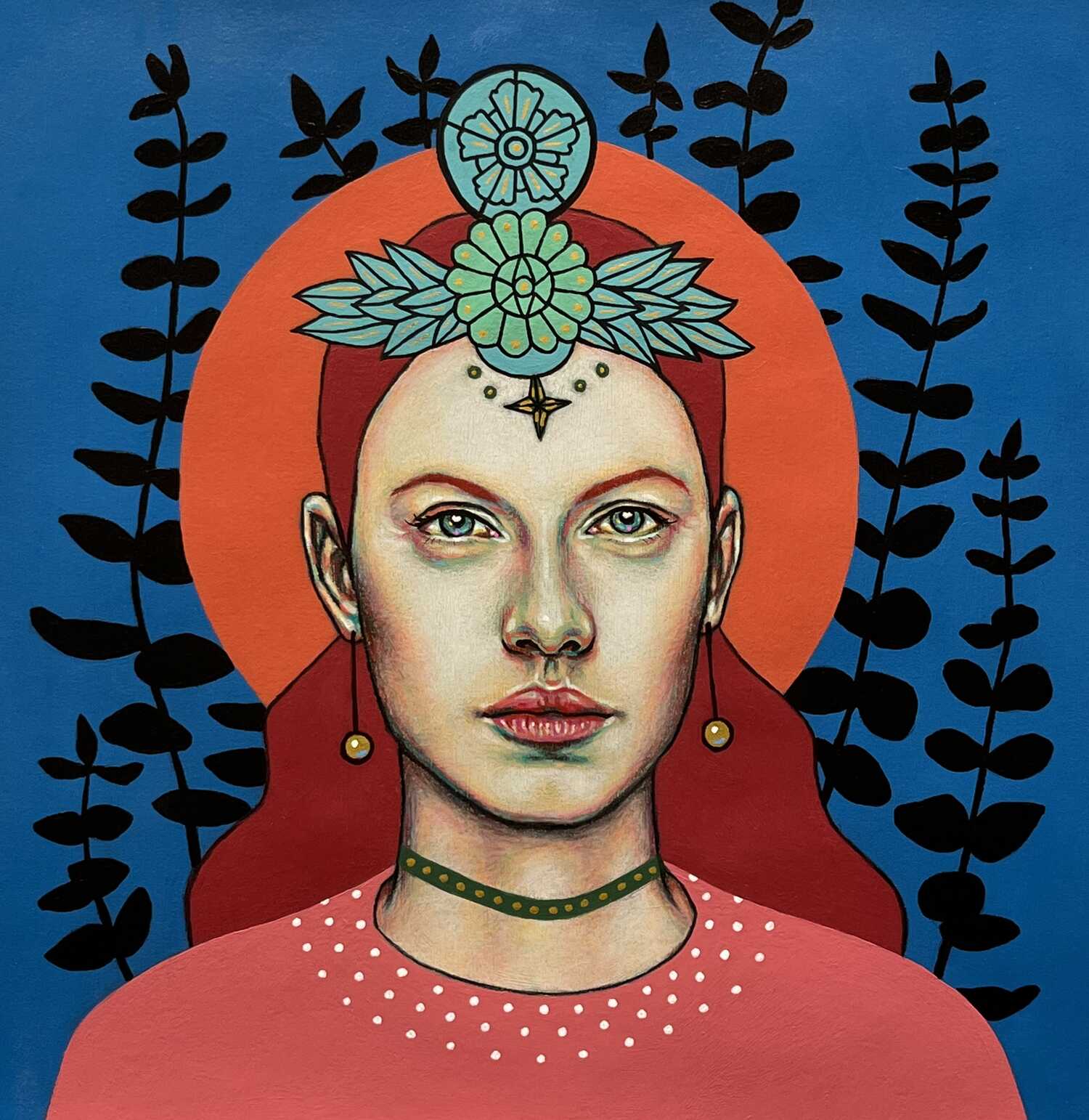
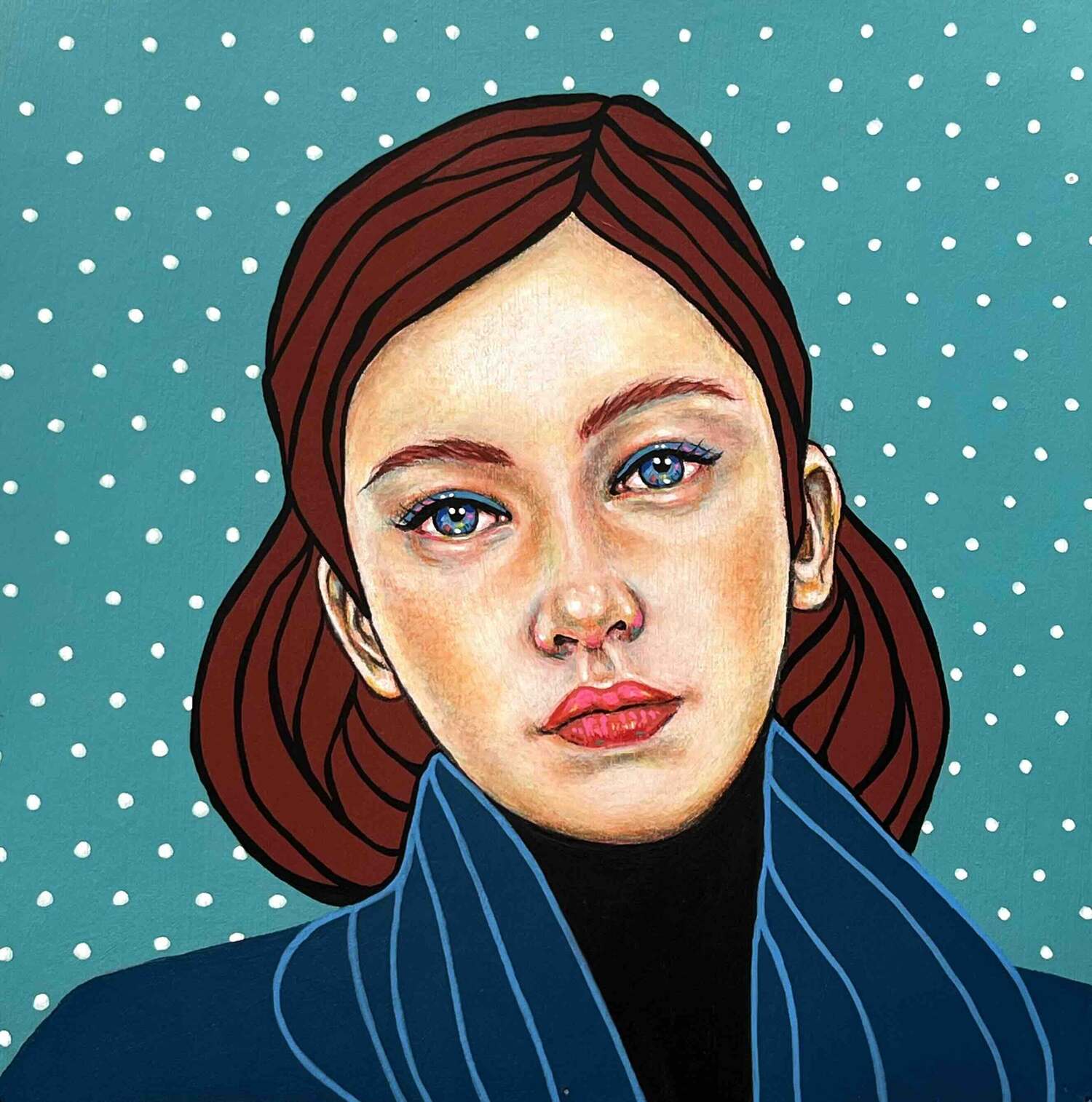
Aneka Ingold is an American artist renowned for her works that blend realist portraiture with surrealism and the abstract to create narrative artworks that are striking yet ambiguous as she seeks to explore the beauty and complexities of the female experience. Using a mixed media approach, she combines both drawing and painting to create dreamscapes where flat colours and patterns envelop her subjects.
Aneka graduated with her BFA in Painting from Grand Valley State University before completing her MFA in Drawing at Kendall College of Art and Design in Grand Rapids, Michigan. Alongside her formal education, Aneka has received recognition for her artistic talents and has been the recipient of multiple scholarships and awards including the Bennett Prize, Kendall Scholarship of Merit Award, and the Alexander Calder Honors Scholarship. Alongside her work as an artist, Aneka also works as an adjunct professor at Hillsborough Community College where she teaches design.
Aneka Ingold is represented by RJD Gallery. For more information on the gallery including their artist roster, upcoming exhibitions and artwork for sale please visit their website.
Interview with Aneka Ingold
Ambiguous narratives are an important part of your work. Do you flesh out ideas before you start work on a painting or do ideas reveal themselves as you paint?
I examine a collection of both contemporary and historical images and then dissect the meaning. I collect my source material from books and magazines, and take photographs of the things around me. I sometimes use figure models, but often rely on myself and a mirror for anatomy. A visual catalogue is built to inform my work. I make instinctual choices regarding what images and symbols to collect and then combine them in different ways to build the narrative.
If I try to control this process too much it loses the excitement and mystery for me and I stop learning from it. The power is in the process. The artwork is alive while I am making it, revealing the inner workings of my psyche. The deeper meaning in the artwork is analyzed later.
The mixed media works I create often occupy dreamlike or liminal spaces that allow for an exploration of the psychological terrain of the collective unconscious and identity formation. These imagined worlds function as speculative environments where the past and present coexist, enabling deeper investigations of memory, myth, trauma, resilience, and transformation.
A long history of cultural myths and fables reveals that our collective unconscious works through story telling. The stories I tell are invented with spontaneity. They often refer to vague remnants of memories or dreams I’ve had, depicting a unique account of an event that I am not immediately familiar with or consciously recalling in the moment. It’s not until after I’ve completed a piece that the layers of meaning are revealed to me.
The symbolic elements within my compositions are intentionally open to multiple interpretations. This approach invites viewers to reflect on their own cultural and visual histories and positions each artwork as a site for inquiry rather than a fixed statement.
Who are some of the women who inspire you and why?
My work has largely been informed by the female artists associated with the 1930’s Surrealist Movement. More specifically, Frida Kahlo, Lenora Carrington and Dorthea Tanning have impacted my process in many ways. The Surrealists believed that we must create mystery and challenge reality in order to free ourselves from the control of reason and order.
Although the Surrealist artists circle was made up primarily of men, these women looked beyond the traditional male gaze. They created dream like worlds full of symbolism that expressed their own personal stories about what it meant to them to be a woman at that time in history. They confronted the norms and standards of a repressive society for women.
Frida’s work often explored the maternal roles women play and it really speaks to me. I have always been fascinated with the way she used symbolism and dream logic to communicate her ideas. Lenora Carington created compositions full of strange or unexpected juxtapositions of objects and characters that nevertheless still appear familiar and seductive. Wild animals that would normally seem out of place in domestic spaces they inhabit, oddly seem right at home in her work and even seem to have a symbiotic connection to the women in her paintings.
One thing I love about your work is how you blend realism with flat colours and patterns to create a surreal yet chic world! Would you say fashion plays an important role within your work?
My interest in fashion definitely plays a big role in my work. I investigate and confront identity and self-concept through fashion. Fashion is not merely ornamental and decorative. Its function goes well beyond superficial display and taps into the political, social and cultural complexities of how we feel about our bodies and ourselves. The way we dress ourselves is an expression of our fears and desires about status, power, morality, sex, gender and corporeality in a continuously fluctuating society.
Fashion functions as an escape as well as an entrapment. Everything that we wear now has been influenced by the past. There is a constant appropriation of ideas from previous time periods to understand our identities in the present.
What is the most rewarding aspect on your work as an artist and why?
Learning about myself as a woman through the art making process has allowed me to connect with other women in ways I never thought possible and this is the most exciting and rewarding part of making the work. It keeps a dialogue going within myself that in turn nurtures my ability to articulate, share and converse with others about womanhood.
I traverse themes such as pregnancy, childbirth, motherhood, domesticity, subordination, women’s rights, corporeality, body consciousness, pressures and freedoms of sexuality, beauty, aging, depression and mortality. When making artwork I am liberated in revealing the pain and confusion of my own female experience. It becomes a ceremonious communion for me with all women who strive to overcome adversity.

I aim to portray both the struggle of womanhood as well as the triumphs, which allows me to achieve a healing and self-defining resolution within myself. My art making process thrusts me into a place where I can truly realize and celebrate the growth and progress made by women. When I draw women, what I am most interested in is confronting and dismantling societal expectations that keep women from being the complicated, complex, and powerful individuals that they are today and always have been.
What is the most challenging aspect of your work as an artist and why?
I think one of the most challenging aspects of making the work is when I start a new piece. I’m in a place of inquiry and don’t have strong sense of what the piece is going to reveal to me yet. Once I’ve begun I can get into a “zone” of making that propels me and keeps me excited. That is my favorite part of the art making process, being in the middle of it. Sometimes it’s a challenge to know how to finish a piece as well, but that usually becomes clear to me at a certain point in the process and I need to stop in order to maintain a balance of things in the work.
What do you hope people can take away with them after viewing your work? Is there a specific thought or feeling you hope people can resonate with?
The process of creating these images is both analytical and restorative. By confronting the pain, ambiguity, and contradictions embedded in my own experience of gender, I create space for recognition, empathy, and healing. My artwork becomes a form of communion, a way of acknowledging the struggles and triumphs of women across generations while affirming their power, complexity, and agency.
Ultimately, my practice seeks to challenge reductive definitions of womanhood and to disrupt the expectations that have historically limited the identities women are permitted to inhabit. Through art making I aim to contribute to a more inclusive and expansive visual discourse on what it means to perceive, imagine, and move through the world as a woman.
Alongside your work as an artist, you are also an adjunct professor at Hillsborough Community College. Has your teaching work influenced your work as an artist and vice versa? Or do you keep them more separate?
In my classroom, I encourage students to articulate their intentions and to reflect on the relationship between process, meaning, and self-expression. My aim is to cultivate an environment in which students develop technical proficiency, conceptual sophistication, intellectual curiosity, and cultural awareness, enabling them to participate meaningfully in the discourses of contemporary art. As I engage with my students on these topics, I am continually asked to reflect on how I do these things in my own studio practice. I am often inspired by my students ideas and the critical thinking they do about their own work.