Exclusive interview with Xavier Escala & Nina Murashkina, Grand Prize Winners of the 2025 Beautiful Bizarre Art Prize
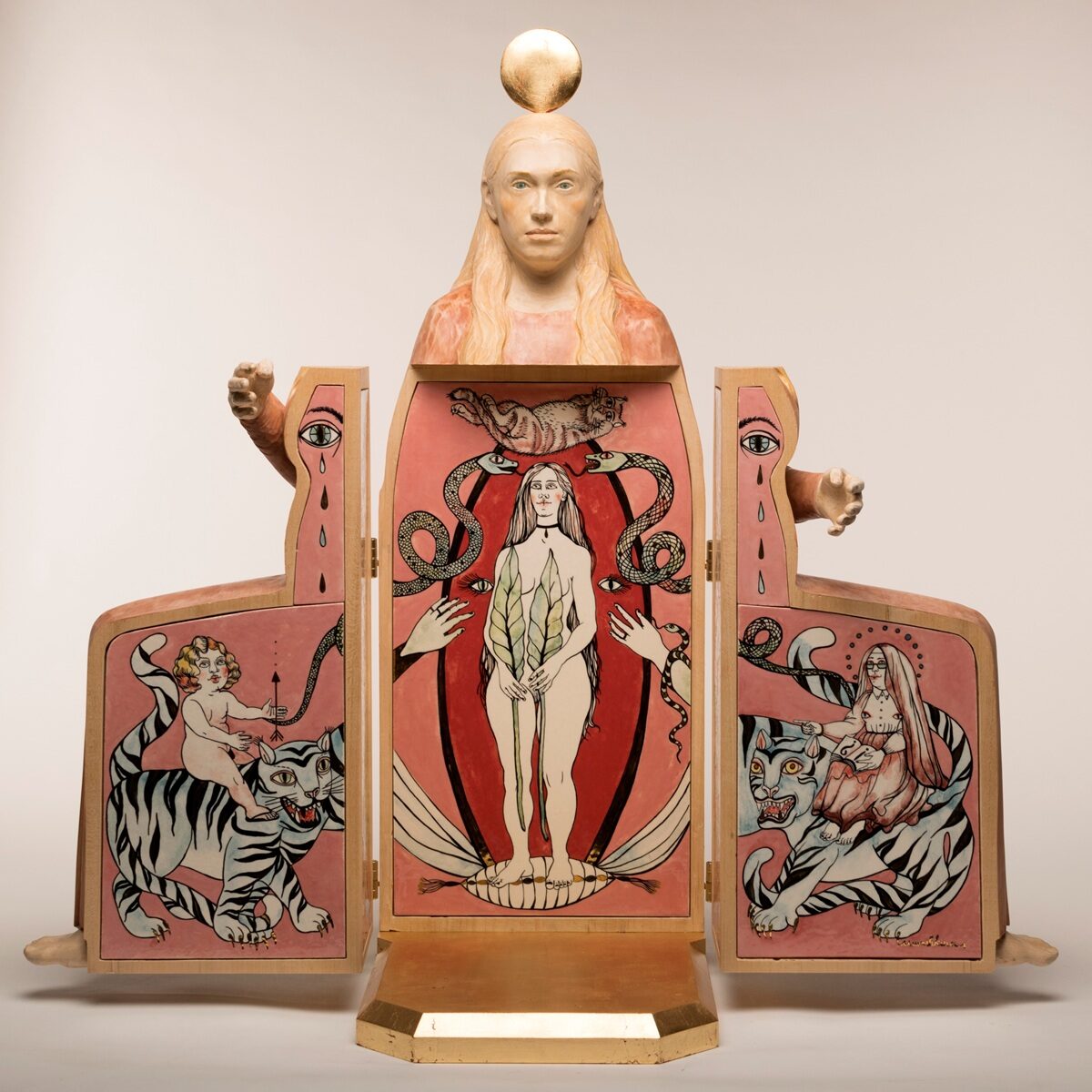
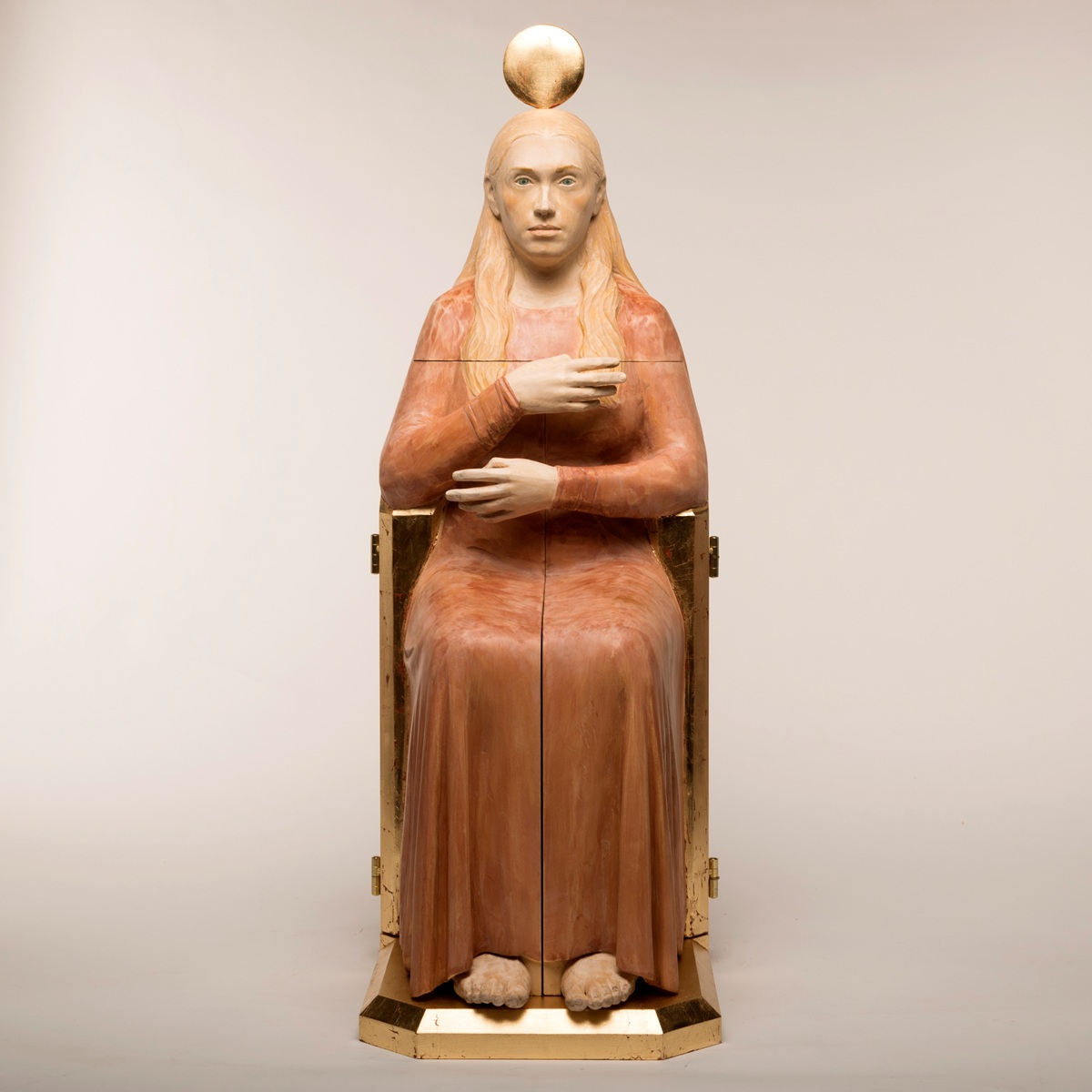
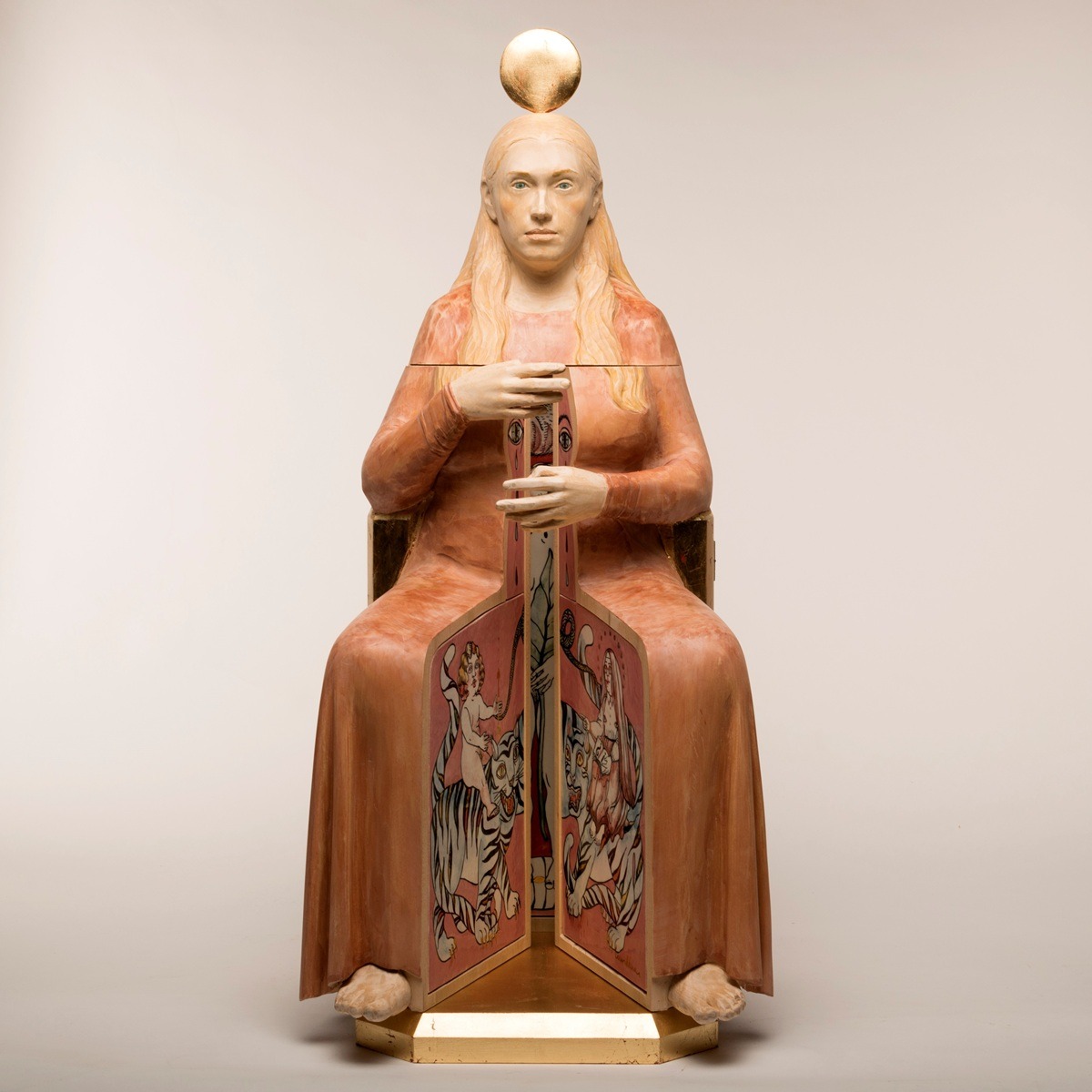
Sexually charged divinity lies within the shrouded altar of Goddess. This Grand Prize-winning sculpture in the Beautiful Bizarre Art Prize 2025 is deceptive, as viewers are met with a modestly dressed depiction of Madonna wearing an Ancient Egyptian-esque lunar crown. Her arms cover her chest, shielding herself and her purity from the world. However, upon closer inspection, one will soon discover the true essence of her being. Her arms open wide, offering a warm embrace as her inner sanctum is revealed.
This inner shrine reveals the true nature of femininity. This divine being, once hidden behind modest clothes, reveals her true power – sexual freedom, independent thought, inner strength, and an innate connection to nature.
“Later in my education, I also spent time working in professional art studios. The rigorous discipline taught from these institutions ultimately diminished some of the individuality I had before my art education. After completing my studies, I realised I needed to unlearn certain aspects to recover my freedom of expression.” – Xavier Escala
Goddess is a sculpture that feels biblical in both its concept and creation. This sculpture has reversed the roles of God and creation as married couple Nina Murashkina and Xavier Escala have created their own piece of divinity. They’ve taken the medieval shrine – Madonna, a type of religious sculpture abandoned in the 15th century, and have revitalised it through a contemporary feminist gaze – as their ultimate tribute to feminine power.
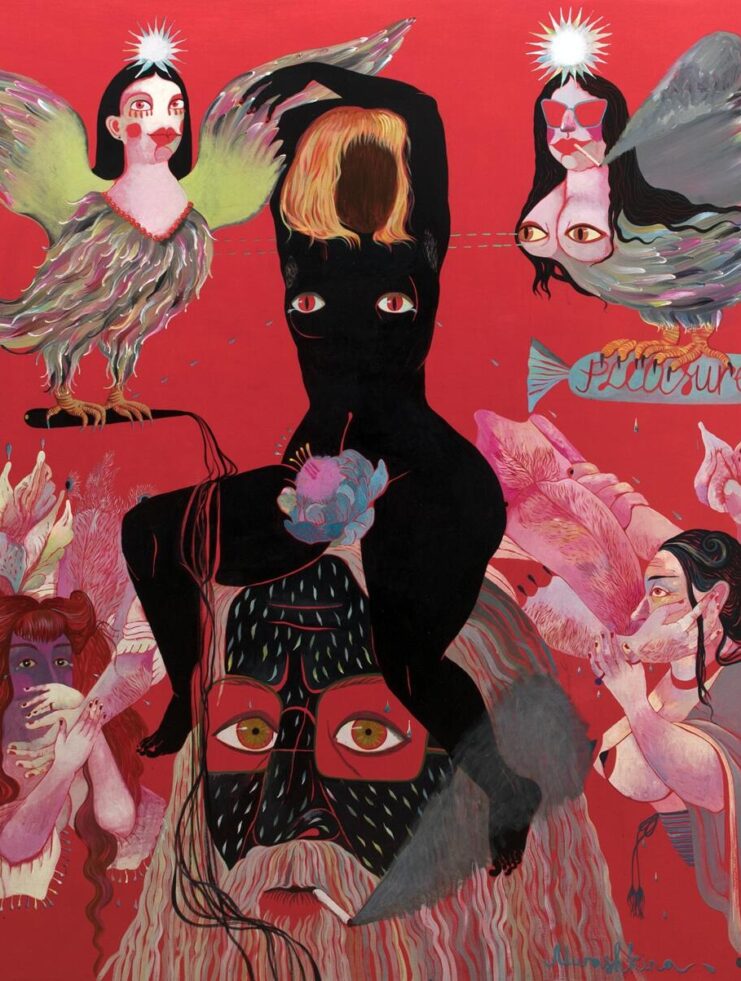
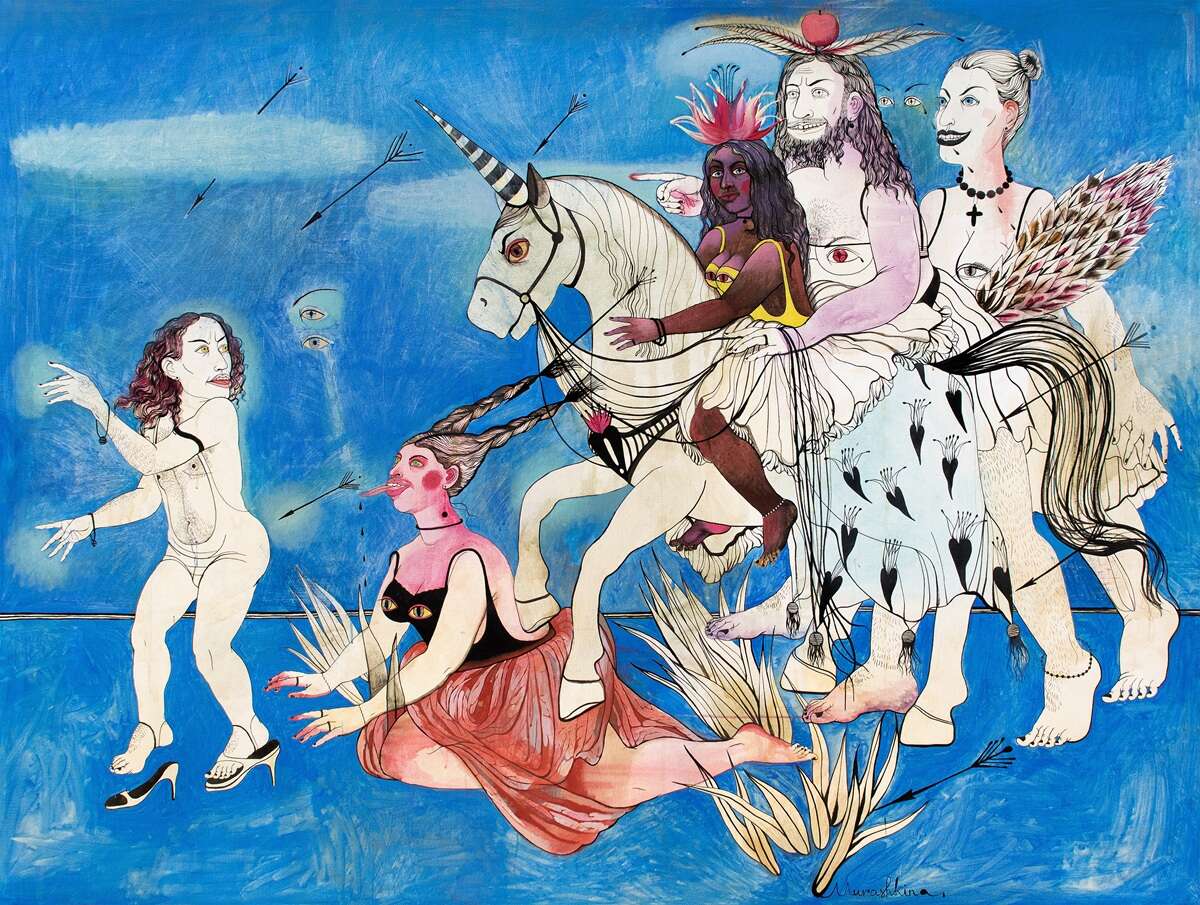
Ukrainian born Nina is a self-proclaimed magical feminist and multidisciplinary artist who works in acrylic, ink drawing, installation, and ceramics to create highly feminine sensual works soaked in sexual liberty. Her art journey began early, taking interest in art and the nude form from the age of 5, her passions further strengthened as she went on to study at the Kharkiv State Academy of Design and Arts and then at the National Academy of Fine Arts and Architecture in Kyiv.
Xavier, of Spanish descent, studied a degree in Sculpture at the Real Academia de Bellas Artes de Santa Isabel de Hungría, before perfecting his marble sculpting at Studio Corsanini and learning wood carving techniques under Aron Demetz.
His body of work connects the classical styles and techniques of centuries past with contemporary ideas that resonate with modern audiences. Currently, the two live together in their home in Catalonia where they continue to hone both of their individual and collaborative crafts.
Exclusive interview with Xavier Escala & Nina Murashkina
To begin, I want to wish you both the biggest congratulations in your success winning the 2025 Beautiful Bizarre Art Prize! What were your first reactions when you found out you had won?
Nina: Xavier and I were sat down for breakfast on our terrace, when he told the news which, of course, was the amazing announcement that we’d won the Grand Prize of the 2025 Beautiful Bizarre Art Prize. In that moment, literally started jumping up and down and dancing around on the terrace.
Xavier: After sharing the news, I sat back and watched Nina dancing around whilst feeling elated. It was truly a magical moment in our lives.
Can you tell us a bit about your backgrounds in the arts and the role art has played within both of your lives as individuals?
Nina: I was born into a family of Soviet engineers and growing up, I was surrounded by sports. I was always a loner and clumsy when it came to team sports. Seeking a safer way to express myself, I enrolled in art school where discovering my inner world became essential. During this time, I studied graphic design, theatre, film, and gained experience in icon painting and storytelling.
A student grant at Krakow then allowed me to develop my style and explore themes of feminism, sexuality and social taboos. My work combines iconography and personal fantasies – and it aims to uplift viewers, inspire hope and evoke emotional and sensual experiences.
Xavier: I studied sculpture and drawing for almost ten years in traditional European academies in both Spain and Italy. Later in my education, I also spent time working in professional art studios. The rigorous discipline taught from these institutions ultimately diminished some of the individuality I had before my art education. After completing my studies, I realised I needed to unlearn certain aspects to recover my freedom of expression.
What roles did each of you play during the creative process of Goddess and how did you find working together?
Xavier: I oversaw the creation and carving of the sculpture from its initial conceptual drawings to the carving out of its final form in wood. I also fired and glazed the ceramic slabs for the inner polyptych. The preparation of the ceramic is very important as it must be precise to fit perfectly into the wooden structure. We both had our own personal projects going on at the same time so finding the right time to work together also played a big part in the process.
Nina: At the beginning of our collaboration, Xavier asked me to create a selection of sketches, and he would pick the one he liked best, as if blessing me to start this collaborative process with him. I took my time, drawing up ideas for my vision and to be honest, communication between us during this process was not always easy. During my childhood, growing up in Ukraine in the 80s and 90s, men were seen as bread- winners and central figures in society. Women, by contrast, were expected to remain in the kitchen, or, at best, appear in beautiful dresses as a kind of table decoration.
Despite this, I was born a rebellious, freedom-loving woman. In my work, I explore the image of woman as a super-heroine, a goddess, a supreme being capable of conquering the highest peaks of the world. And in this, my vision of art and the world converges with Xavier. He’s an even bigger feminist than me, and in Catalonia, where we live, from an early age, girls and boys are raised in equality.
So, I started with a rough drawing of the proportions of the polyptych and gradually made more sketches with the concept and composition in mind. I then began painting on the prepared slabs, as if starting on a blank canvas.
This was a very exciting part of the process as I was able to express physically and metaphorically that inside each woman there’s a unique inner world, full of fantasy and magic. After all, the sculpture opens like the gates of paradise or an inner world, where the viewers can find something new for themselves.
“A student grant at Krakow then allowed me to develop my style and explore themes of feminism, sexuality and social taboos. My work combines iconography and personal fantasies – and it aims to uplift viewers, inspire hope and evoke emotional and sensual experiences.” – Nina Murashkina
Can you tell me a bit about the artworks Nina painted within the shrine and the symbolic significance they hold?
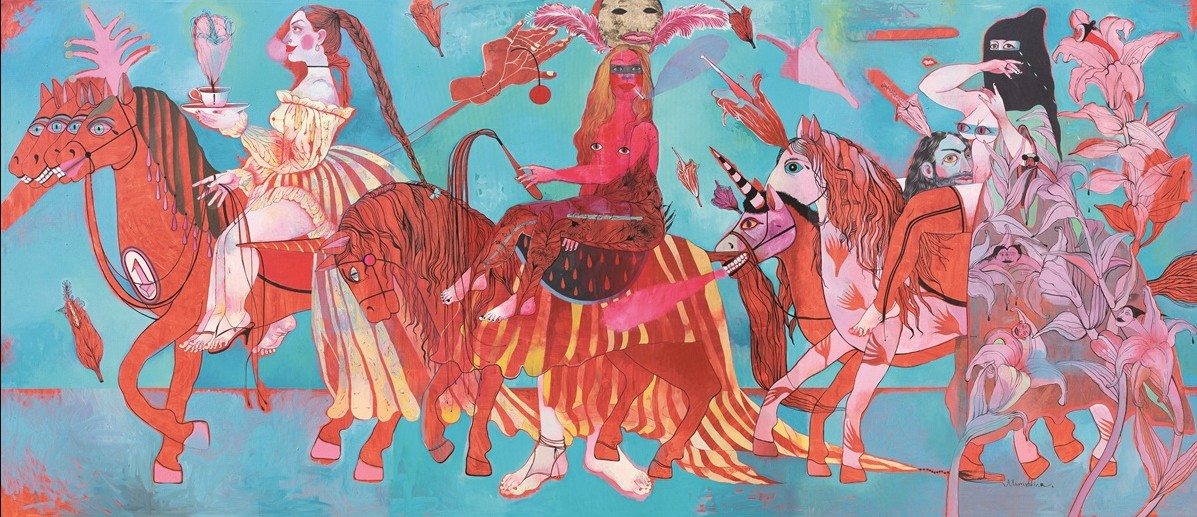
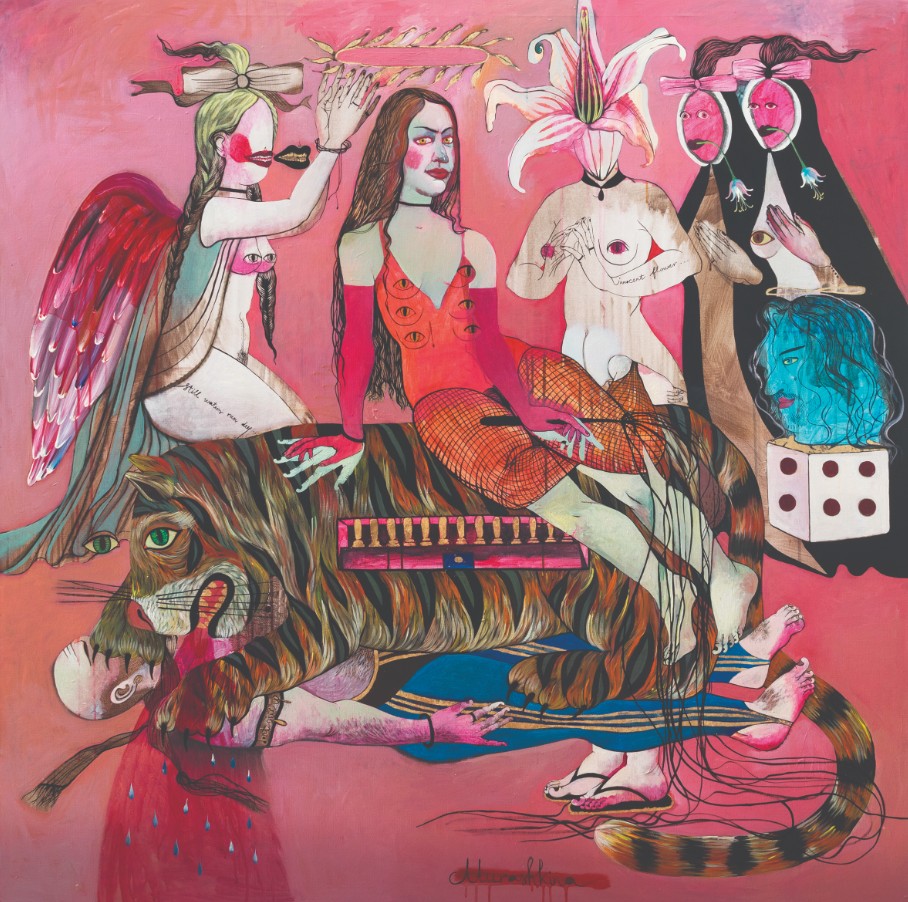
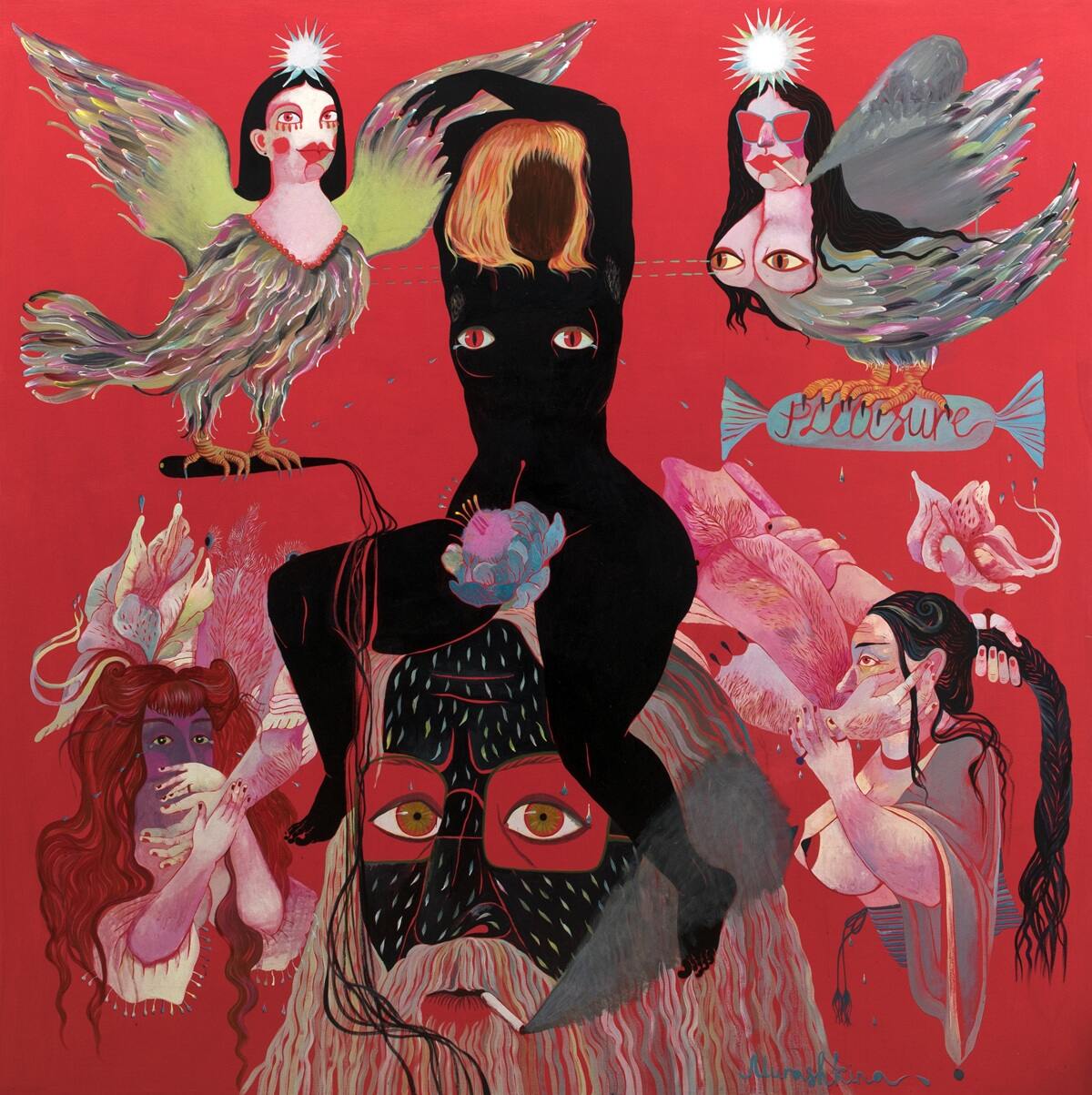
The central figure represents the inner self, divinity, and self-vision that exists within every person. She appears in front of a red, almond-shaped form, symbolising birth and feminine sexual power. The figure is surrounded by snakes, cats, and other felines – attributes that have accompanied representations of goddesses since the beginning of art history.
The women with flowered heads, instead of faces, are excited, in love and silent. Hands and eyes scattered around the composition remind us that we are in the realm of the senses. There is also the figure of a boy as a young Eros, and a wise woman holding an open book with an esoteric meaning.
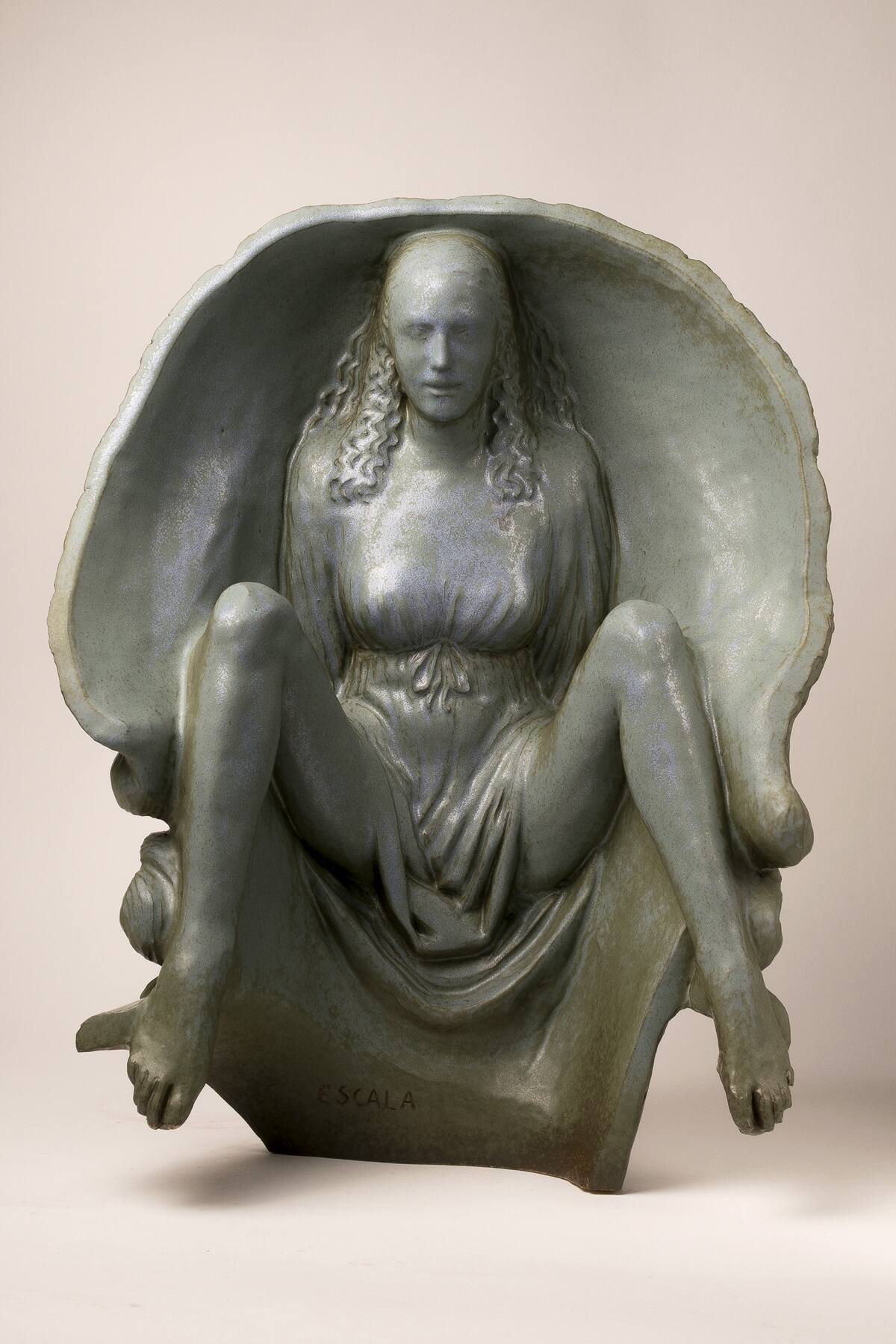
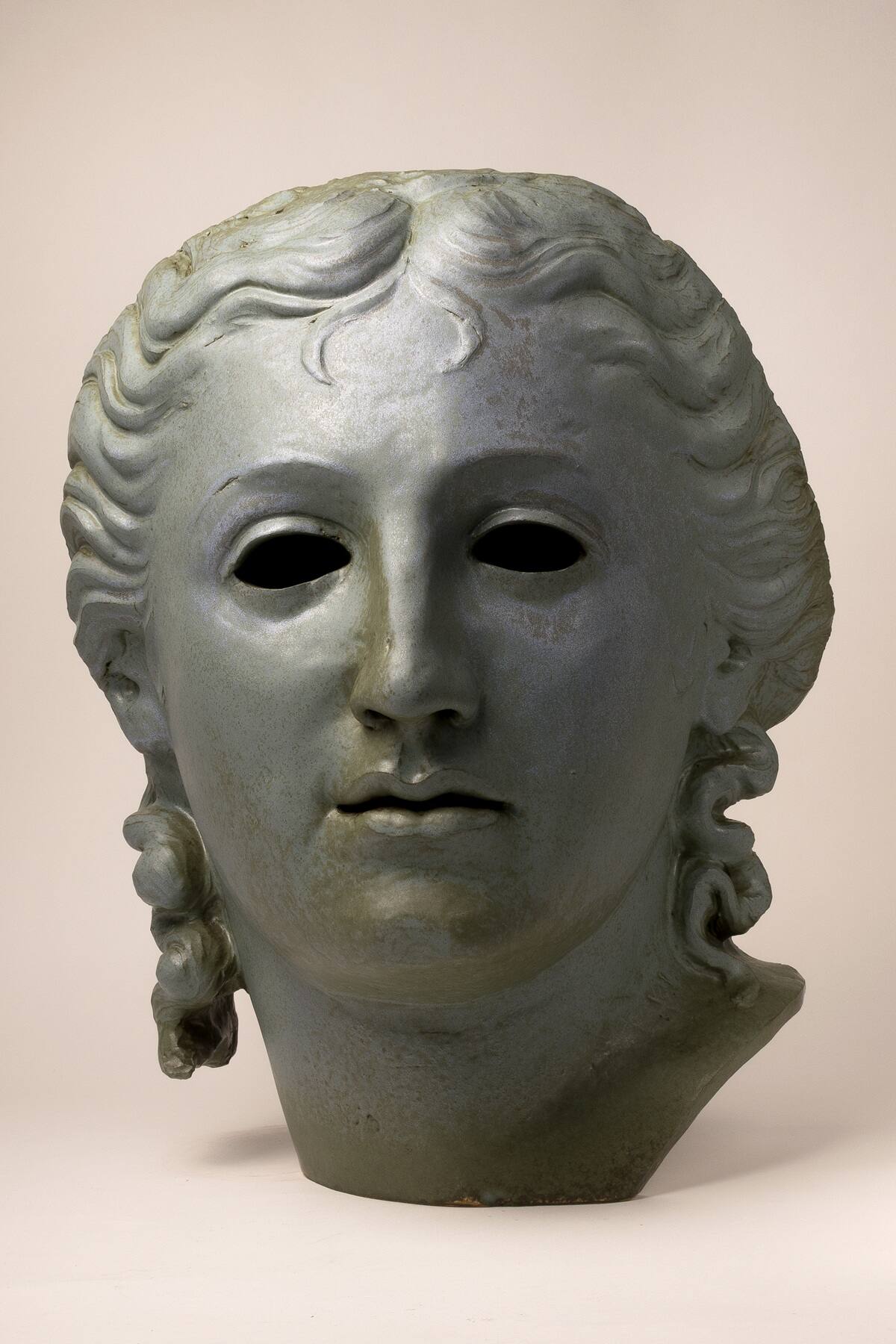
Goddess is also part of a long-standing series that Nina’s been working on since 2018; I’d love to learn more about how Xavier got involved in this project and what this piece means to the both of you!
Nina: We started collaborating on sculptures together back in 2018, after marrying in 2017. It was Xavier’s idea (and a huge compliment), as a homage to my physical and internal beauty, to create this archetypical goddess sculpture. This sculpture is a symbol that reveals our creative potential. For me, every woman is a goddess, in her beauty and strength. I am glad Xavier feels the same way, and that we are both inspired by medieval art.
Xavier: I was working on a series of artworks I call “opening sculptures”, usually consisting of masculine figures that I would sculpt and then paint the inner panels of. When I fell in love with Nina, I asked her to pose for one of my sculptures, proposing that she could paint the inside panels. We learnt a lot during this process and realized the great potential of this typology of sculpture when we presented it at an exhibition and witnessed the public’s emotional reaction.
You are both inspired by medieval art and Goddess is a piece influenced by the shrine Madonna, an art form that began disappearing in 15th century. Can you speak more on what inspired you to revive this art form and do you think these shrines should make a comeback in the contemporary art scene?
Xavier: I didn’t consciously decide to revive this sculptural typology. I had ideas to express and was looking for a way to do it. Many years ago, I saw images of the shrine Madonna in Carl Gustav Jung and Joseph
Campell’s books as well as in person at the Metropolitan Museum in New York and the Musée de Cluny in Paris. I realised that I wanted to express a similar idea of the medieval Madonna, but without a religious context. Later, I read that many of these shrines were destroyed or transformed due to some theologians criticising the fact that the figures of God or Christ were smaller than the women containing their likeness! In that moment, I realised we could create an artwork that was contemporary and alive, and we were finally expressing the idea of divine femininity contained within a feminine form.
In today’s world, if we want to live with more social equality, I think it’s a terrible anachronism in religions that God is masculine.
Your bodies of work both have a sense of being both divine and sexually charged in nature as you explore the human body and condition. It reminds me of classical artworks of centuries past with a very modern twist. What are your thoughts on this interpretation?
Nina: Thank you for the compliment. I am very pleased to hear your interpretation. For me, it is important that viewers recognise the divine and sensual aspects within the work, because these two dimensions are inseparable. When viewers recognise something classical in our art, I feel a great sense of honour, because it means that the traditions we admire so much continue to live in contemporary forms.
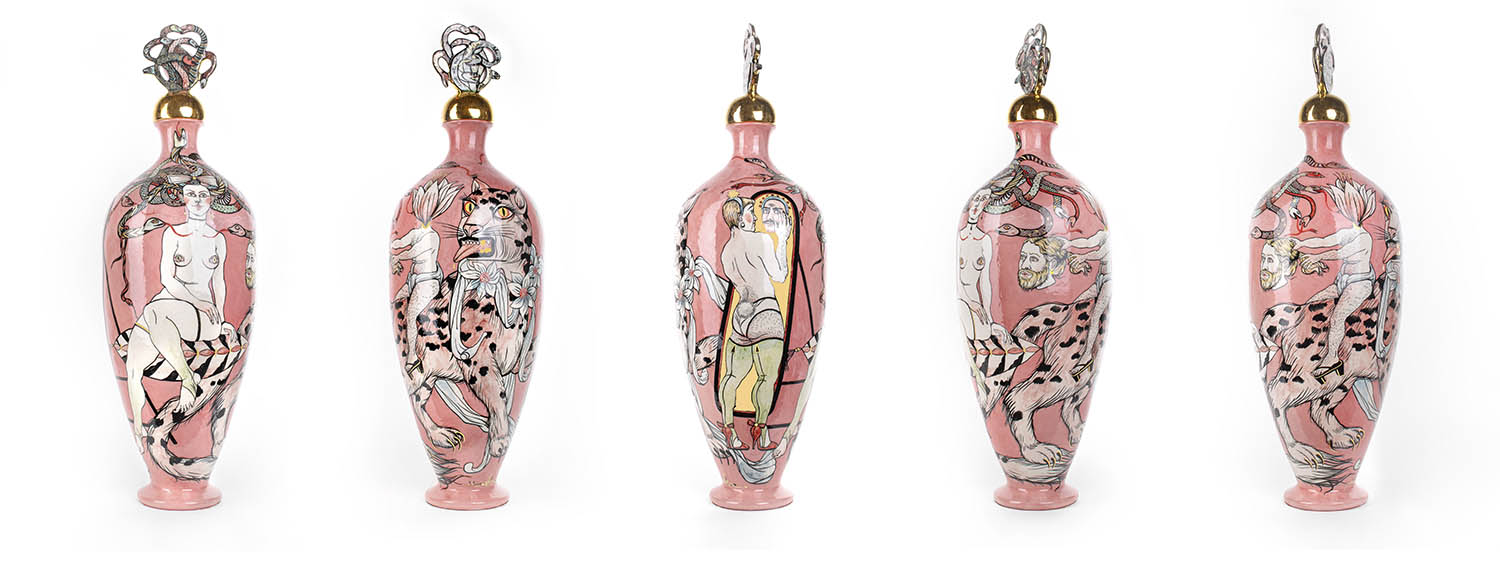
Xavier: I spend a lot of time studying the meaning and symbolism of “classical” art, not just its external forms. Once I began to truly understand this, I felt as if I were following in the footsteps of the artists of the past – facing similar problems and using the same resources for artistic expression.
The idea of the divine, including its sexual dimension, hasn’t changed since the very beginning of art history. For me, it is essential to understand this in order to renew it and bring it to life. If I approached “classical” art by simply imitating its style of external appearance, the result would risk being nothing more than an imitation.
What have you learnt about yourselves and each other through this creative process?
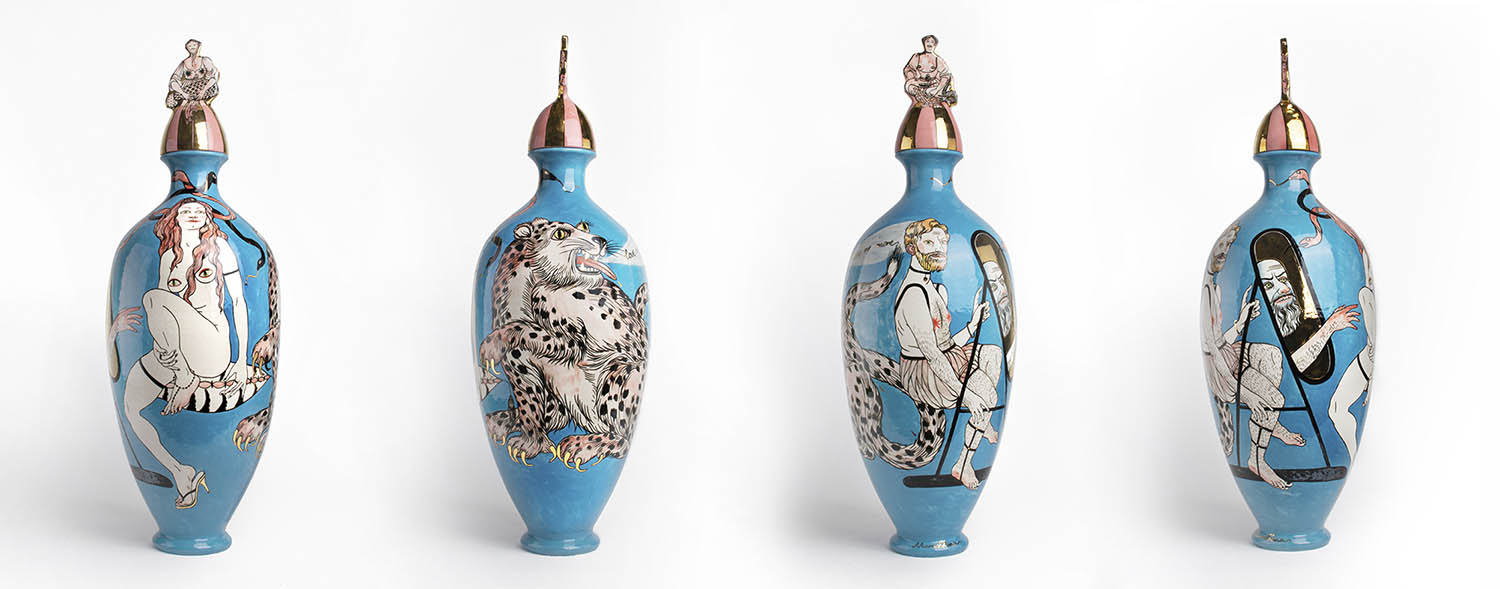
Nina: Throughout our creative process together, I realised how much Xavier and I complement one another as artists. I am responsible for the sexuality of the piece, whilst Xavier is responsible for its spiritual aspect.
Xavier: It is my tribute of respect and devotion to feminine power, a force that my own masculine energy must constantly seek reconciliation with. Since childhood, I have been well educated in the values of gender equality, and I consider myself a feminist.
Yet, when it comes to the concept of the divine, equality has no sense. There, feminine and masculine energies can complement or confront one another. We can see this clearly in mythology, where goddesses appear not only as nurturing and life-giving figures, but also as powerful, dangerous, and vengeful beings. In this artwork, I was struck by how our energies, Nina’s and mine, intertwined and complemented one other to create something that felt almost like an androgynous creature, a union of opposites.
What were some of the biggest challenges when working on Goddess?
Nina: Goddess is a complex piece in terms of its architectural form. For me, the biggest challenge was to both subjugate, and at the same time reveal, the potential of a woman’s inner world – where each element has its own meaning and gives the viewer an impetus for fantasy. It was also the first time we used ceramic panels inserted into the wood, but it worked really well, as I was able to paint my part at the same time Xavier was sculpting in his studio. I didn’t need to wait for the sculpture to be finished to start to paint, and the result was intense and precious.
Xavier: I found the biggest challenge to be uniting our creative energies. The artwork needs to have unity, and to achieve that, our work must flow in the same direction. The expression of the painting affects carving the sculpture and vice versa. I had to accept that I didn’t have full creative control over the artwork and as artists we both need freedom of will to create. Letting go of control wasn’t always easy, but it was necessary, and in the end, it made the piece stronger.
What do you hope viewers can take away with them after viewing both your separate and collaborative bodies of work?
Nina: I think the combination of two energies – male and female – creates a powerful impact on the viewer on multiple levels. Xavier and I often notice people crying when engaging with our collaborative works. These genuine, emotional reactions are even more meaningful to us than financial reward. They cannot be bought, and for us, they are the most important measure of the work’s value.
What’s next for you? Can we expect to see more collaborative works from you both?
We currently have two more collaborations in the works, both in the advanced stages and with plans for more to come. We intend to continue developing this connection, deepening the integration of painting into sculpture, between masculine and feminine, the material and the spiritual. We believe there is still so much to discover.
Xavier Escala Social Media Accounts
Website | Instagram | Facebook