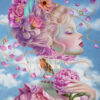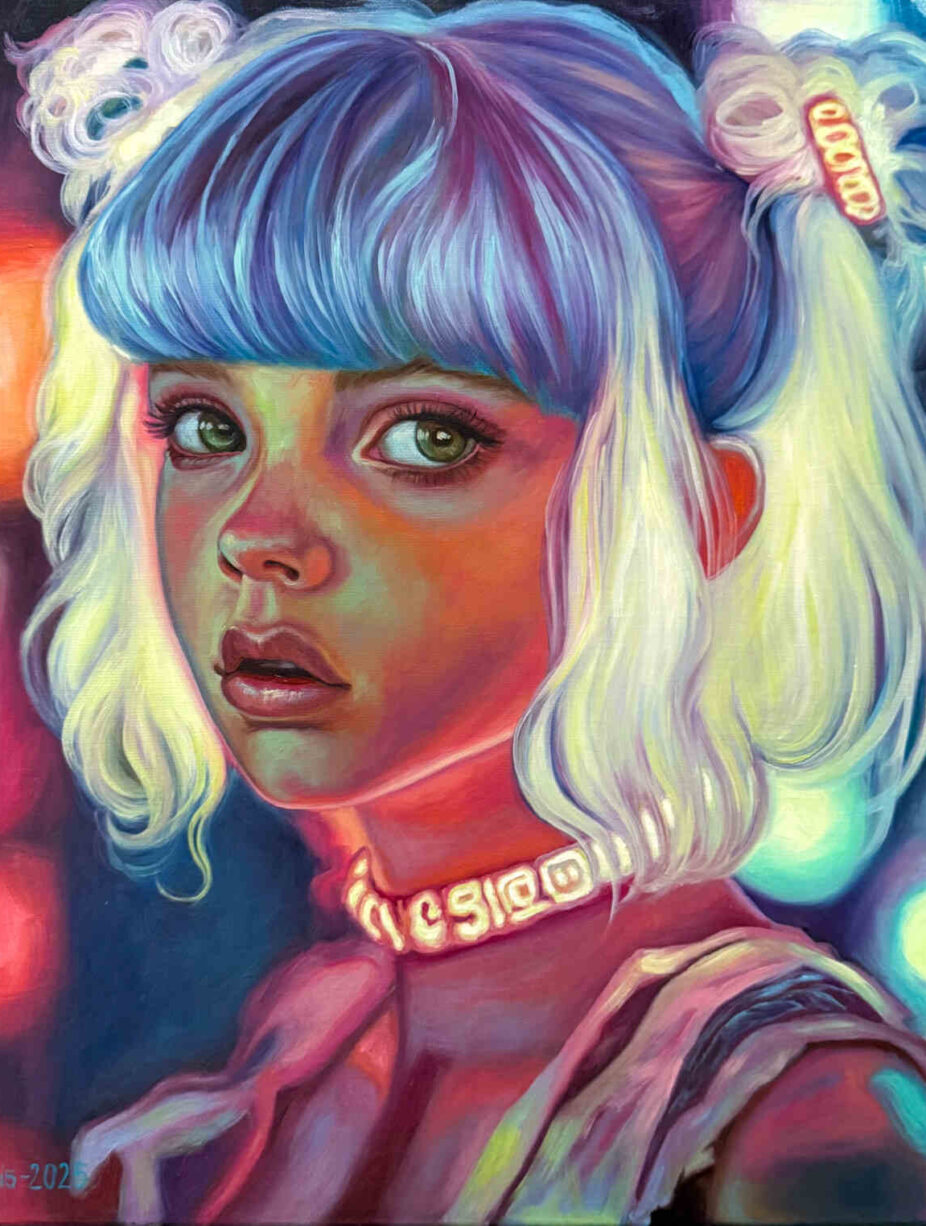
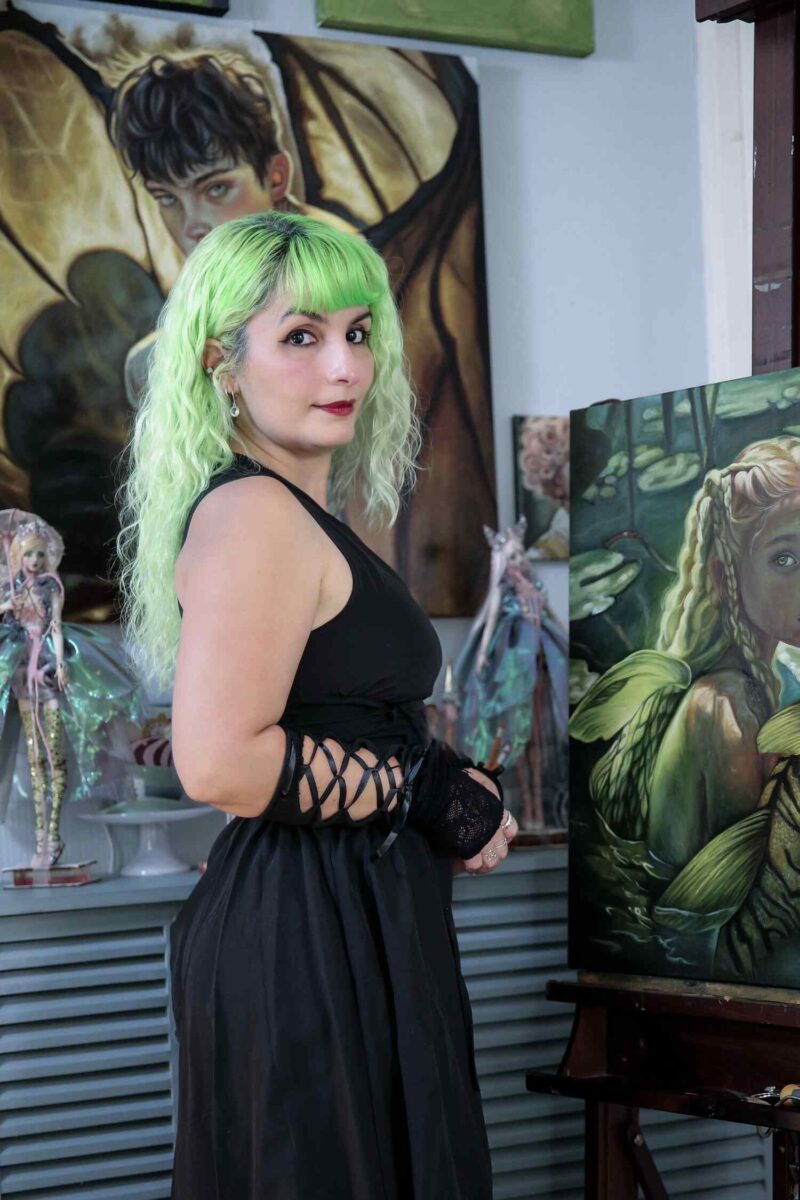
I never knew oil paintings could actually glow until I discovered the works of Aidamaris Roman. Her paintings radiate an ethereal light that feels as if it could have only been created using pure magic. Aidamaris has the incredible ability to rekindle the childlike wonder we often lose throughout our adult lives, encouraging us all to explore fantastical realms and wonderous creatures that we once loved as children but have come to neglect with age. She reminds us that the next time we see a sparkle of sunlight or the flutter of wings within the corners of our eyes, to take a moment and remind ourselves of the magic that surrounds us all.
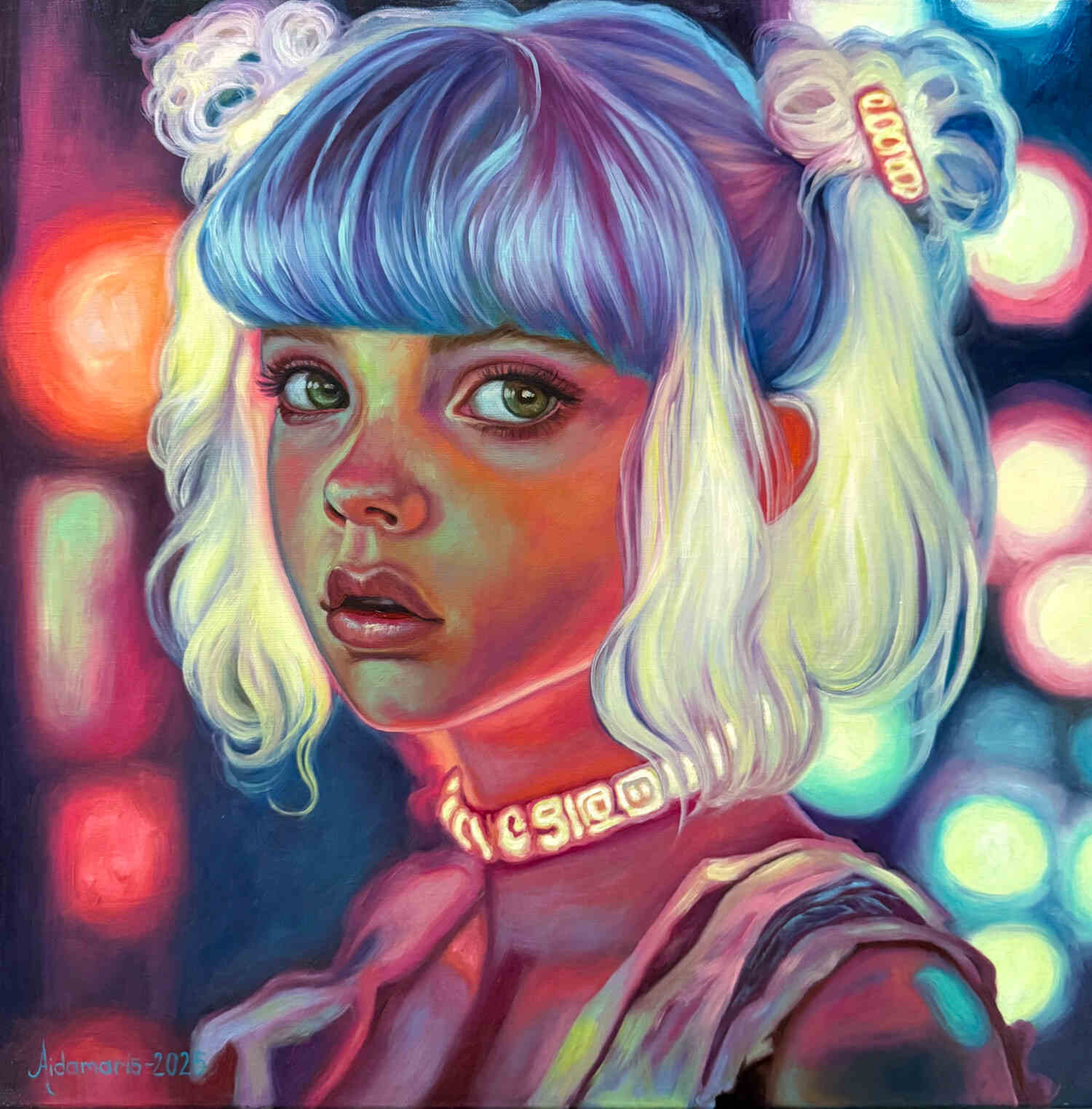
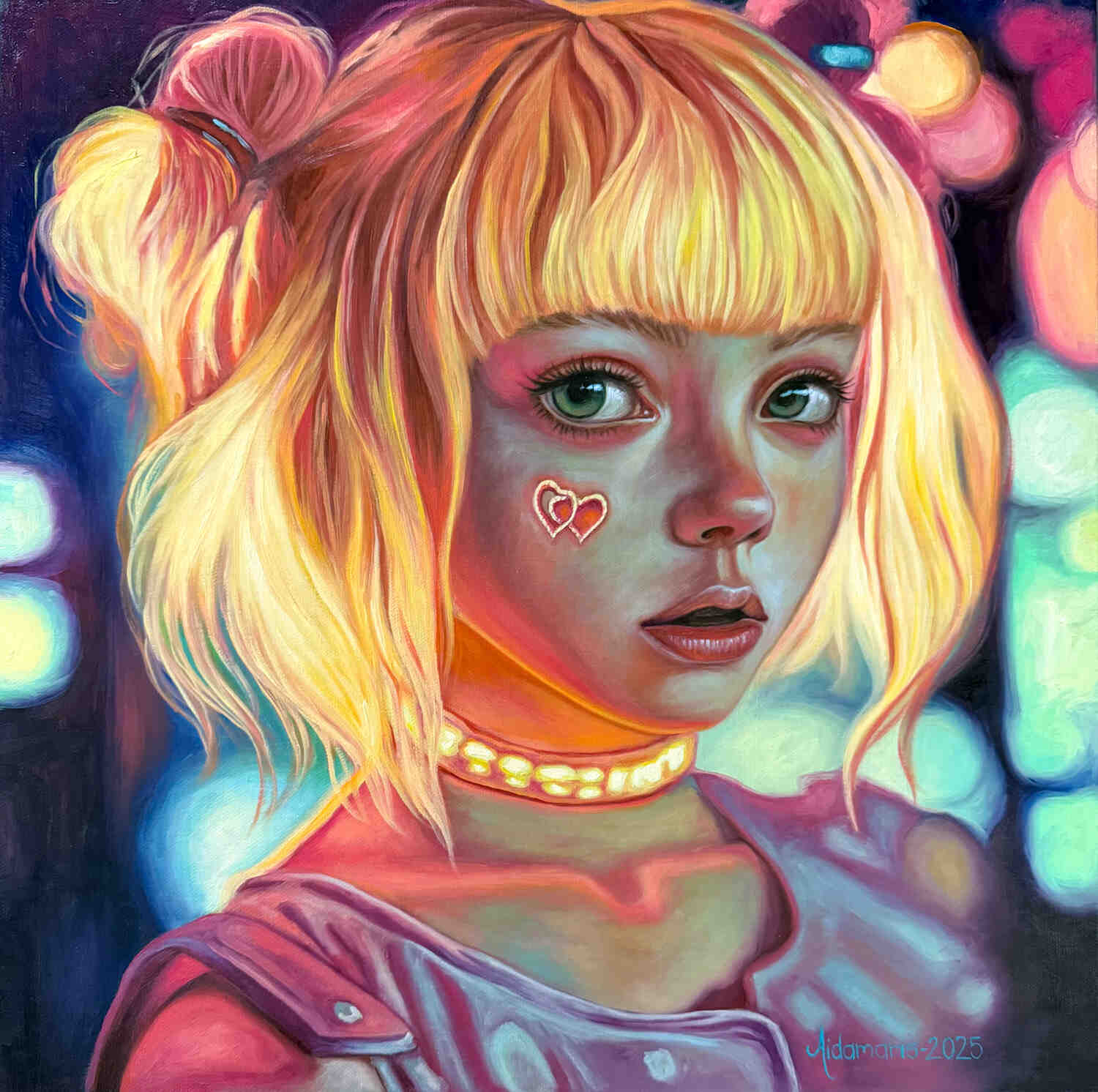
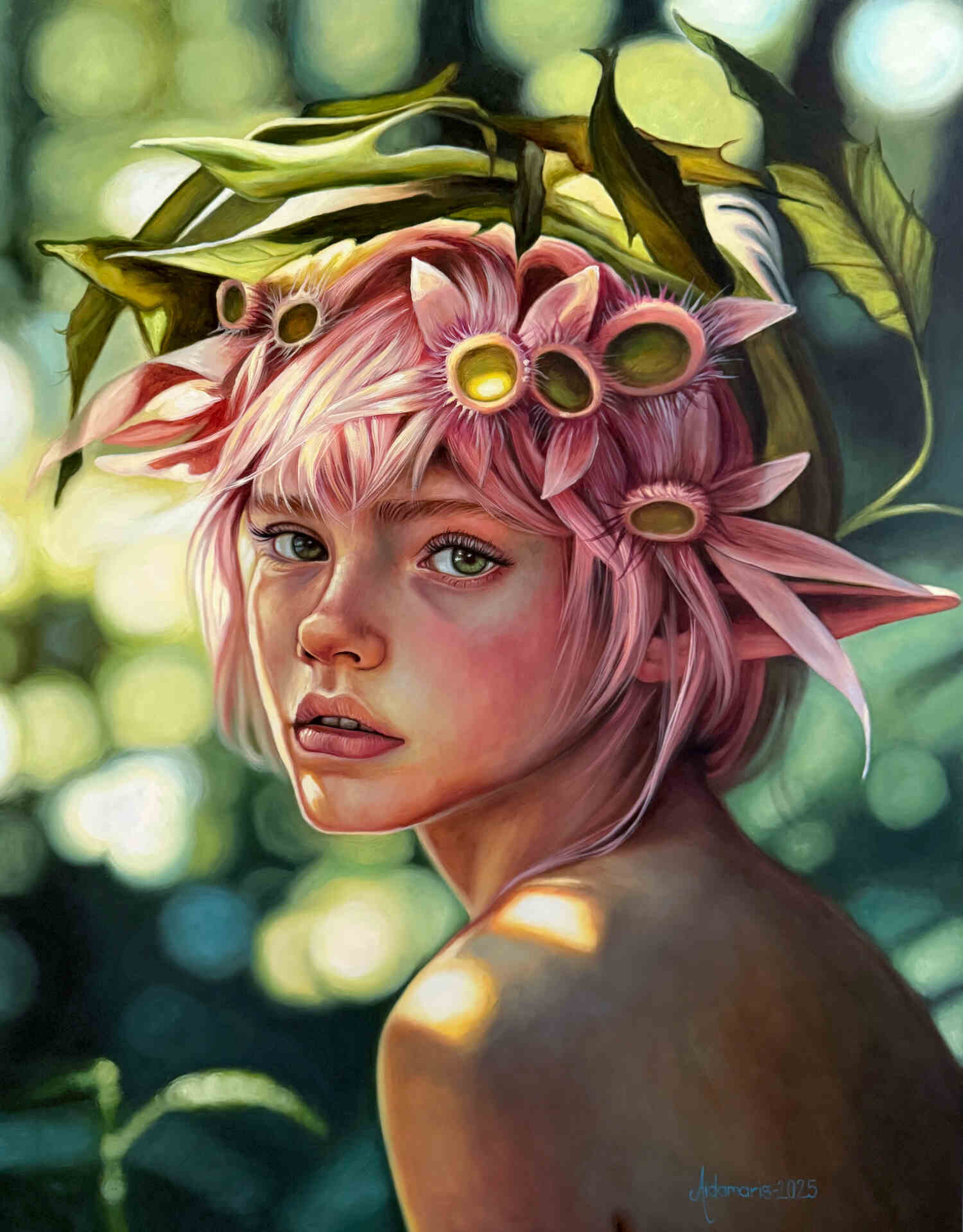
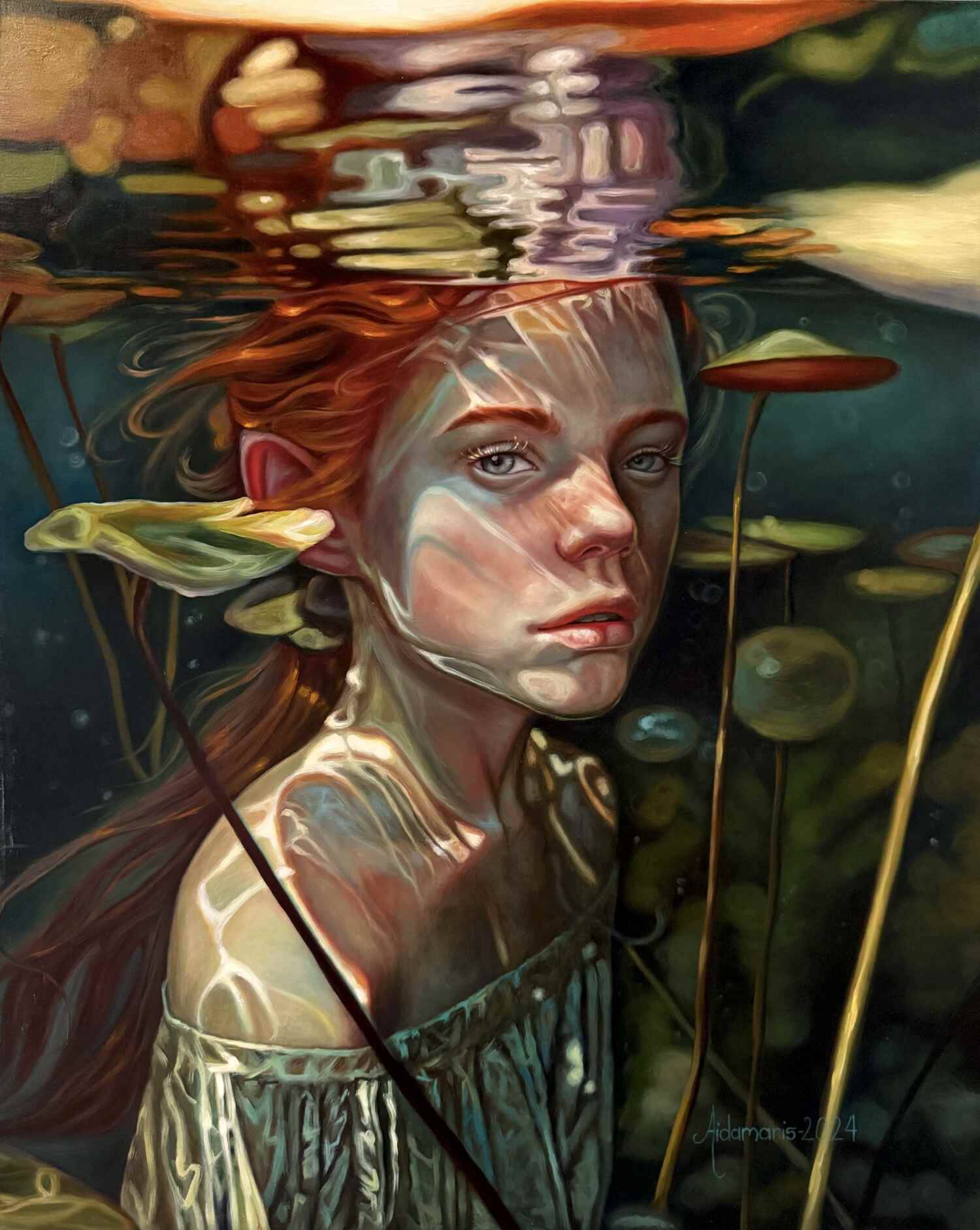
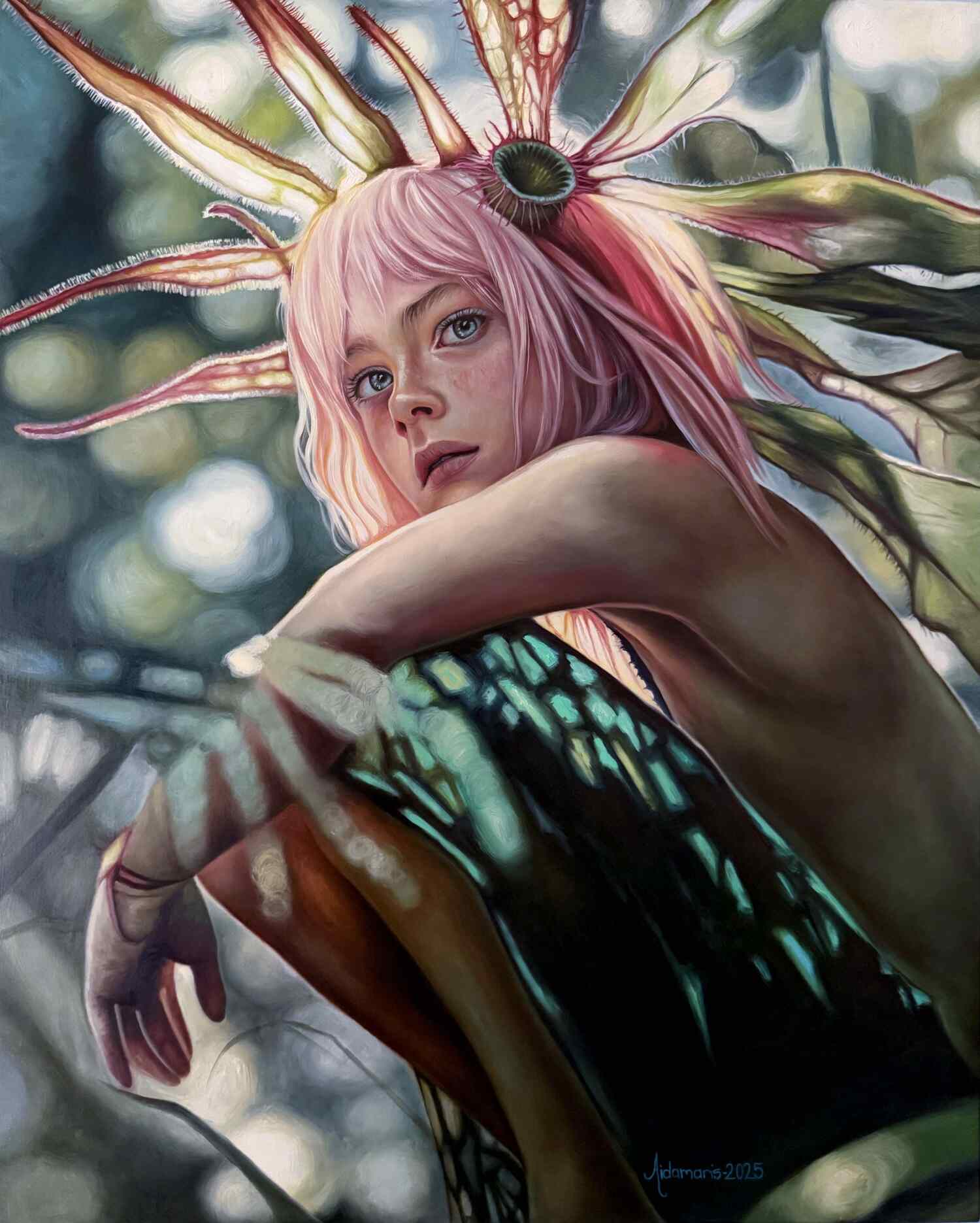
Puerto Rico-born Aidamaris Roman is a fine artist known for her luminescent oil paintings that play with light and shadow to create fantastical worlds where realism and fantasy blend together in harmony. In her personal body of work, Aidamaris’ subjects often look to the side whilst holding eye contact with the viewer, encouraging them to explore and observe their surroundings in hopes to inspire curiosity and fire the imagination.
From a young age, Aidamaris has always had a passion for art and began developing her skills in painting and drawing independently. Alongside her creative interests, she’s also a passionate business woman who studied Marketing and Business Administration at university and now utilises both her creative and business skills in tandem in her collaborative business with her husband and artistic partner Gamalier Bravo. In 2010, after meeting her husband, the two launched their porcelain doll project ‘Forgotten Hearts’, a business in which the two have explored many creative disciplines including sculpting, photography, costume design, makeup and hairstyling.
Aidamaris Roman is currently represented by PoetsArtists, an online platform and art community providing publishing and marketing opportunities to contemporary realist artists.
I love crafting not just a piece of art, but an entire world around it — one that connects emotionally and visually with others.
Interview with Aidamaris Roman
What does a typical day in the life look like for you as an artist?
My life is a tapestry woven with art, family, and a lot of love. I’m a full-time artist, and I’m also
the proud mother of two wonderful neurodivergent sons, now 20 and 21 years old. Even as young adults, they still choose to spend time with me every day, and that connection is one of the greatest gifts in my life. Their unique ways of seeing the world continue to influence how I process emotion, light, and meaning in my work. I usually begin my day slowly — coffee in hand, soft music playing, and a quiet moment in the studio before diving in. I work with oil paints, layering glazes to create luminous, almost surreal effects. My current series explores themes like memory, longing, and the tension between nostalgia and technology — using light as both a metaphor and material. In the summer, my studio transforms into an informal art camp. My two nieces are here almost every day, and we spend hours making art together. It brings so much joy and energy to the space — I love being able to share my passion with them and encourage their creativity. There’s paint, glitter, music, and lots of storytelling.
Throughout the day, I move between painting and sculpting porcelain dolls for my ‘Forgotten
Hearts’ brand, which offers me a more tactile and narrative-focused outlet. My days are never the same — some are emotionally charged and quiet, others are full of laughter and collaboration — but they all revolve around creating beauty, and being surrounded by the people I love. Art isn’t just what I do; it’s how I stay grounded. It’s how I honor the complexities of motherhood, neurodivergence, and identity — and how I connect with the world.
Alongside painting, business is also a big passion of yours, I’d love to hear more about your passion for both art and business and how these two facets of yourself intertwine and contrast with one another!
For me, art and business aren’t opposites, they’re two parts of the same creative force. Painting is where I express my inner world: memory, emotion, longing, light. It’s quiet, intimate, and deeply intuitive. But building a business — whether it’s sharing my oil paintings with collectors or running ‘Forgotten Hearts’ — gives me a completely different kind of fulfillment. It’s about vision, problem-solving, communication, and long-term strategy. I find that exhilarating.
I’ve always seen business as its own art form — it requires imagination, persistence, and courage. When I’m sculpting a doll or preparing a painting for exhibition, I’m also thinking about presentation, audience, narrative, and experience. I love crafting not just a piece of art, but an entire world around it — one that connects emotionally and visually with others.
At times, the business side can feel like a contrast to the slower, more emotional process of painting. Business moves faster, demands clarity and decisions. But it also gives my work structure and direction. It allows me to be independent, to support my family, and to connect with collectors and communities around the world.
As a woman, and a Puerto Rican artist, I also find power in running my own creative business — it’s a way of claiming space, telling my story on my own terms, and showing others that you can be both deeply sensitive and deeply strategic. The balance isn’t always easy, but it’s one of the most rewarding aspects of my journey.
Fantasy, nature and spirituality are key themes throughout your work, what is your own relationship like with these topics and how have you been inspired by them throughout your career?
I grew up in a Christian family, so spirituality has always been something natural and deeply
rooted in my life. From a young age, I was encouraged to believe in something beyond the
visible — to seek the divine in silence, in beauty, and in the mysteries of the world. Even as my personal beliefs have grown and evolved, that spiritual foundation has stayed with me and continues to guide my creative process.
I was also blessed to grow up in the countryside of Puerto Rico, where I spent most of my childhood lost in the woods — barefoot, surrounded by trees, rivers, and the quiet magic of nature. Those early years shaped me profoundly. Nature became my sanctuary, my playground, and my first source of inspiration. I still carry that sense of wonder with me, and it often finds its way into my paintings — not just as scenery, but as an emotional and symbolic presence.
Fantasy allows me to explore things I can’t express directly — longing, vulnerability, memories that feel like dreams. Through glowing light, imagined creatures, and surreal moments, I try to build visual worlds where the spiritual and emotional overlap. My paintings are not always literal, but they are always honest. I use fantasy to reach for truth in a more poetic way.
Over the years, these themes have become a kind of personal mythology — one I return to again and again to make sense of the world, to find healing, and to connect with others who see beauty in both the visible and the invisible.
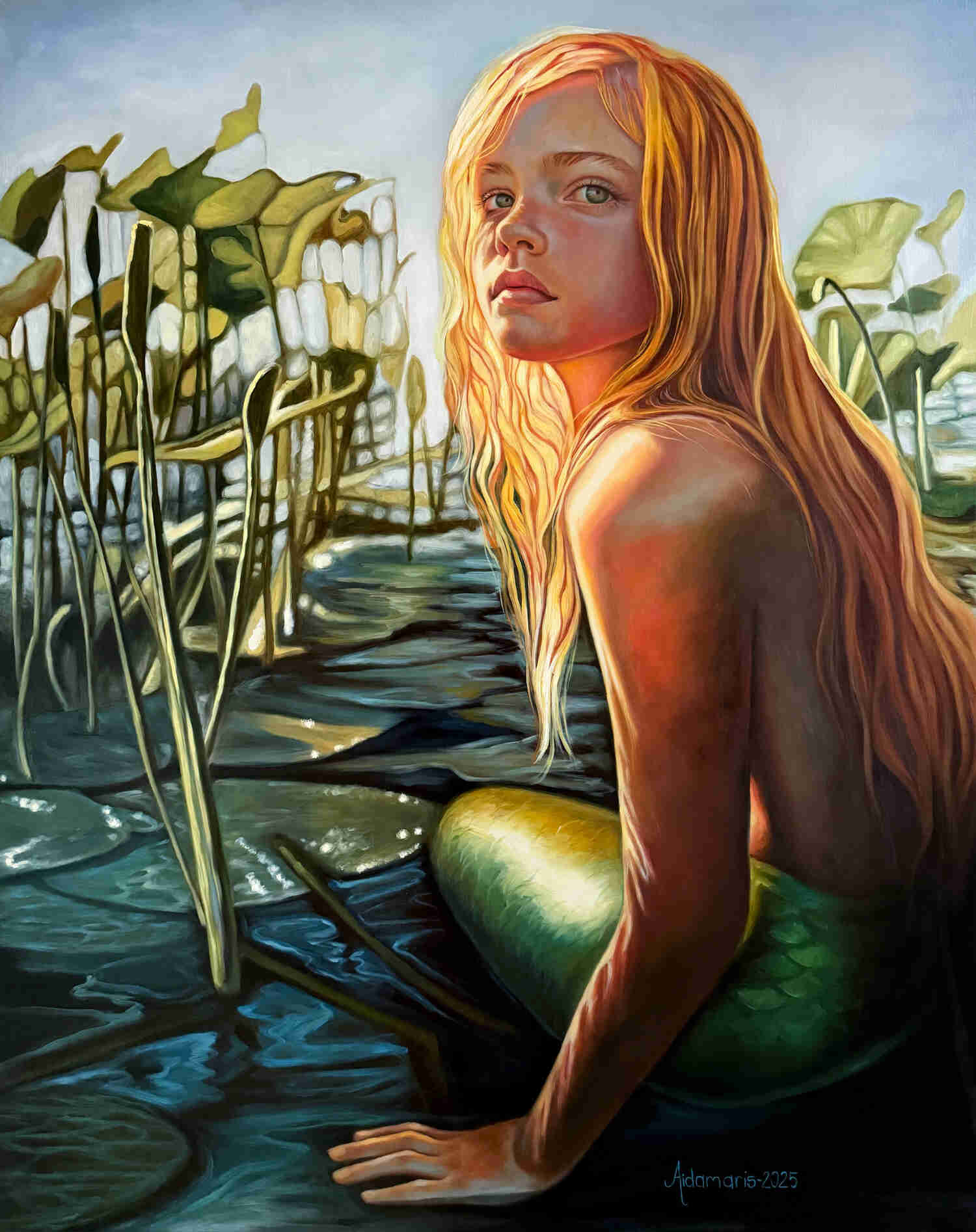
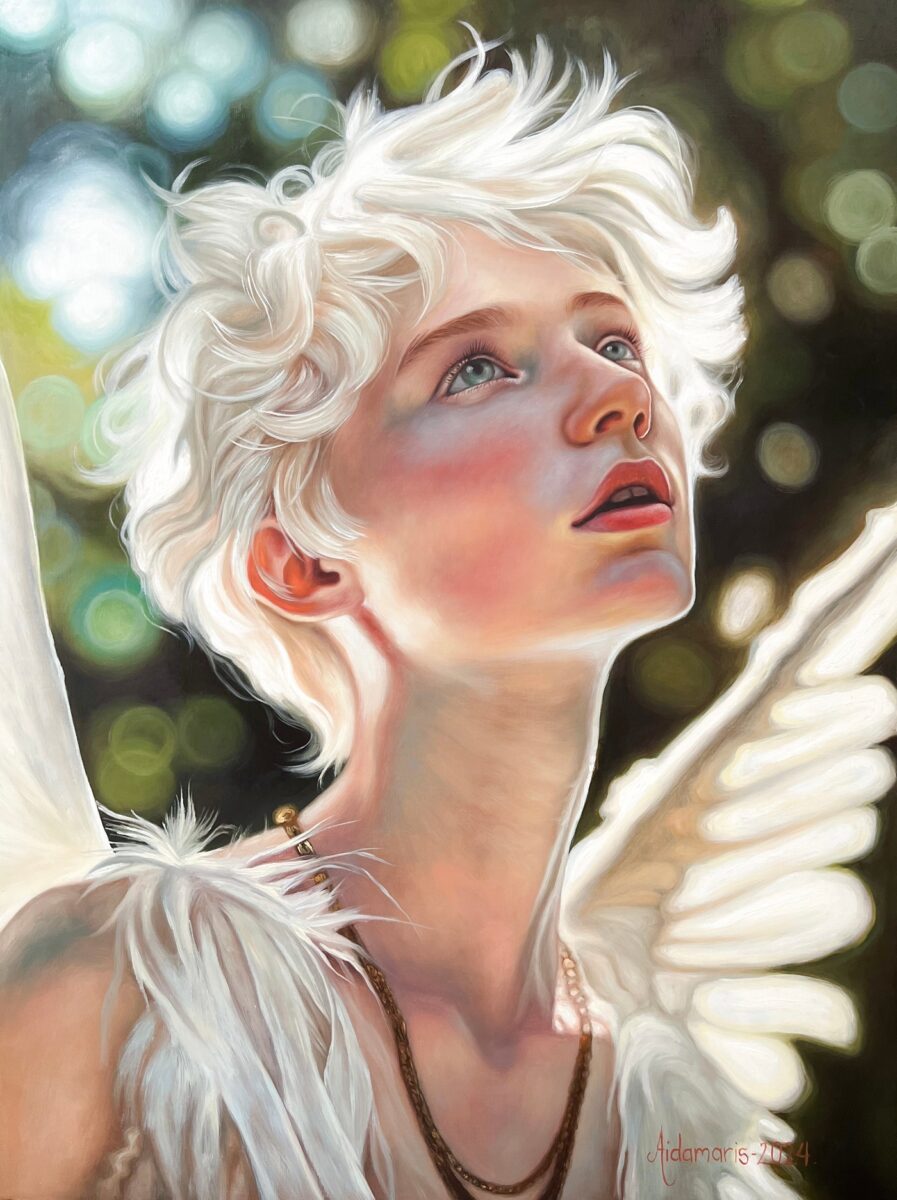
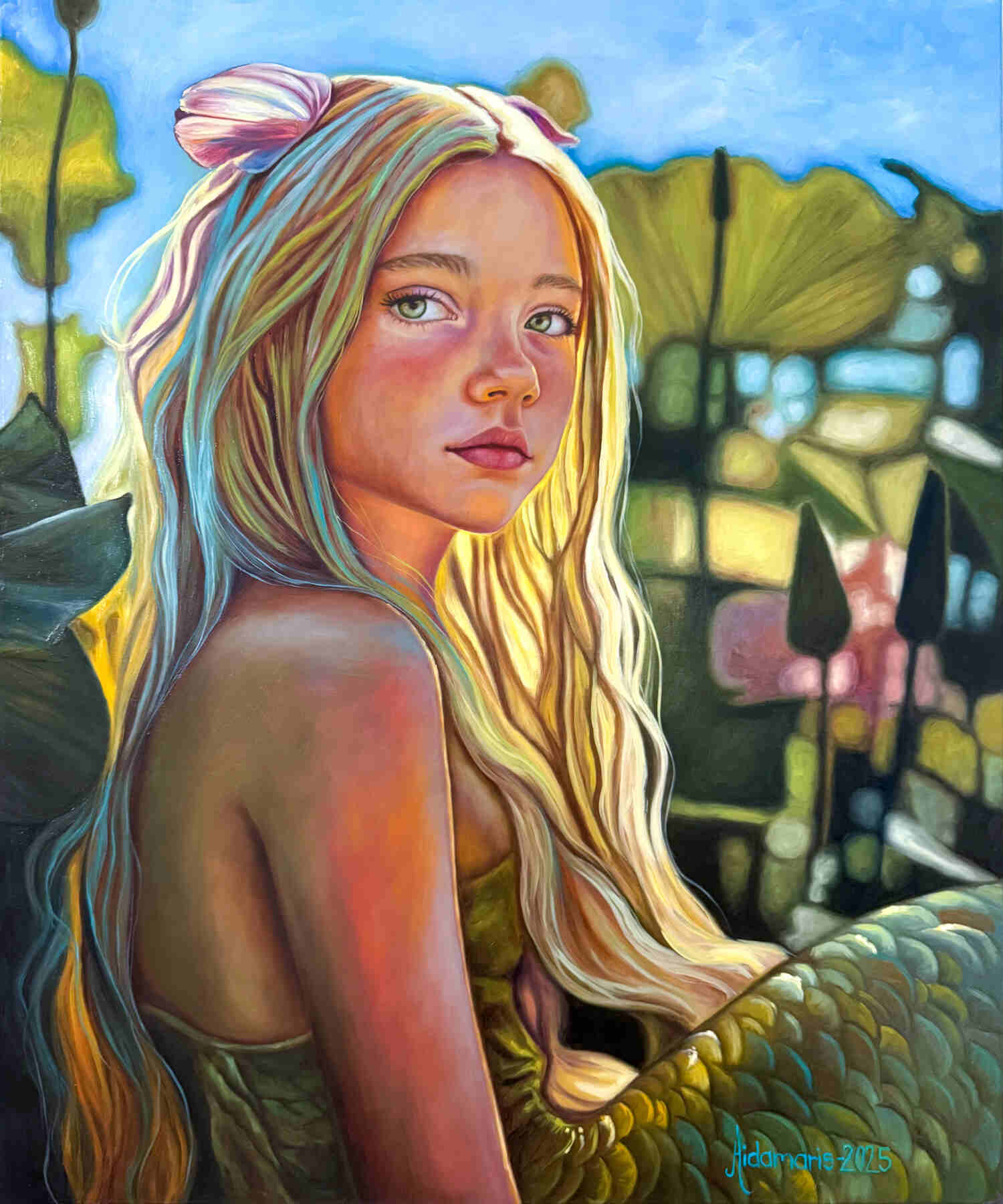
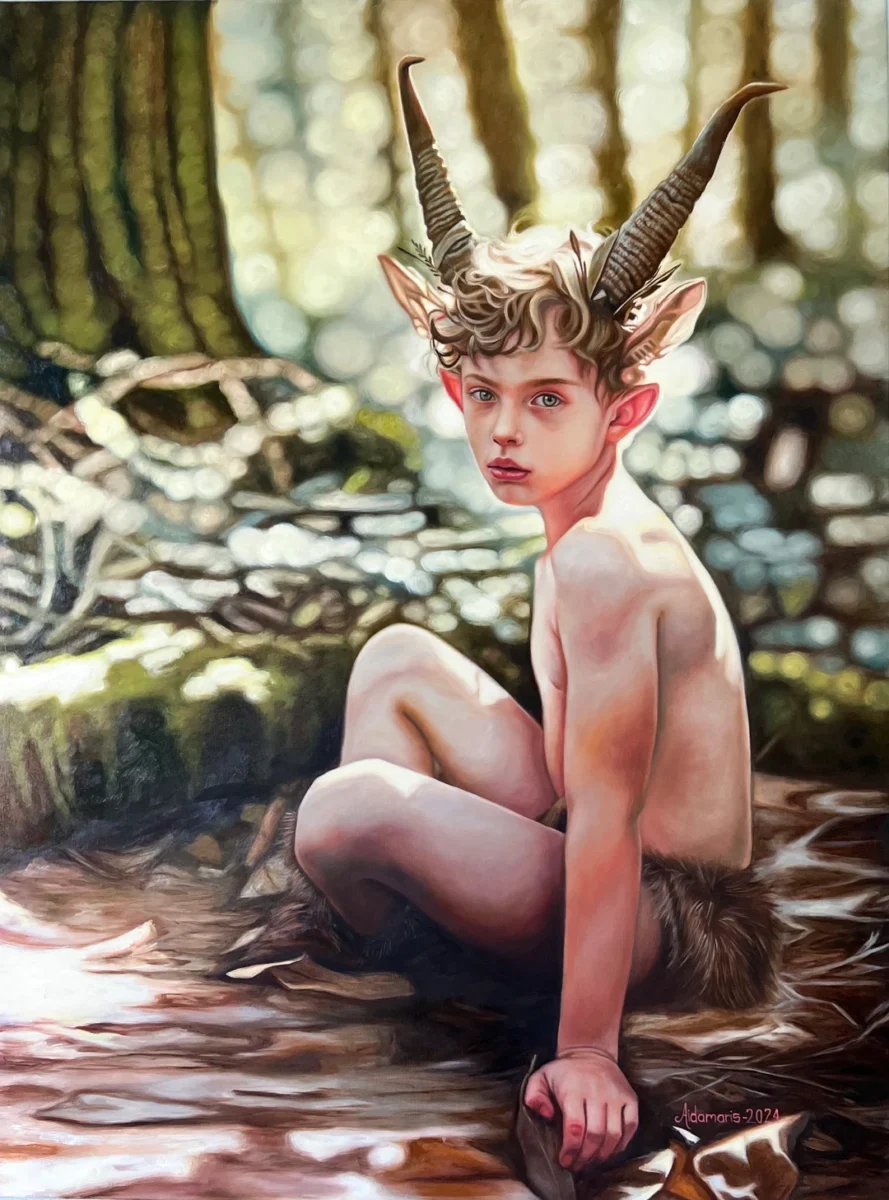
Some of my favourite works from you include ‘Ghost in Technicolour’, ‘Neon Glitch’ and ‘Artificial Muse’, the way you use light and colour is just incredible and so unique! What drew you to this style of painting and do you have any tips for those of us who’d love to learn to create something similar in terms of lighting techniques?
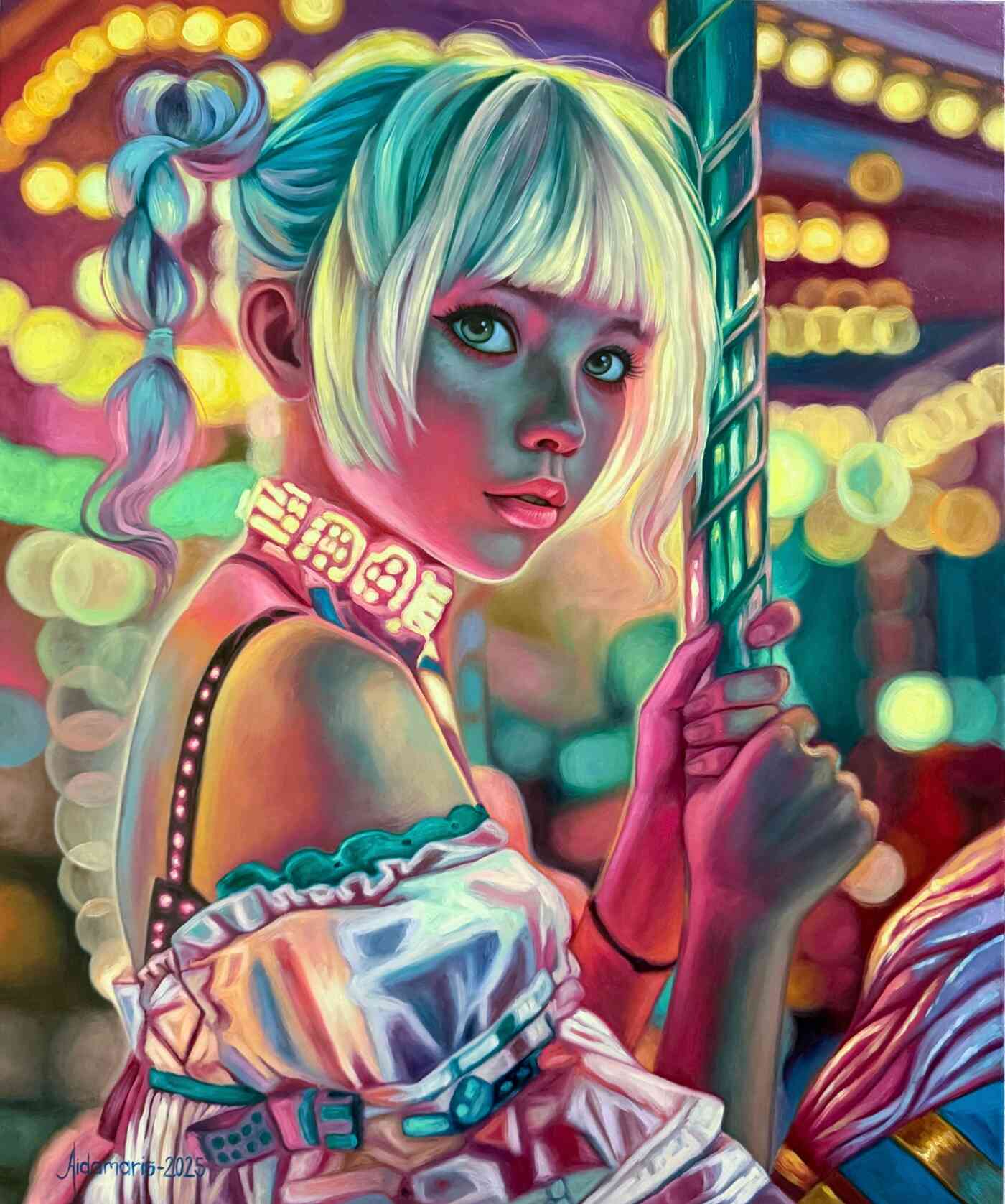
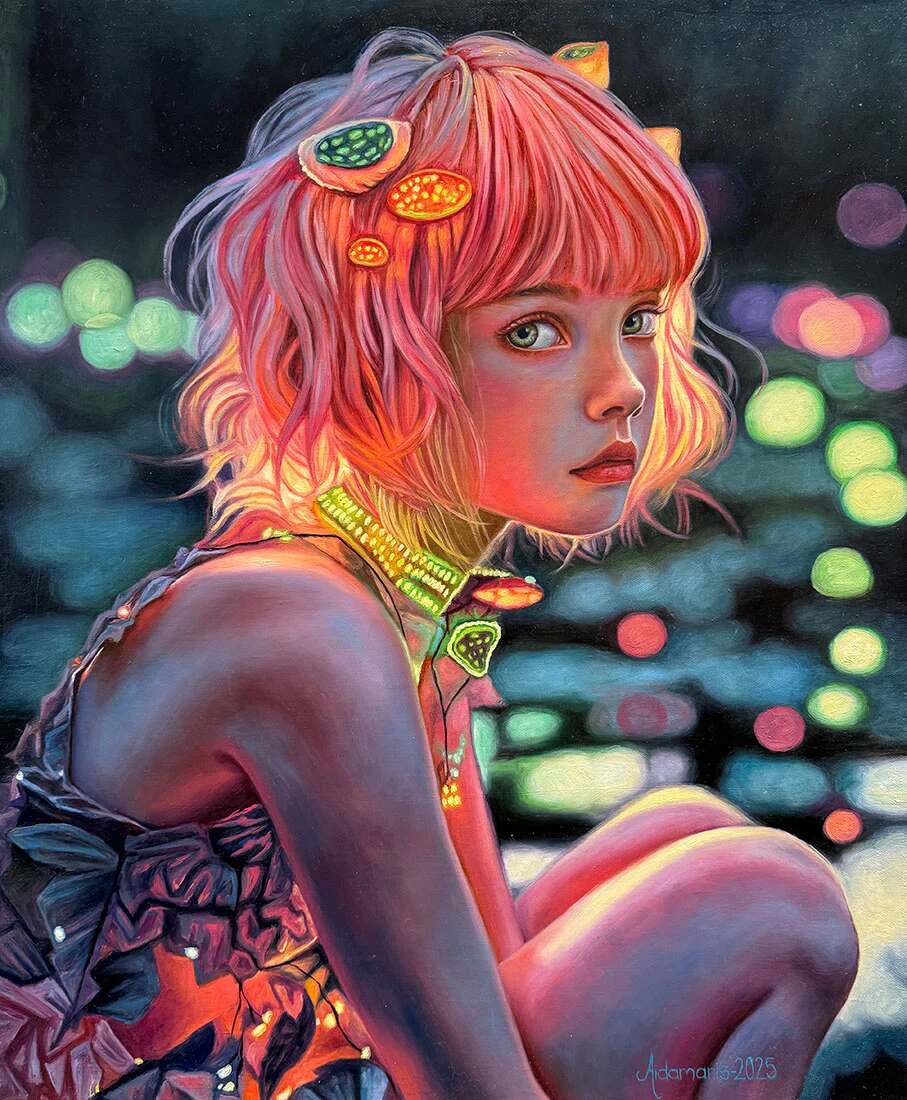
Thank you so much! Light has always been a central part of my work — not only as a visual element but as a way to express emotion, memory, and atmosphere. Growing up surrounded by the natural beauty of Puerto Rico, I was deeply inspired by the shifting qualities of natural light — the warmth of a sunset, the softness after rain. Later, I became fascinated by artificial light sources, like neon and digital glows, which add a modern, almost surreal energy to my paintings.
An important influence on my approach has been photography — especially professional photos I take of my porcelain dolls. I love how photography can blur the background, creating depth and focus on the subject. This inspired me to mimic that effect in my paintings by carefully controlling edges and using translucent layers to create a soft, glowing atmosphere that makes the figures almost float out of the canvas.
Technically, I work mostly with oils, layering transparent glazes in complementary colours to build up luminosity without ever using neon pigments directly. I pay close attention to temperature contrasts and edge sharpness to create a sense of depth and movement within the light.
For artists who want to explore similar lighting, I suggest really observing how light behaves in different settings and how it interacts with surfaces. Experiment with layering and glazing techniques if you work in oils or acrylics. And don’t underestimate the emotional power of light — think about what the light in your piece is meant to feel like, not just how it looks.
You and your partner have both joint and separate artistic practices, what does your creative relationship look like, and do you find yourselves taking inspiration from each other?
My husband and I are complementary opposites — and I think that’s what makes our creative relationship so special. We’re both painters, both working in oil, but our energies and approaches couldn’t be more different. I’m deeply emotional, intuitive, and often drawn to fantasy, light, and symbolism. He’s more grounded, bold, and direct in his expression — often working with powerful figures and vivid colour.
Even though we each have our own artistic voice, we share a deep understanding of what it means to live a creative life. We support each other in the studio, offer honest feedback, and push each other to grow. There’s a constant dialogue between us — not just about technique or composition, but about meaning, purpose, and how we want to show up in the world as artists.
Sometimes we work side by side in silence, other times we’ll stop and talk through a problem in a piece or share excitement over a breakthrough. I love seeing how he interprets the world, and I know he respects the emotional language I bring into my work. There’s mutual admiration, even when our styles diverge.
We also inspire each other in unexpected ways — in how we handle challenges, how we connect with collectors, how we keep evolving. Being able to share this journey with someone who understands the ups and downs of the creative process is truly a blessing.
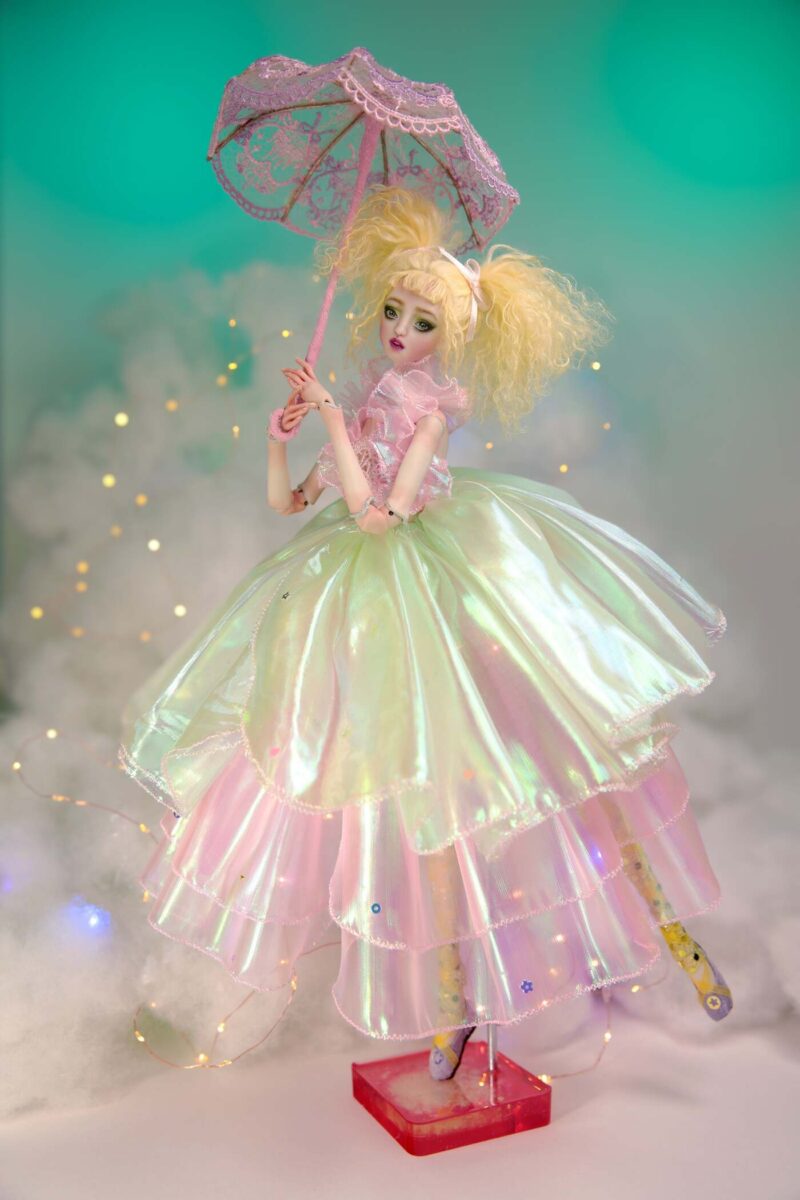
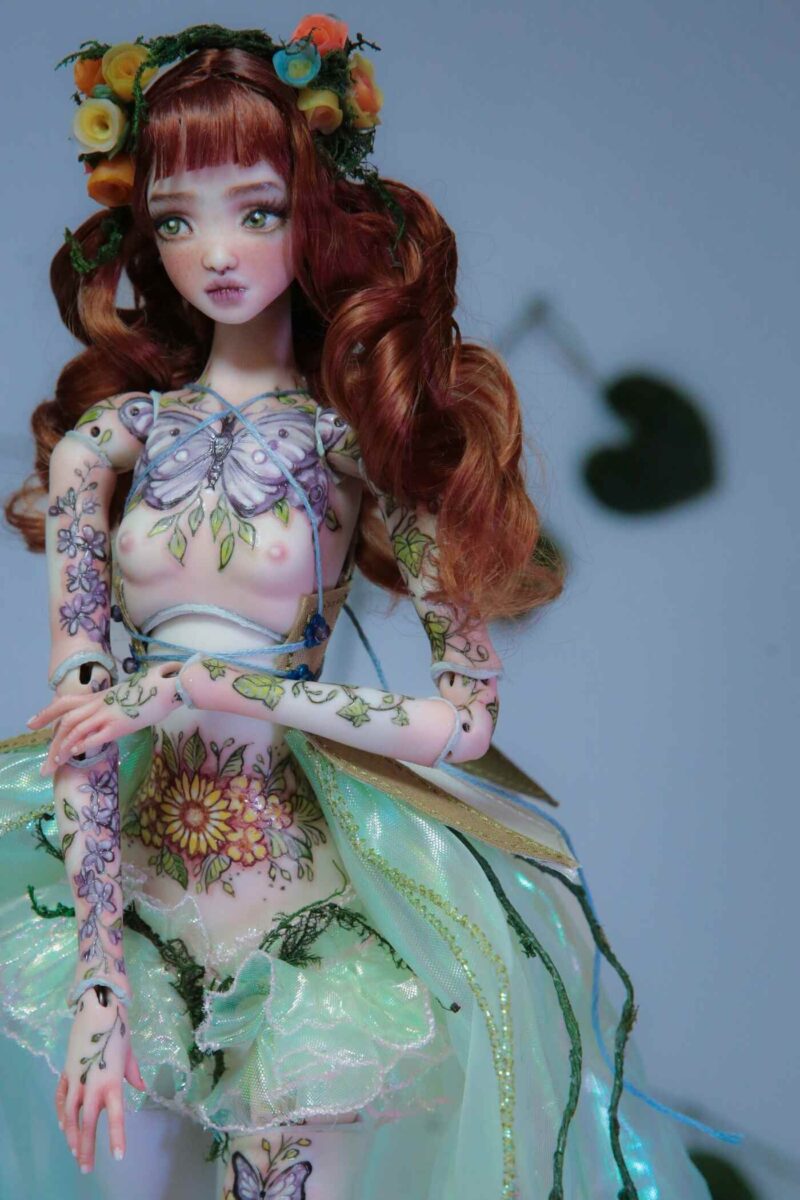
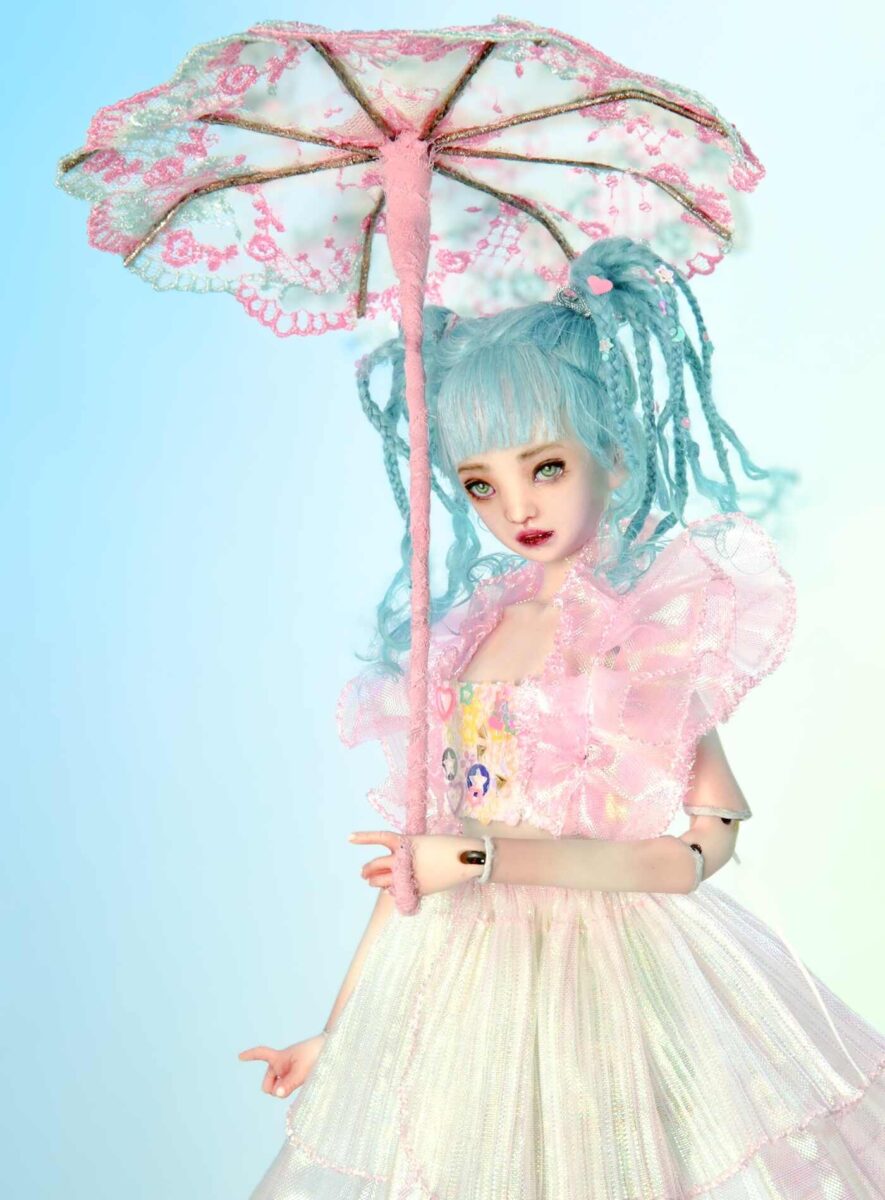
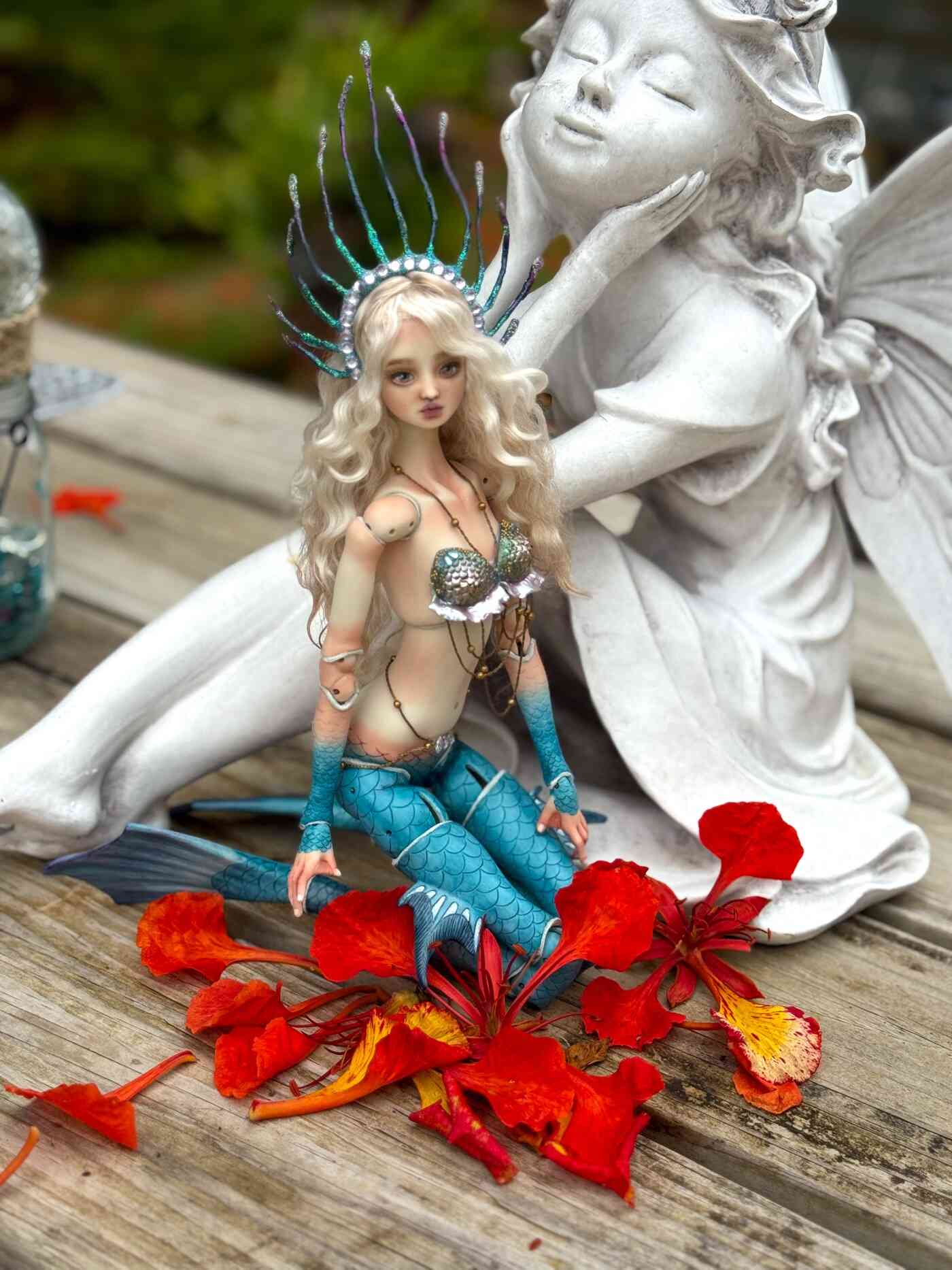
Can you tell me more about ‘Forgotten Hearts’? I’d love to learn more about your interest in fine art ball jointed dolls and what inspired you to create this business?
‘Forgotten Hearts’ was born from grief — and love. I created it shortly after the death of my father, as a way to honor his memory and keep his legacy alive through something beautiful and meaningful. The name itself is a tribute to the quiet souls, the delicate emotions, and the parts of ourselves we often feel are forgotten. In many ways, it became a memorial — not just to him, but to all the fragile, in-between places of life.
The dolls are fine art pieces — hand-sculpted in porcelain, painted and dressed by me. Each one is a unique character, often inspired by themes of loss, transformation, and identity. They’re not just objects; they feel like tiny souls. Creating them gave me a way to process grief, to heal, and to reconnect with the parts of myself that needed gentleness and story.
What began as a deeply personal act eventually became a business, with collectors around the world connecting to the emotion and vulnerability in the dolls. Through ‘Forgotten Hearts’, I also taught myself photography — learning how to capture each doll’s presence in a way that felt cinematic and poetic. That exploration of light, softness, and atmosphere eventually made its way into my paintings too.
‘Forgotten Hearts’ taught me that beauty can grow from pain, and that art can hold memory,
legacy, and love in the most unexpected forms. It’s not just a brand — it’s a living part of my story, and a tribute to someone who helped shape the artist I’ve become.
What are some of the biggest lessons you have learnt as a self-taught artist?
As a self-taught artist, one of the biggest lessons I’ve learned is that you don’t need anyone’s permission to create. You don’t need a degree or formal validation — you just need dedication, curiosity, and the courage to keep going, even when it’s hard. In the beginning, I struggled with self-doubt, always wondering if I was “good enough” without academic training. But over time, I learned to trust my own voice and let my emotions guide me.
Another important lesson has been patience — with both the process and with myself. I work
slowly, in translucent layers, and I’ve had to embrace that rhythm. Progress isn’t always fast, and there’s no shortcut to mastery. But there’s beauty in taking your time and letting each painting reveal itself.
Being self-taught also meant learning everything on my own — not just how to paint, but how to photograph my work, run a business, communicate with collectors, and present myself professionally. That was intimidating at first, but it ended up making me resilient and resourceful. I’ve learned to wear many hats, and that independence has become a strength.
Most of all, I’ve learned that vulnerability is what connects us. The more honest and personal my work became — when I painted my grief, my dreams, my light, my family — the more others saw themselves in it. That’s the real magic of art: it doesn’t matter how you learned, only that you’re willing to feel, to share, and to keep creating.
Who/what has been inspiring you lately?
Lately, I’ve been inspired by a beautiful mix of personal and professional influences. My two
nieces, who spend most of their summer days creating art with me, have been a huge source of joy and creative energy. They approach painting with such freedom, imagination, and honesty — without fear of making mistakes. Their fearlessness reminds me to stay playful, stay curious, and trust the process. They’re both incredibly talented young artists, and their presence in the studio has been like a breath of fresh air.
Artistically, I’ve been very moved by the work of Guillermo Lorca. His ability to merge classical oil painting with surreal, almost cinematic narratives is breathtaking. There’s this delicate tension in his work — between beauty and darkness, realism and dream — that I find deeply resonant. His glowing light, symbolism, and use of animals all speak to themes I explore in my own paintings.
I’ve also been learning a lot from Andrew Tischler. As a self-taught artist, I’m always looking to deepen my technical understanding, and his approach to realism, composition, and colour has helped me refine my own techniques. I especially admire the way he breaks down complex ideas into something approachable, and how committed he is to craft. His teachings have reminded me that even years into your practice, there’s always room to grow and evolve.
Between my nieces’ raw, emotional creativity, Lorca’s visual poetry, and Tischler’s precision and insight — I feel both grounded and inspired, pulled in directions that are challenging me to go deeper, technically and emotionally.
What legacy do you hope you and your partner’s work will leave behind?
More than anything, we hope our work leaves behind a legacy of emotional truth. We want
people to feel something when they stand in front of our paintings — to see themselves, their dreams, their pain, their joy. Whether it’s through light, colour, story, or silence, we hope our art reminds people that beauty and vulnerability are powerful forces.
My husband and I are very different in style and energy — we’re complementary opposites — but we both pour our souls into what we create. We hope that, together, our work tells a fuller story about love, resilience, identity, and the human experience. We want to leave behind a body of work that speaks across time, culture, and language — something timeless that people can return to for comfort, inspiration, or reflection.
Personally, I also hope to leave behind a legacy of creative independence — to show that you don’t need to follow a traditional path to be a serious artist. That you can be self-taught, emotional, unconventional — and still create work that touches people’s hearts. I hope our story encourages other artists, especially women and caregivers, to believe in their voice and claim their space.
Ultimately, I want our legacy to feel like a light left on in the dark — a soft but unwavering glow that continues long after we’re gone
Do you have any exciting upcoming projects or exhibitions in the works that you can tell our readers a bit about?
Yes! One of the most exciting current highlights is that my work is being exhibited at the prestigious clinic of the renowned Dr. José Ángel Marrero, located at The Mall of San Juan. It’s an incredibly beautiful, modern space dedicated to aesthetic and regenerative medicine, and I’m truly honoured to have my paintings featured there.
What makes this opportunity even more special is the visibility — the clinic attracts many celebrities, public figures, and influencers from all over Puerto Rico, which has allowed my art to reach new audiences in a meaningful way. Sharing my work in such a vibrant, elegant setting has been a dream, and I’ve had the chance to connect with people who may not usually step into a traditional gallery, but are moved by art in their daily environments. I also have a few exciting exhibitions lined up for later this year, including a solo show at Nanny Goat Gallery, and I’m continuing to develop my ‘Lights of a new world’ and ‘Beings of light’ series, which explores light, memory, and digital emotion through oil painting. There’s a lot more to come — and I can’t wait to share it.
Aidamaris Roman Social Media Accounts
Website | Instagram | Forgotten Hearts