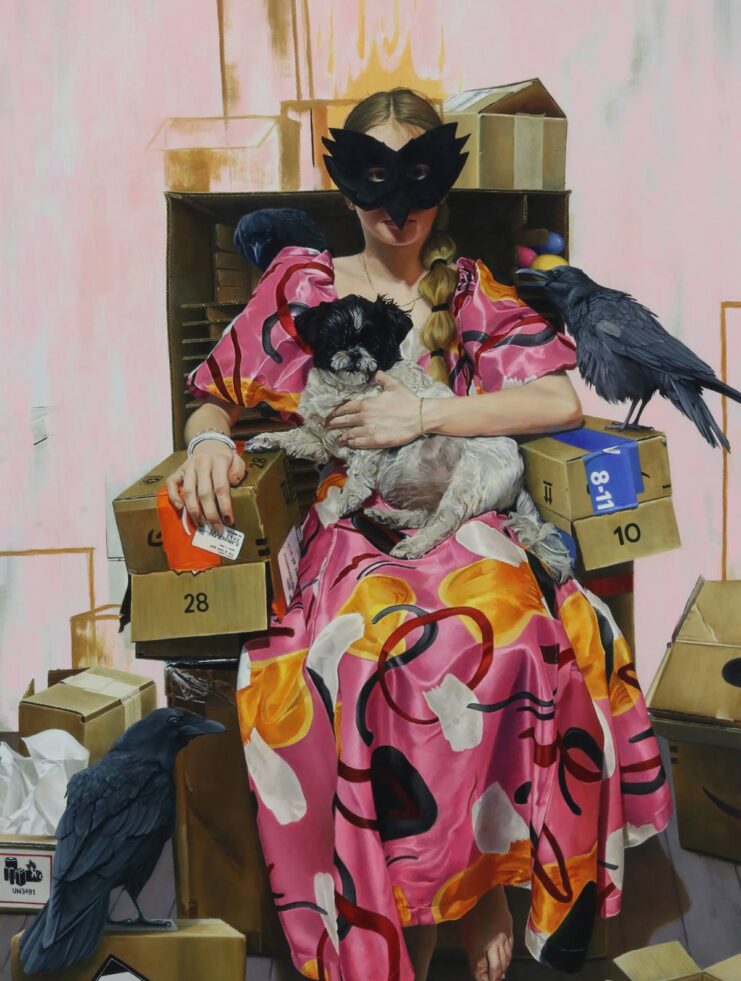
The human mind, body, and soul is like a garden. No two are the same but each one must be nurtured daily with the love, respect, and kindness it deserves. In doing so, one can hope to bloom a beautiful garden that is unique to them. Whilst many humans like to see each individual garden as something to be easily categorised and stigmatised in terms of gender and identity, Amanda Greive reminds us that we are so much more than what society tells us we are. Some gardens may hide under the anonymity of tall trees, shielding themselves from cruel forces. Others may bloom with a pure and unafraid energy from sun drenched windowsills or revel in connecting with other curious creatures. Amanda showcases how our identities are brimming with raw emotion and uniquely lived experiences. We are free to grow however we like, as long as we remain true to ourselves.
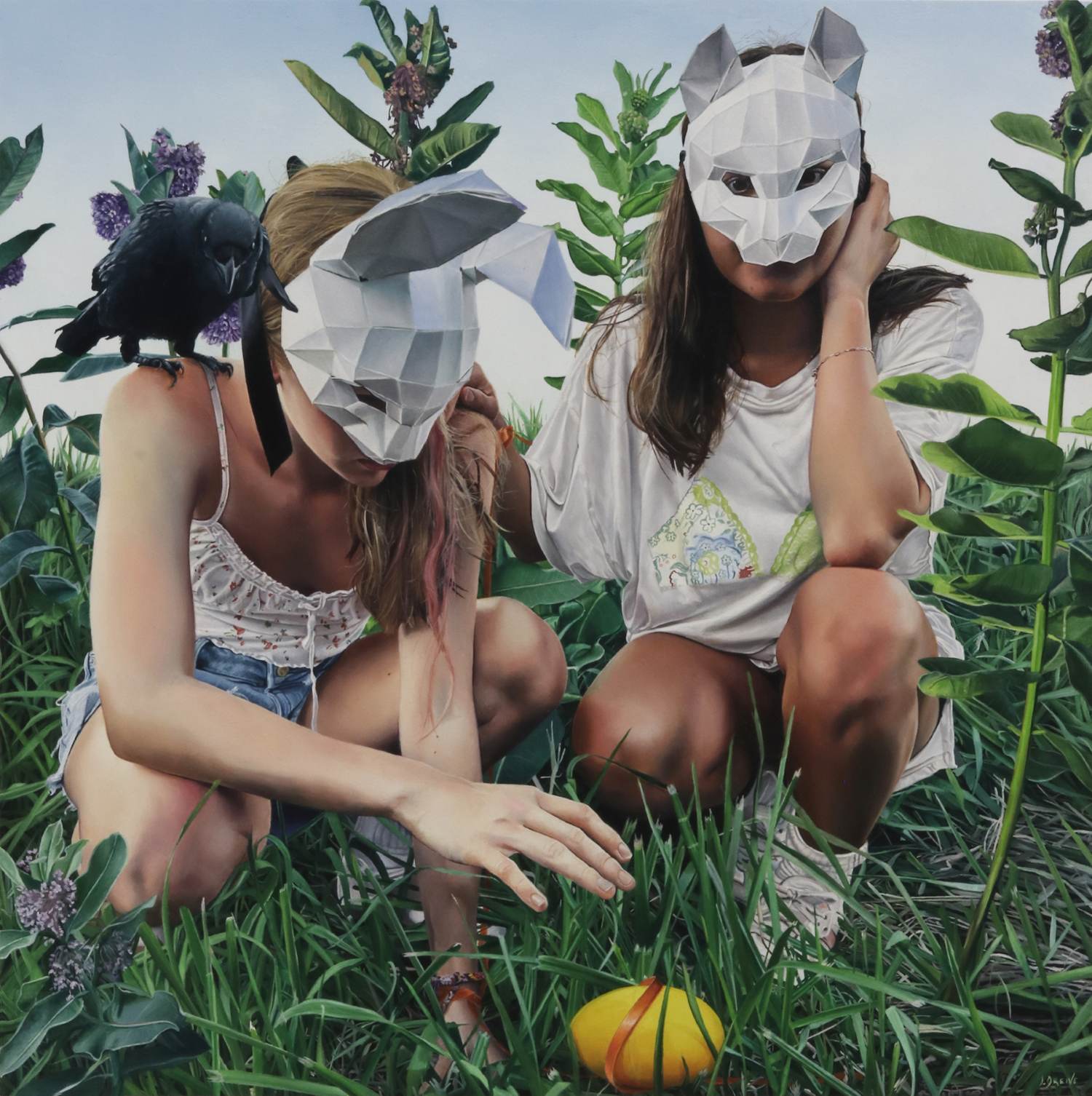
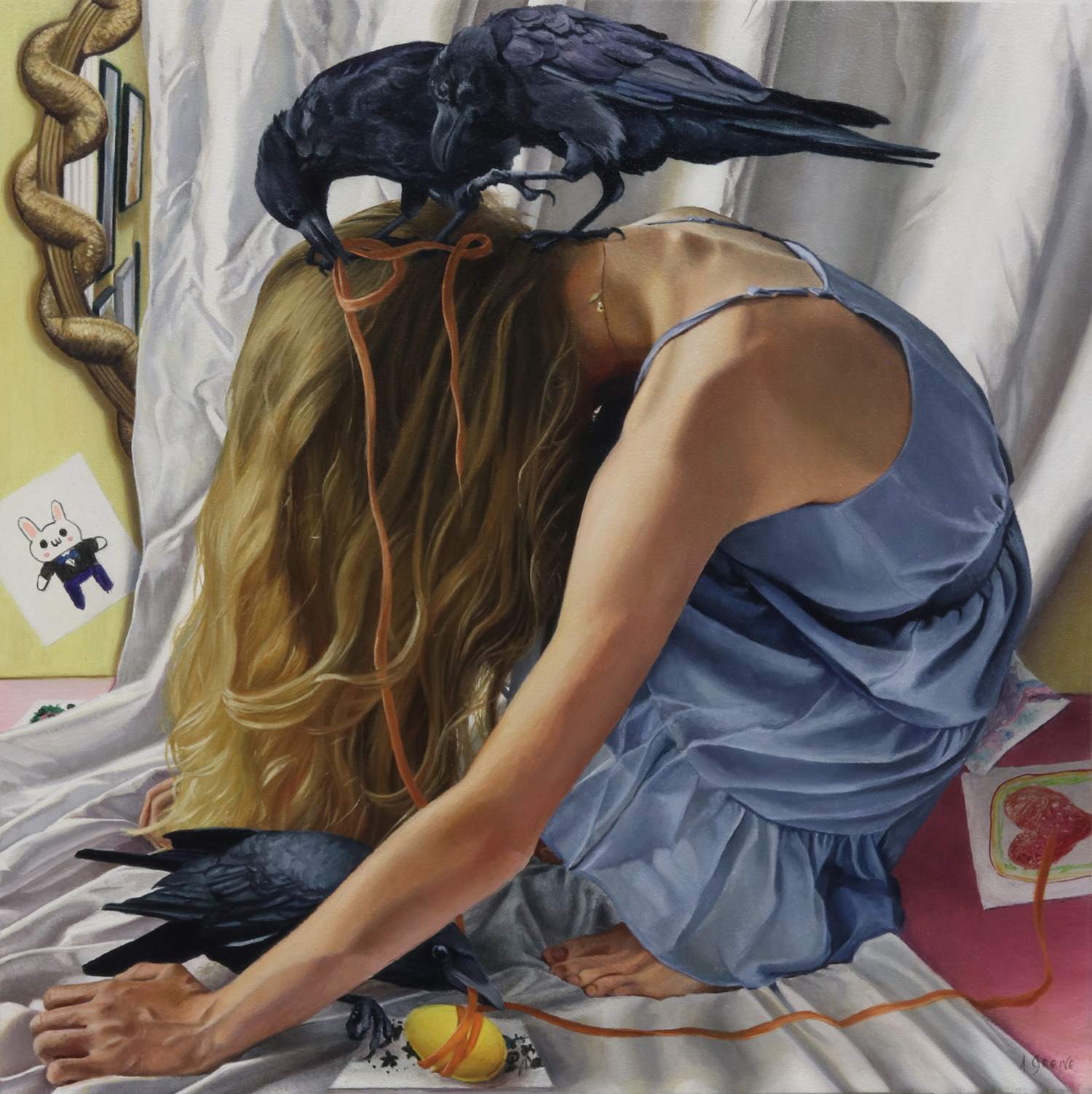
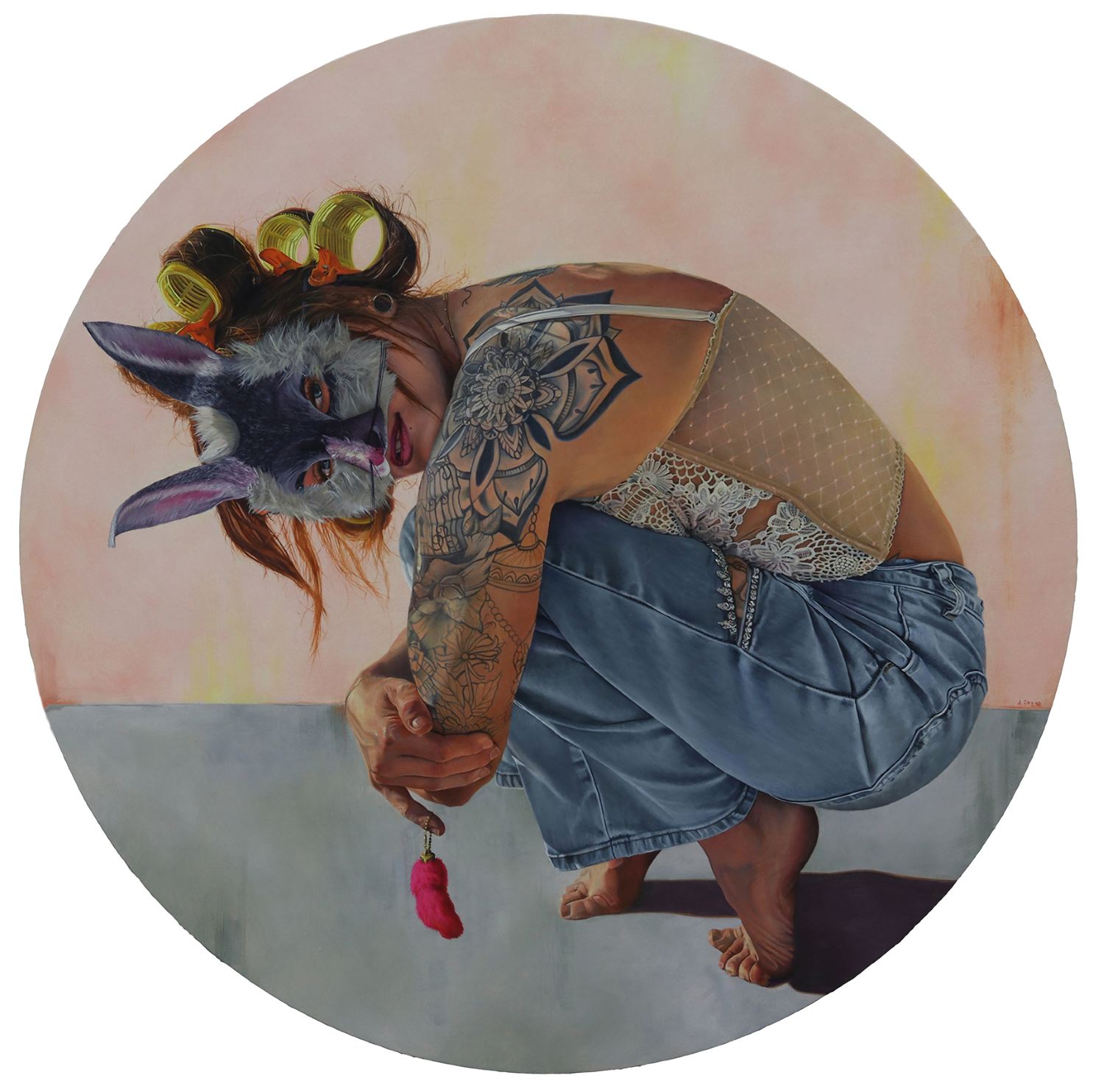
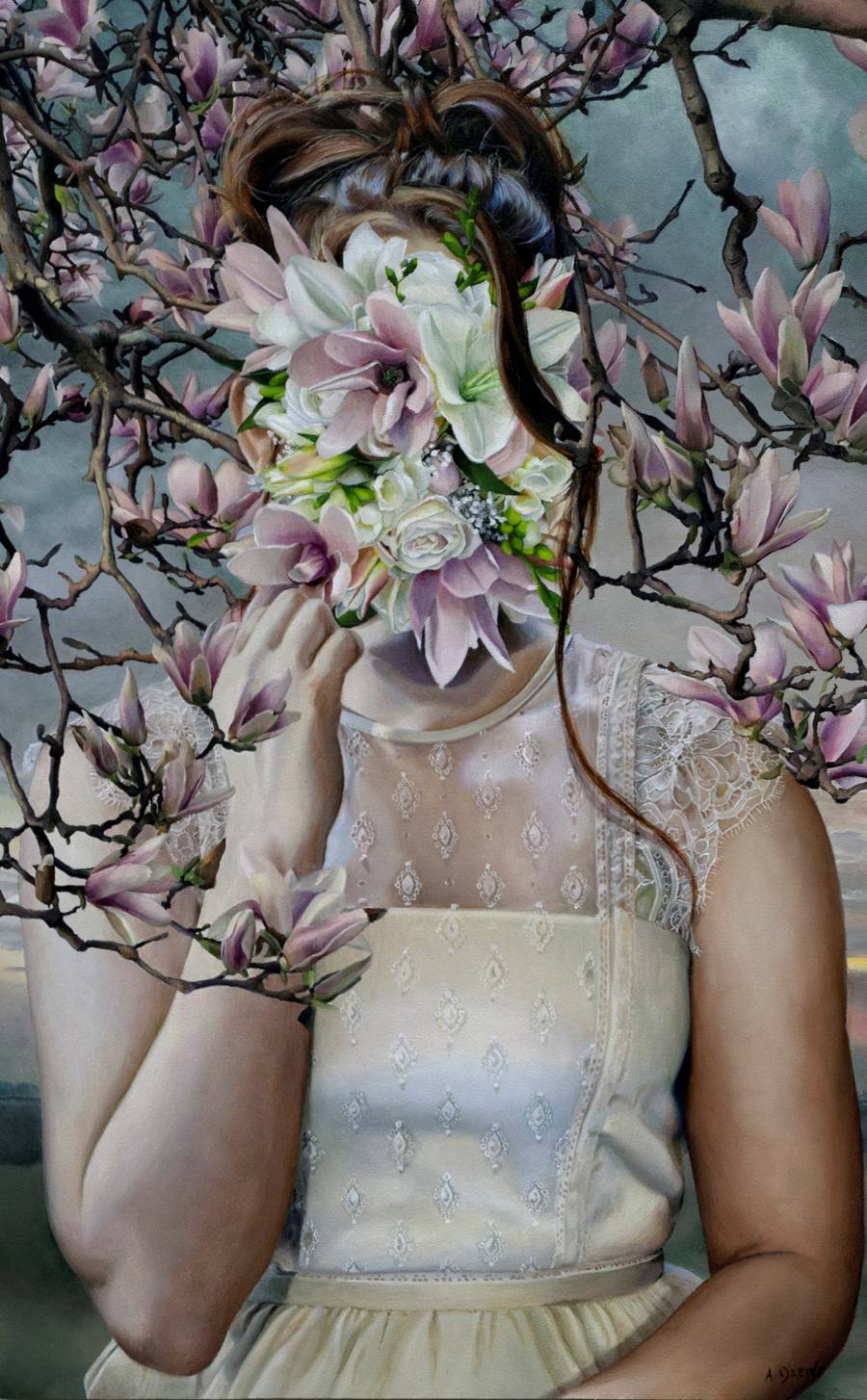
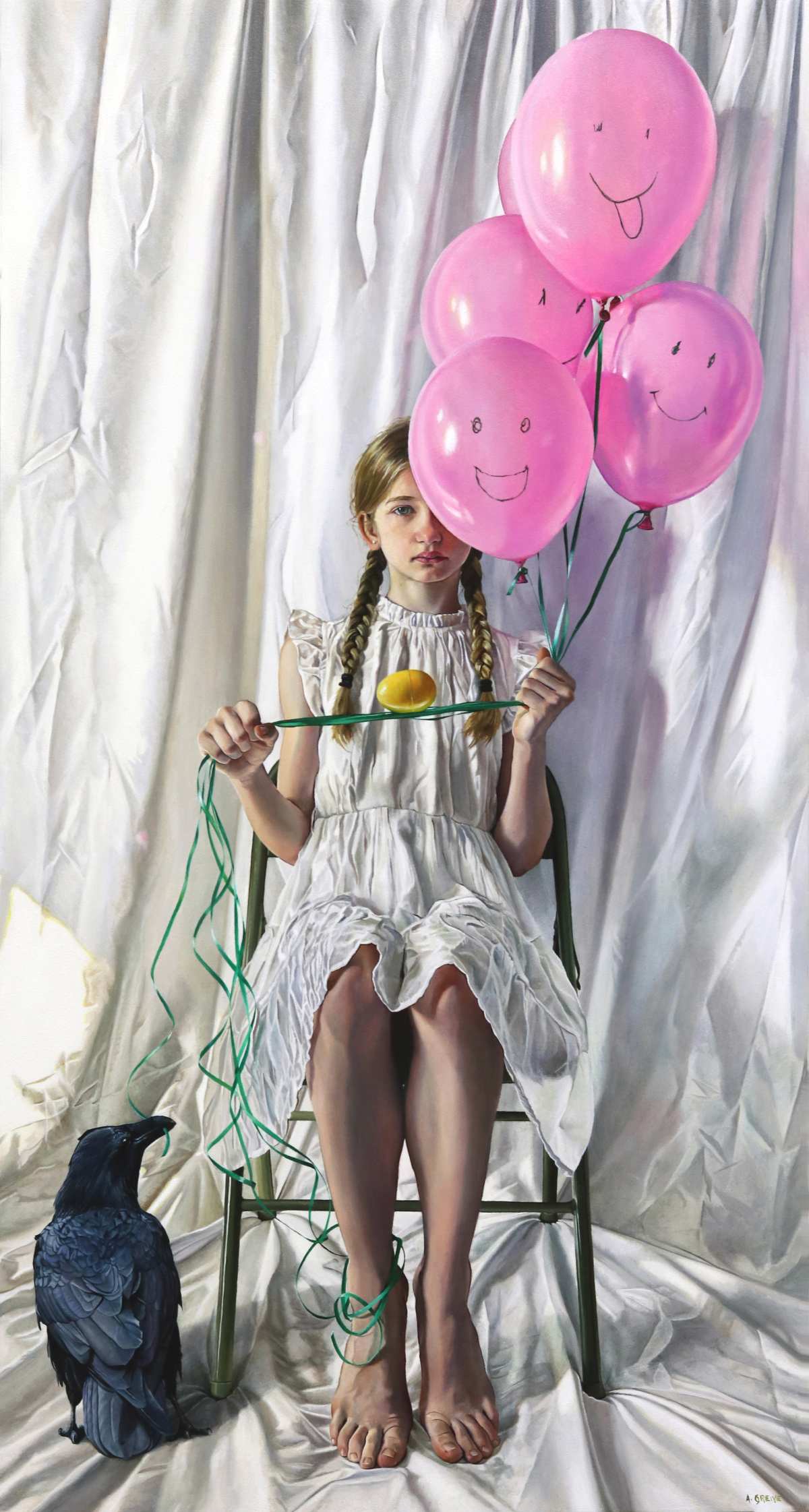
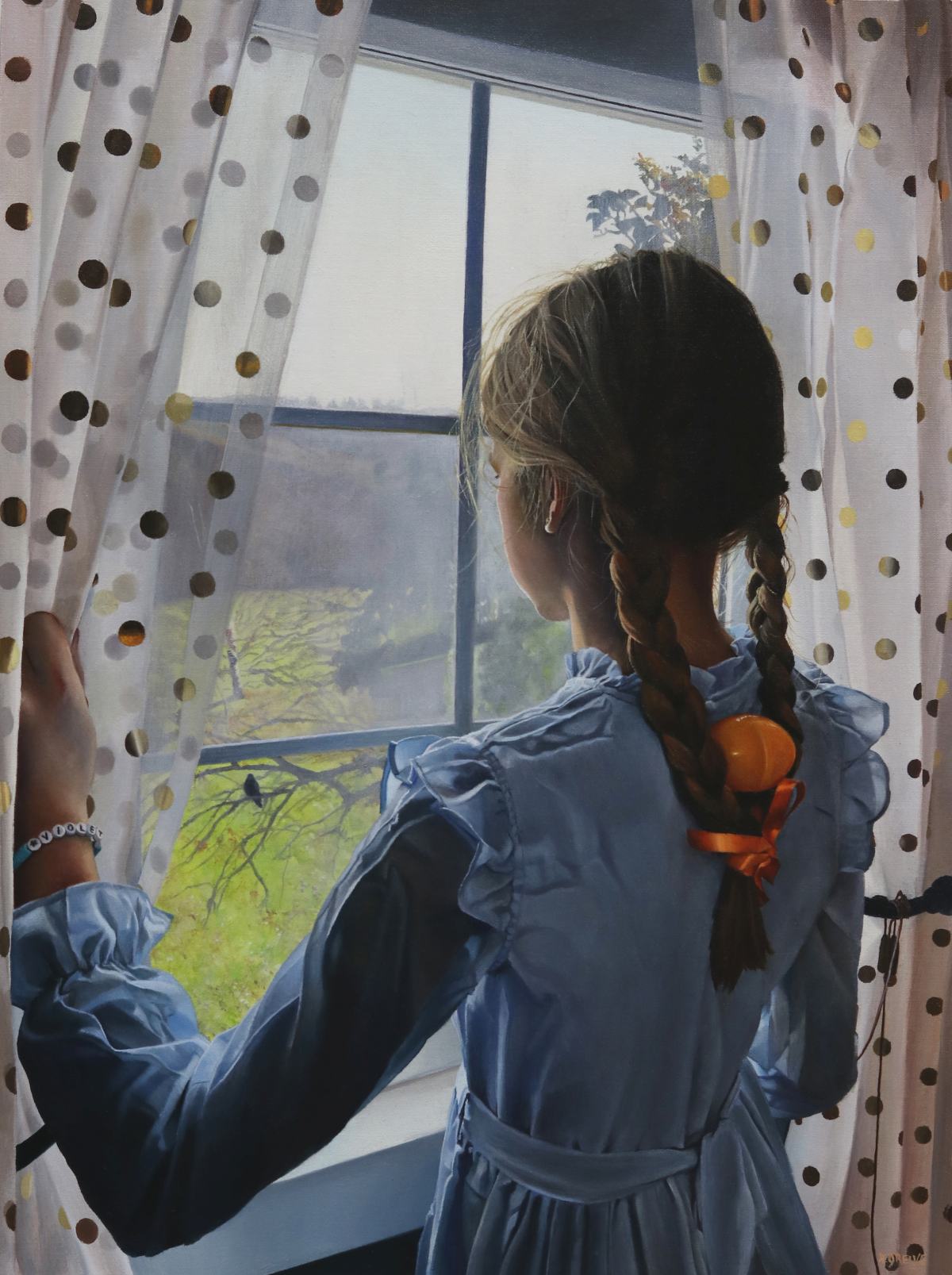
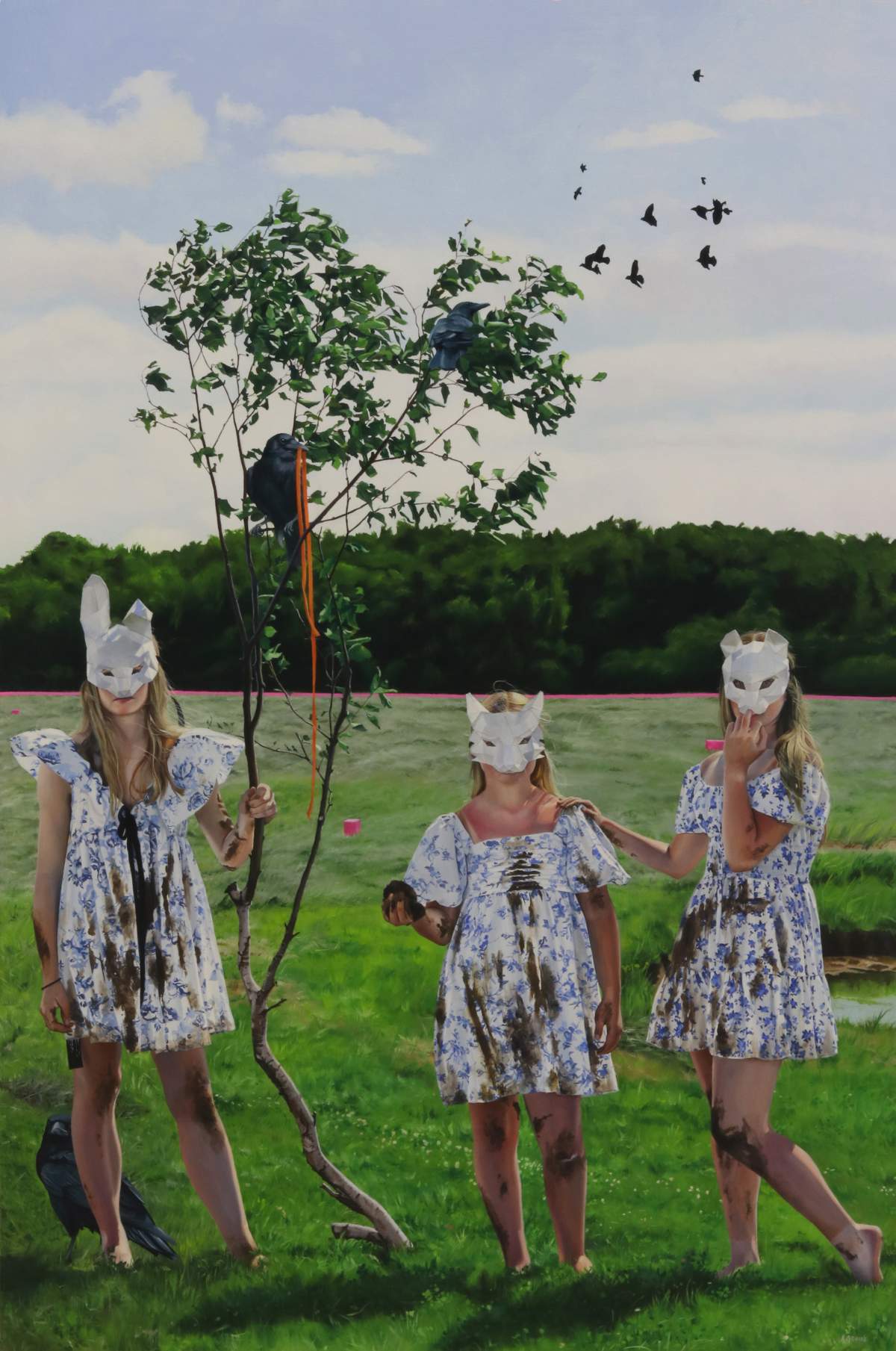
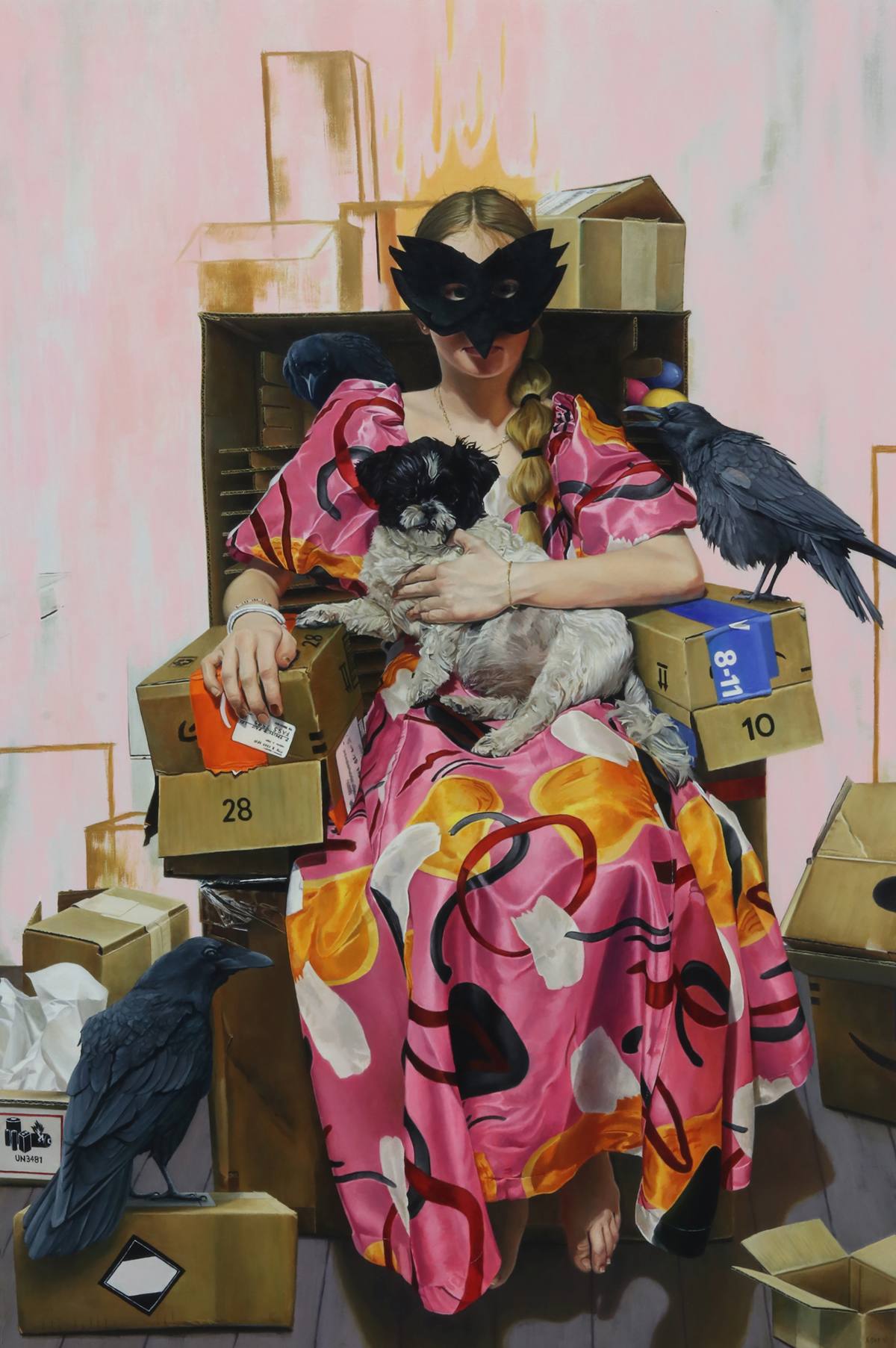
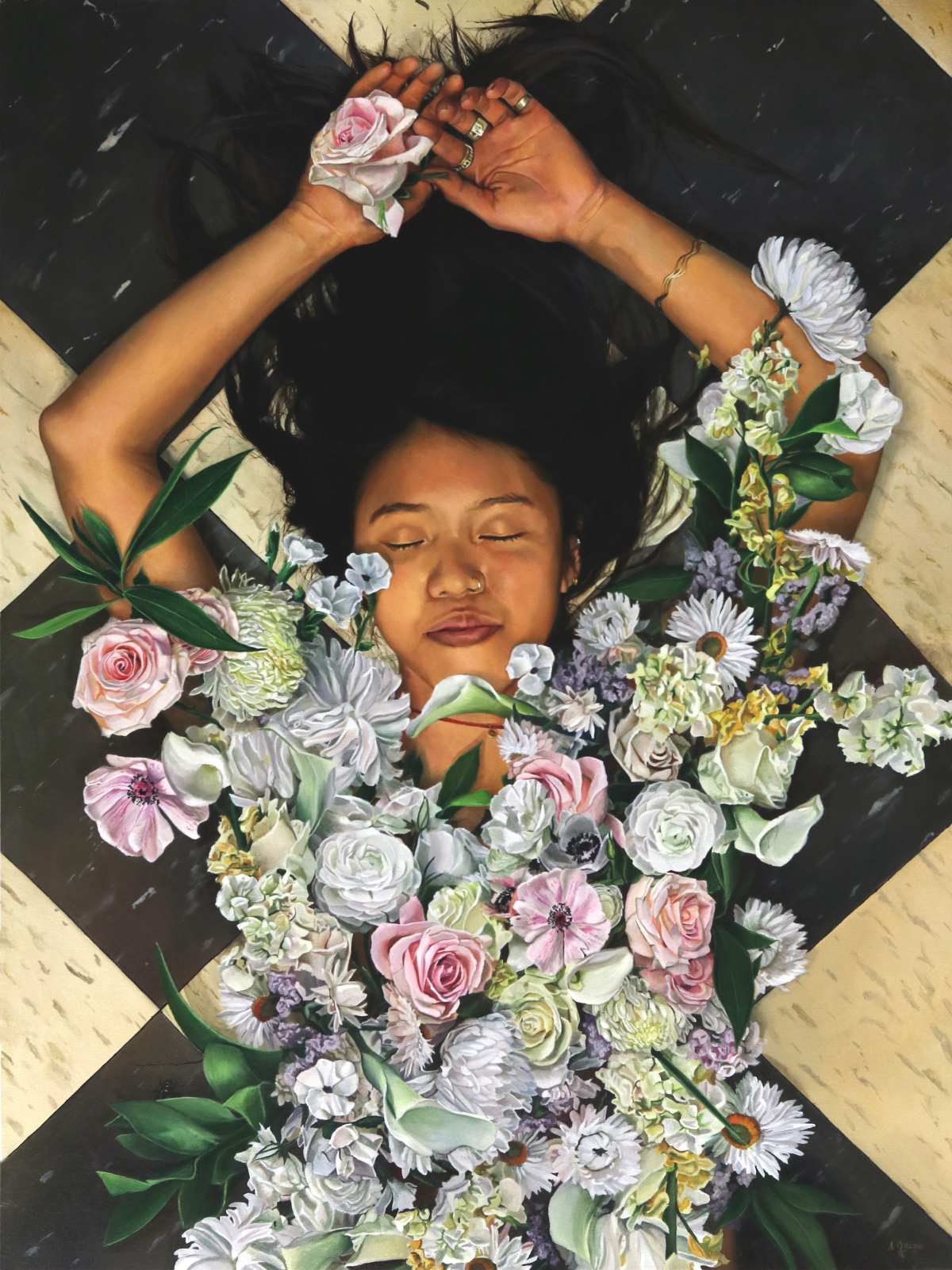
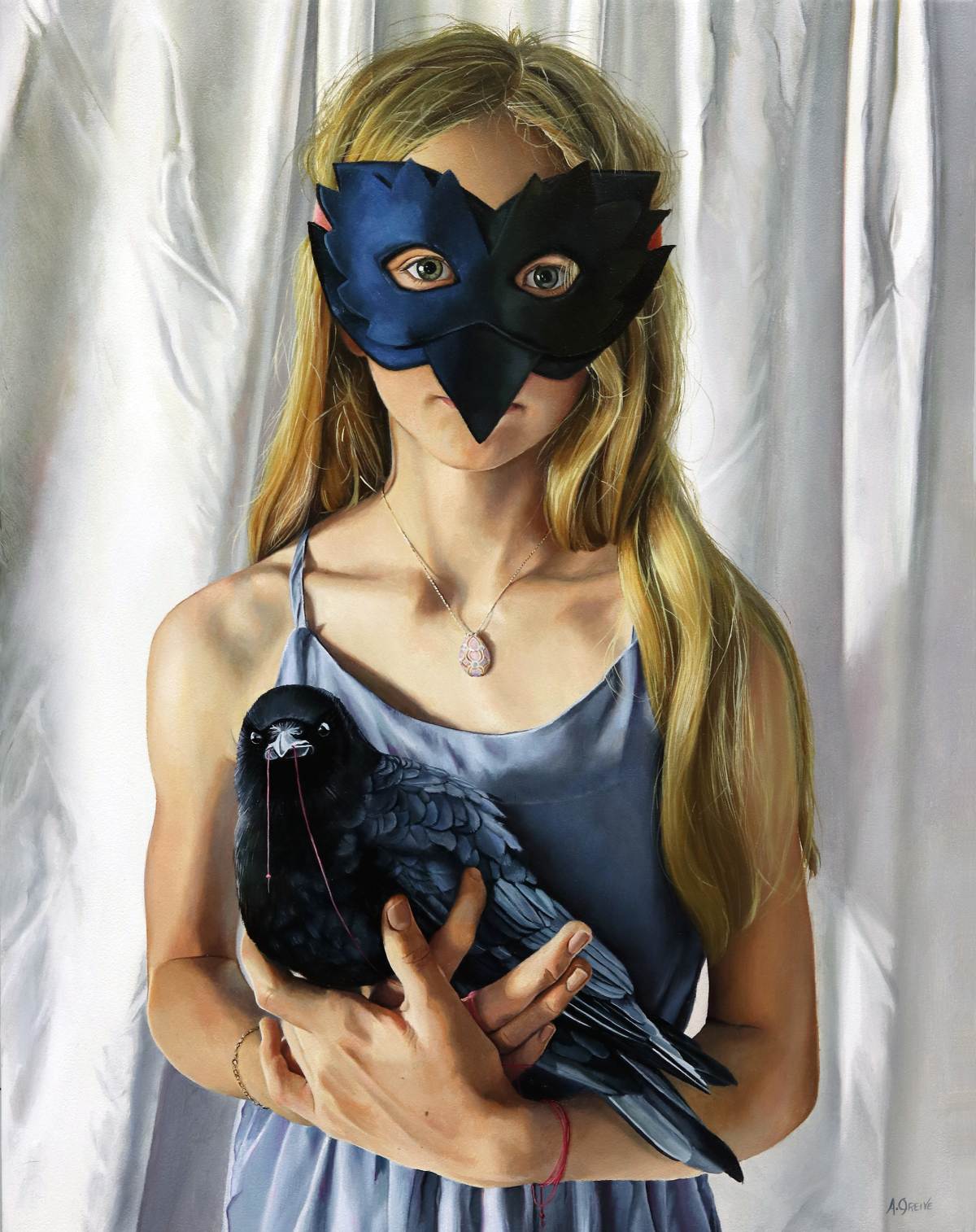
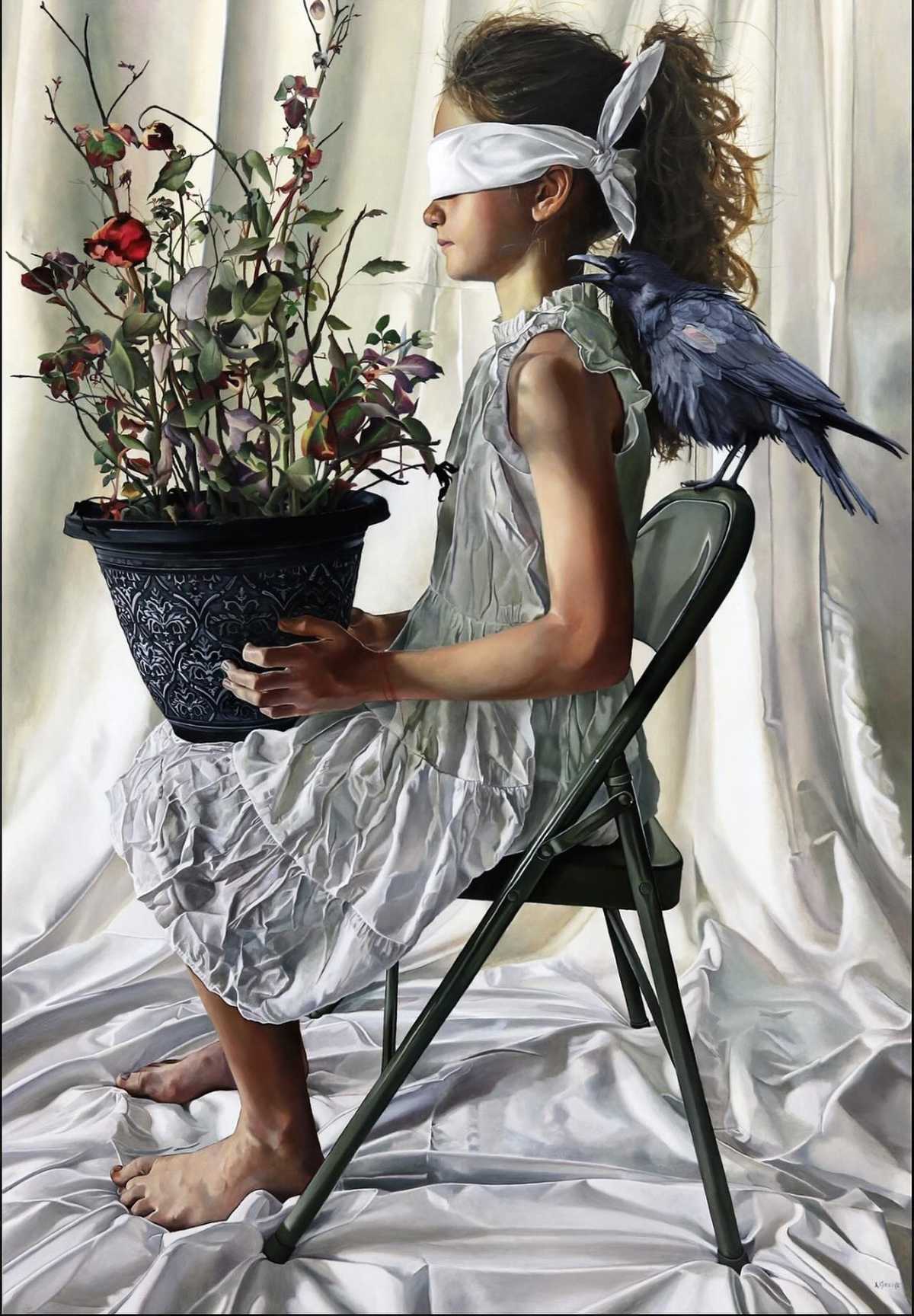
Amanda Greive is an American artist recognised for her hyper-realistic portraits that combine classical and contemporary symbolism and iconography. Using oils, Amanda explores the human condition as she seeks to showcase raw emotion and uncompromised truths all whilst confronting gender-based stereotypes and the fears and isolation this ideology can cause. Amanda’s paintings predominantly feature feminine presenting individuals, many of whom have their faces covered or obscured, as she connects them with the undeniable symbolic resemblance held between femininity and the natural world.
In 2008, Amanda graduated from the University of Illinois Springfield with a BA in Visual Arts. Since finishing her studies, Amanda has exhibited her work both locally and nationally across the United States. Amanda continues to build her body of work from her studio in Central Illinois and she is currently represented by Rehs Contemporary Galleries, Inc.
Interview with Amanda Greive
The feminine form and the botanical world are key themes throughout your body of work. How do you plan the relationship between your models and the types of botanical life you feature in each of your paintings? Do you have an idea of what types of plant life you’ll use before you begin painting or do you cater each arrangement to suit your models?
When I’m planning a work that includes a botanical element, I generally have an idea of the plant or plants that I want to include before I even conceive of the painting. So, when I I start the painting, the composition is tailored to the plant I’m using and the overall theme that I’m trying to convey through the piece. As for the model, if I have the actual plant available to me during the photoshoot, I try to photograph the model and the botanical element together. Otherwise, I will just use a stand-in object, and then later use photoshop to include the plants I’ve chosen.
Who are the subjects featured in your work? Do you work with people close to you, or do you hire professional models?
So far, I have only worked with friends and family. I feel very lucky to be surrounded by women who trust my vision and are willing to help me bring an idea to life.
I’ve noticed that in many of your paintings such as ‘A Legacy’, ‘Shroud’, and ‘The Feeling of Falling’, your subjects faces are often hidden or obscured by botanical life, hair, or the subjects are turned away from the viewer. I was wondering if you could tell me a bit about the symbolism behind this? Does it relate to themes of motherhood and identity?
The main purpose for obscuring the faces in a lot of my work is to create a sense of generalisation for the viewer. I feel like, sometimes, including the face in a piece makes the meaning behind the piece narrower, as if it applies only to my life. Removing that element of the composition, to me, makes the meaning of the painting more relatable to a broader audience.
Do you think flowers and other plant life are inherently feminine in the qualities they possess?
I don’t necessarily think that all flowers and plants are inherently feminine, though I do acknowledge that there historically is an association between the two. That said, my work does address some commonalities that I think women and plants share. For instance, I think they share a quality of adaptability, as well as a perception of delicacy, while also displaying a hardiness.
Do you think your art has shaped/changed your own relationship with femininity and gender? If so, how?
That is an interesting question. I would say that I don’t necessarily think that it has changed my relationship to femininity and gender, as I feel like I have a pretty broad, liberal view of the relationship. I will say that I feel like creating works that explore this relationship has given me the opportunity to learn more about femininity and gender from a societal perspective.
What is the most rewarding aspect of your work as an artist and why?
The most rewarding aspect of my work, by far, has been having the opportunity to meet and connect with so many people. Working as an artist can be a very isolating experience, as you spend a lion’s share of your time in the studio. Being able to connect and create community with other people in person or online not only through my work but through the work of others always feels like a very precious and important experience. I feel like I learn a lot about myself and my work from hearing what others think about it.
What do you find to be the most challenging aspect about your work and why?
The most challenging aspect of my work is by far being able to find enough time to do the work. Trying to juggle all of life’s priorities can sometimes make it difficult to allot enough time to painting, so there are times when I may paint late at night or in short spurts during the day. For me, it came down to asking myself how important painting is. It’s very important to me, so I found that I had to, and to a point still have to, make sacrifices in order to be able to make time to paint.
What do you hope people can take away with them after viewing your body of work?
I always hope that my work creates a scenario wherein the viewer can reflect inwardly and think critically about the world within which we live. I hope that my work is seen as something that champions equality and that it also creates an opportunity for meaningful conversation.
When you’re not painting, what do you get up to in your free time?
Between painting and facilitating my daughter’s social calendar, there isn’t a whole lot of free time (haha!), but when I do get time to myself, I enjoy reading fantasy and sci-fi novels or running.