Exclusive Interview with Brian Bailey 1st Prize Winner of the Victoria Olt Gallery Drawing Award, 2025 Beautiful Bizarre Art Prize
Brian Bailey’s work possesses a remarkable ability to communicate emotion in ways that extend far beyond what is immediately visible. Atmospheric color, gesture, posture, and concealment all become part of a larger visual language. The dreamlike softness and light feels deeply contemplative while still allowing moments of vulnerability, conflict and connection to reveal themselves.
The nature of the pastel as a medium is especially significant, almost reinforcing the themes throughout his elegant compositions. There is a quiet tension present, whether it’s found within the shadows or the subtle shifts in body language – it’s often those elements that speak the loudest. By exploring these shared sensitivities, Brian Bailey draws resonance through what is hidden yet still understood.
Introduction written by Bella Harris
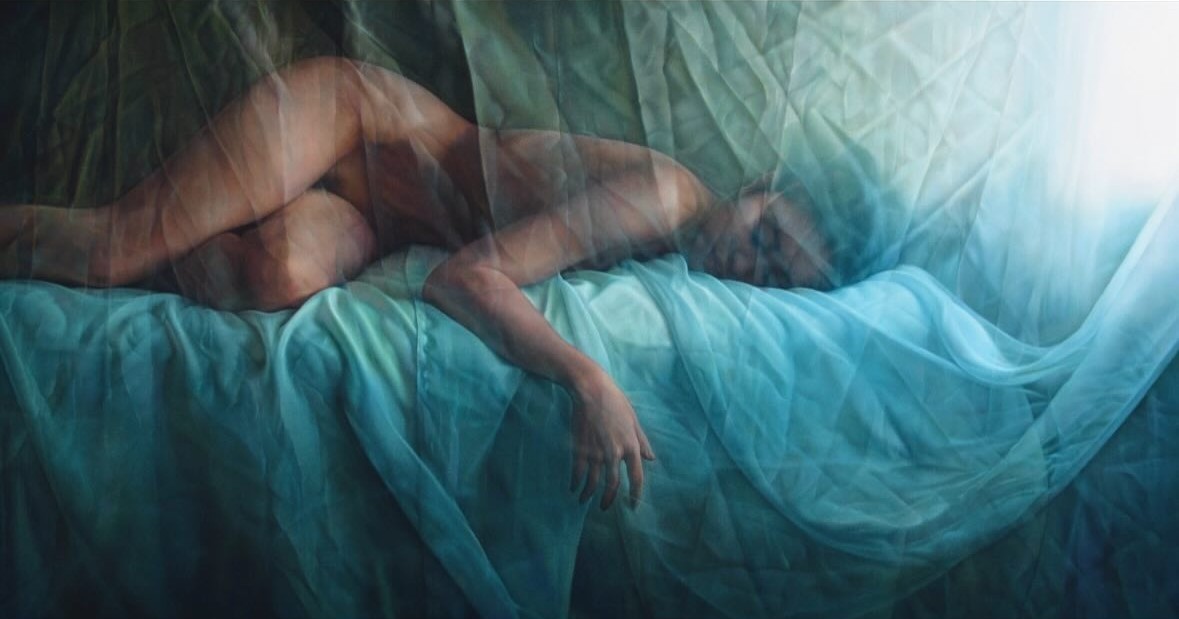
Exclusive interview with Brian Bailey
What was the most memorable experience I had as an illustrator?
The most memorable experience was working my way into an interview at Time Magazine in New York City. I had been out of college (art school) less than one year and was using all sorts of strategies to have an in person viewing of my portfolio. I had been lucky enough to finagle my way get one at Fortune Magazine, a business magazine that used a lot of illustration at the time.
I saw the art director, Marjorie Peters, the year was 1982. She liked my work and suggested I go see the art director of Time Magazine. It was her name and recommendation that helped me get an interview at Time. She also generously gave me several covers over the next few years.
The interview at Time happened to fall on a day in NYC that saw a two-foot snowstorm. I lived in Brooklyn at the time and my winter coat was an old denim jacket. I borrowed some rubber boots from my roommate and proceeded to take the subway to Manhattan. The falling snow had soaked me through and I looked something like a wet dog upon my arrival at the offices in the Time Life Building. The assistant I met was a gentle woman who tried to make me comfortable considering my soaked appearance.
After a few minutes, she ushered me in to the office of the art director, Rudy Hoglund. He faced outwardly towards the Manhattan skyline with snow heavily falling. The windows of his sprawling office were floor to ceiling and his imposing silhouette against this setting was extremely cinematic.
This was my big moment to shine or fail. In school they had referenced working for Time Magazine as the epitome of the field of illustration, reserved for the elite of the industry. Here I was twenty three years old standing in the office of the art director, a titan in his field. He stood silent after my entry, back turned and slowly puffing on his cigar (it was legal and common back then to smoke in offices). He waved his hand towards a large desk and his assistant told me to open my portfolio there.
As he slowly turned and walked towards me his piercing eyes seemed disinterested in both an introduction or the entire prospect of seeing my work. He gestured for me to turn over each work and barely saw three or four paintings before telling me to stop.
He then took a long drag on the cigar and walked away back towards the large bank of windows. Time (no pun intended ) literally stood still and the seconds turned to minutes but seemed like hours. As he exhaled and my had heart dropped already, he said “ I think I have something for you”.
He briefly described the scenario of my first assignment for Time Magazine. It was an inside spread of three illustrations that included a small portrait of the author John le Carre’.
This humble assignment led to several covers over several years and what proved to be a challenging, rewarding and sometimes tumultuous professional relationship. That one signature moment on a snow driven day in the heart of New York City made me feel I had conquered the world. A long subway ride back to Brooklyn, yet I barely felt how soaked and cold I was.
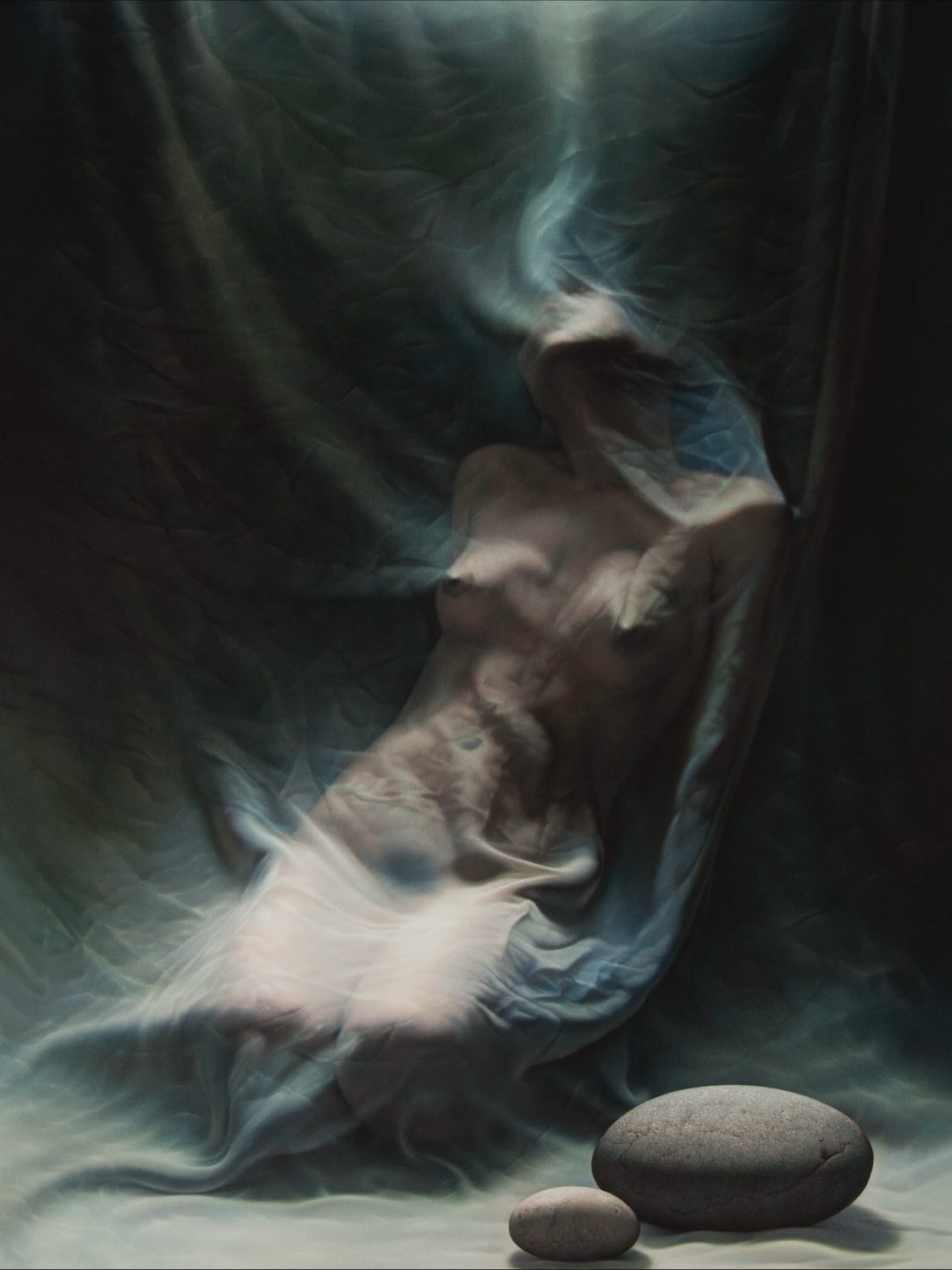
Medium & Dimensions:
Pastel on paper, 41 x 27 in.
What is one of the greatest challenges you’ve faced, either in your personal life or professional?
I suppose my greatest challenge personally and professionally came like a tidal wave of emotion and fear. I had been pushing myself pretty hard excepting to many illustration assignments. They were noteworthy assignments and I was newly married. I worked tirelessly to produce paintings that would defy their deadlines . As example I received a cover assignment from TIME on a Monday, went home did an elaborate sketch, went in on Tuesday, received the okay and went home to start to paint.
The deadline was Friday of the same week. My work back then was in acrylic paint (for drying time) and so I prepared a board and laid in the drawing. The first stretch was probably around fourteen hours of painting time, a few hours of sleep and back at it. The second stretch was thirty-five hours straight of painting, no sleep, just to reach the deadline. My style was such that it required layering of delicate color to produce realistic portraits for TIME. I had never missed a deadline as an illustrator and I prided myself on that and not asking for more time.
A foolish mistake but as a prideful artist I knew that every TIME cover was gifted to the permanent collection of the National Portrait Gallery, part of the Smithsonian Museum in Washington DC. This made my approach to my work to be unsatisfied with anything less than perfection.
Ultimately that approach unknowingly took its toll on my health. A few years later, on perhaps the happiest day of my life, my son was born, my career seemed solid and I was proud of my work and accomplishments. In the fall of the same year, I was diagnosed with cancer. After a barrage of surgeries, and constant testing, I had found myself in a state of worry and fear of the future. I still produced work throughout and eventually fought back to health because of my family obligations.
The next few years posed other challenges with the advent of digital illustration finding its way into the illustration market. I was trained as a painter/ draftsman. I was prodded by my clients to go the way of the computer as they loved my thinking process as well as my technical achievements.
I purchased a state of the art computer system, learned how to create a digital illustration, I did one book cover and proceeded to give the rather large investment to my niece. I hated its process, it had no feel for me, no sensitivity. This new way was not for me, I had always loved using my hands both sculpturally as well as drawing and painting. The field of illustration had literally changed in what seemed overnight. I was left pondering both my existence as an artist, as a husband and as a father all in the course of one year.
“I build my layers on a pastel under painting building and blending the thickness of the medium as I develop the subtleties.” – Brian Bailey
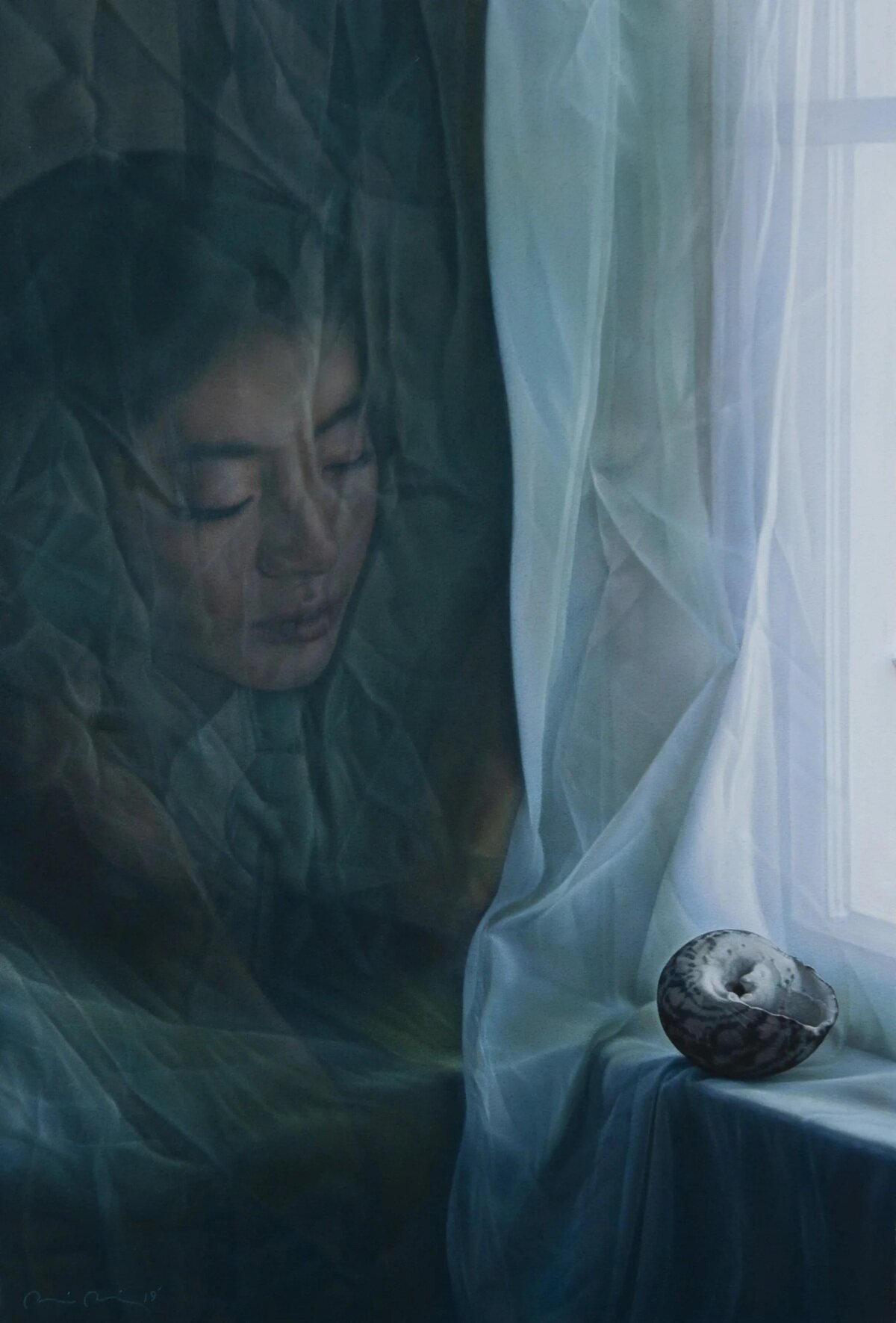
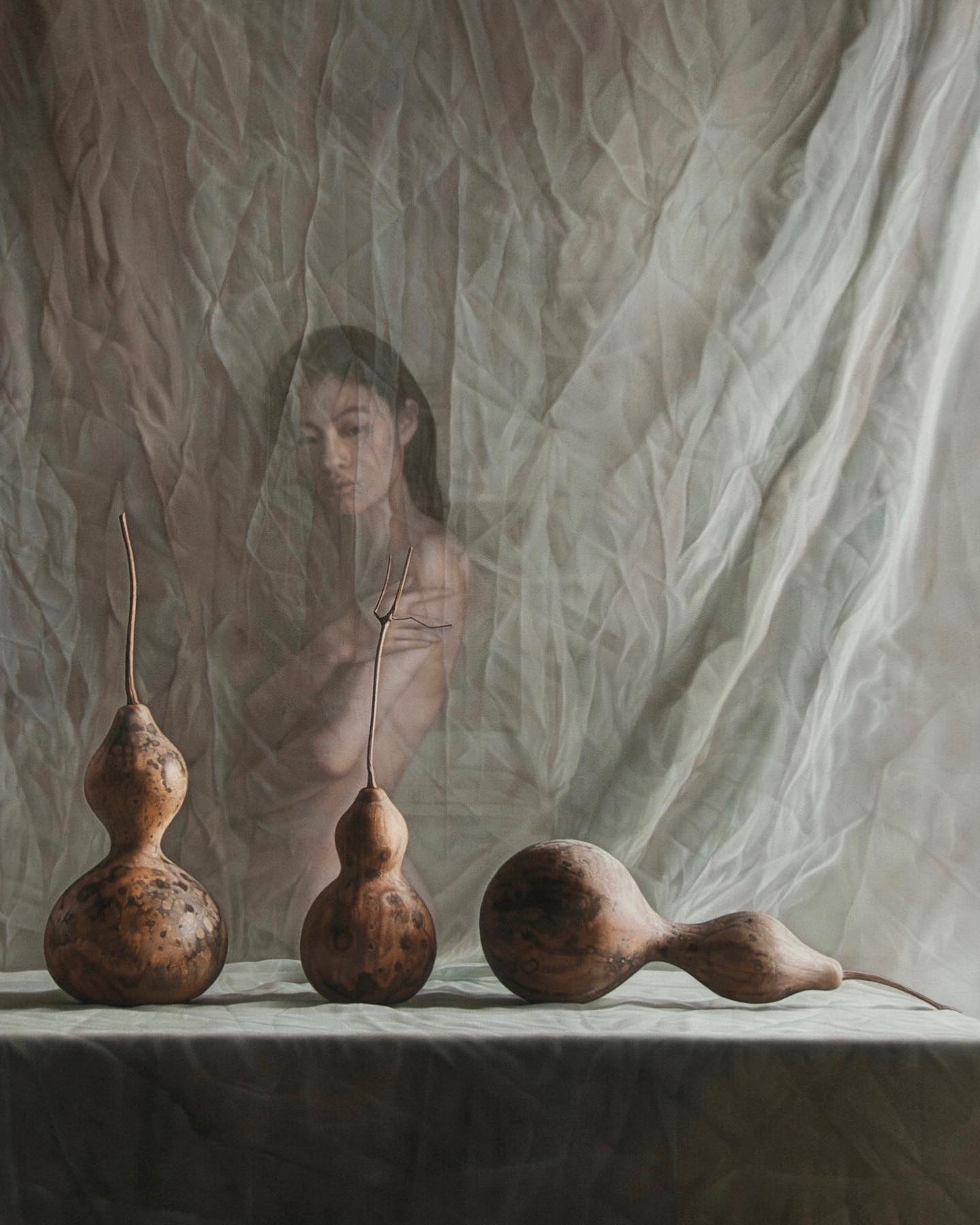
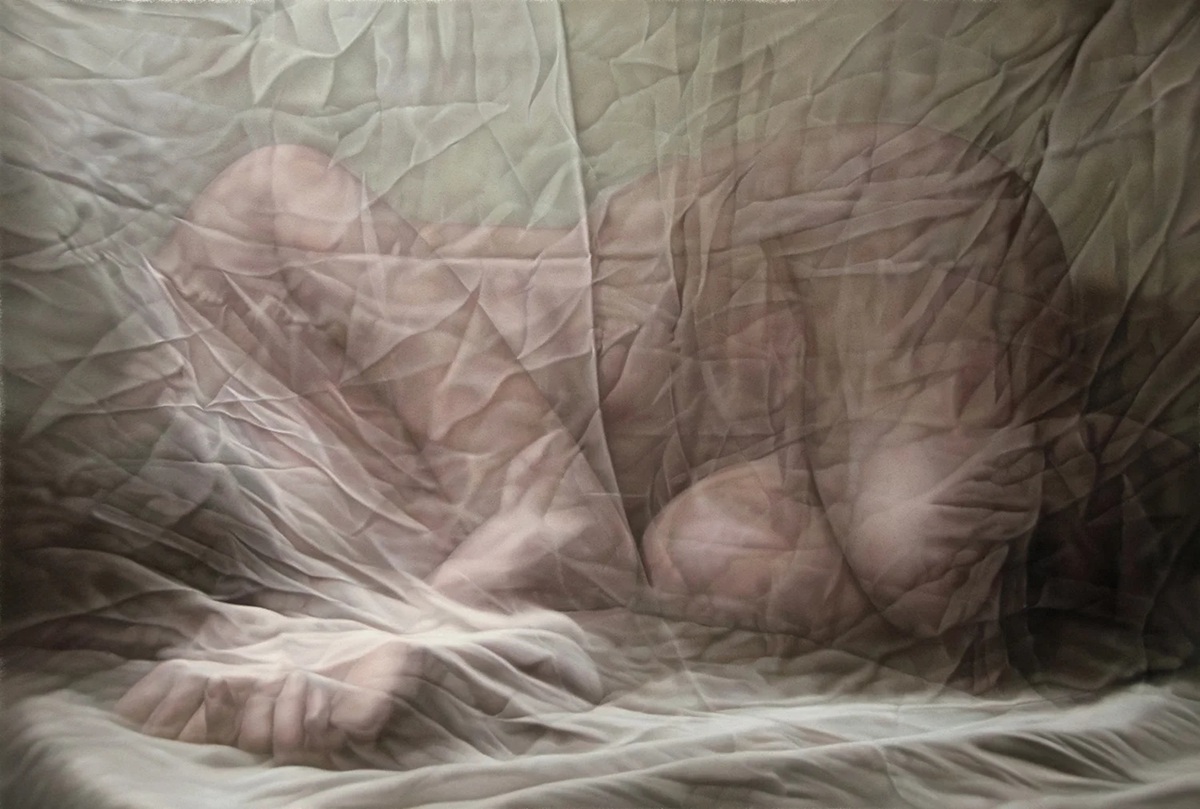
My pieces such as “Listen” take a long time to produce. I worry about their composition, their meaning, and their execution. I am a self-taught artist in pastel and therefore have translated my approach to painting, which is classical, into my use of the medium. It’s a layered approach using an under painting technique.
I build my layers on a pastel under painting building and blending the thickness of the medium as I develop the subtleties. These paintings generally are large in scale since I use no other materials beside stick pastel. I use no pastel pencils in these works thus the scale of the stick pastel requires generally a larger painting. The marks and my fingers as my only tool require such a large scale. Conversely, when I painted in oil or acrylic the nature of my work was quite small due to the scale of a small brush versus the rub of a large finger.
These paintings could take an average of a month or more pending the time I can give daily to the work. I have an active teaching schedule some years seven days a week. I try to work at least six hours a day when I’m in the painting process. I call these works painting due to the nature of the execution; under painting, building and blending passages and final marks.
Traditionally, pastel has been considered a drawing medium due solely on the fact that it is dry. I take exception at that and have tried to blur that line in categorizing the art. I do not like labels and in art I think rules should broken. I tend to enter competitions with my work that are paint-centric and try to break those barriers. In the many exhibitions I have been part of, both on-line and physical, people have always been surprised if not shocked that my work is in pastel.
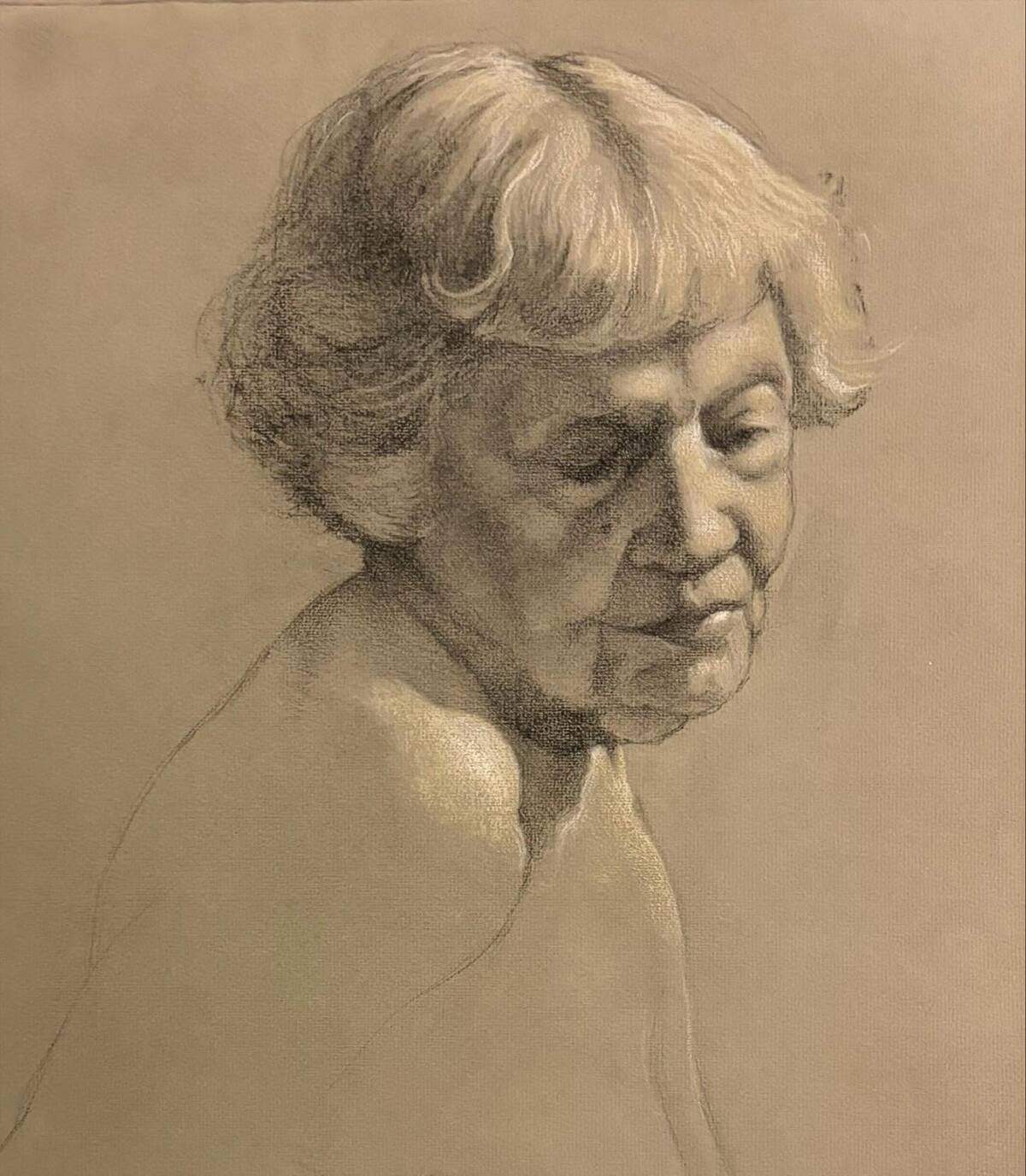
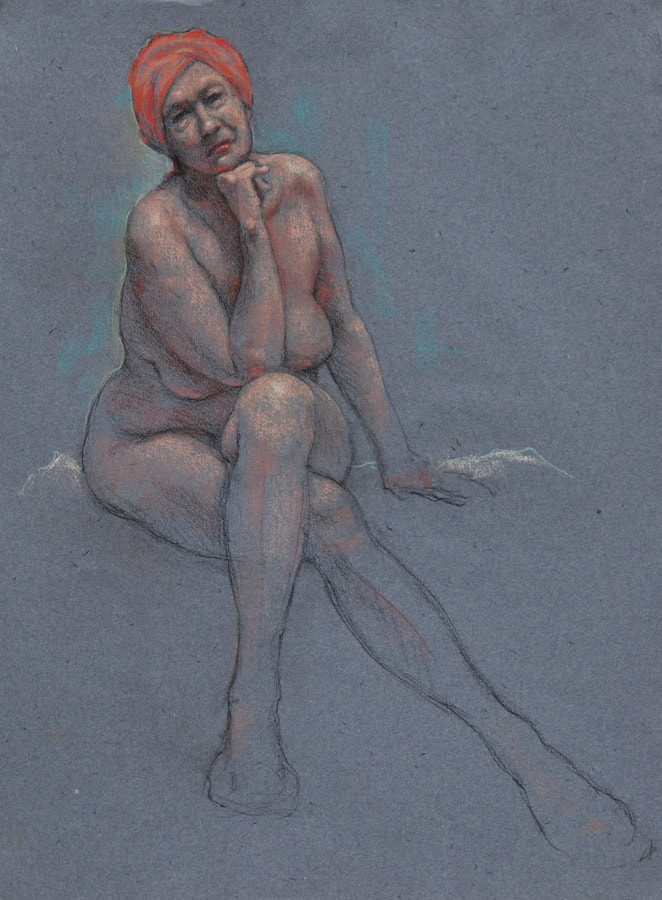
In terms of me categorizing other works of mine, using pastel as a drawing medium, it is a completely different use. I draw the figure from life weekly; in this setting I may have one hour or slightly more to complete a drawing. I draw in charcoal adding line and some tone to a colored drawing paper, usually a mid tone.
Then I execute the light using soft pastel, in this approach I can balance the color to the palette of the paper and give the necessary volume to the figure. The amount of pastel is minimal letting the paper speak to the finality of the drawing. In this approach I am fast and fluid and would never consider it a “ painting” in pastel.
I can, however, do short demos of simple objects, fruit or vegetables in a more painterly approach that follows my technique for a formal painting in pastel. I have done so for various pastel associations over the years and in different countries as workshops.
How do you see your art competing with AI as more and more AI is being utilized?
I don’t see myself competing with AI, if someone wants art with soul they should choose that option instead of work that imitates soul. That’s all I can say about the matter. One other point, is that I have devoted an entire lifetime to achieve my work and that includes all my life experiences that have led me here. That I don’t think can be duplicated artificially.

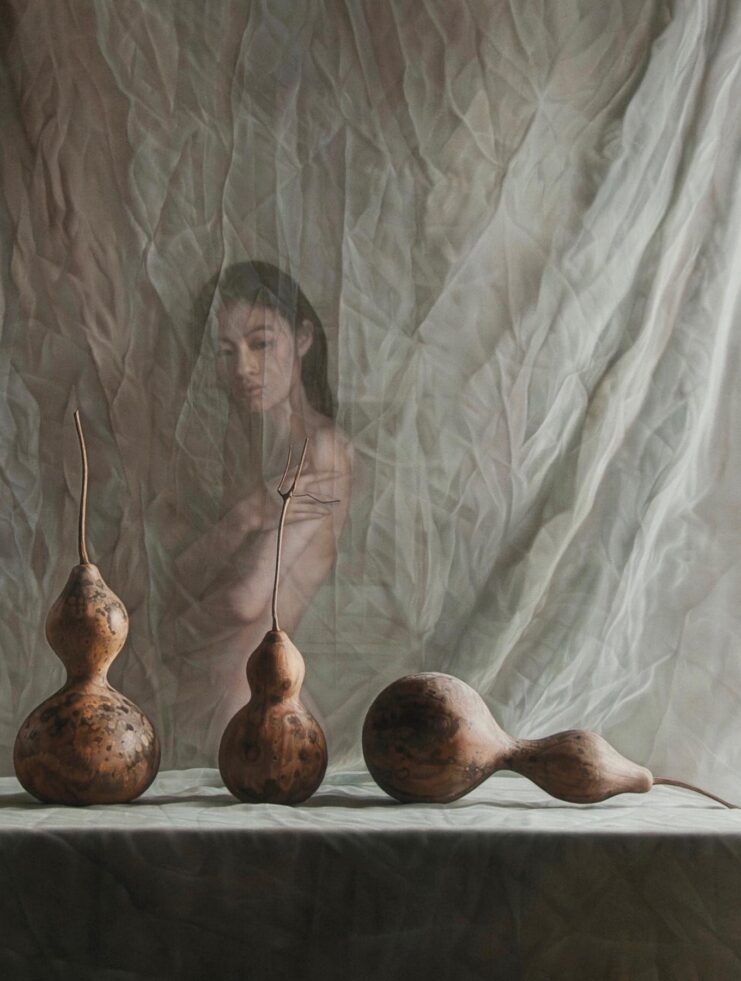
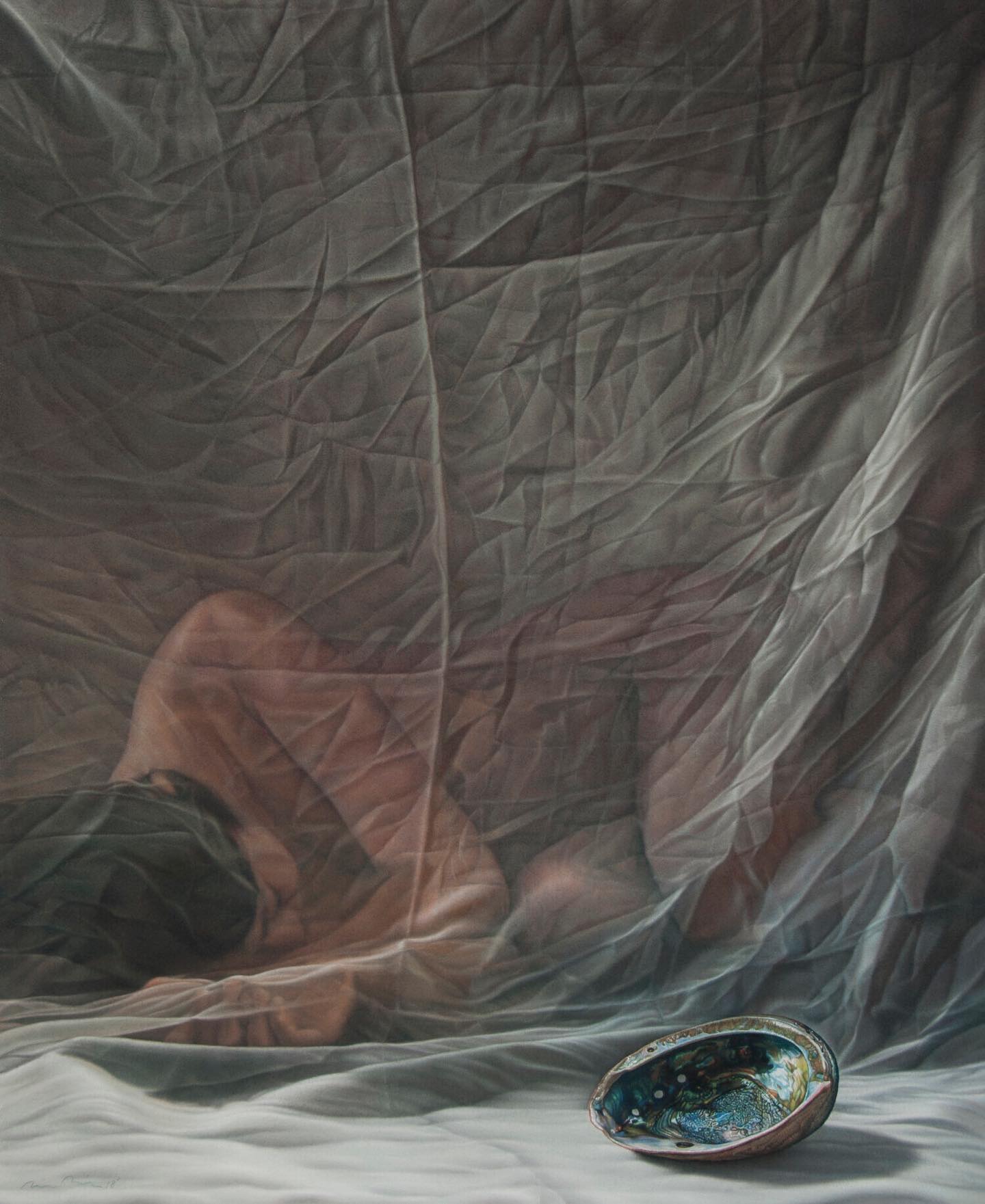
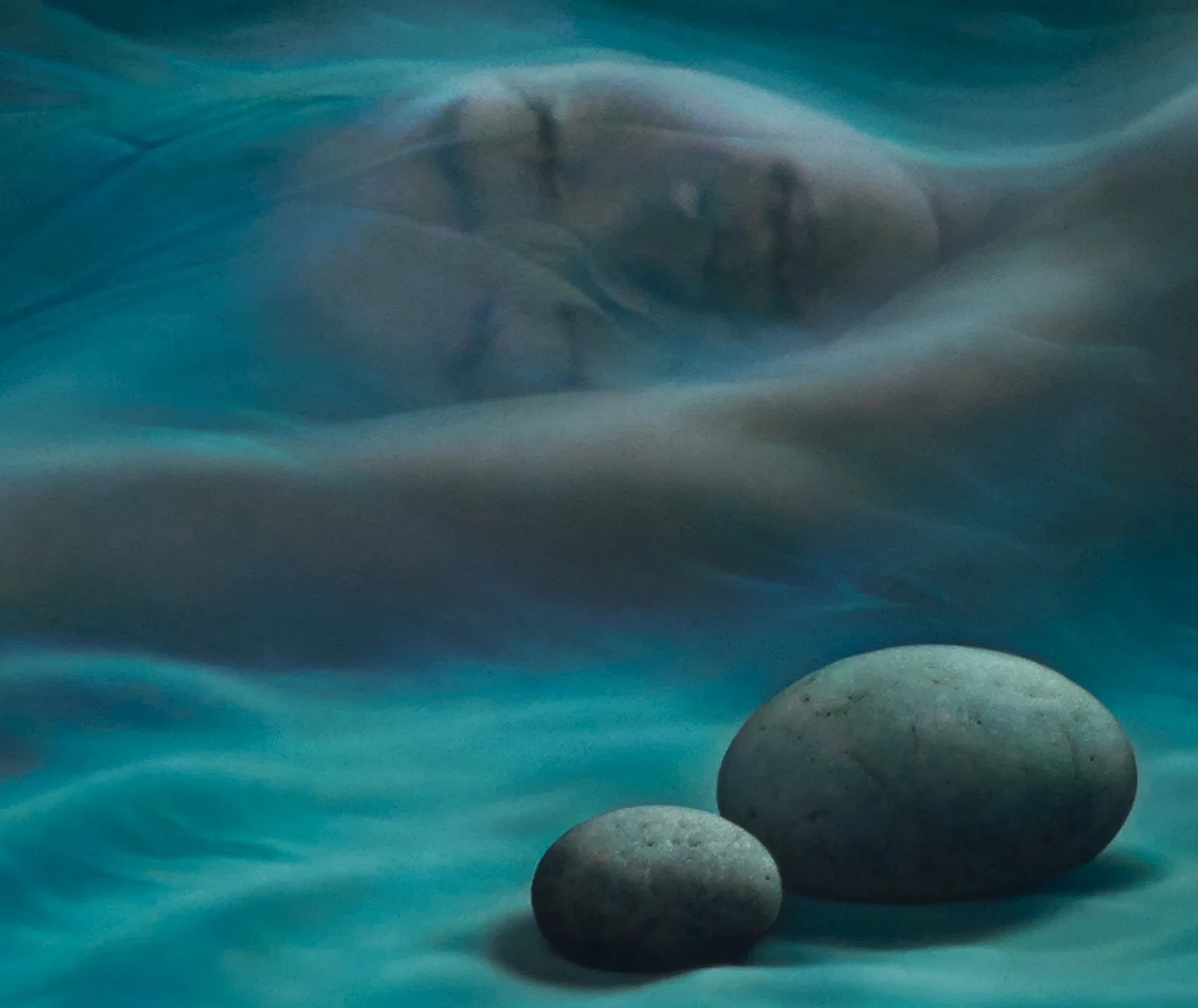
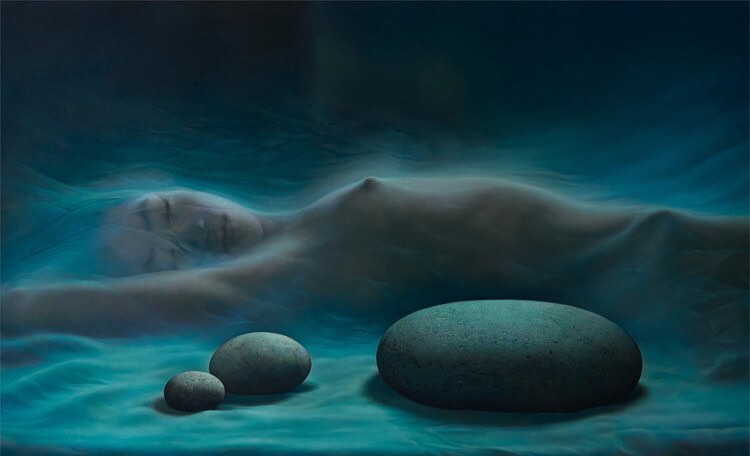
In your submission “Deep”, how do you reconcile the simplistic foreground with the more complex background? It almost appears that there are two separate images here fused into one.
I would disagree with the premise that the background and the foreground are separate. The subject was set up as one image that I constructed with model, objects as well as the veil. I interpreted the veiled appearance by studying the movement of both fabric and light.
What is one of your favorite pieces you’ve completed and why?
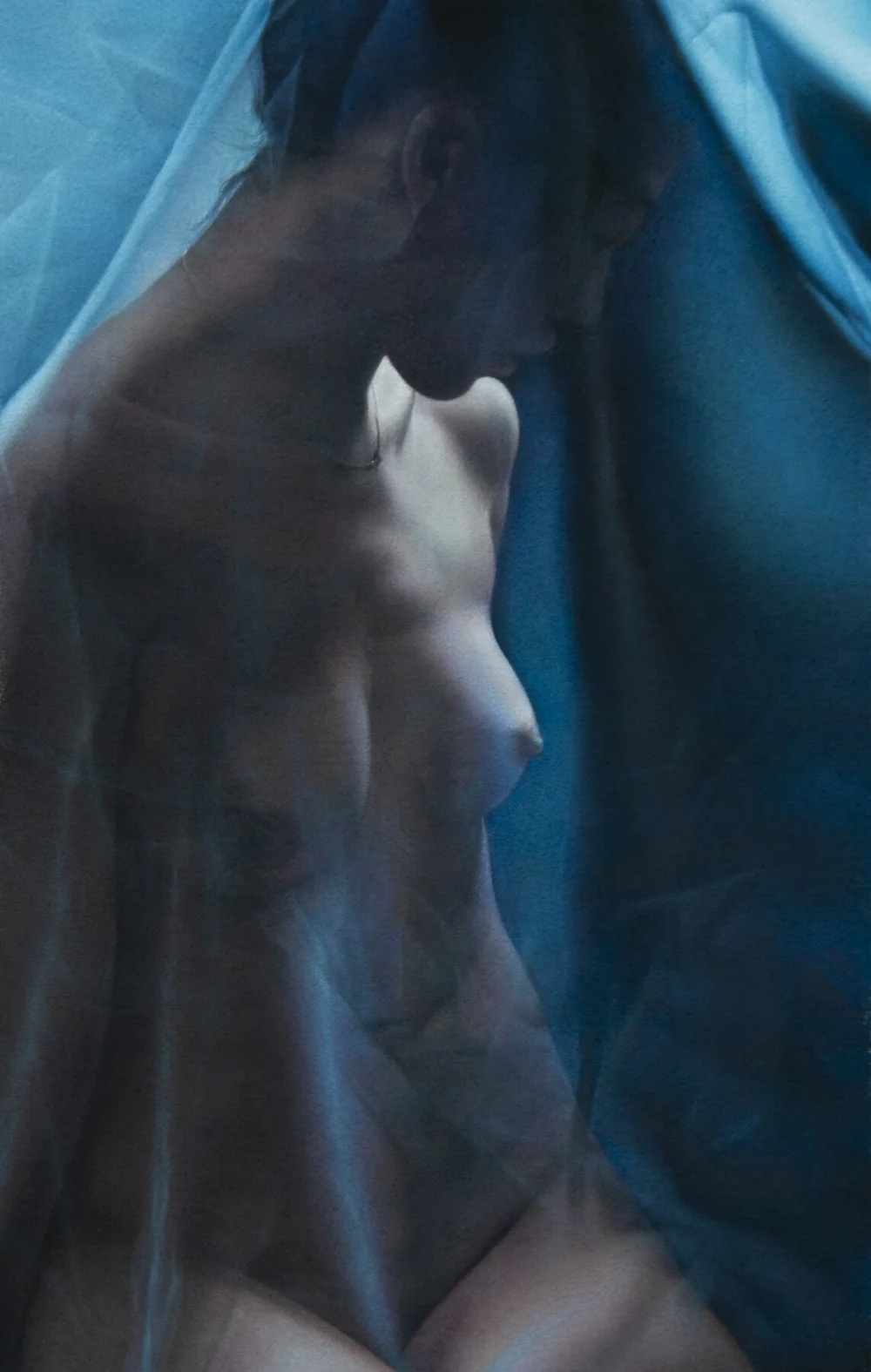
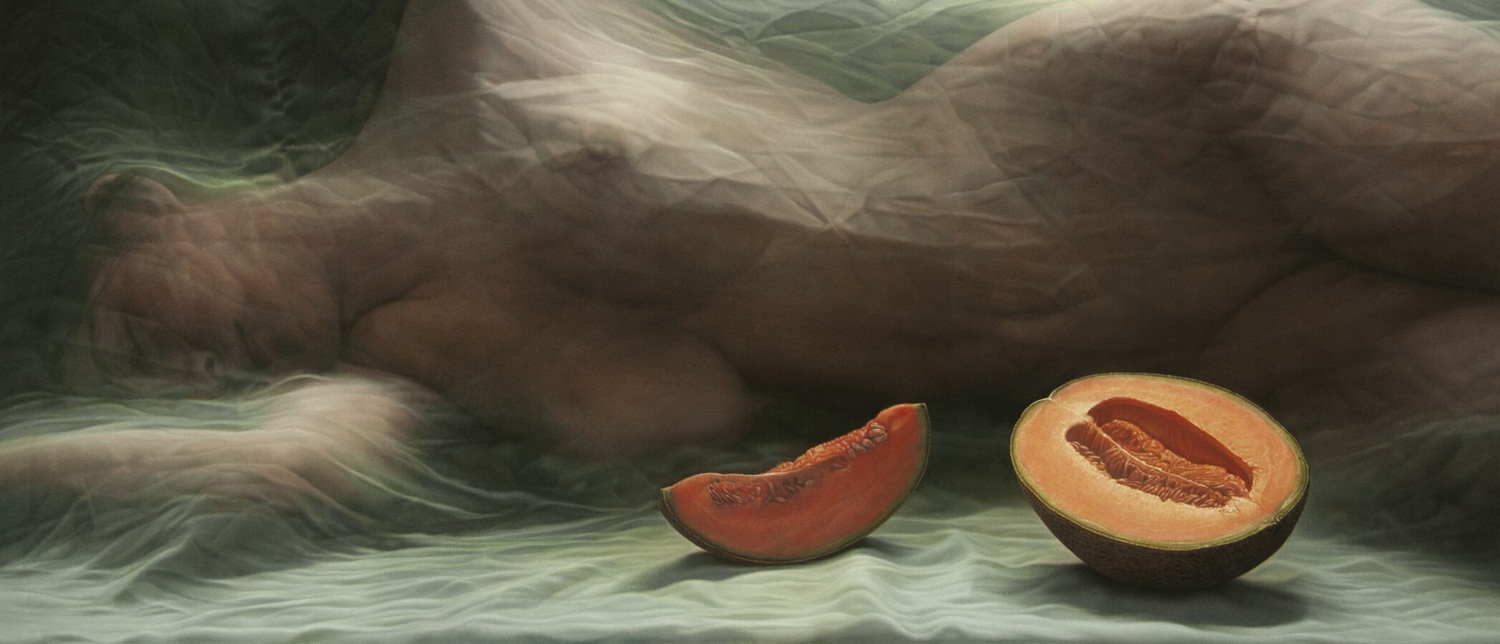
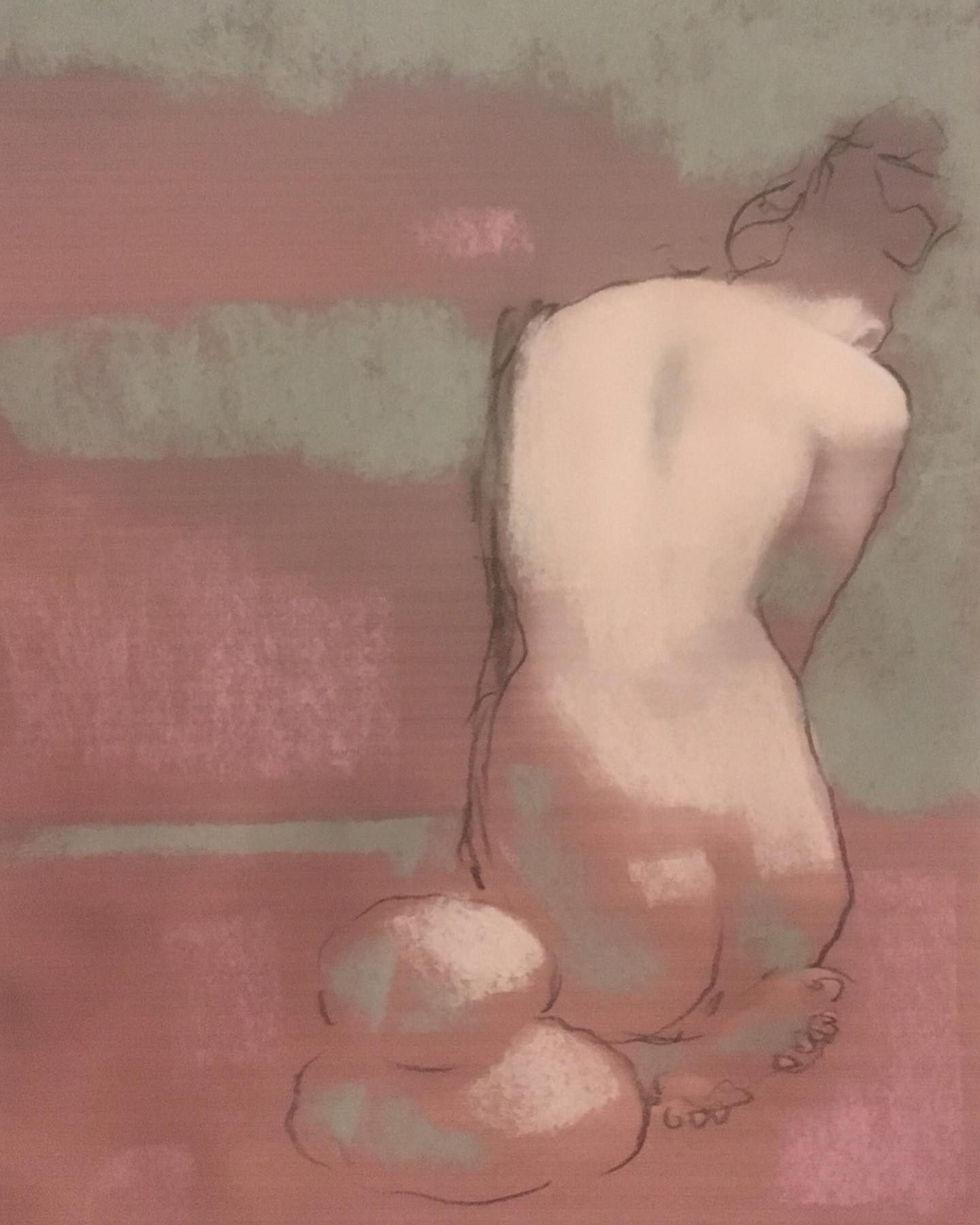
“Veil” is one of my favorite works because it signifies and path I have taken only somewhat recently with my work. The veil as a subject or as a vehicle that helps me explain and alter my approach to the figure has been an interesting journey. It helps me somewhat abstract the figure into shapes without losing its essence of both solidity and sensuality.
“Veil” speaks in both cases to that essence I try to attain. It’s a large work that has a oversize scale of a body that is confined to a space, set behind a veil and still capturing the beauty of the female form. Of course, this is how I see it, the rest is left to the viewer.
“I was given a small set of pastels by my father when I was eight years old, which I still have the remnants of today.” – Brian Bailey
You have previous experience in the art industry, how did you settle on pastel and what are some of the benefits you have found with the medium?
I was given a small set of pastels by my father when I was eight years old, which I still have the remnants of today. I brought them with me to college and was quickly told in my classes that we wont use any pastel. I proceeded to use for quick life drawings at the discouragements of most all of my teachers. Over the years, after doing most of my illustration in acrylic/oil, I discovered its beauty again as a teaching medium in my studio. The pigments themselves are generally not too expensive and paper as your substrate, I found it to be an economical option for rising students in the arts.
I taught pastel for years as a medium for student to learn the basics of color for painting from life without the investment in canvas or board. It’s a forgiving medium for mistakes and has the sensitivity of touch. I, as an artist, believe strongly that the cornerstone of the arts is sensitivity and our individuality of touch. Also being that I only use my hands, my finger becomes my brush. I have said in previous interviews that there is no greater connection between artist and medium than ones where we only use our hands as tools.
How do you see your art expanding over the next five years?
I frankly don’t know based on where I see the art market going. I try to survive in a world where appreciation for my type of efforts are limited. I realize this sounds a bit dark but its my life and livelihood therefore I try to find ways to keep producing work I believe in regardless of current fashion. The art world leaves me questioning my directions at times but I have no choice but to speak to my inner voice. Whatever direction it leads me I will embrace, but I won’t sacrifice my essence as an artist.
“I, as an artist, believe strongly that the cornerstone of the arts is sensitivity and our individuality of touch.”- Brian Bailey
Why did you enter the Beautiful Bizarre Magazine Art Prize?
I entered because I had admired an artist’s work and found his work was appreciated and awarded. I thought I would send a work that was meaningful to me that shared some of the unique qualities that Beautiful Bizarre Magazine seems to showcase. I really didn’t expect a result such as this, to win that award gave me a bit of hope that my work is understood and appreciated. It means a lot for an artist to be seen for their efforts.
Would you recommend it and encourage others to enter? If so, why?
I encourage all artists to take a chance to show yourselves. Someone will see you, someone maybe BBM will appreciate these efforts, which are deeply personal and completely unique. Art is a visual extension of ourselves, a fragile gift to the world, expose it.
Brian Bailey Social Media Accounts
Victoria Olt Gallery Social Media Accounts
Website | Instagram | Facebook