In the hustle and bustle of our daily lives, many of us forget to take a moment to stop, take a deep breath and soak in the nature that surrounds us. From that little patch of grass sprouting dandelions in the garden, to the dense forest who’s roots twist and tangle into an ancient entity, nature is something that shouldn’t be admired from afar, but should instead be embraced like a long lost familial figure. Elizabeth Porritt Carrington’s surreal landscapes and whimsical portals offer the perfect starting place to begin rekindling our relationship with nature. All we need to do is that that first step into a world close to our hearts but forgotten to time.
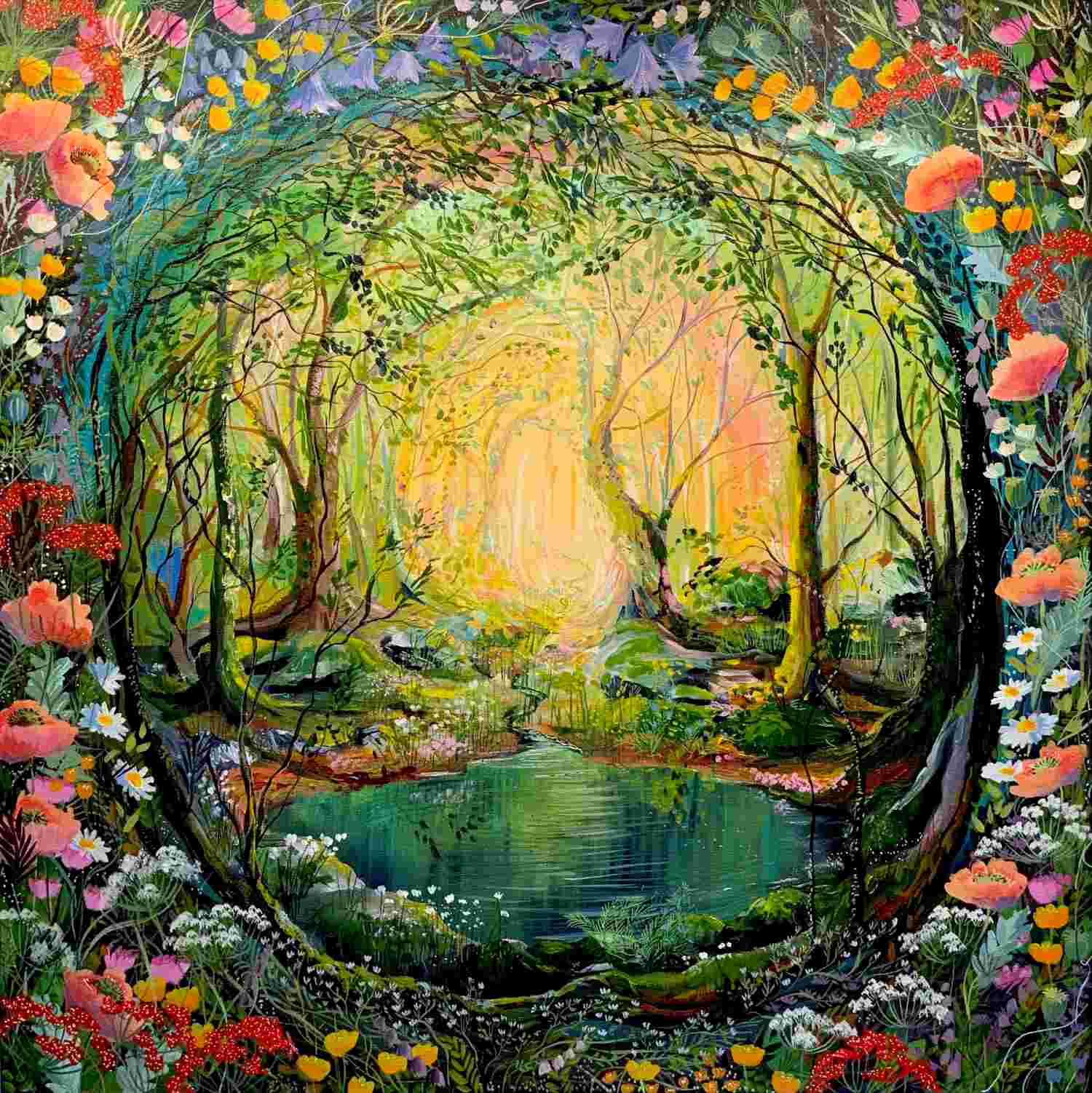
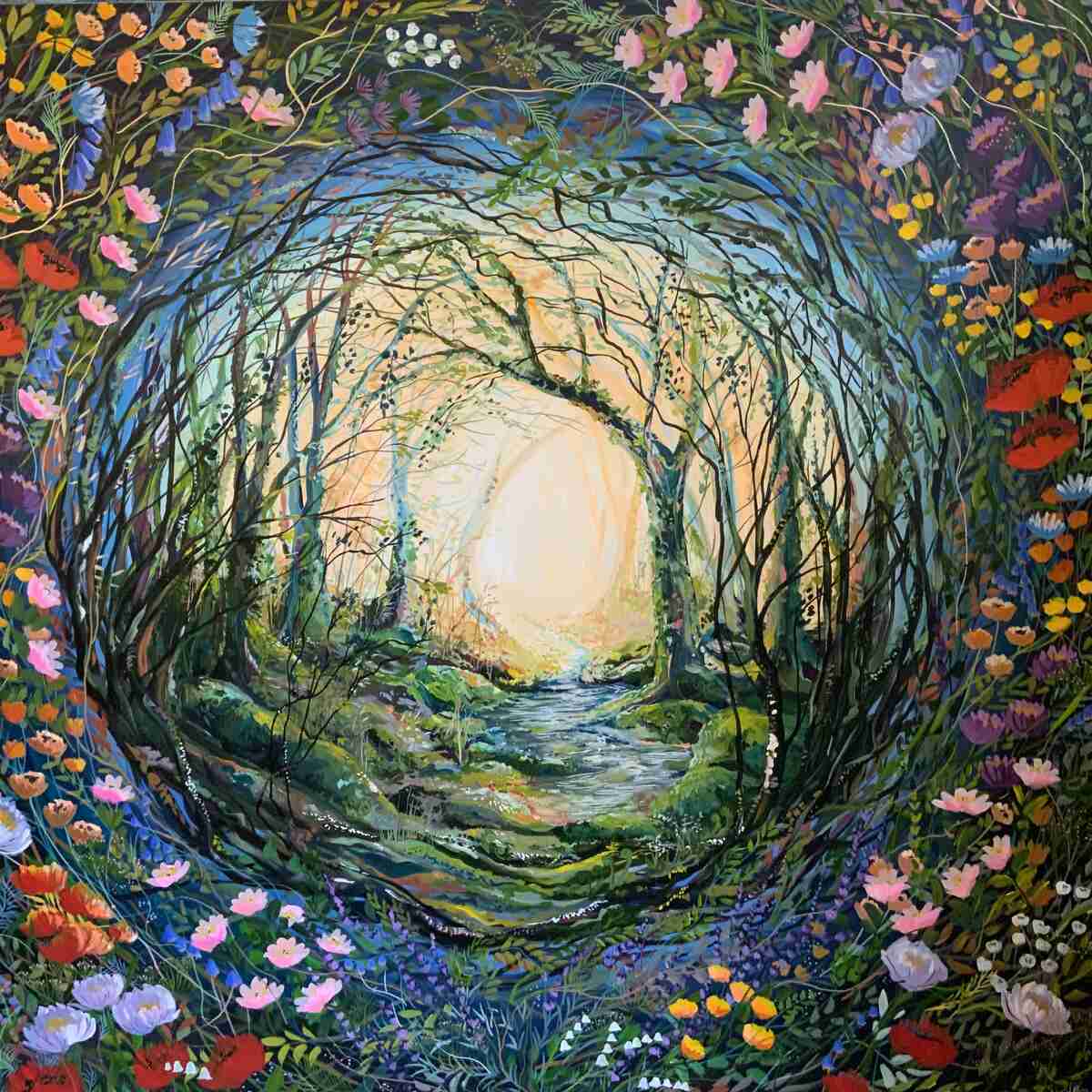
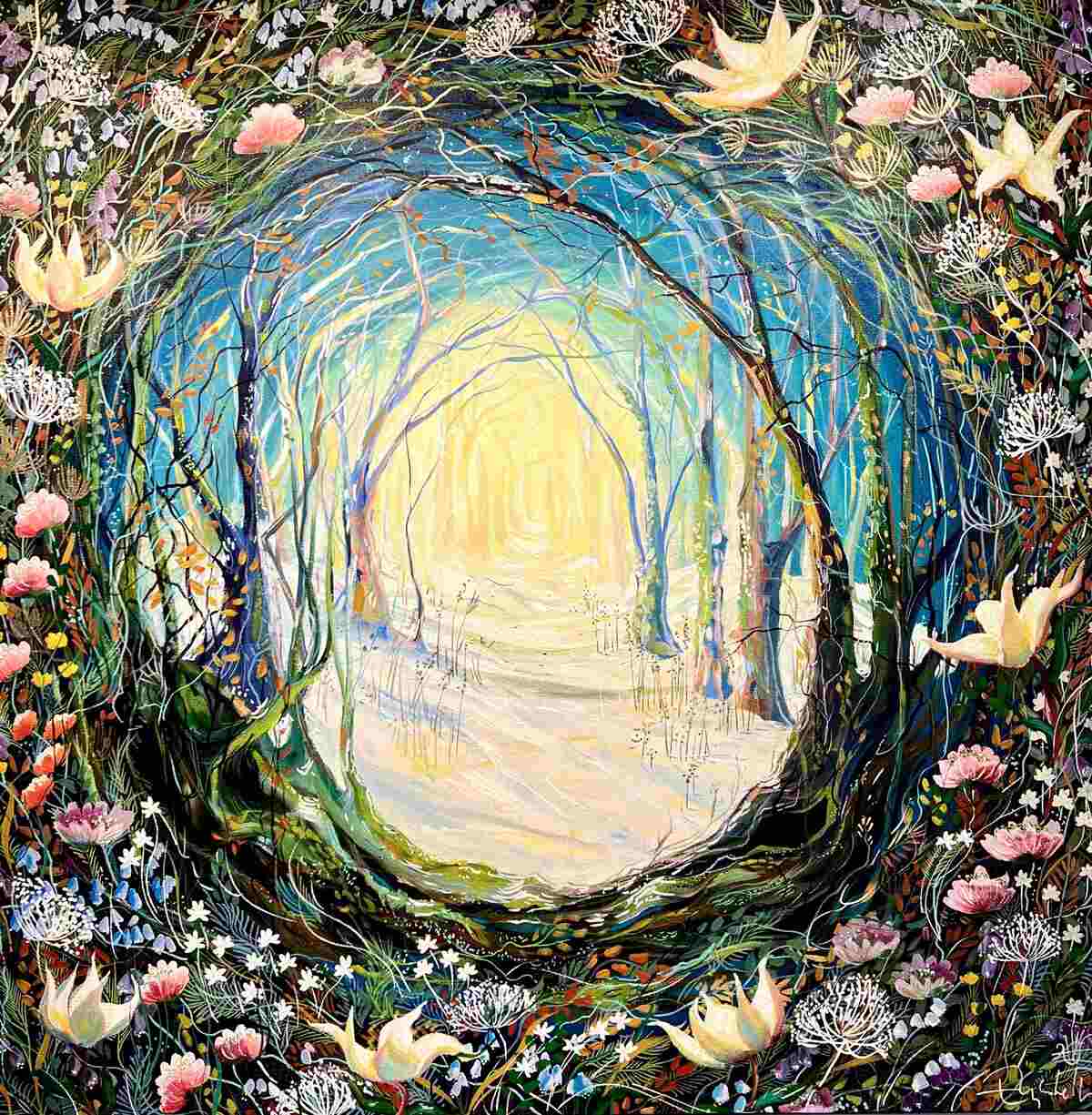
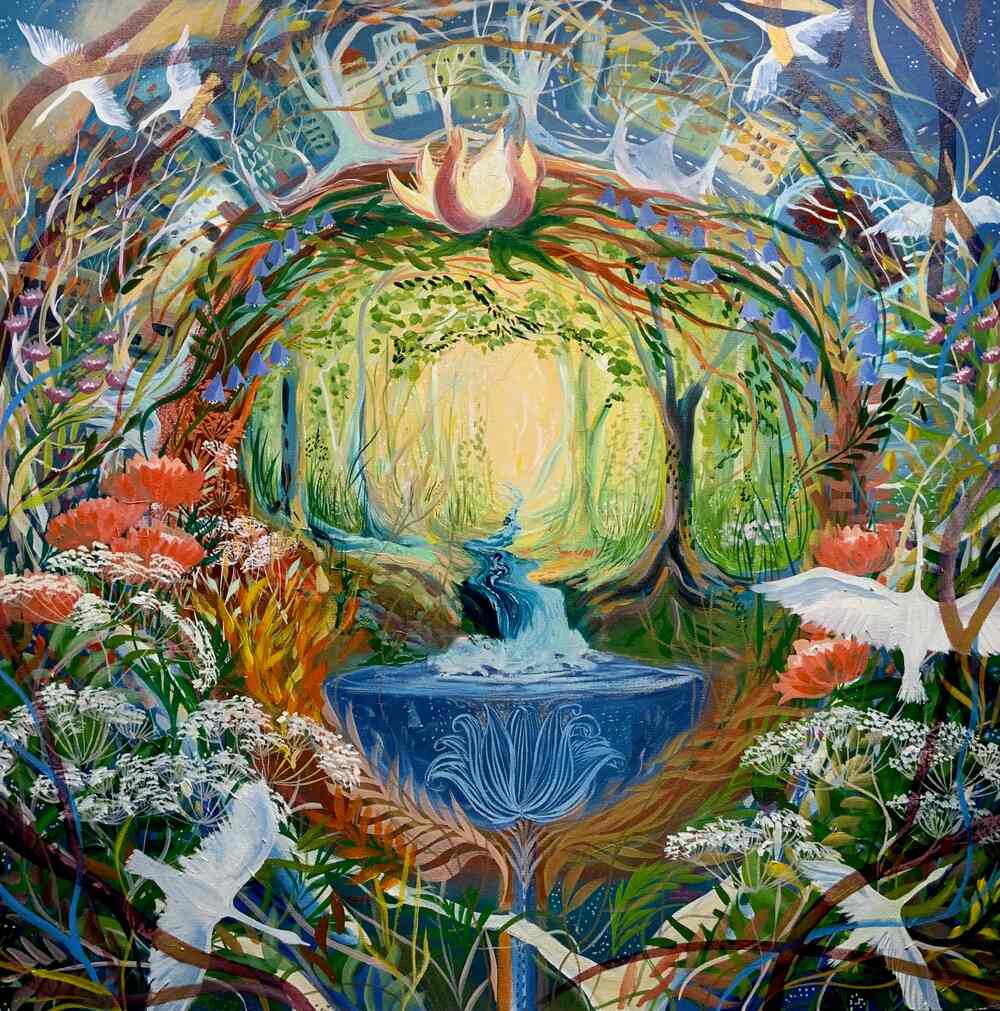
Elizabeth Porritt Carrington is an Irish artist currently based in Asheville, North Carolina where she is represented by Bender Gallery. Growing up in rural Ireland, Elizabeth has spent much of her life surrounded by nature which, in turn, has come to influence her work as an artist.
After graduating from Atlantic Technical University with a BFA in the Sculpture and New Media, Elizabeth has spent the past 25 years evolving what she calls her “eco-contemplative” work which hopes to inspire other’s to re-establish a relationship with the natural world. Through a mixture of nature, mythology, ecology, grief and humanity, she aims to explore her own experiences and curiosity with the world all while encouraging others to do the same.
I cant help feeling nature and art are in tandem or the creative forces and impulses that cause us to pick up a pen or brush are something akin to a seed breaking open in dark soil.
Interview with Elizabeth Porritt Carrington
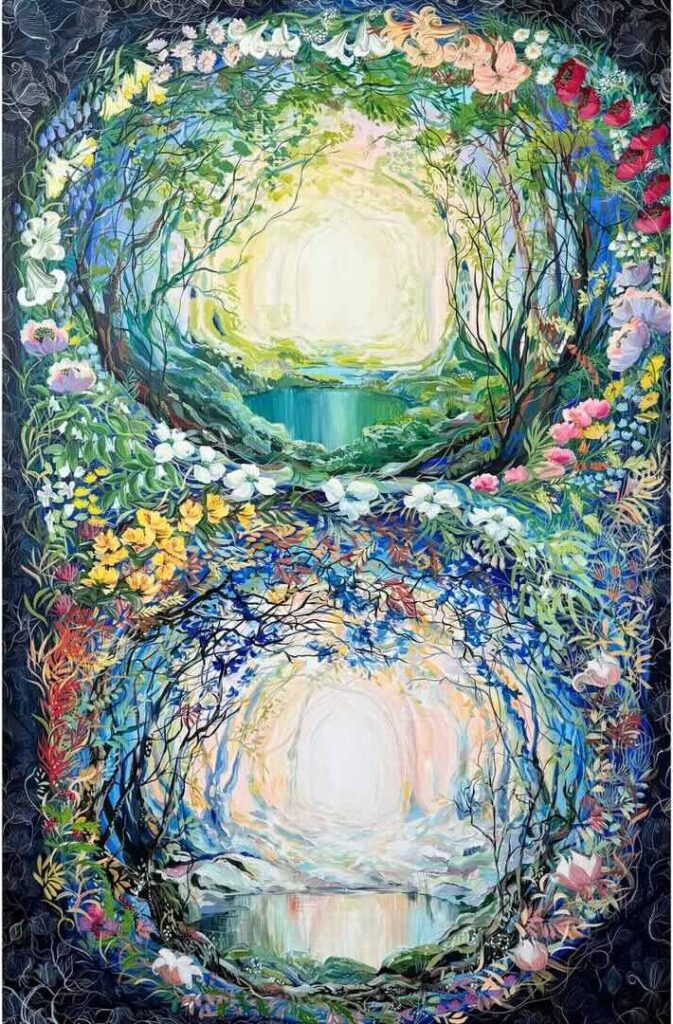
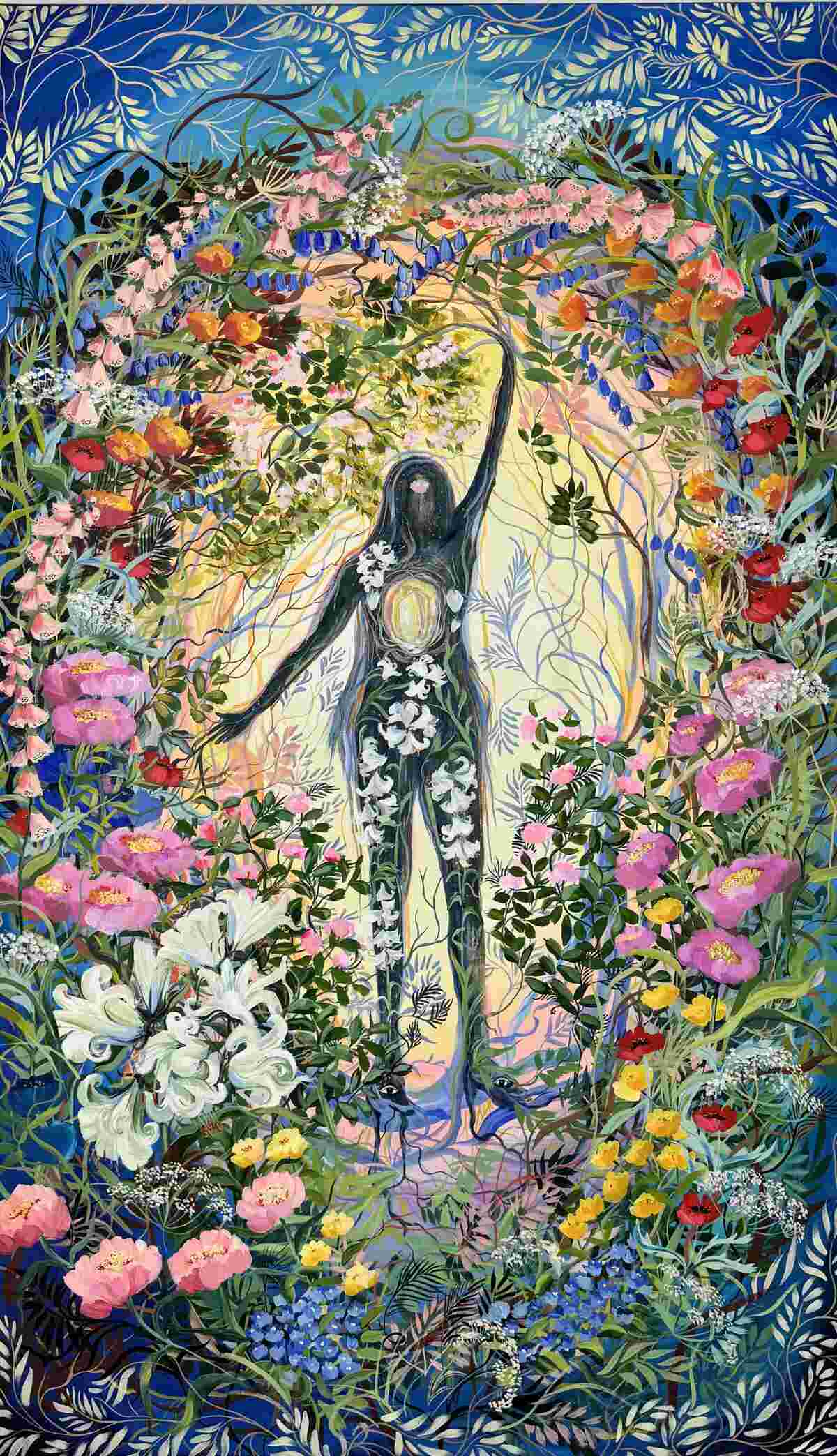
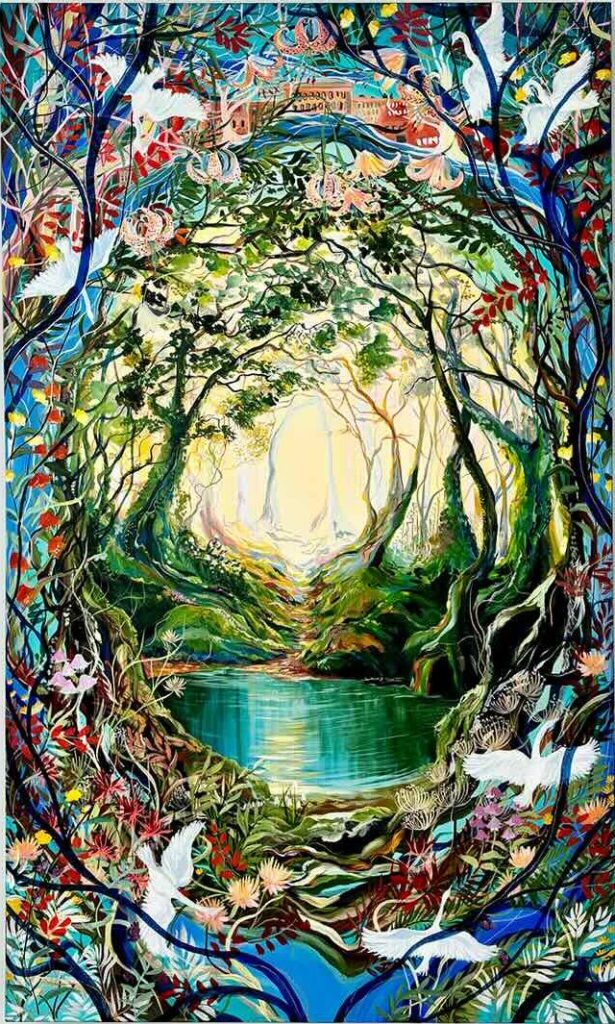
As nature is the central theme of your work, I’d love to know more about how you approach starting a new painting and how you reference nature in your ‘Paintings as Portals’ and ‘Millefleur’ series. Do you scout locations, take reference photos, paint on location, etc. or do you prefer to use your imagination?
Yes to all of this. I am presently in the west of Ireland, which is where I am from originally though based in Asheville NC most for the year. I’m in the Burren National park now where I am restoring an old Irish cottage with my family. This is our third summer coming here to work and be with this place. I’m about a half hour from where I was born as the crow flies.
Spending time in the natural world, especially places like this that are less disturbed by industry, I am profoundly charged for making paintings. Witnessing and accompanying places full and rich with systems of life that are intact in their cycles and creative forces causes something in me as an artist, to be switched fully on. I draw and paint here, and take photos. But I also wild swim daily.
I make a real effort to get close and personal with the wildness in this place. I snorkel through the seaweed forests on the coast, dip my head in near holy wells and streams, forage in the woods, hike to the top of hills and mountains. And I wait long enough to watch light change and skies color over. I go back to Asheville brimming with ideas for paintings and bring some back with me. I also enter into this practice daily in Western North Carolina but not quite as immersive as here.
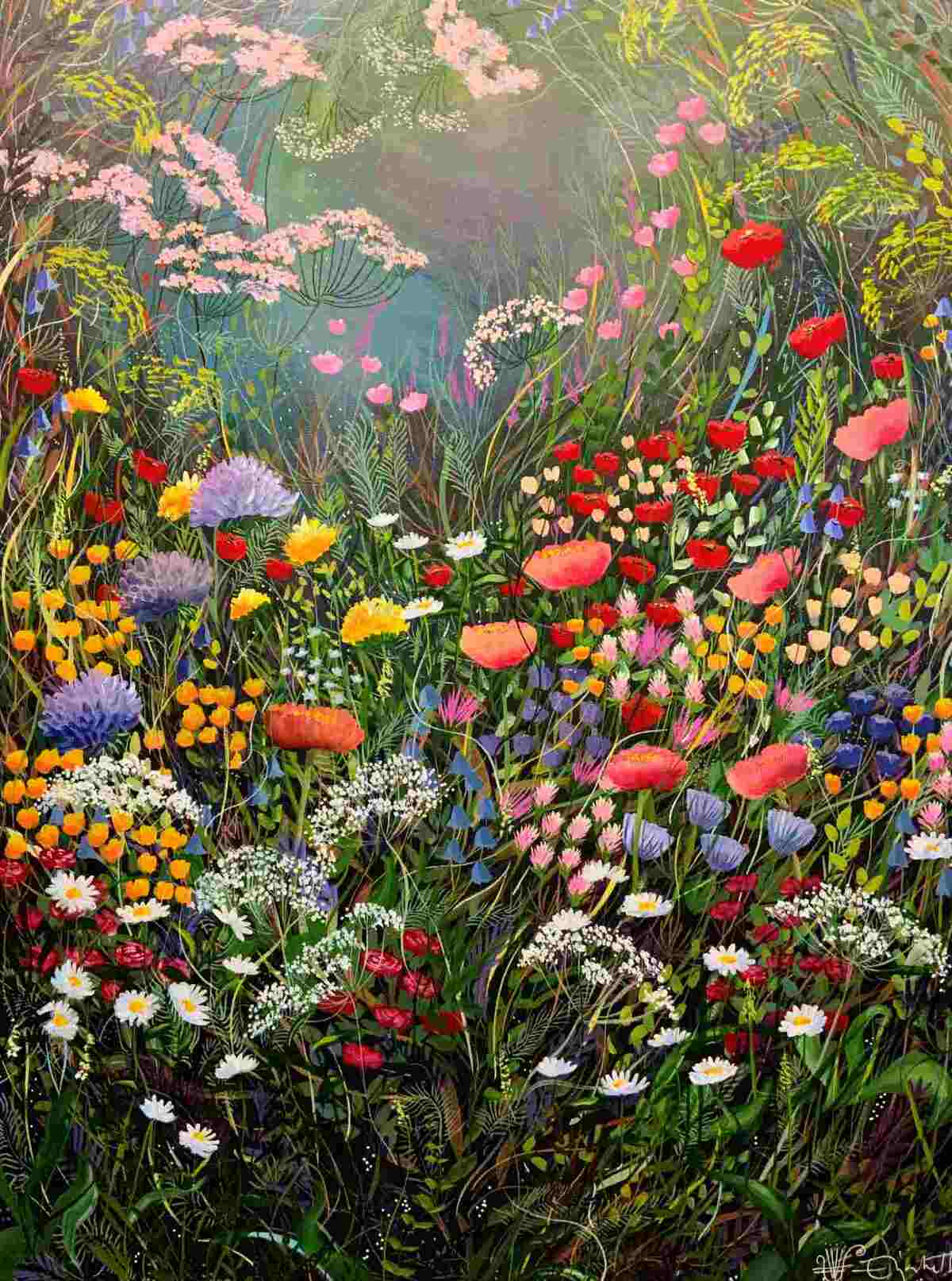
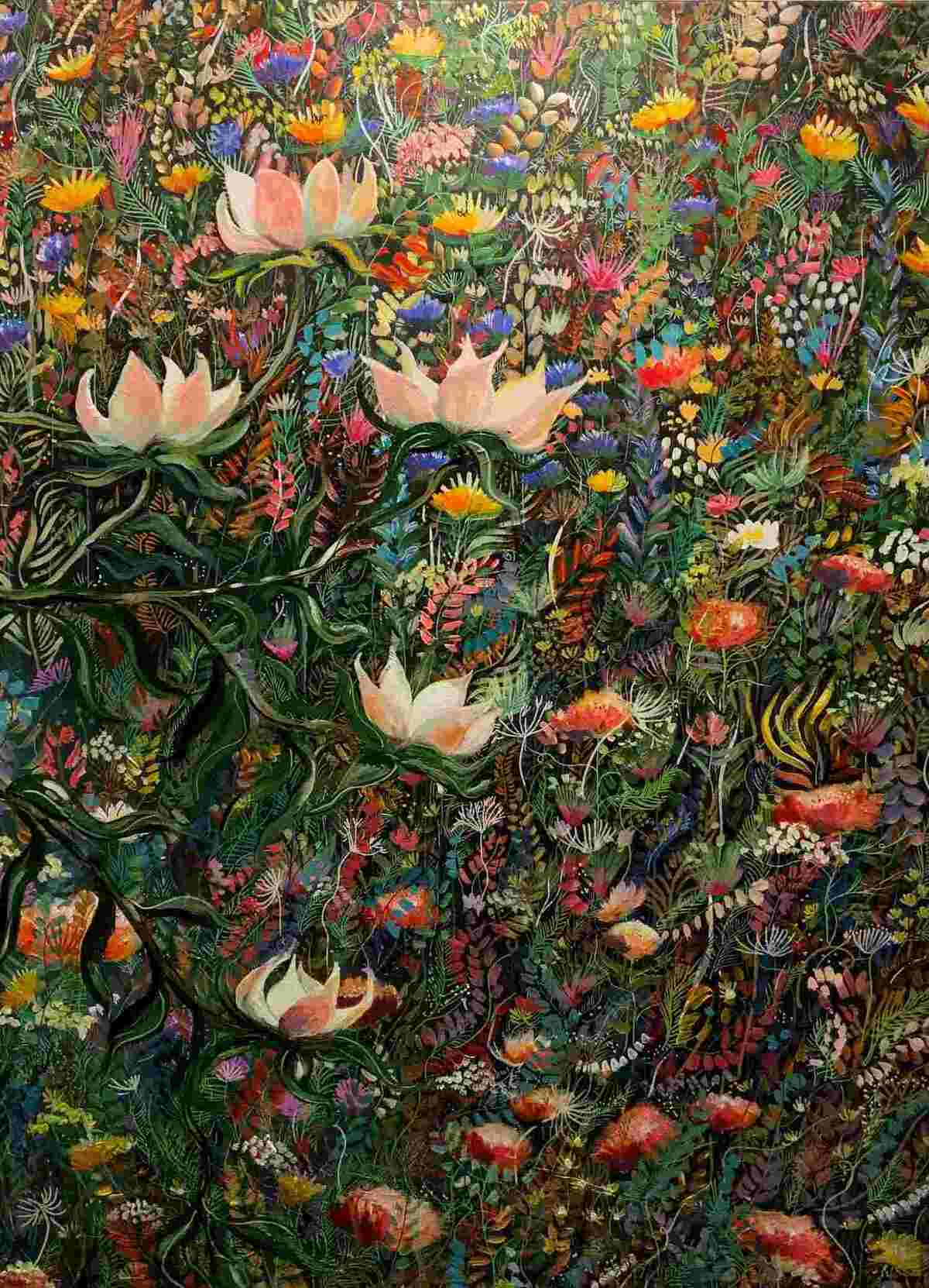
I see my portal paintings as invitations to the viewer to come into this kind of immersive conversation with nature or to feel it emanating though the paintings as something they too can feel, a place of wildness that has a kind of peace and belonging to it that is natural to us all and is our right to feel. Almost like how orthodox Christian icons are perceived as windows to some kind of heaven, I imagine my ‘Painting Portal’ and ‘Millefleur’ works as invitational windows into this Earth home, both in real time and to inspire a memory of this from childhood or indeed to speak to a yearning to feel akin to nature.
In the Irish language there is a phrase:
“Tá tír na nÓg ar cúl an tí, tír alainn trína chéile.” This literally means, heaven is behind the house, its a beautiful land entangled with this one. The Irish poet Seán Ó Ríordáin opened his poem ‘Cúl an tí’ with this. I love this understanding that there is something beautiful and heaven like in wild places, not the cultivated controlled front garden but perhaps the wild places where we are forgetting to bring our attention hold something vital for us.
The paintings I make try to evoke that wilder place, a kind of nirvana that’s is in the here and now, in a sense of belonging or feeling a part of a wild nature intact in its life cycles and renewal.
What are some of the elements of nature that you find to be most inspiring?
I am fascinated by light. I can never quite get over that colours are not really there but wavelengths of reflected light on different surfaces. I continue to be very curious about light especially in natural places, as through trees, and on water. I love creating a sense of depth with light. These simple tricks of light in painting remain a true wonder to me, and to make colours is a play with light, substance and texture.
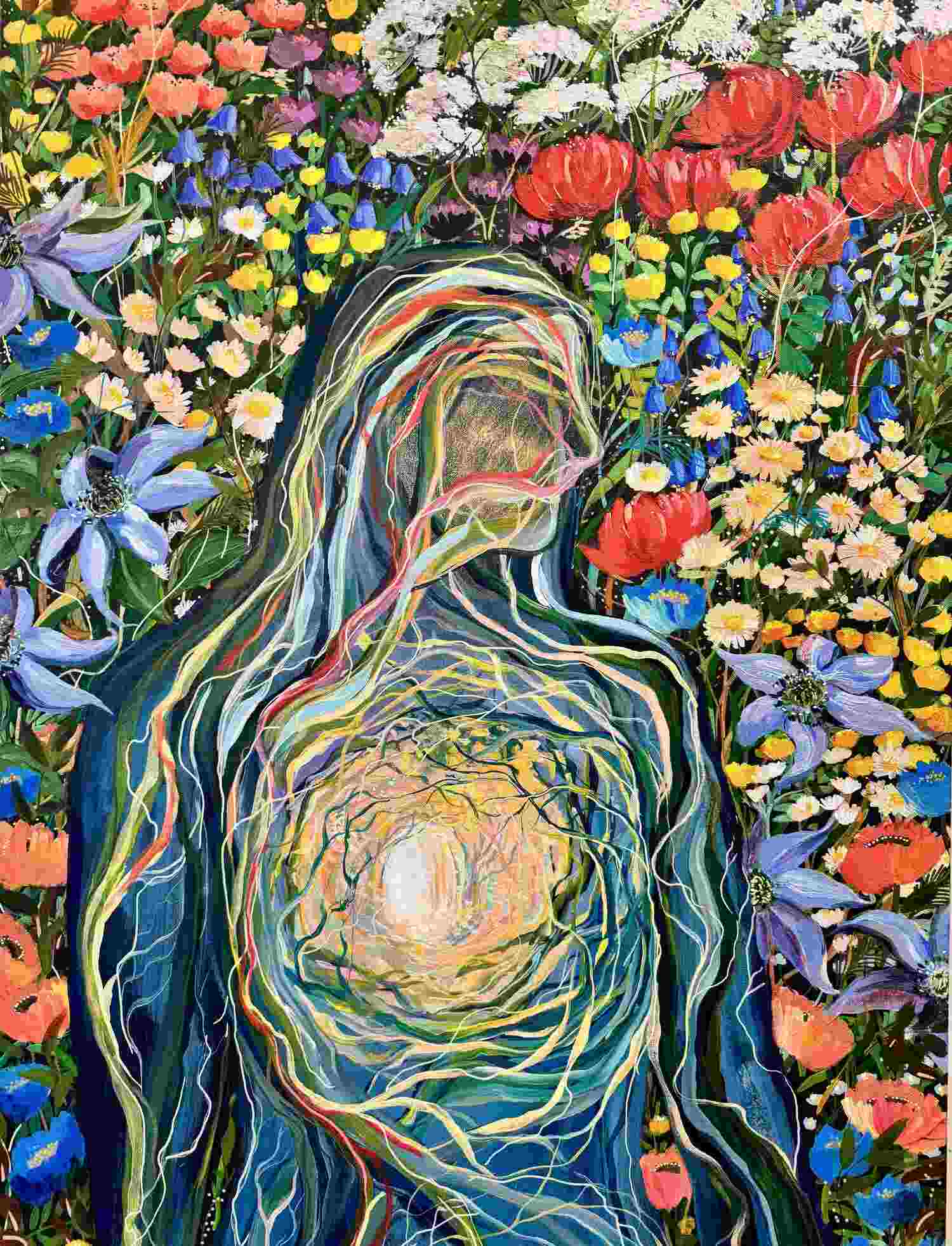
Grief is also a prominent theme throughout your body of work, how have you navigated exploring such a heavy topic within your work and what have you learnt from exploring grief artistically?
Grief drove me out into natural places in a kind of desperate need for solace. I thought I was going out to scream at life or surrender something alone. I found instead I wasn’t alone at all but surrounded by an understanding as clear as the eye can see that life lives in cycles. Laying on forest floors feeling the aliveness and thriving of both decay and life being born, was this sort of somatic healing for me. It became a lifeline for me to spend time watching nature move through the year, seasons where a kind of existential grip I held onto, to grieve with me.
Watching eco systems live fully, learning about symbiosis and many examples of natures communication and support systems emboldened me to accept the losses, and live more vibrantly and fully to the best of my ability. Ideas for paintings began to arrive in those moments of wonder really seeing what life was doing around me and then the overwhelming desire to share them.
I cant help feeling nature and art are in tandem or the creative forces and impulses that cause us to pick up a pen or brush are something akin to a seed breaking open in dark soil.
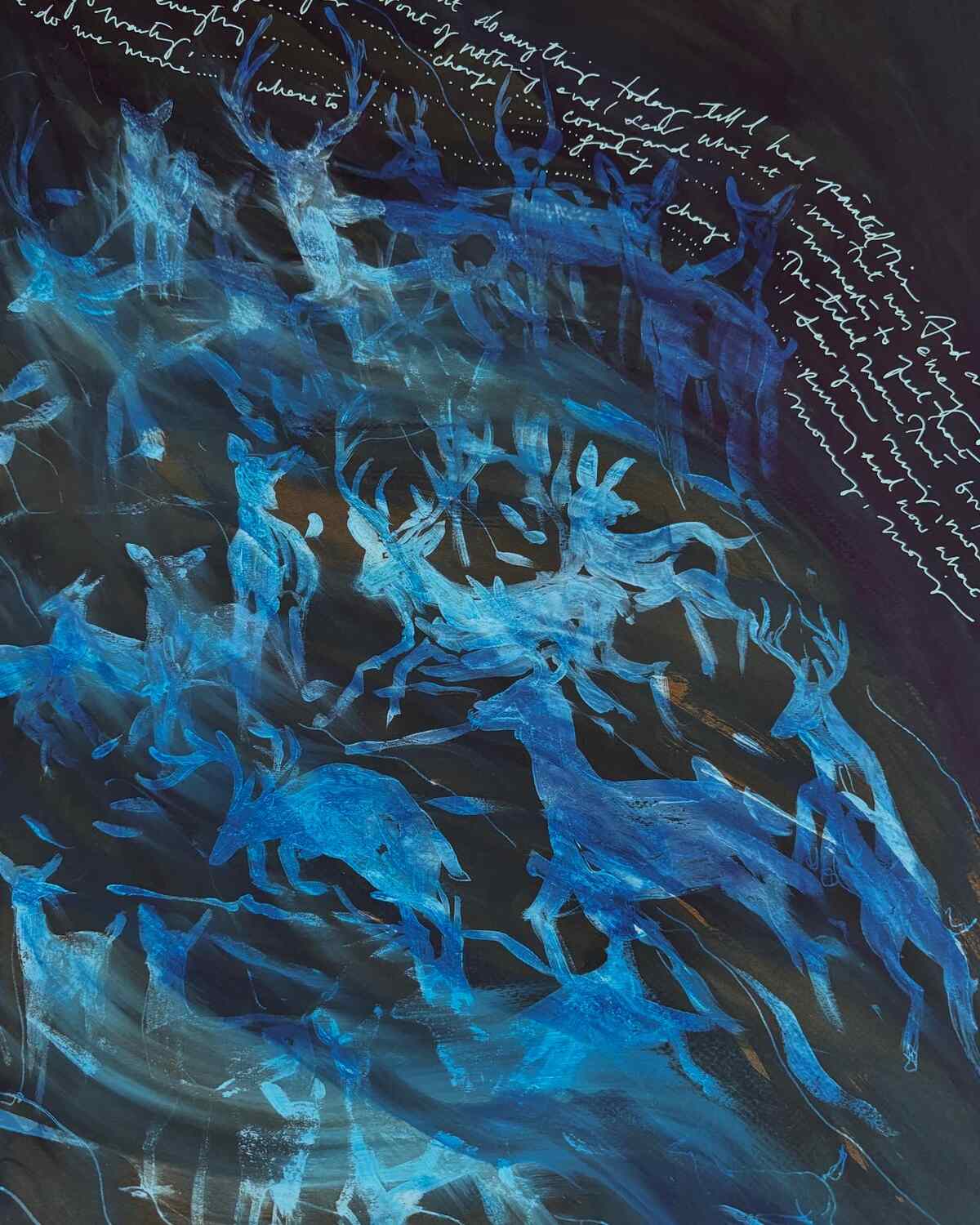
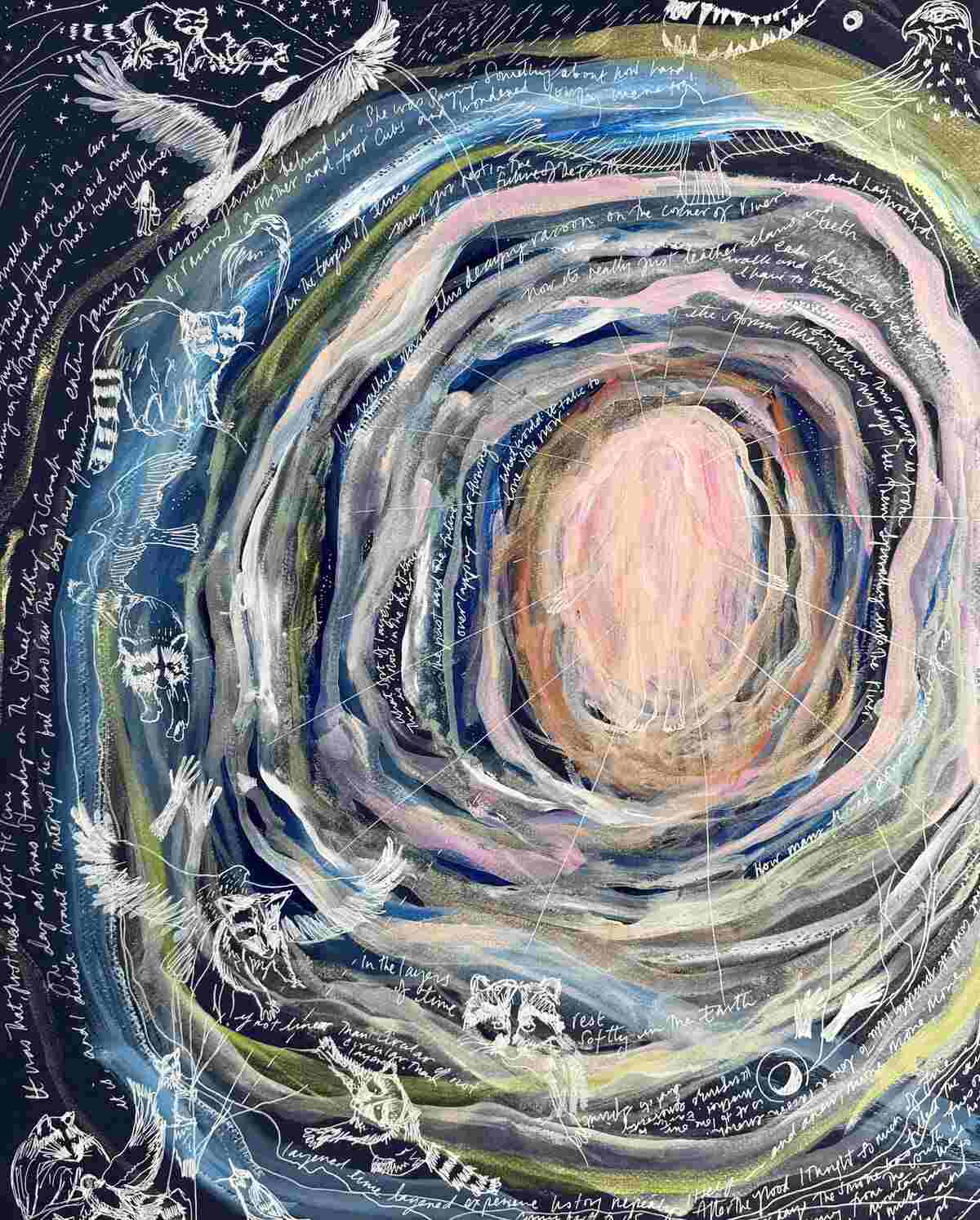
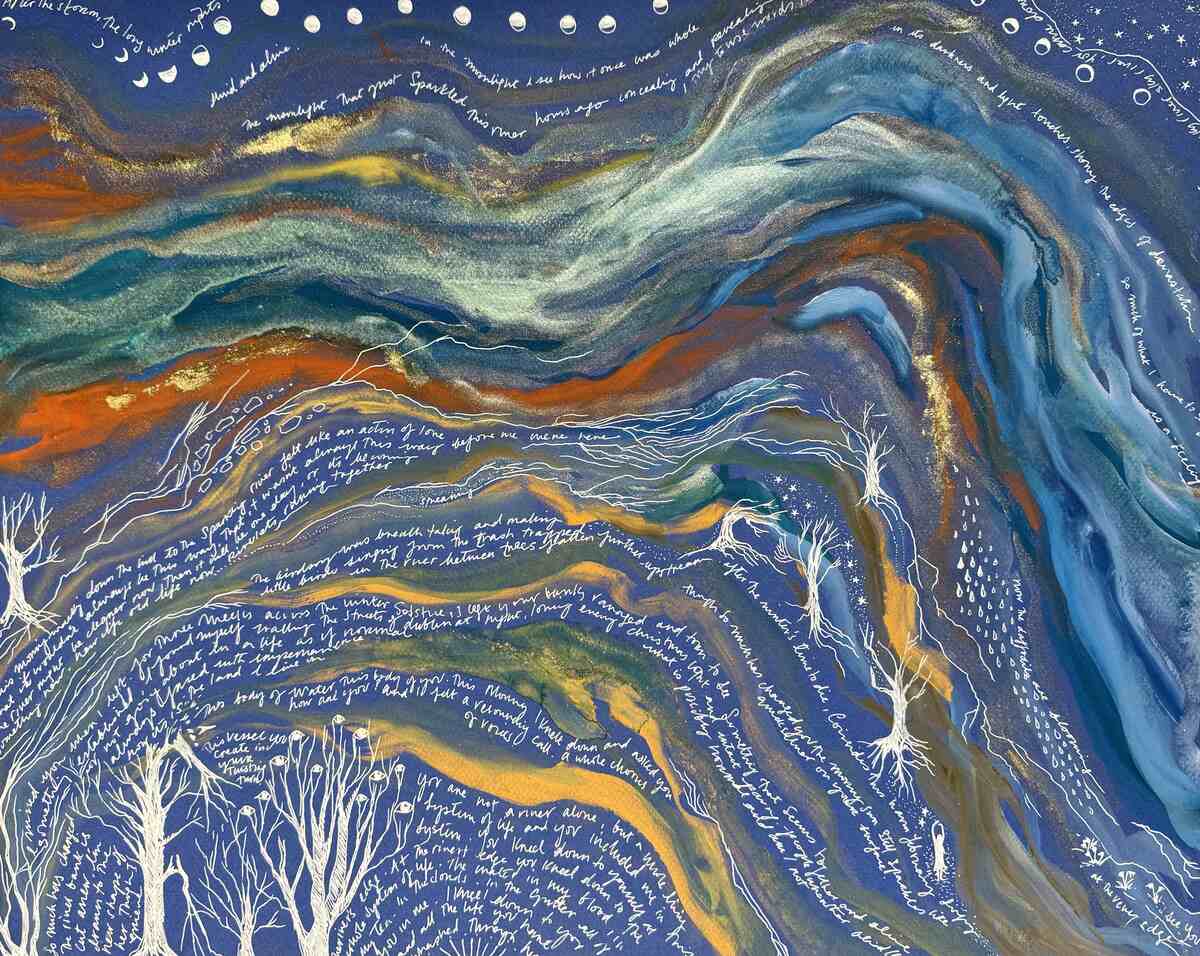
Surrealism also plays a role within your artistic style, drawings such as ‘Not a River Alone’, ‘Singing to the River’ and ‘To the Waterfall’ have a very dreamlike quality to them and heavily utilize handwritten text to create landscapes. How do you approach creating these surreal landscapes and deciding what you’re going to write?
Over the last few years in Asheville I’ve really been in this endeavor to try to engage the river that runs through the city of Asheville in a conversation. Tahkeeostee is how this part of the river is named in Cherokee. It is a wide and beautiful river that runs through the River Arts District. On the banks of this river sits my studio and is also near where I live there.
I’ve approached the river in different ways both with an artist’s eye, looking to form, light, colour, atmosphere, direction and energy, and a more eco contemplative or a deep ecology approach asking the river questions as I walk or stand by. I might be telling the river how I feel or thanking the river for being such an important artery of life in this region.

I notice a kind of dreamlike or surreal response at times with what arises in my imagination. I try to get to the studio soon after theses interactions to draw, paint and write what I have just experienced or am experiencing. It is often a dreamlike quality that comes from these. Hurricane Helene has been a huge bend in the practice. I am continuing this work from a process driven place, watching what’s emerging and staying curious to what I learn.
The drawing, ‘Not a River Alone’ will be exhibited in New Orleans in September as part of a Tale of Two Cities, an exhibition marking the 20 year anniversary of Hurricane Katrina with a collection of artists form Asheville and New Orleans at NOAFA.
You’ve lived and worked in Ireland, the South of France and now Asheville, North Carolina. What similarities and differences have you found living and working in these different countries and how has each place inspired your work?
I have a bit of a nomadic tendency. But I prefer to stay in places long enough to feel familiar with them. I am a creature of habit but love to find a new place to learn and grow around if given enough time to adjust. Place truly inspires me and I feel a kind of compulsion to speak for a place through paint once I am attached. The natural world has so much to tell us and does so generously over and over.
Nature remains for me my primary source of inspiration wherever I am. As I have described, here in the Burren, I tend to immerse myself in landscape before I paint it. I swim in it, eat from it, walk it and watch it a while. All of this, is a kind of effort in developing relationship. It is much less about objectifying or capturing a place and more about embodying and sharing with a place. Meeting new places is like making new friends, admiring and seeing there qualities and learning how they live.
What do you hope people can take away with them after viewing your work? And how do you think we can begin to re-establish ourselves within the natural world and what role do you think your art plays in aiding this mission?
These two questions are one for me. I hope my paintings are an access point that help people to feel the powerful presence of the natural world. This can be a balm, we definitely need images that soothe, that bring more peace, but I also hope they act as an invitation, an active kind of portal place that invites the viewer to see something they too can have, to experience the presence and kinship available in nature.
I dream these works can be medicine for our terror filled times. There is a kind of romanticism in what I do, but I think it is more relatable to a kind of post-postmodernism that realises itself as offering something that implies the world is beautiful and peaceful, that there is a natural powerful beauty that still exists right now and is juxtaposed with a world rife with pain, poisoned and fractured by climate crisis, with the threat of war and mass migration at the doorstep. If the paintings are soothing, they also ask you to turn in their direction and fully see them.
Was is it to fully see nature? I hope they can be dreamlike thresholds that like nature stand by you and you may look in their direction and set your new course their way and enter in.