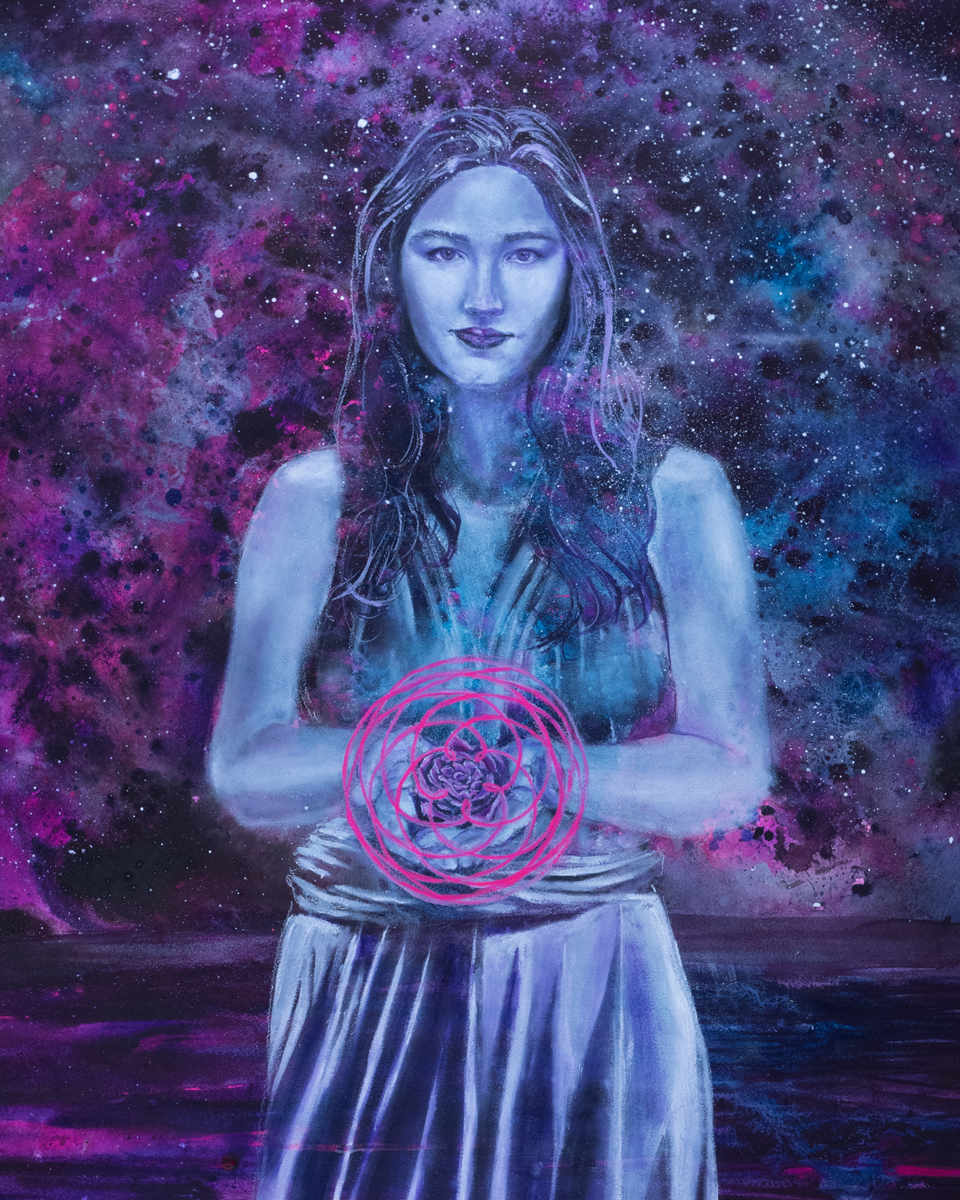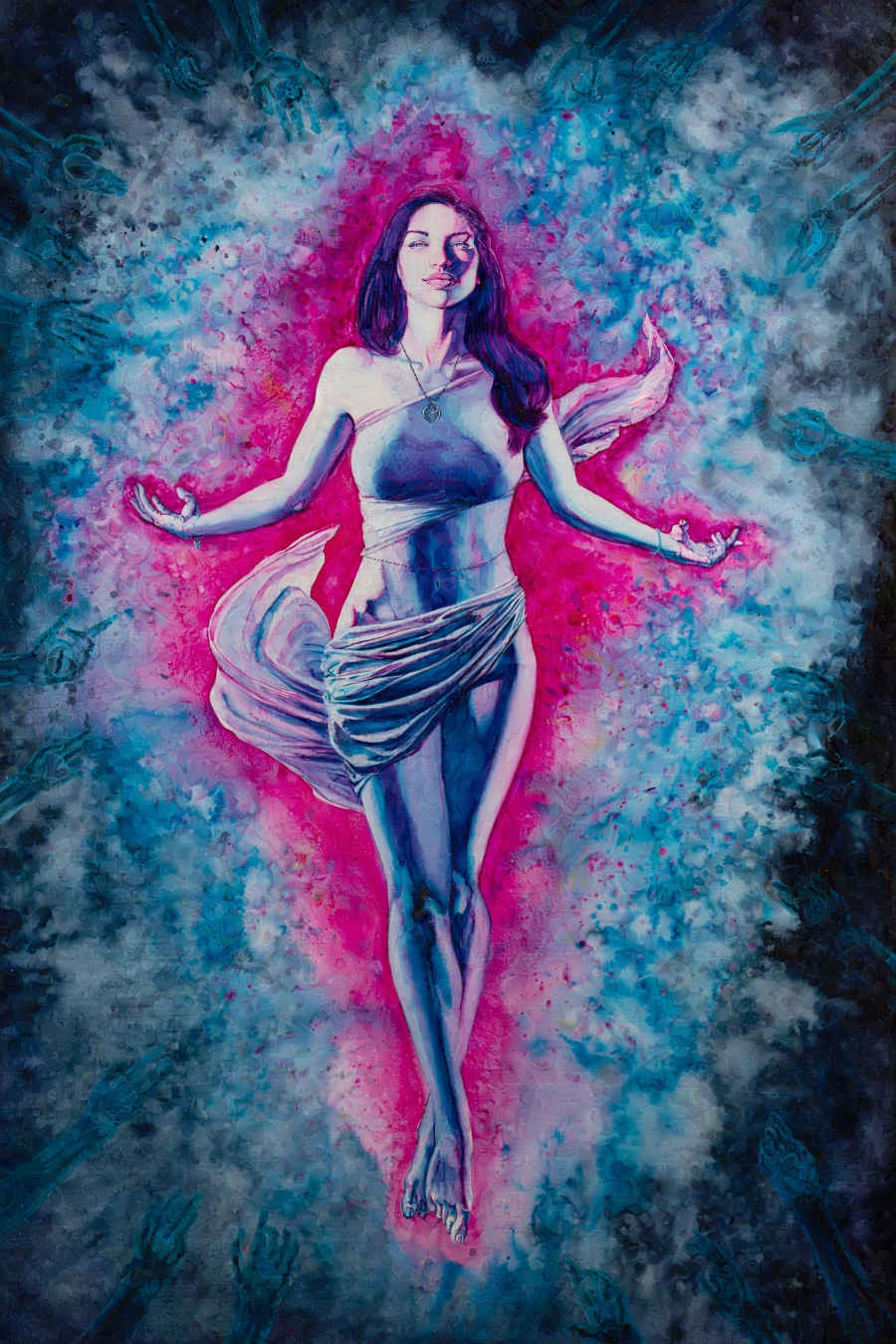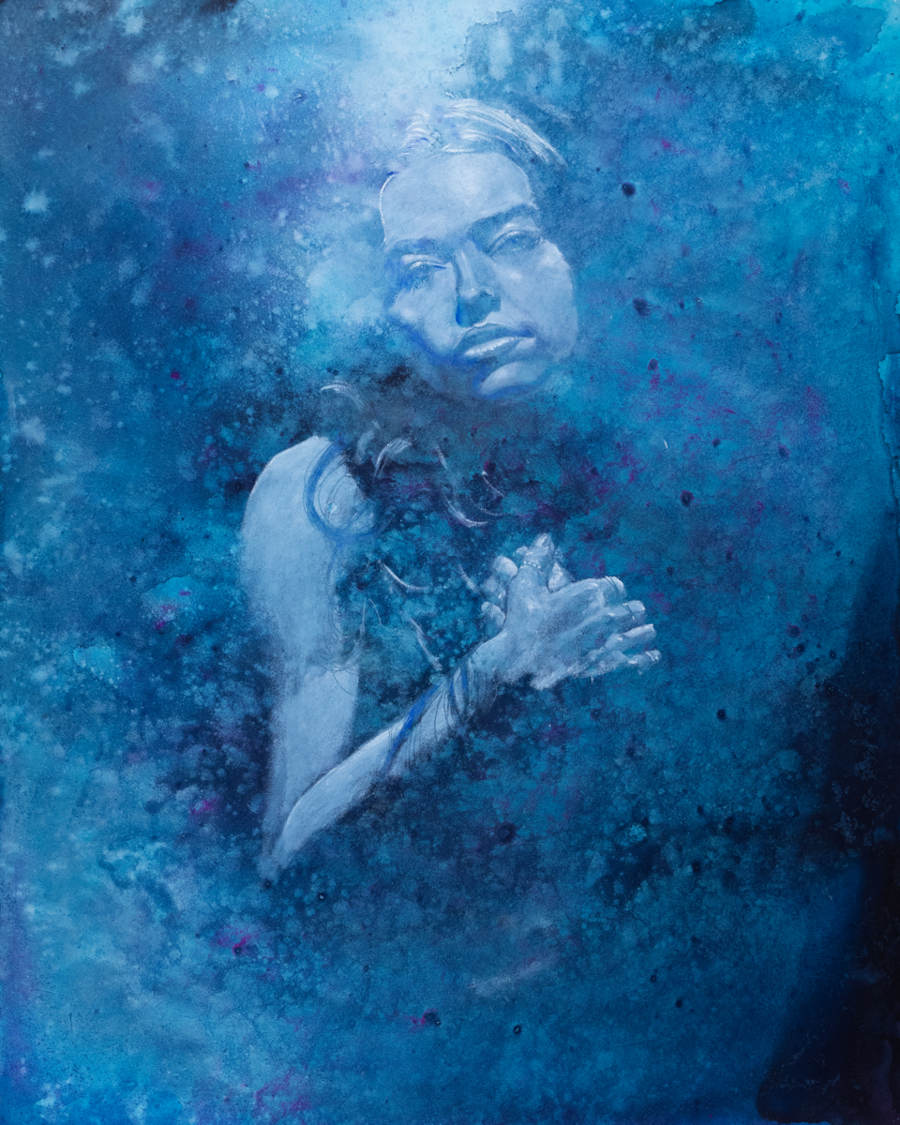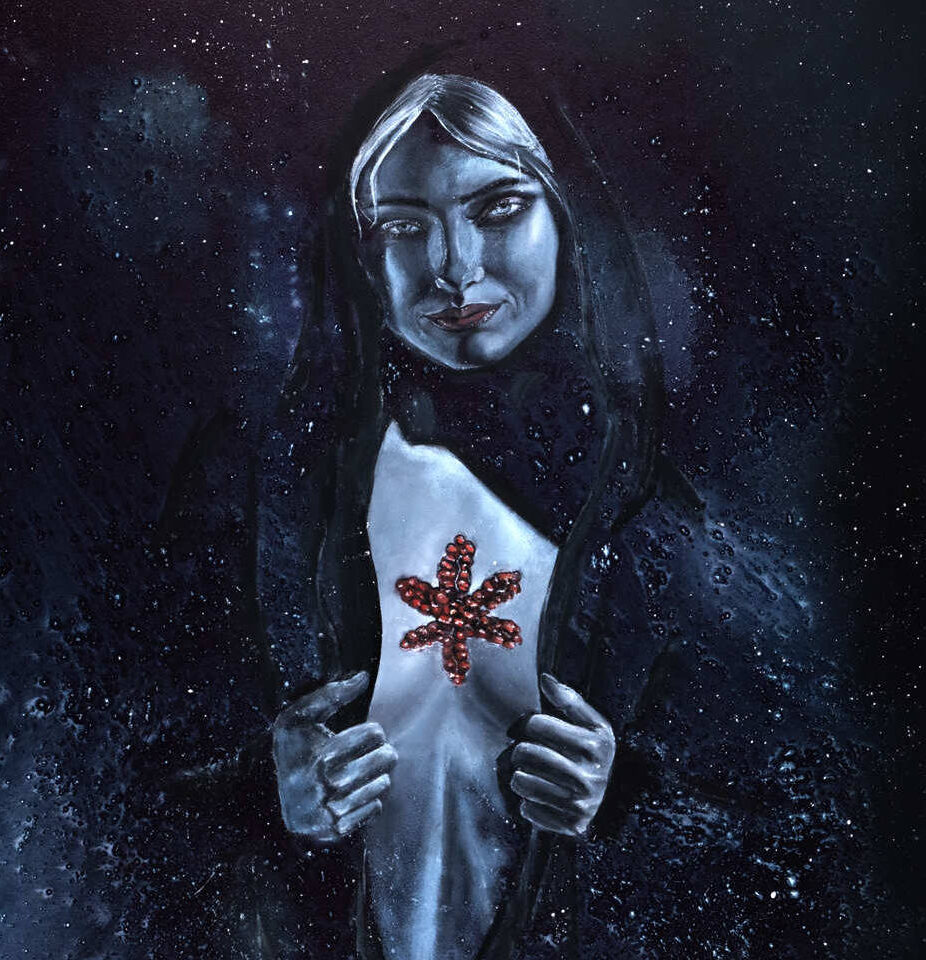
Blended with multiple themes including symbolism, spirituality, mythology and surrealism, US artist Steve Cleff creates powerful portraits which often bring to the limelight an understanding of unspoken stories, ready to be told through paint alone. Tapping into his synesthesia, he uses colours to represent concepts as he sees them in his mind’s eye (learn more about his synesthesia here). His unmistakable aesthetic has connected with audiences across the globe, often opening up conversations with his viewers about healing and trauma, freedom and oppression. From here, the foundations of his larger, multi-faceted creative series The Aphrodite Project has strengthened and grown.
Predominantly available on his Patreon for now, Steve Cleff has delved deep into the 40,000 year-old history of Aphrodite to unearth many of her previous and parallel forms which have been worshipped and revered throughout the ages. His research has taken him into the intertwined history mingled deeply with the roots of misogyny, bringing light to often-forgotten, and sometimes surprising, forms of her deity. Read ahead to learn more about The Aphrodite Project and his upcoming companion Oracle Deck.
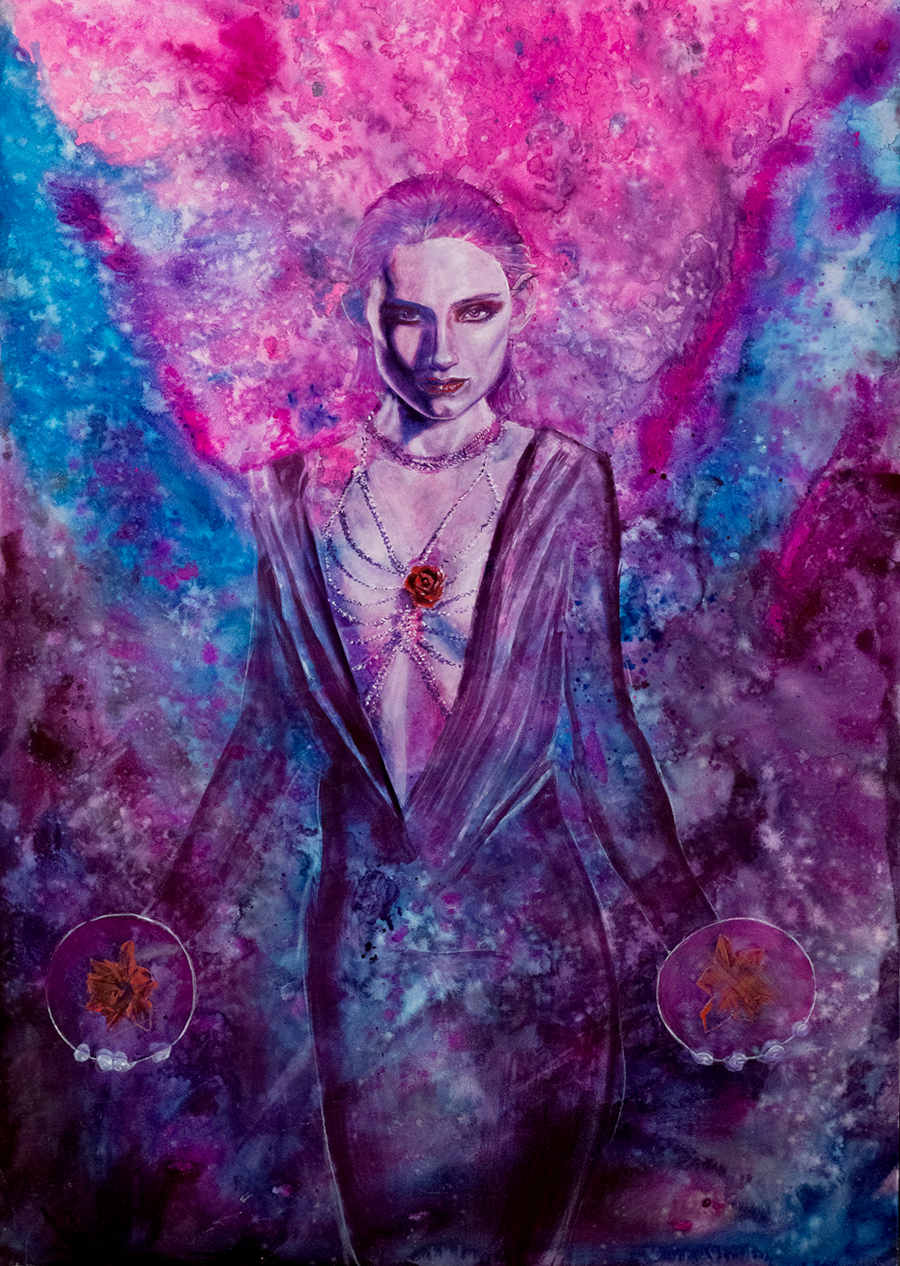

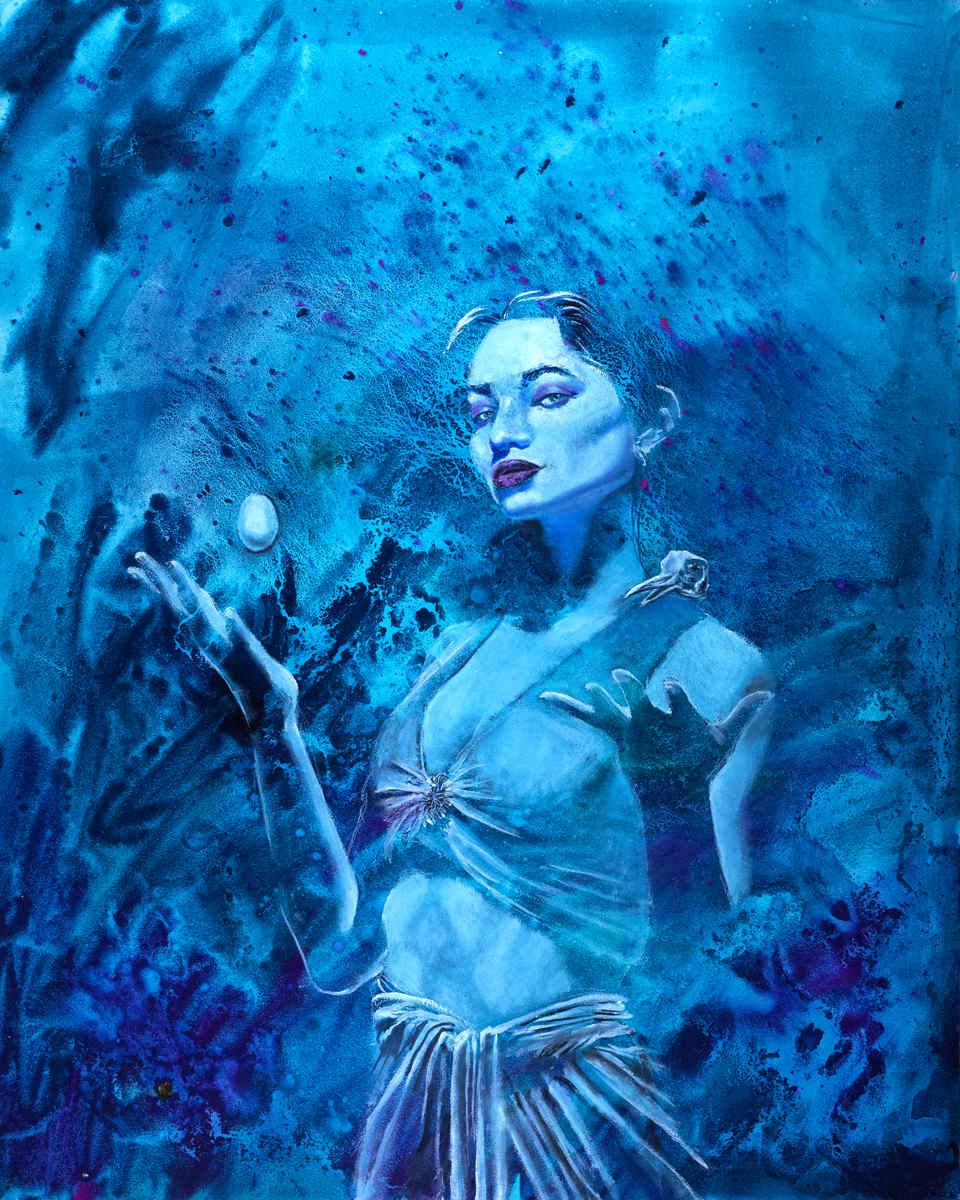
Exclusive interview with Steve Cleff: delving into The Aphrodite Project
Having a look at your paintings is a real visual delight! Tell me more about The Aphrodite Project.
Did you know that Aphrodite was worshipped for hundreds of years before she became part of the Greek Pantheon? Or that there were over 70 different versions of her including a goddess of war, a goddess who protects graves, and a goddess of political harmony? Or that her history and depiction parallel the origins and history of misogyny? I had no idea about any of that when I started research for the project. The long-term plan is to release a book of paintings and stories with a companion Oracle Deck.
In the short term, pieces of the book and work in progress can be seen at my (mostly) free Patreon. The purpose is to help spread the story, change the perception of her today, and give people some inspiration to build a better society. In addition to a book, I’ve been encouraged by a screenwriter friend to write it as a TV show and my wife and I have just completed a script for the first issue of a comic series about a modern day Aphrodite.
Why did you decide to focus on Aphrodite?
An artist friend, Katelan Foisy, mentioned something to me about “two Aphrodites”. I considered myself knowledgeable about Greek Mythology but I hadn’t heard of that before, so I began researching.
Without getting into too much detail, that’s when I learned about how the depiction of Aphrodite by Plato was intertwined with the roots of misogyny. To this point I had thought Aphrodite was an embodiment of vanity and superficiality and I discovered that I was supposed to think that, as part of a thousands of years old strategy to undermine the position of women in society. Which motivated me to use my work to try and counteract all that, in my own small way.
It’s led to many discoveries about why society is the way it is and has impacted my core beliefs. It’s been a gift and at the very least a huge source of creative inspiration.
Steve Cleff
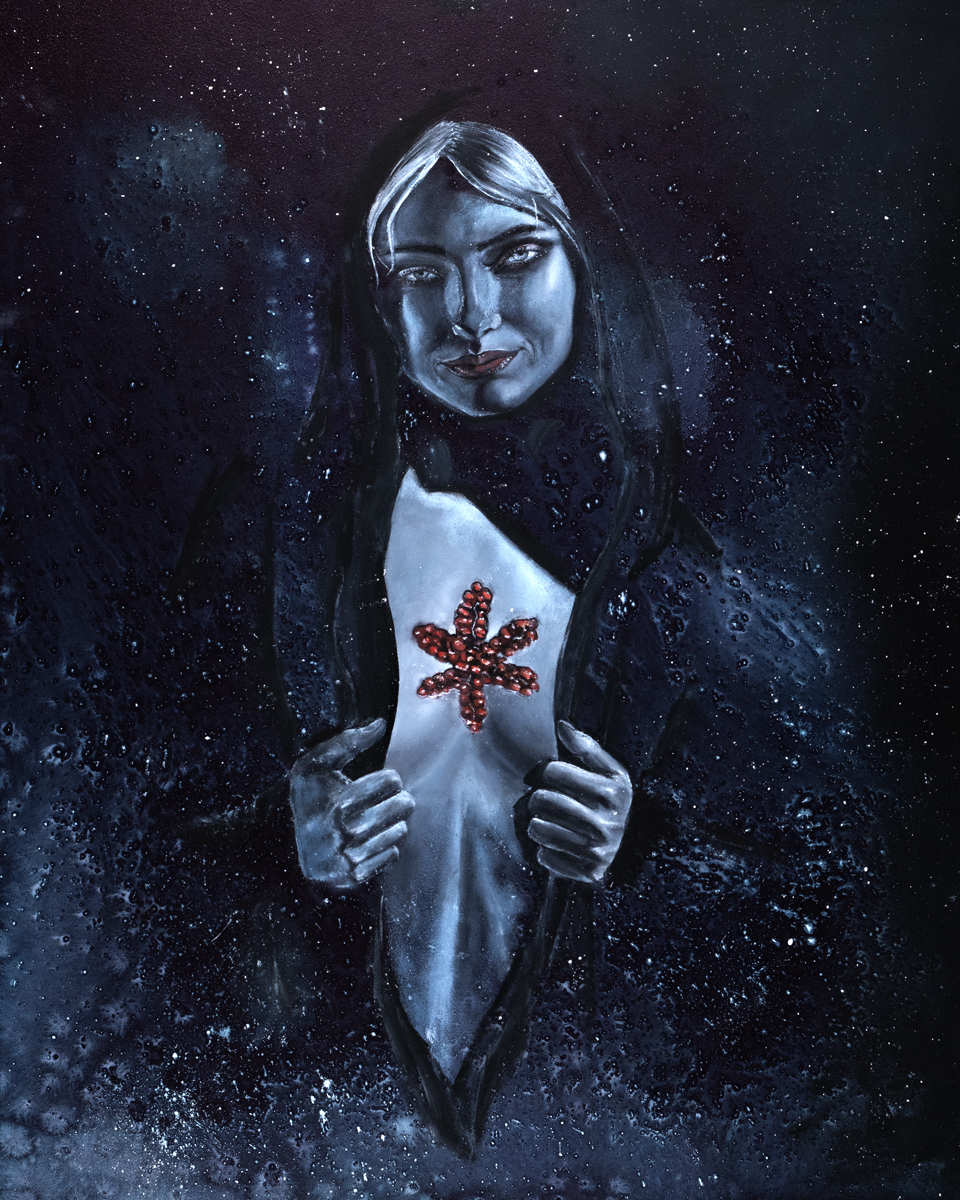
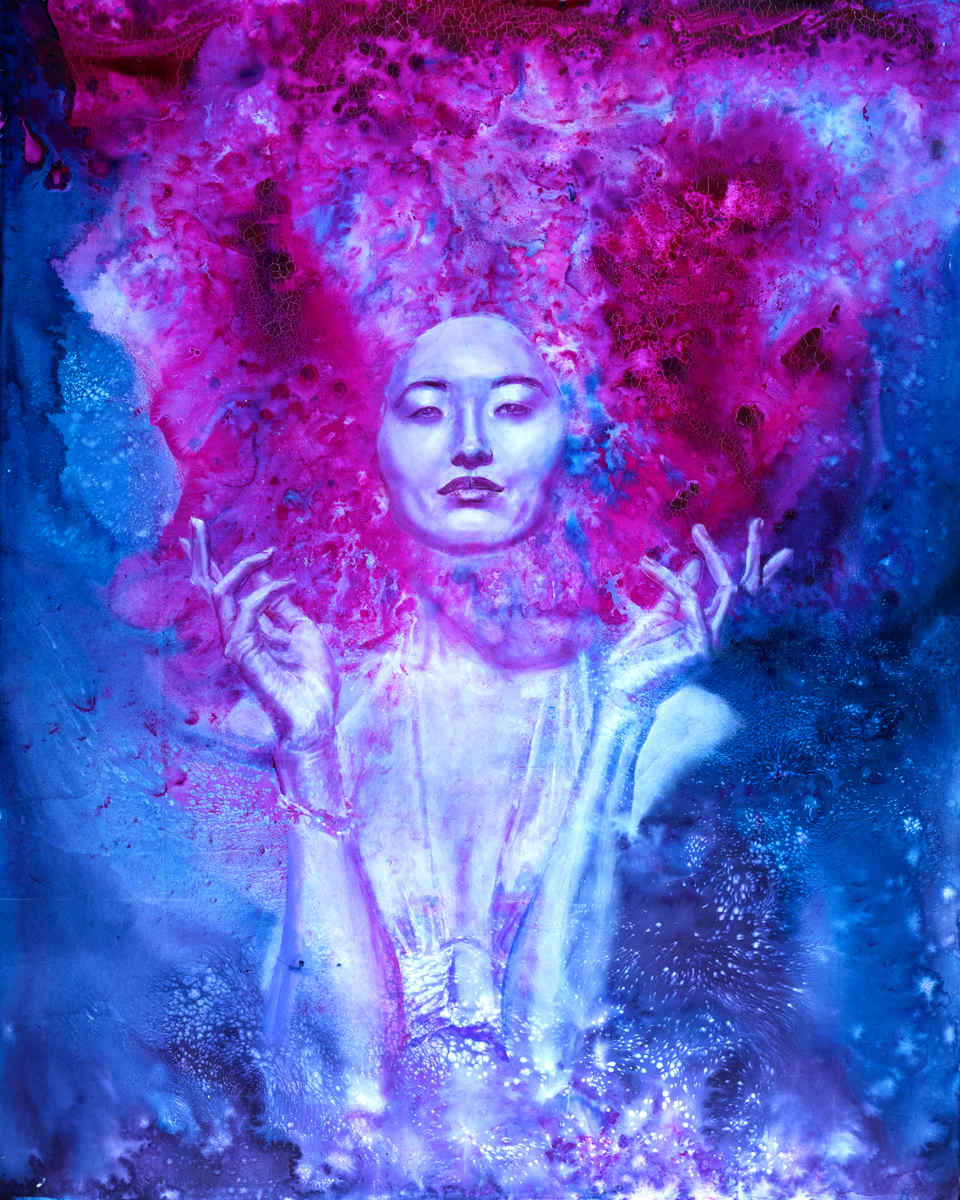
I think your project couldn’t come at a better time. The world feels particularly disjointed these days with a high contrast in beliefs and thoughts; women, their roles and freedoms in parts of the world have definitely been in the spotlight again as part of this. As your book starts with the surprising history of Aphrodite and how it mirrored the rise of misogyny, do you hope that this publication will help to open people’s eyes and reflect on the world around them?
That’s exactly why I’m motivated to do it!
If people understood that the current systems that favour men in roles of leadership, power, and authority are not only not natural, but haven’t been standard historically, my hope is that they will start to question why things are this way, how they got to be this way and why they perpetuate. Which will hopefully lead to change.
Do you have any favourite Aphrodite epithets* which stood out to you?
*A deity’s “epithets” – i.e. alternative versions/names – would often reflect a particular aspect of that god’s essence and role, for which their influence may be obtained for a specific occasion.
Aphrodite Mixis, a goddess of creating something new by combining two existing things, sometimes opposing things. I think this is the only way forward in these polarizing times. It’s not possible to go back to the way things were, we can only create something new.
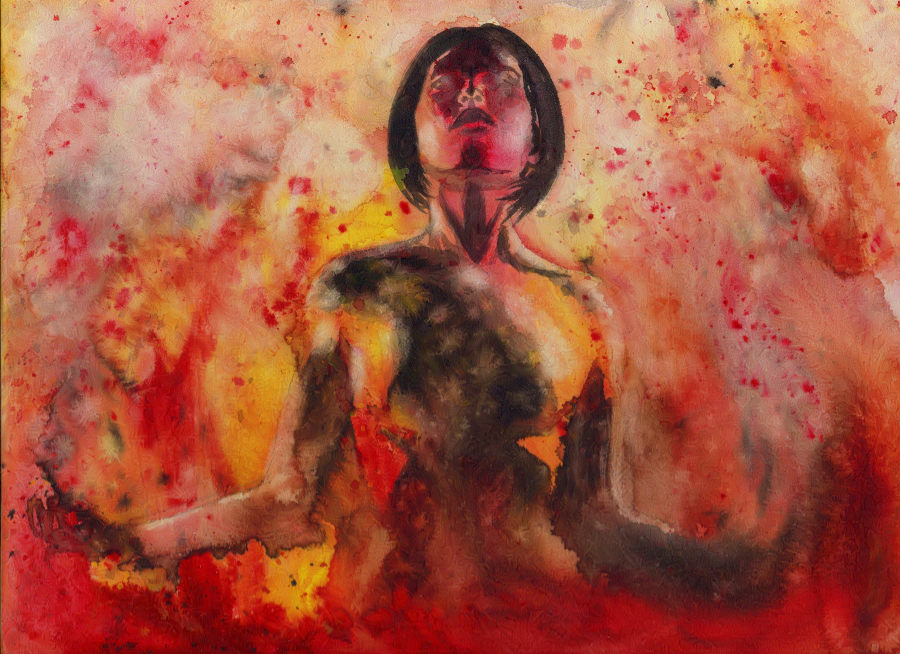
I love your version of Aphrodite Areia – from my understanding, she was a smaller cult epithet of the goddess founding from Sparta and Taras. She’s curiously contradictory from the usual references and ultimately, badass and warlike. I can see her rising in the minds of soldiers on the flaming battlefield! Can you tell me more about her and how you designed this painting?
She’s the first epithet I mention when I’m trying to help people who only think of Aphrodite as a blonde self-absorbed goddess of lust to see there’s more to her. Aphrodite in Cyprus and Syria pre-Greece was both a fertility goddess and a goddess of war. So were her predecessors Innana in Mesopotamia in 4000 BCE and Astarte in Phoenicia in 1500 BCE. These seemingly different aspects are unified by passion.
When I wanted to portray Aphrodite Areia, I wanted to just paint, not think too much, but feel that passion and I just saw a vision of her as fiery and defiant. I used a new technique and painted three quick passes of color, letting the details bleed into each other and create forms on their own as the watercolors dried. I wanted just enough suggestion of the figure so the viewer’s mind would fill in the blanks and feel her energy. I wanted to not think too much or render too much, but act out of emotion while trying to capture emotion.
I’d love to learn more about how you have designed this whole series. Did you start with a list of versions you wanted to focus on, or did you just start painting? Were some paintings easier to plan than others?
I actually started before I knew I was going to work on this project. As far back as 2017, I had begun a series of paintings I vaguely described as a collection of goddesses of mental health. I was painting things I struggled with and wanted to have a painting as a focus or reminder to help manage anxiety, regret, holding onto harmful memories, things like that.
In 2020 when I read Plato’s Symposium and started this project and began my research into Aphrodite the most surprising thing was that she was so many things to so many societies. To make sense of it I started looking for a common thread. I realized she was whatever each society needed to survive. Agrarian cultures needed a goddess of fertility. Warlike cultures like Sparta needed a goddess of war. Seafaring cultures needed a goddess of the Safe Harbor. In Athens they needed to end a revolution and they honored Aphrodite Pandemos who had the ability to create political harmony.
I thought if there was an Aphrodite to turn to today she would need to be a goddess of mental health, which I then realized I had been painting. It helped me understand how to manage dealing with the current world. There are so many powerful forces making life difficult and dangerous for so many. To survive, first we need to be mentally strong.
I then began painting classic Epithets in no particular order based on my initial research.
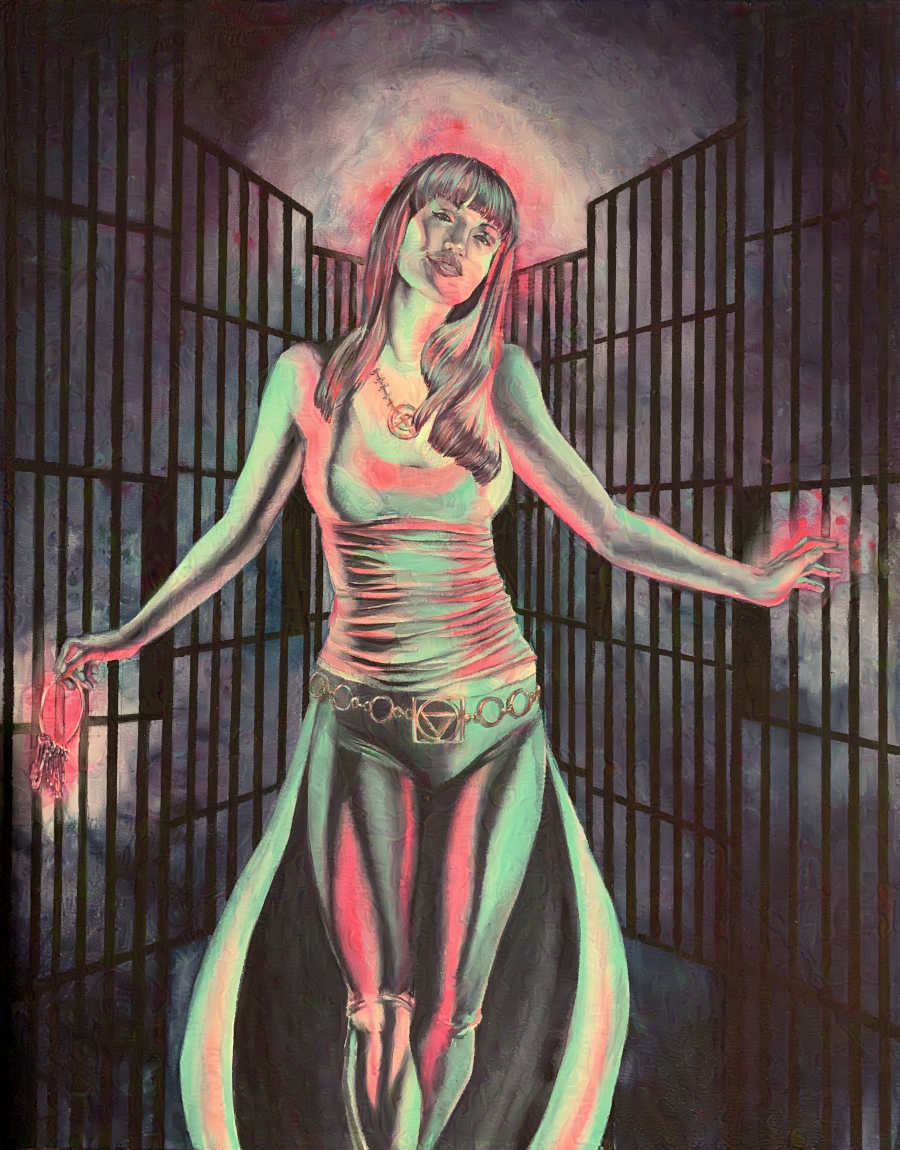
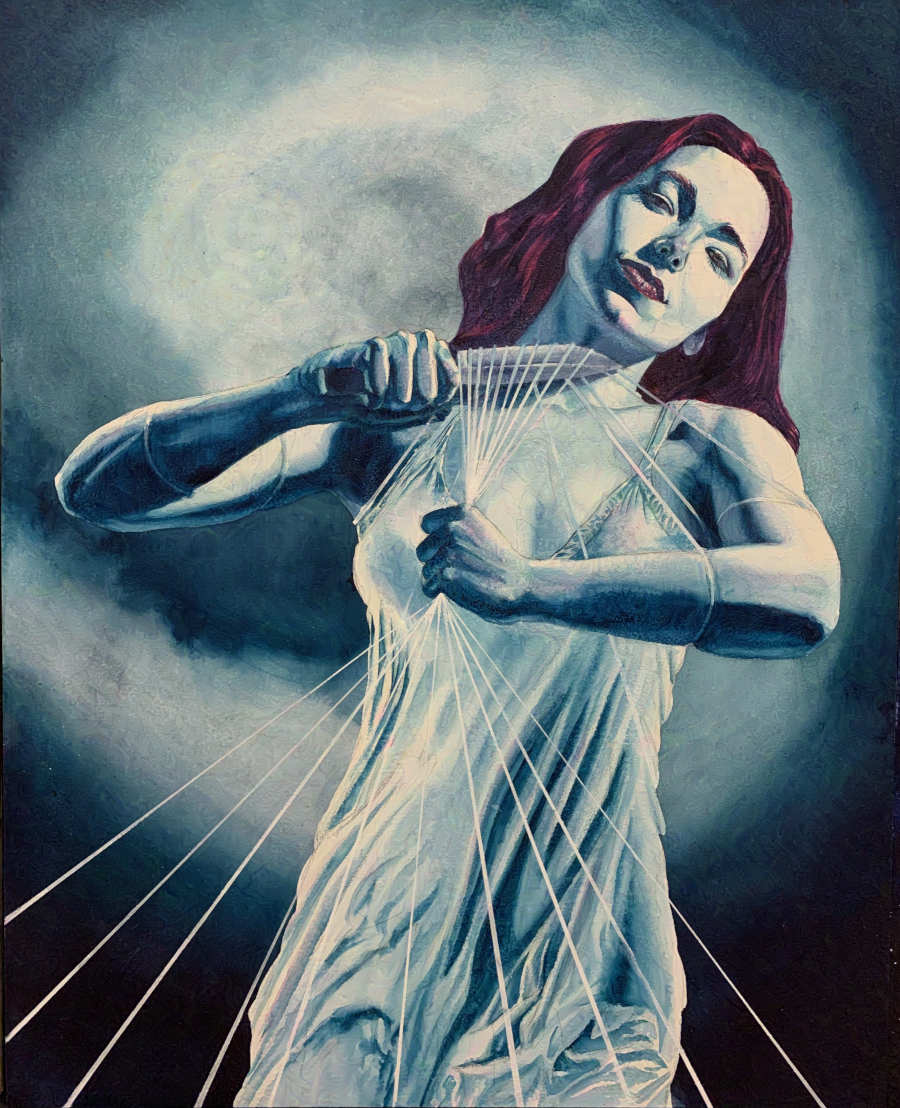
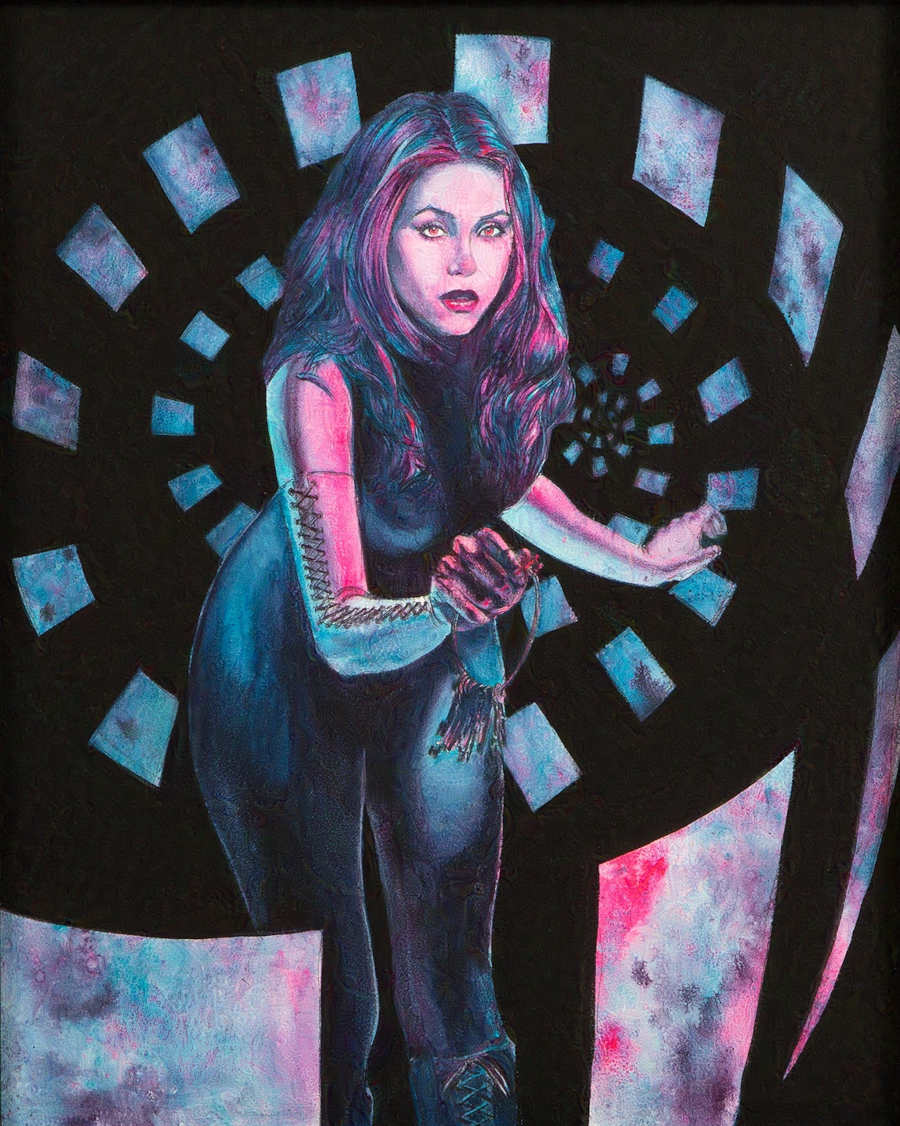
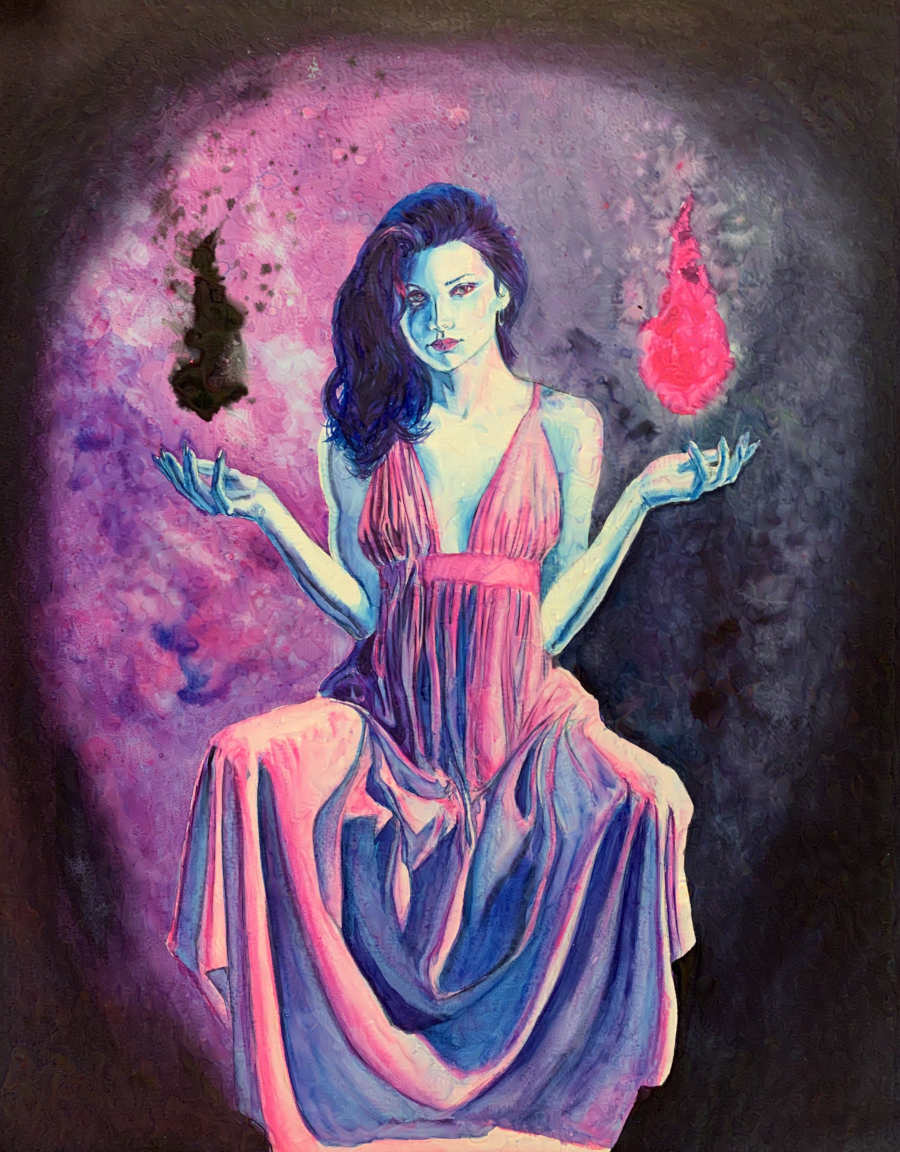
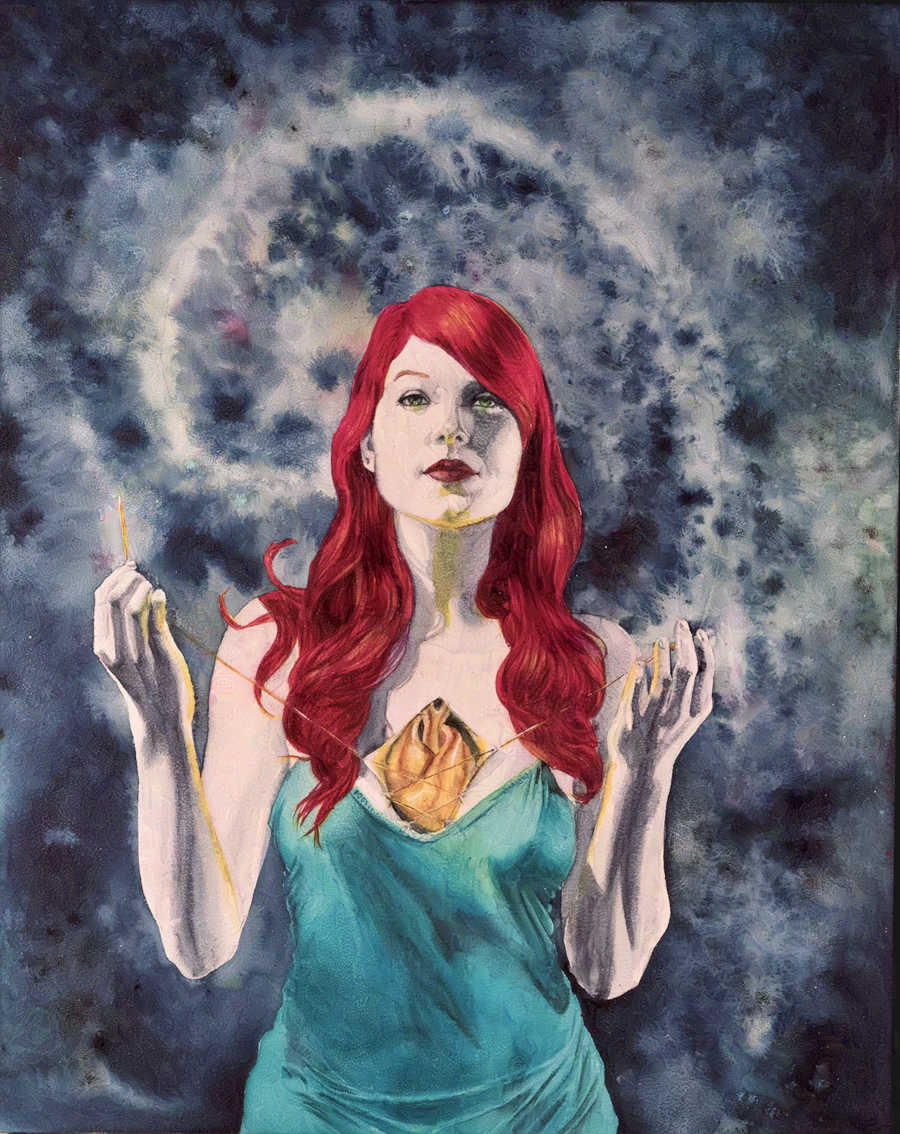
After that I created some new modern versions of Aphrodite.
Then I wanted to get structured or I’d never finish this project.
I researched more and found the 70+ ancient epithets and added some ones I created to have a list of over 100. I’m working my way through in a somewhat organized sequence, combining the main historical ones like Aphrodite of the Heavens, Aphrodite of the People, Aphrodite of the Gardens, and Aphrodite of Averting Unnatural Desires (the big four back in the day) with some of the more surprising ones like Aphrodite Who Loves the Night, Aphrodite of the Graves, Aphrodite of Mercy and some of the “mental health” versions that I’ve created.
One more thought: I don’t want to misrepresent that I don’t see that Aphrodite is a goddess of love and sex. She is. She’s just not only a goddess of those things and the way those aspects of her have been portrayed since Plato have been as weaknesses, not strengths. My hope is she again becomes a symbol of survival.

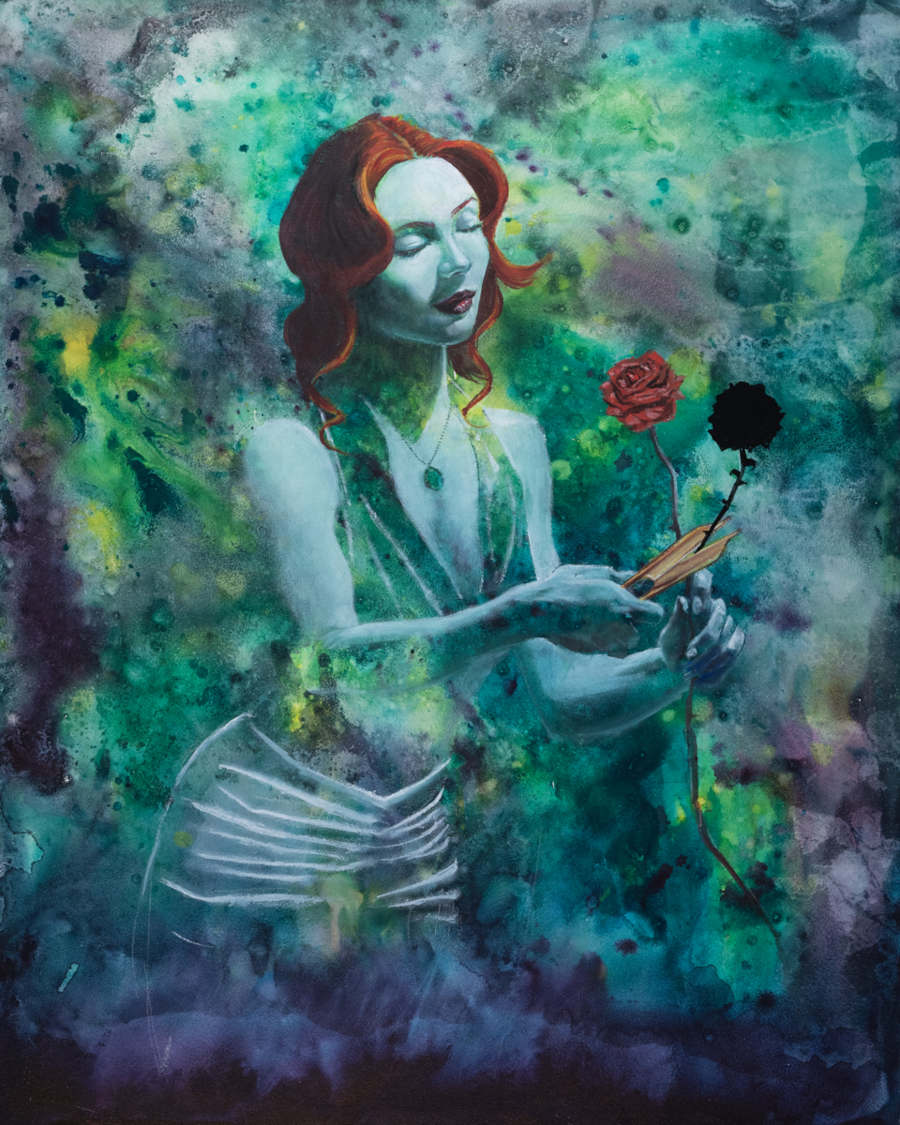
Now, as well as delving into the multifaceted past of Aphrodite and her evolution alongside shifting cultures, you are also creating a coinciding oracle deck with a selection of ‘lesson’ and ‘challenge’ cards! Oracle cards feel better suited for artists and creativity compared to tarot, allowing for more open symbolism and interpretations; are you new to oracle cards, or a long-standing explorer?
I’m new. I was only slightly aware of them until this project.
Why did you decide to add in a section on oracle cards?
When I was showing my goddesses of mental health to friends while it was in progress, I was told by several that I should make an oracle deck and the idea seemed perfect. I could immediately see how it could not only broaden awareness of all the many aspects of Aphrodite, but it could help people to find guidance.
How are you finding the experience of designing your own deck?
It’s been a way to collect all the lessons I’ve learned to help myself and what I’ve learned about Aphrodite. It gives me freedom to be creative, but enough structure to not be overwhelmed by this secret history that’s over 40,000 years old.
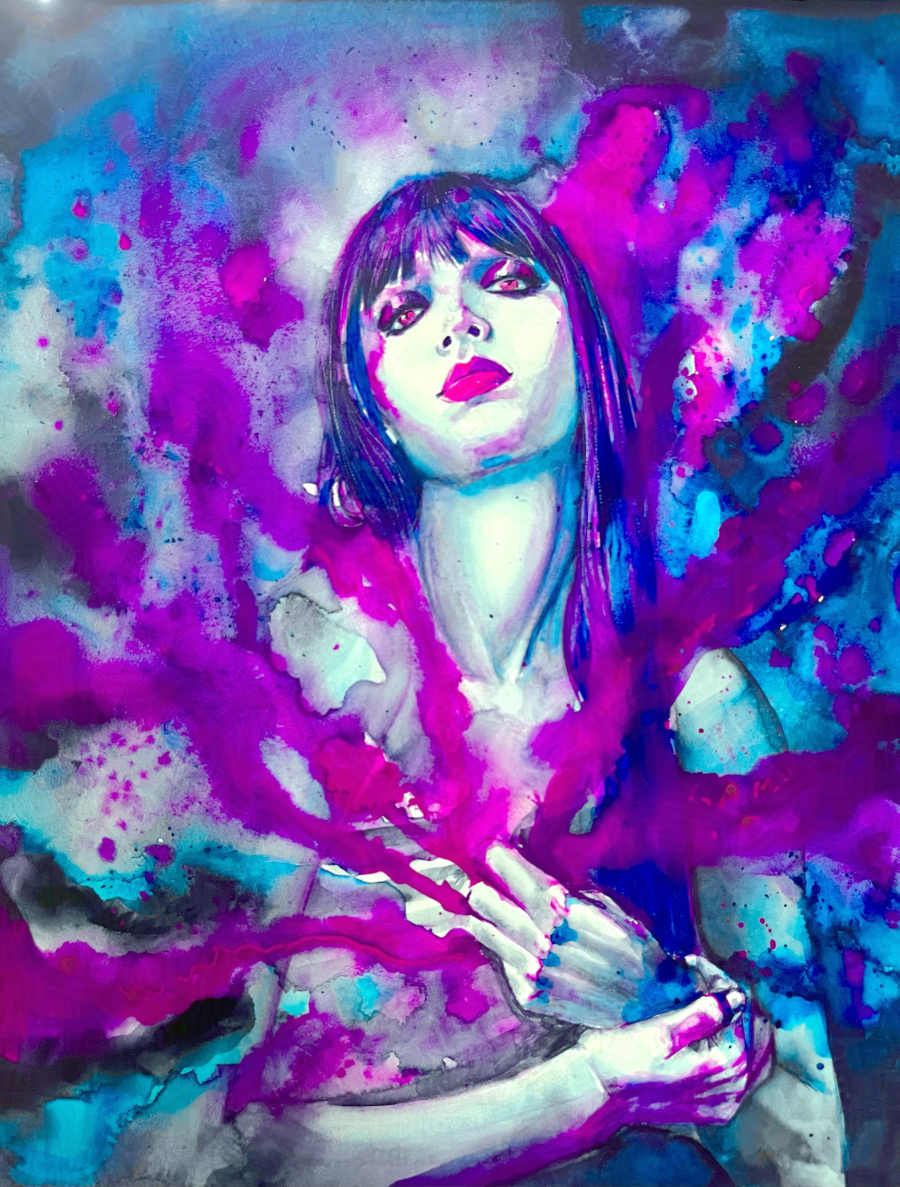
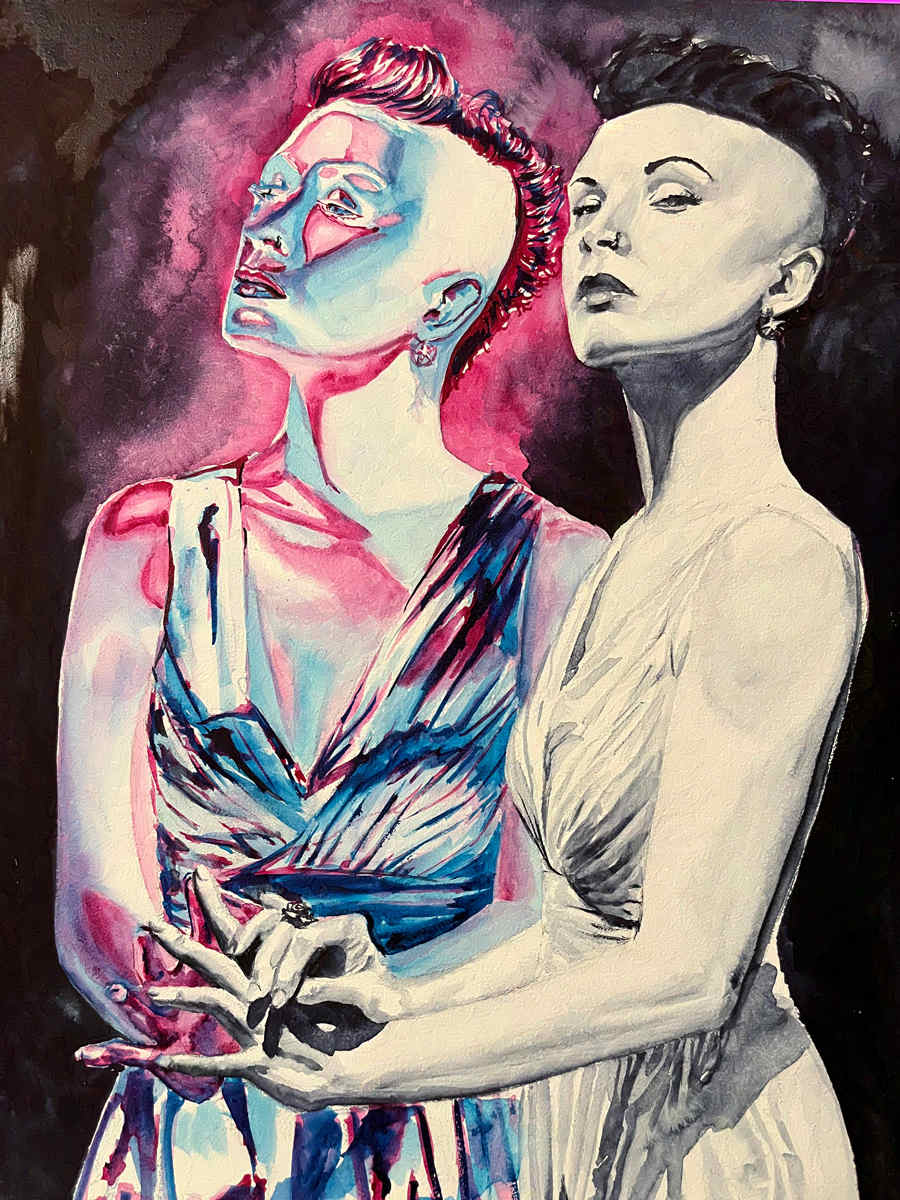
Building on this, you will also be including two more parts; a story of modern-day Aphrodite, and a selection of portraits of everyday people as their versions of the Aphrodite that they need. What a complex yet harmonious set of chapters! Responding to and interpreting people’s needs sounds like a series in itself. Will you be creating what your subjects themselves feel they need? Or interpreting their feelings to what you think they really need?
Both. One of the most exciting aspects is the collaboration. I’ve done portraits like that in the past, helping people become their own superheroes and horror icons. If they have strong feelings about what they want for this, I’ll help that become real, but if not, I have learned interview techniques that help people surface their challenges from their subconscious.
The Aphrodite Project delves into an impressive exploration of human emotions and complexities. Has this journey changed you at all along the way?
I’m a different, kinder, more thoughtful person. I have a better understanding of human history and understanding of how women are treated as less than in many modern societies. I have a way of processing the terrible events of today and somewhere to direct all that energy into something constructive. Aside from meeting my wife and having our two sons with her, it’s the most significant thing that’s ever happened to me. I’ll always be grateful.
To keep up to date with Steve Cleff and his Aphrodite project, follow along on his Patreon: “to keep me accountable for finishing it!” he laughs.