The Quick Q & A editorial in Beautiful Bizarre Magazine is a much loved regular feature, in which we ask 6 artists the same 4 questions. In the June 2025 Issue 49, these were the Quick Q & A questions:
- What piece of advice do you have to unlearn to get to the next step in your art career?
- If the child version of you could see you now, what do you think they would say/think?
- How do you approach the challenge of staying motivated and inspired in your art practice?
- How do you differentiate yourself and your work from other artists in your field?
We feel that the artists’ responses provide such a valuable insight for our community of artists that we wanted to share one Quick Q & A response from each issue with you, going forward. The June 2025 Issue 49 print is sold out, but you can download the digital magazine via our webstore to read more. To ensure you never miss an issue again, you can also subscribe to Beautiful Bizarre Magazine, and have each issue sent straight to your door each quarter.
Excerpt from Issue 49 // June 2025 Quick Q & A editorial: Theo Polymorphos, Ryoko Rio, Haejin Yoo, Lisa Lennon, Alex Sugar, and Juliet Nneka all respond to the below Quick Q & A:
Quick Q & A: What roles do galleries have in supporting the arts, or do you think that galleries will become obsolete in the future?
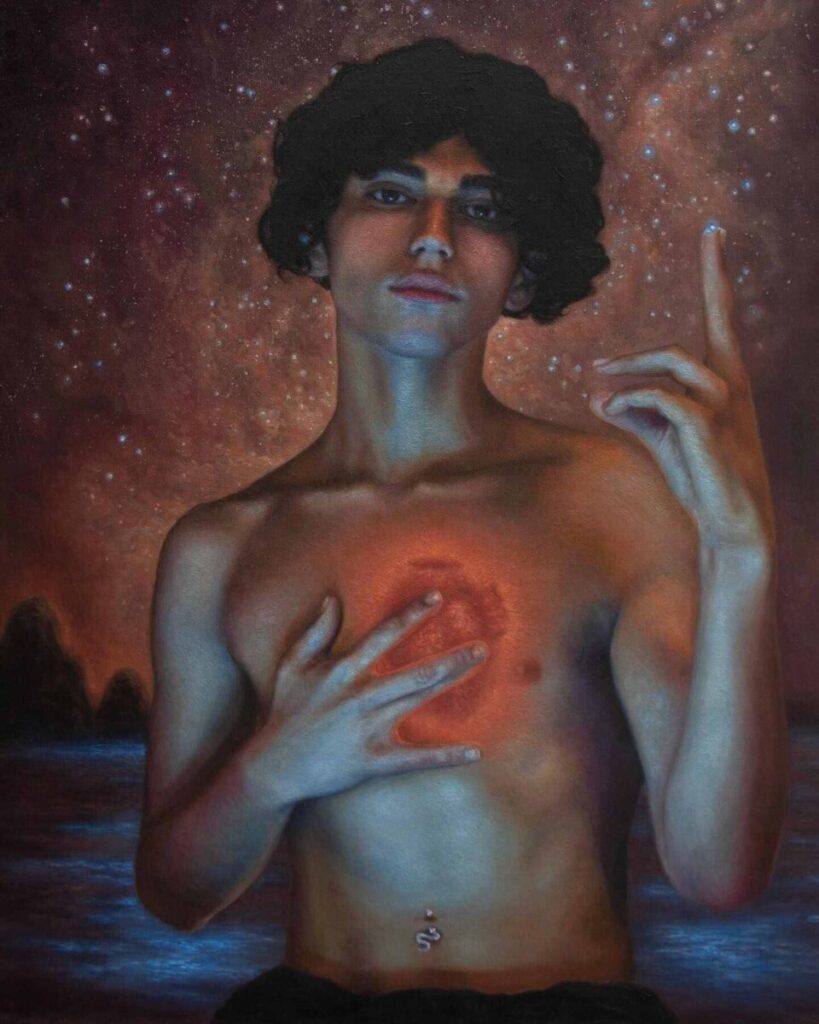
“Galleries of all kinds still play an essential role in promoting art. Yes, online spaces, like social media, offer new ways of showing work, and more artists than ever are selling directly to collectors. But galleries have important advantages. They provide the public with a physical space to experience the work in-person instead of on a tiny screen, a place to gather and discuss the work together instead of in the comments section. With careful curation, galleries can provide a more poignant and thought-provoking experience than the endless onslaught of images on our phones.
I think people are a little weary of digital spaces, especially how these platforms addict us and distort our view of reality. Energetic, innovative galleries are an antidote to this.”
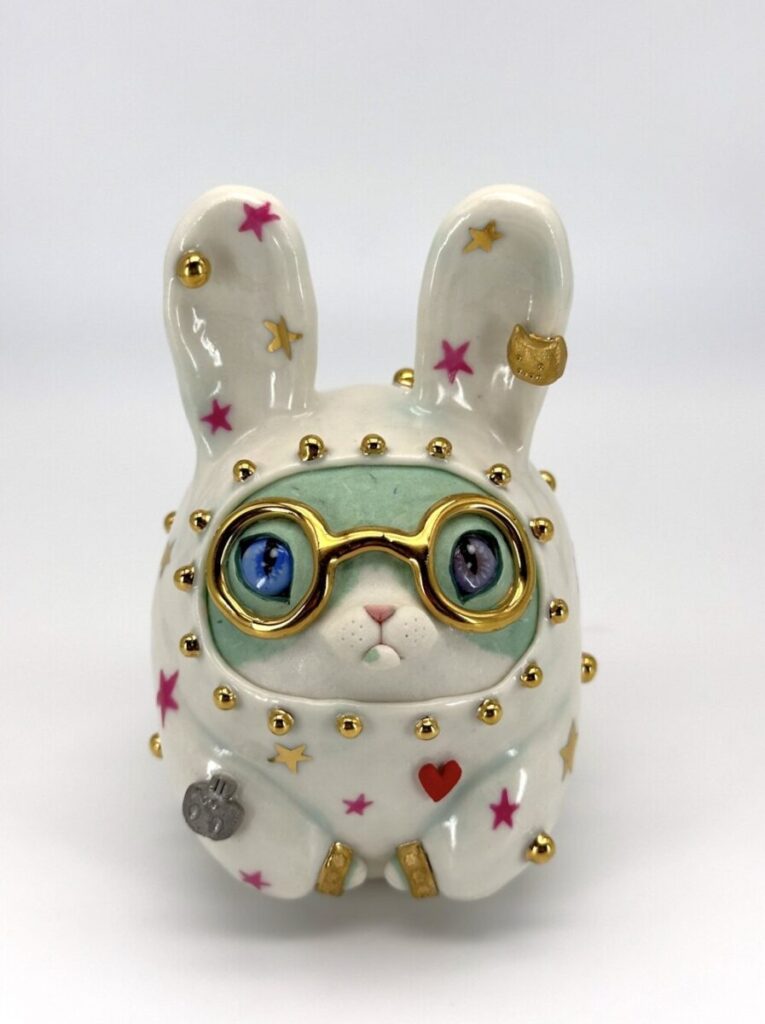
“No, I don’t think galleries would become obsolete at all. They certainly help artists to gain credentials and trust throughout their career. I also think this may be extra important, especially for emerging artists. Collectors may feel safer and more confident in works purchased from trusted galleries. People can buy art online directly from artists but that might be a little scary, especially if you don’t know the artist.
I’ve been very fortunate to have opportunities to work with galleries that understand my work and connect it with collectors with whom it resonates. They can reach people that I wouldn’t by myself and show my work to the wider world. I also like seeing my work alongside other artists. It’s very inspiring!”
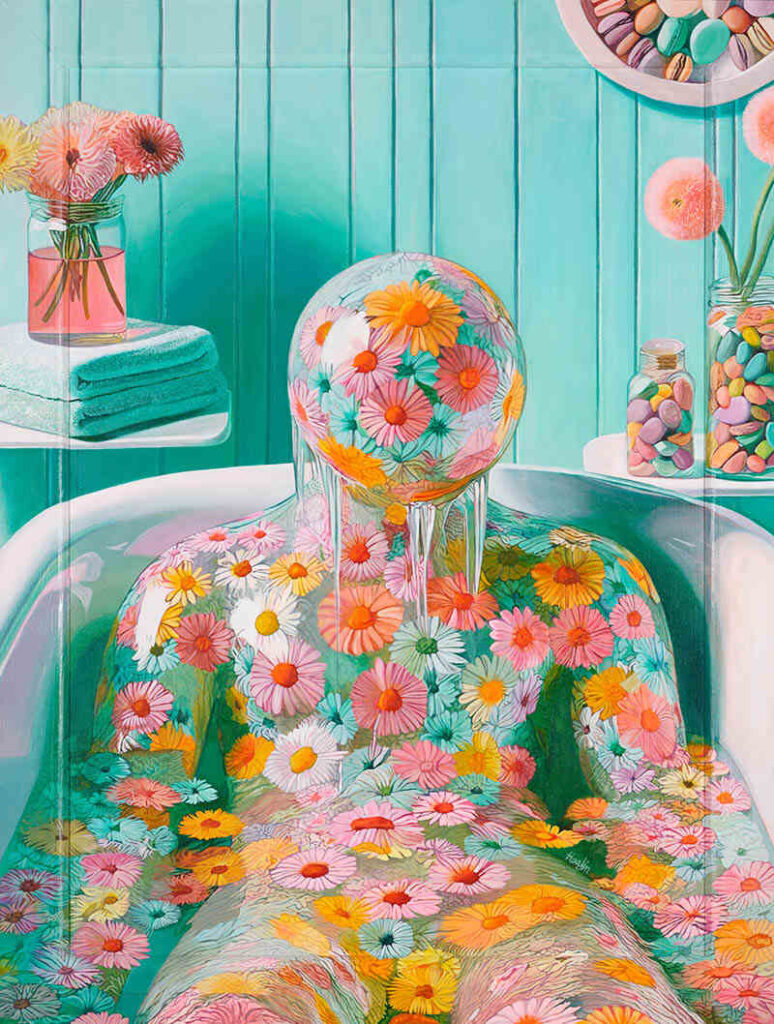
“I don’t think galleries will disappear, but their role is evolving. Online platforms give artists more independence, yet galleries provide something irreplaceable – physical presence. Seeing an artwork in real life, experiencing its texture and depth, is unmatched. Galleries also help artists connect with the right collectors, cutting through the vastness of online exposure.
Many artists struggle with networking (and I am no exception), but galleries serve as a bridge between artists and audiences who truly appreciate their work. The personal relationships that galleries foster between artists and collectors create opportunities that digital platforms alone can’t provide. While online exposure is powerful, there’s nothing quite like standing in front of a piece and feeling its presence.”
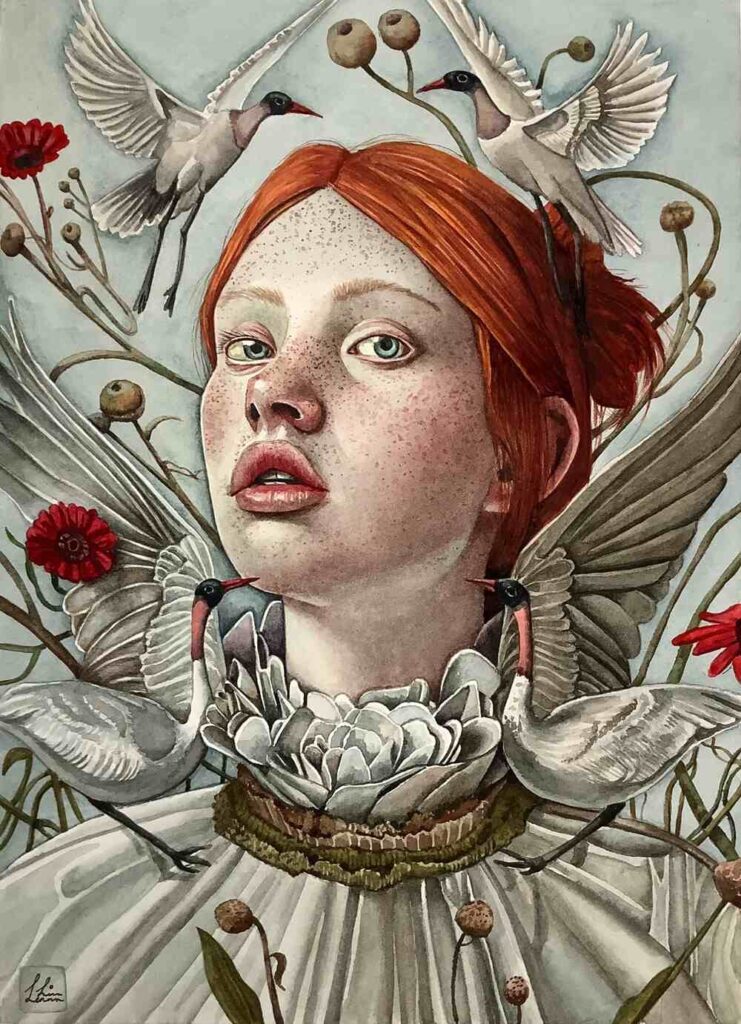

“Online galleries have been a game-changer for me, making it much easier to share my work with a global audience. They have helped me reach collectors, sell pieces, and build a following without needing a physical gallery space. In a world that’s more digital every day, this kind of access is huge. That said, I love seeing the real thing – all the aspects that don’t fully translate through a screen.
Experiencing art in a gallery or exhibition creates a deeper connection. It’s more immersive, more emotional. So while online platforms are vital, they can’t replace the experience of standing in front of an artwork and truly feeling its presence. No, I don’t see galleries becoming
obsolete – we will always crave that human connection.”
Galleries can be such a huge part of any creative’s work. For me, personally, most of the galleries I’ve worked with have given great advice, and they have given me confidence and support in what I’m trying to achieve with my career as an artist. It’s been a massive accomplishment to show my work with galleries through solo shows, group shows etc. I really can’t see the art world without them. Brick and mortar galleries are a place for artists to meet in real life and connect and converse. All types of galleries have their purpose for sure, and you simply can’t beat viewing an exhibition in real life and feeling the work all around you.”
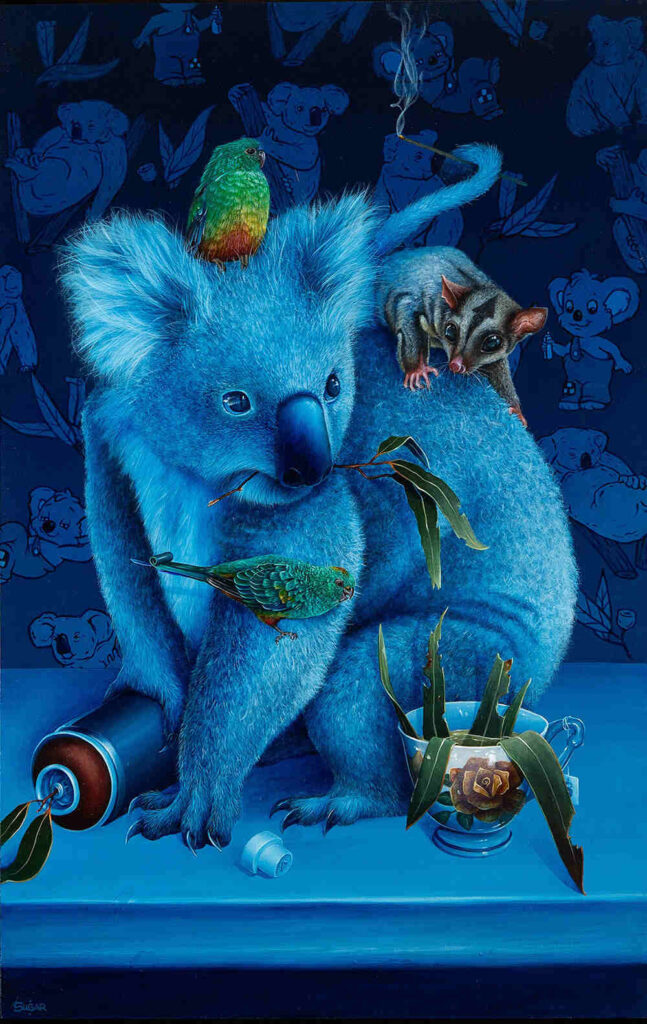
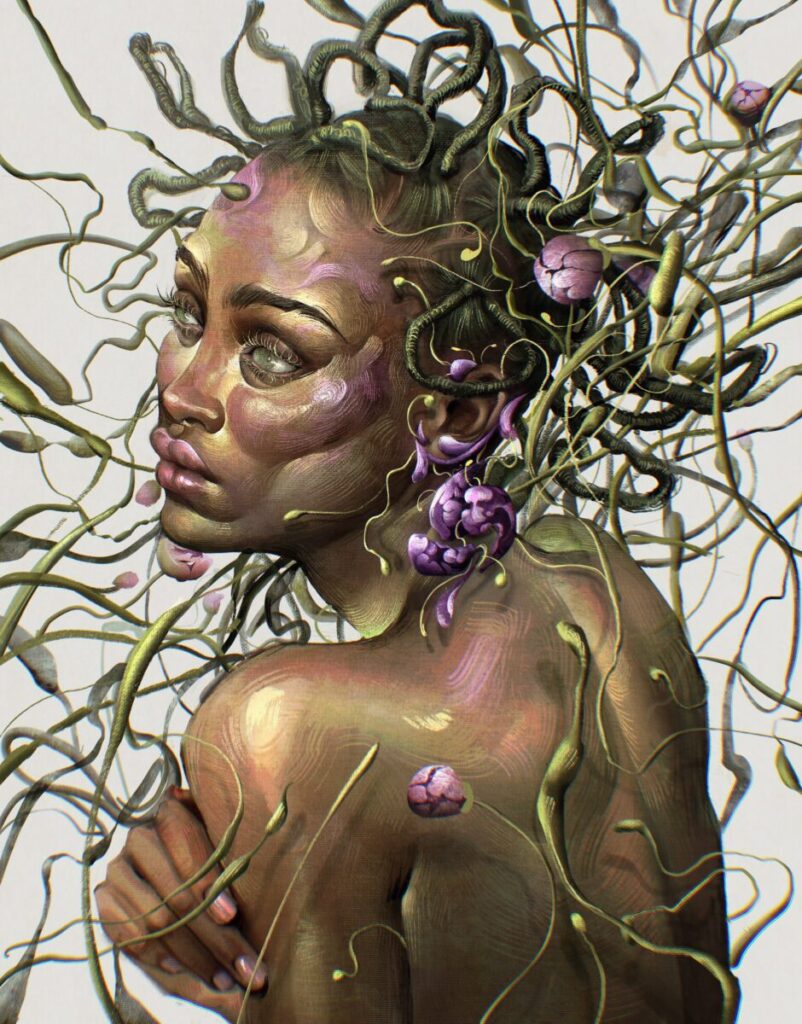
“I do not think they will become obsolete, but galleries are becoming more agile. An artist who tends to their own sales, projects, provenance, and curation then becomes a gallery of one: the smallest unit. But galleries do persist where they bring value, not just as middlemen, but as builders of markets, architects of legacy. Relentless advocates even in stillness.
The internet has granted us artists a sovereignty never seen before. The artist who could go it alone may instead choose collaboration – not out of necessity, but because
something greater emerges in partnership. Now, the question is not whether galleries will vanish, but how they will evolve. No longer talent and manager, but two sacred businesses in communion, shaping something that lasts.”