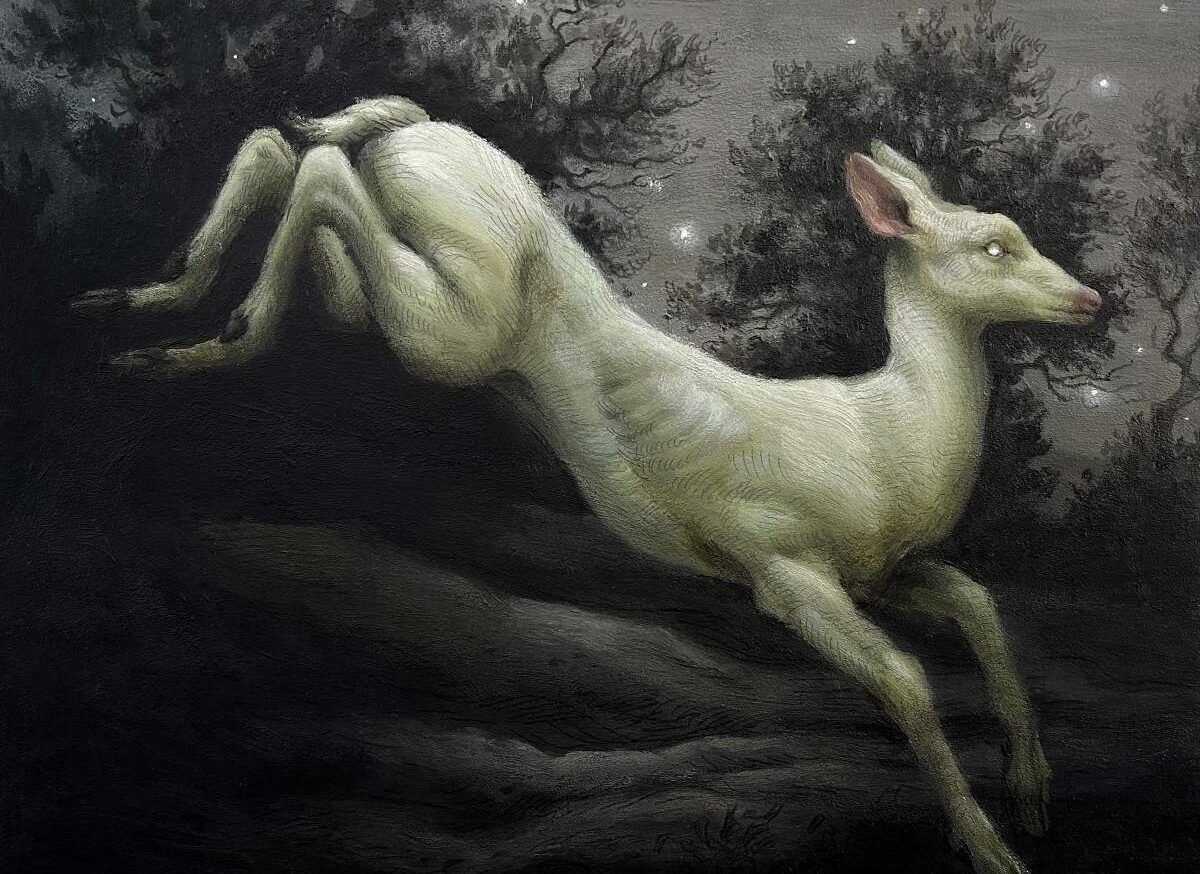
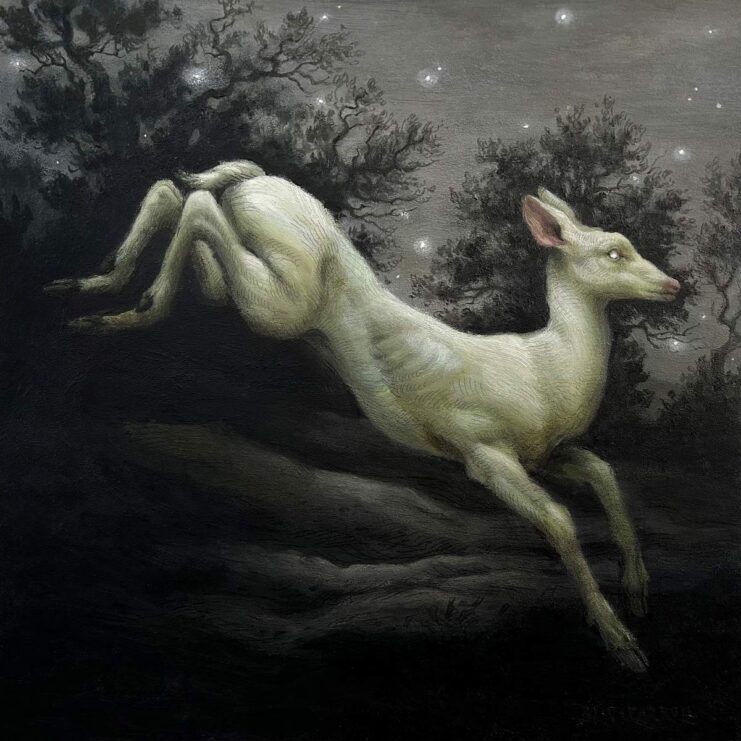
15Quiet whispers call out from dark corners of rooms long lost to the passage of time. Wooden stairs creek under the delicate paws of unexpected guests. Childhood doodles fade into walls like old tattoos. Bygone memories become new mementos clutched in the claws of untamed visitors who relish in the spoils of their conquests. Mary Carroll’s body of work is equal parts haunting and comforting. It holds space for complex narratives of humanity’s harsh relationship with nature all whilst showcasing the peaceful daydream that could blossom if nature could only take back what’s rightfully theirs.
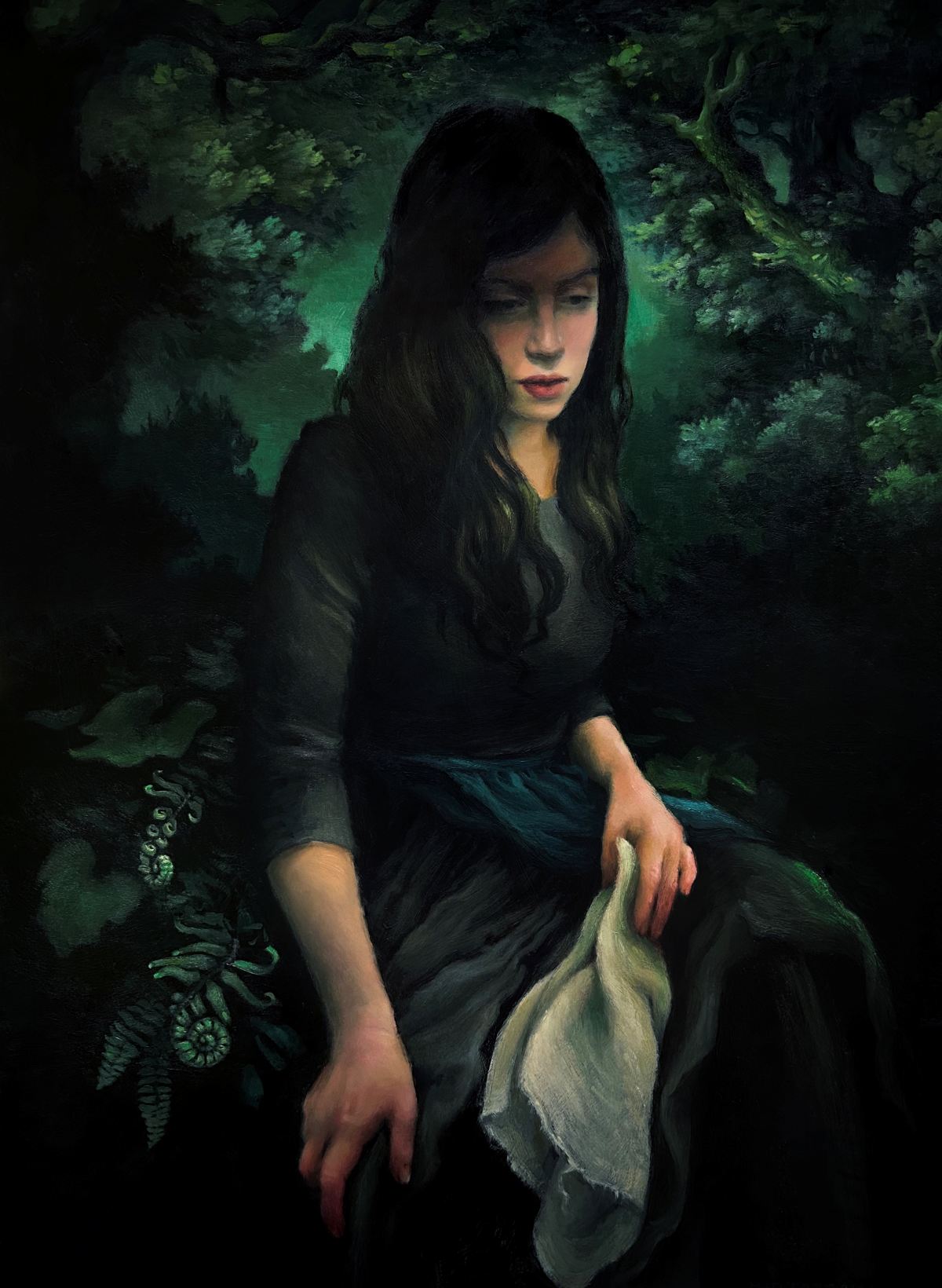
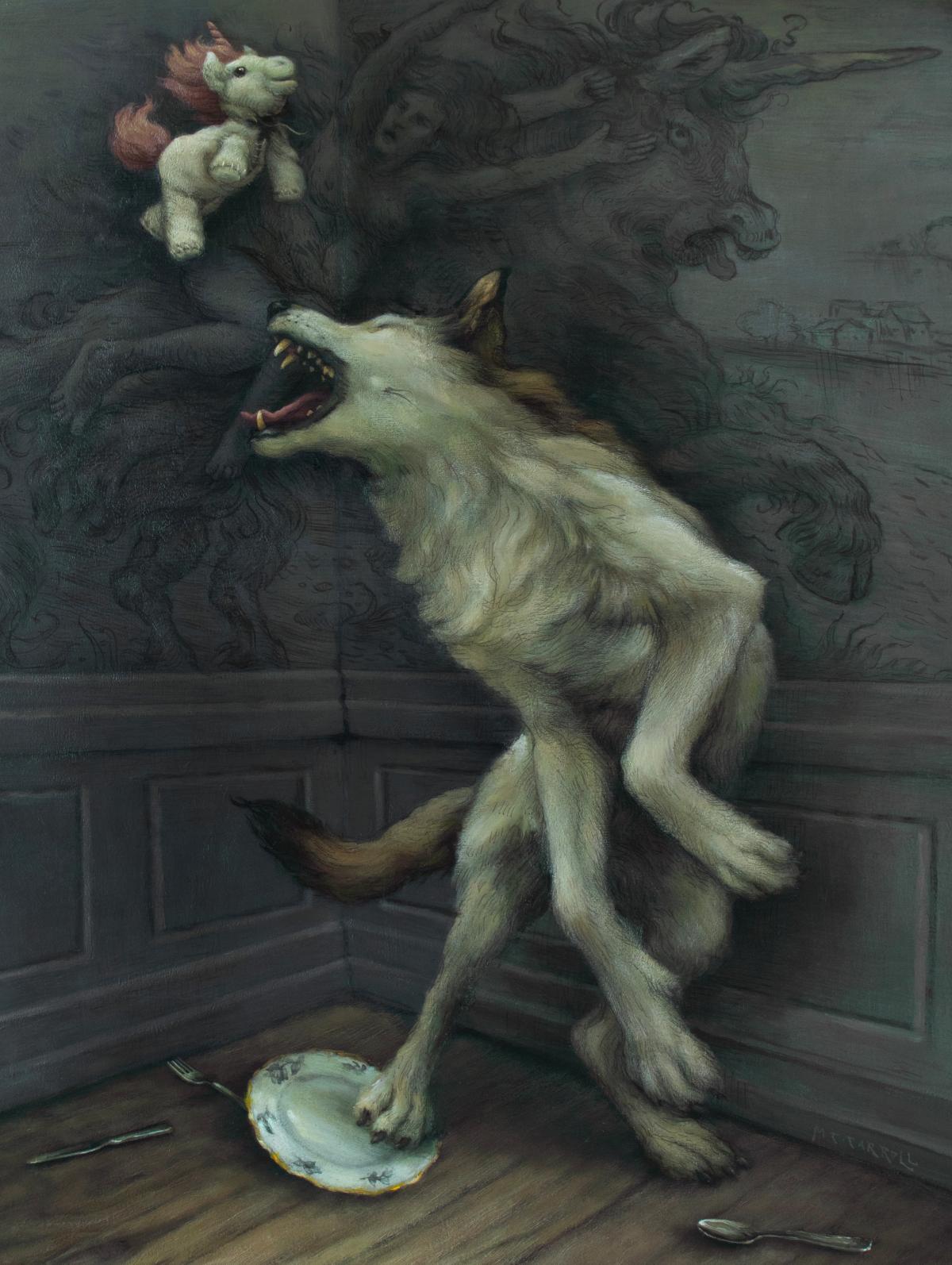
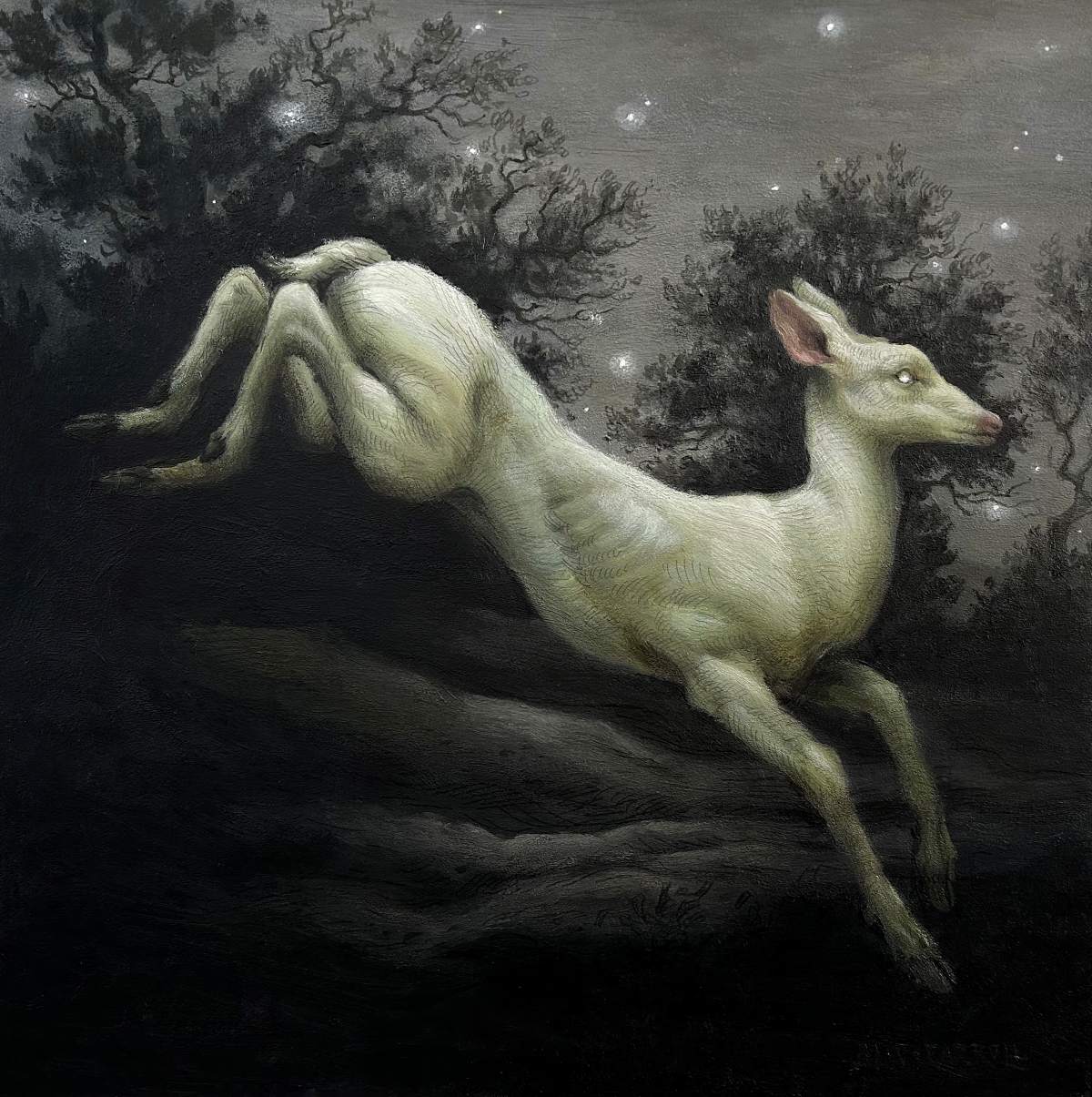
Mary Carroll is an American artist recognised for her figurative realism drawings and paintings. Born in rural West Virginia, Mary grew up on her family’s farm surrounded by the natural world. Mary and her family did not own a television or many of the other modern distractions throughout her youth so much of her time was spent outside with nature as both a source of play and inspiration. Using nature as her limitless source of inspiration, Mary’s imagination has translated into a beautiful body of work that uses provocative daydreams to explore the human disposition and our relationship to the world around us. In 2010, Mary graduated with her Master of Fine Arts degree in painting and art history from Radford University where she was also awarded best thesis.
Since graduating, Mary has continued to expand the haunting daydream she has created. Her award winning work has been exhibited both nationally and internationally. Her work is also featured in the permanent collection of the New Salem Museum of Fine Art. Mary Carroll is currently represented by RJD Gallery.
Interview with Mary Carroll
What is your earliest memory of making art?
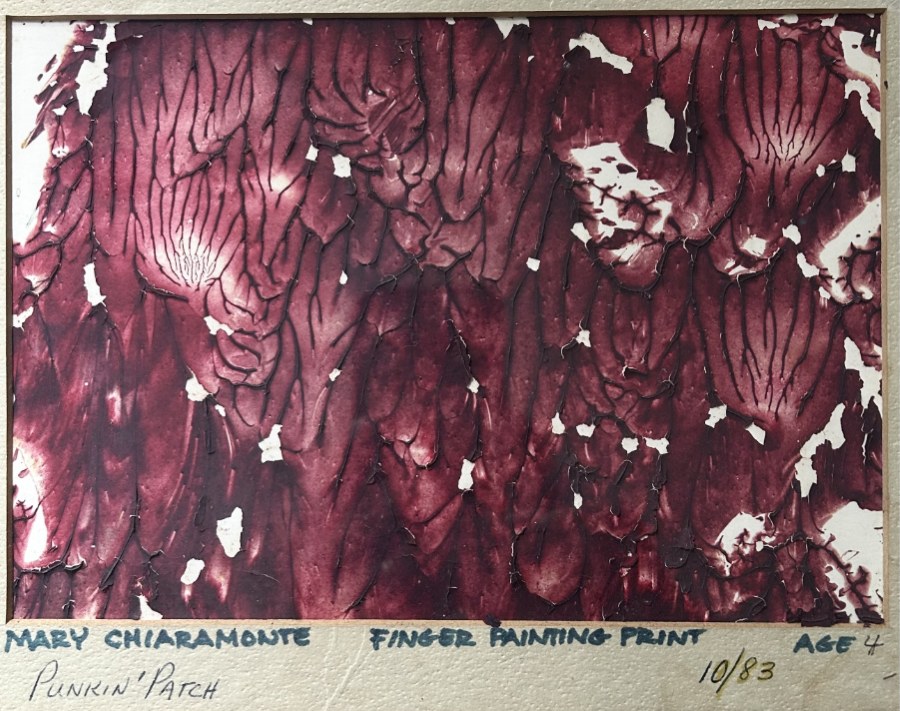
When we were 4, my twin sister and I were at some kind of childcare center for the day, which was rare because we didn’t often leave the farm. I think in part because of that, I fully remember the experience of being given some tempera paints and being instructed to make a finger painting. I wanted to find this deep red and so mixed the paints until I did. I shifted the paint around with my hands instead of my fingers to achieve this peak- and- valley type of texture that you can get by lifting your hand up off the paper. I was mesmerized. I remember it like yesterday. The teacher told my mom I was going to be an artist, and so she saved the work, which I’ve always had hanging in my studio. Other early memories were of just being obsessed by it and being yelled at to go to bed and to put the crayons away for the love of God.
Growing up in rural West Virginia you and your family didn’t have a television or other modern distractions. How do you think your upbringing has affected your work as an artist? Do you think it has benefited your creativity and productivity?
I absolutely attribute the way we were raised like this to everything that we are now. I think it applies to each of us in our own way. My twin sister became a veterinarian, probably because she had always helped with the animals on our farm, and my older brother may be an architect because we built our own family home by ourselves. Twice. But I liked the adventure of slipping out of reality and into painting best and wandering the hillsides looking at all the life there. And I still love the solitude in painting, that really stuck with me from the isolation we experienced living so far out. I think that I am entirely unemployable.
Much of your creative inspiration comes from the natural world. What are some parts of nature that you find to be particularly inspiring?
That it’s quiet. And if it were loud, it would never be offensive. It would be a hard wind or a patch of Joe Pye weed humming with bees. I find so much peace and rest in wild places that I’d rather be an animal, frankly. I don’t want to be a human again in the next life if I could put in a request. It’s a bit much. So, I want to be with the animals, the moss, the ferns, and I’ll just have to observe all of it in my paintings, if I can’t be it. And I love looking at how animals live, the various distinctions between the habits of say, a coyote versus a hummingbird. It’s truly fascinating what they’re all getting into.
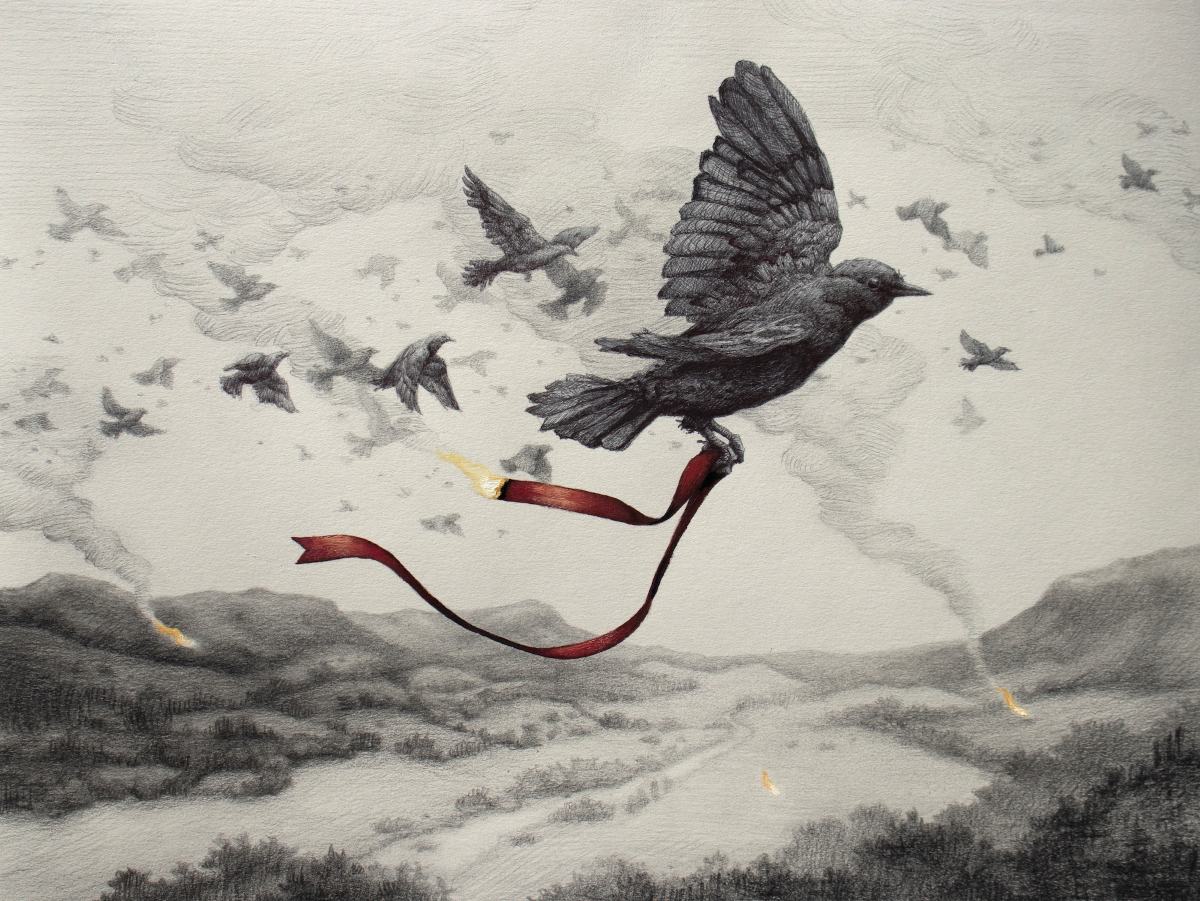
When I view your work, I feel that there is an element of darkness that haunts the narrative, does this feeling connect to your exploration of the human disposition and our complicated relationship with the natural world?
I think it’s that personal feeling of uneasiness of being a human here and rather being a piece of the forest floor. I don’t often feel like I’m in the right place so that longing permeates everything. And then the human things come into my work as an exercise in acceptance, too. And both ideas are real in my world, so I often dream on how they interact and overlap and all that is born into the work as a result.
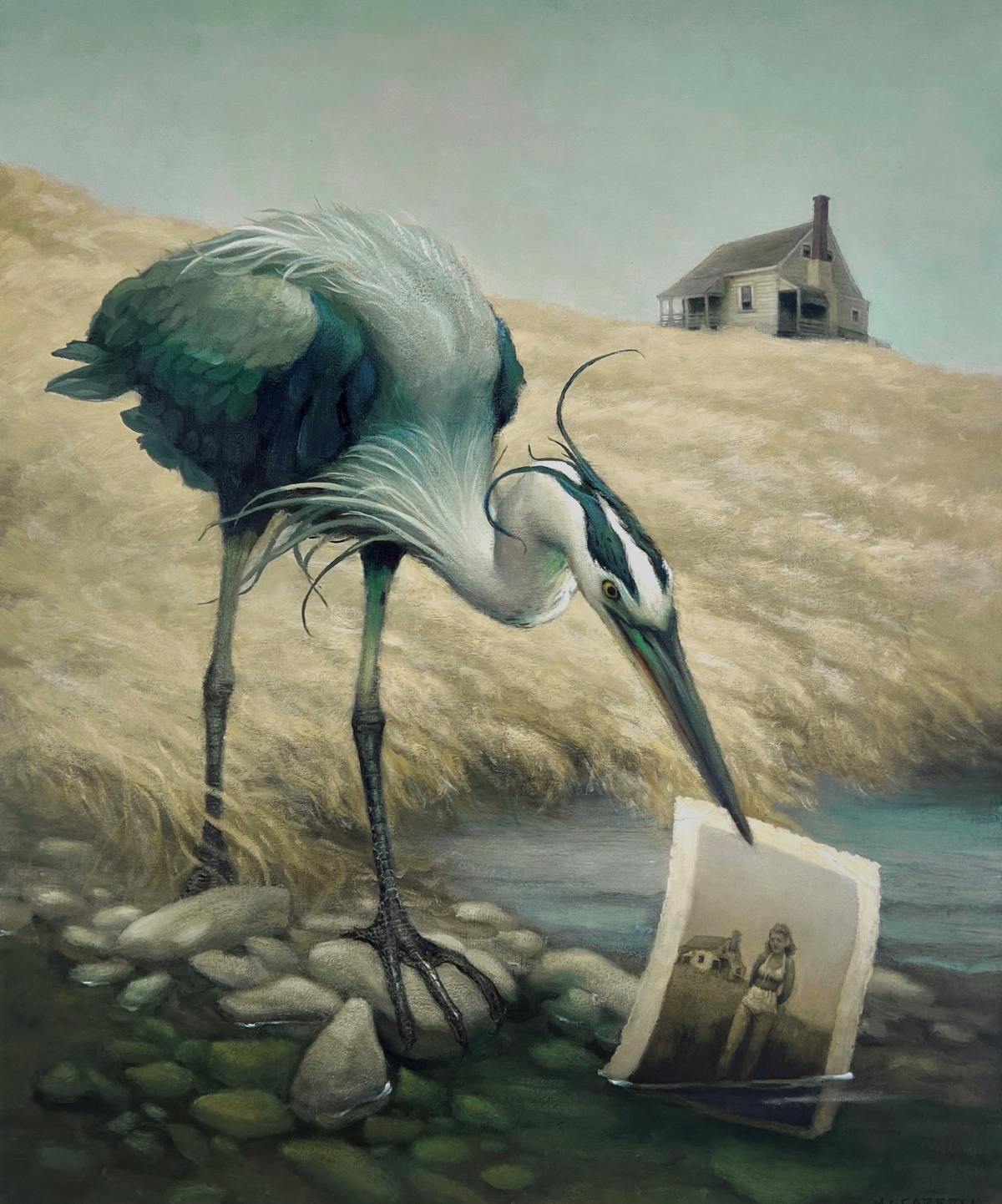
Your drawings and paintings feature a variety of different animals, from more predatory animals like bears and wolves, to more domesticated animals such as rabbits, dogs, and horses. What do these animals represent within your work? Do they each hold a specific meaning within the narrative?
Another gift that came with growing up the way we did was falling in love with various fables and folklore from different cultures and times. I love inventing new animal stories, both in writing and painting just like I did when I was little, inspired by these beautiful books that our mother ensured we had. I treasured those stories and still do.
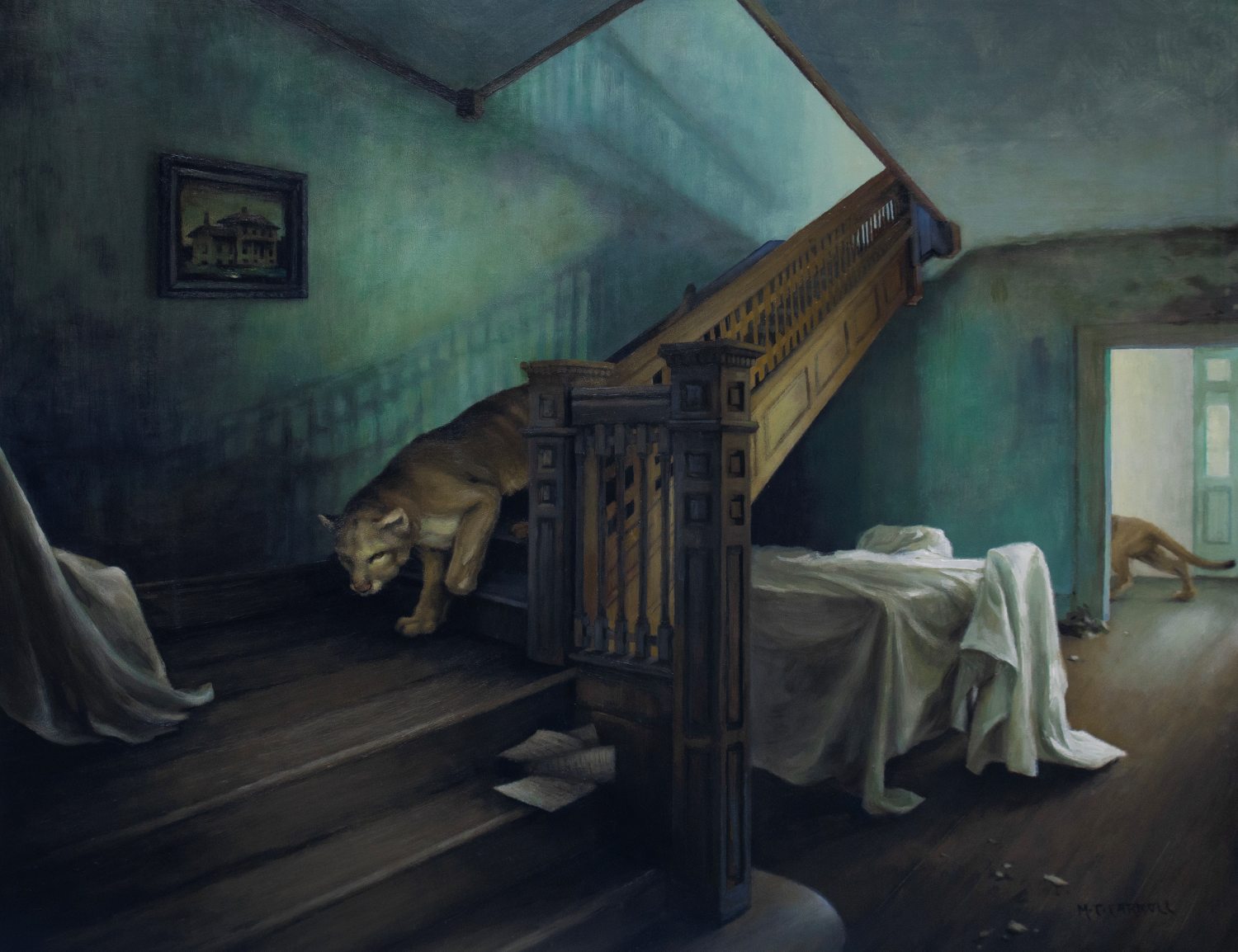
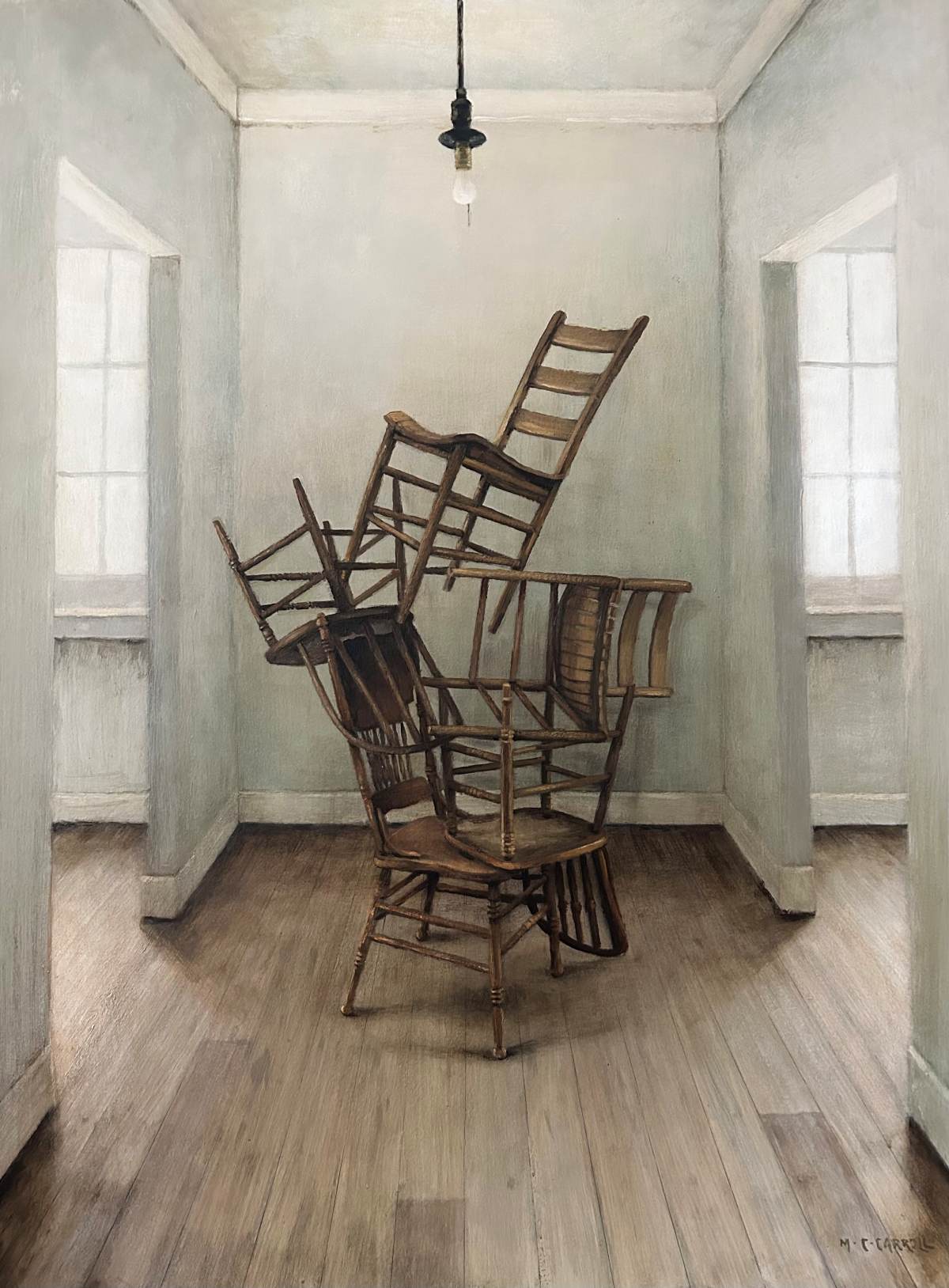
Some of my favourite works from you include ‘The House on Eden Road’ and ‘Poltergeist’, which feature abandoned/empty houses and rooms. Can you tell me a bit about the meaning these settings hold within your work?
It’s just as simple as my curiosity of what the world would look like without us. How it would recover, and the images of the animals coming into these empty rooms, but with our ghosts, and the vestiges of our pasts still there.
What is the most rewarding aspect of your work as an artist?
When someone tells me that it did something for them, that it helped them in some way.

What is the most challenging part of your work as an artist?
Having the isolation and the time to do it. I have found that people tend to think that artists somehow get their work done miraculously in mere seconds. This all takes vast amounts of time; it’s an all day, every day affair. But I still get these phone calls at 10 am on a Tuesday asking me what I am up to. Or, that you aren’t doing anything and that you can drop whatever you’re doing anyway, just because you don’t have a boss breathing down your neck. We do, and it’s ourselves. Discipline is an absolute necessity. Most of us need space and peace; we need meditations to create and to drag those things from our minds in order to surface into the work.
What do you hope viewers can take away with them after viewing your body of work?
I just want the paintings to have reached them somehow, and made their lives better, if even in a small way.


Mary Carroll Social Media Accounts
Instagram | RJD Gallery Profile